

 Pregledaj u prostoru
 Pošalji
 Podeli
 Detalji o delu

 Преузми
 Slični predmeti
 Rendgenski snimak
 Slajdovi
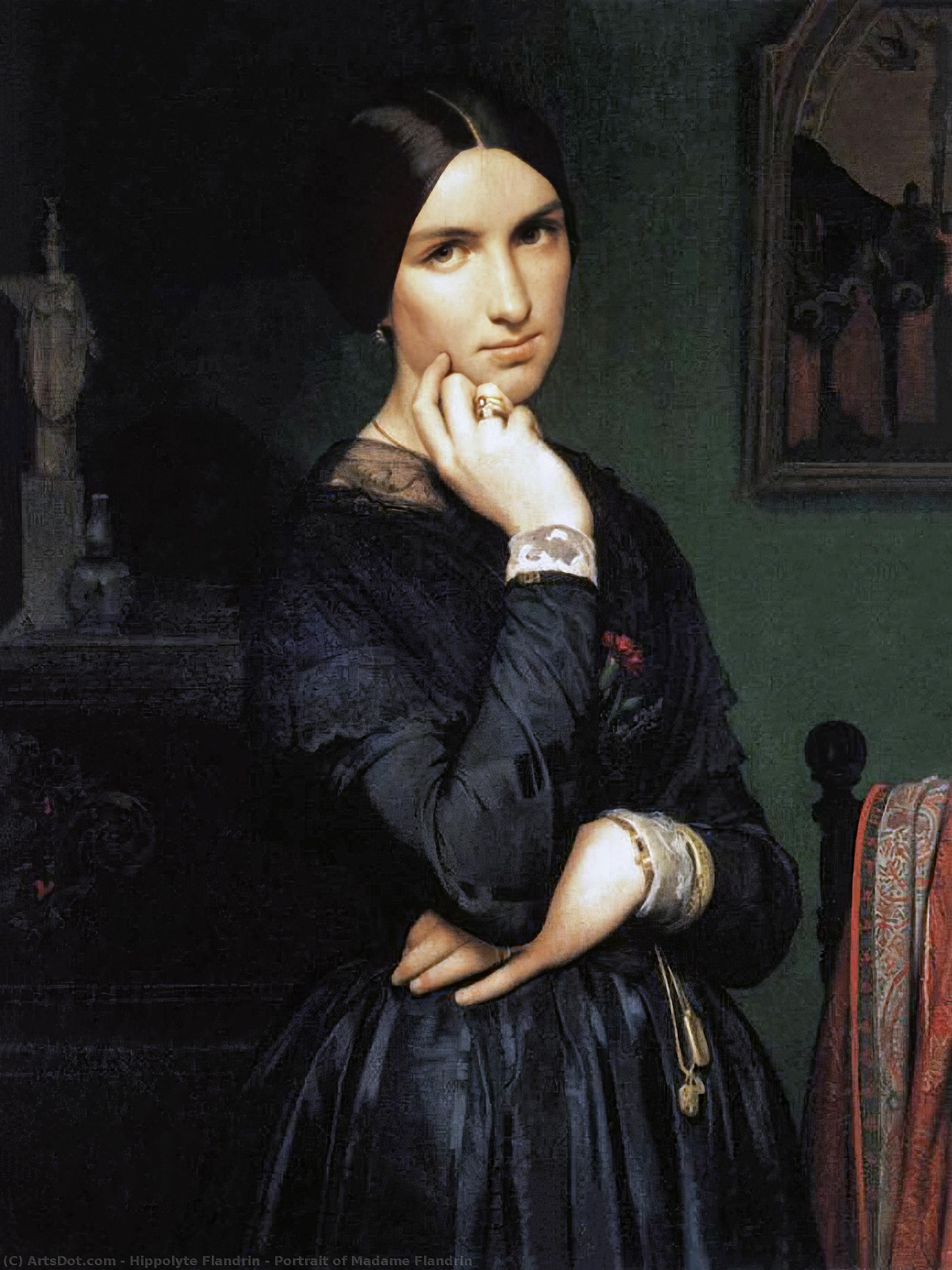
Portrait of Madame Flandrin
 Oil On Canvas
- WallArt
- Neoclassical Academic Realism
 1846
1846- 19th Century
 83.0 x 66.0 cm
 Louvre
 Pročitaj više
Ručno rađena uljana reprodukcija
Ručno oslikano uljanim bojama na platnu u dimenzijama i okviru po vašem izboru, izrađeno po porudžbini od strane naših umetnika. ( Kupi print Kupi digitalnu sliku)




P118B $10

P118H $10

P118W $10

P438Z $10

P508JH $12

P508YH $12

P805H $10

P805Z $10

P919BZ $10

P919G $10

P919XJ $10

P959ZH $10

P968JZ $12

W106C $8

W218G $10

W218JH $8

W218Y $10

W307PJ $10

W316G $10

W316PJ $8

W316Y $10

W398PJ $8

W4111J $10

W500HY $15

W500JH $15

W692G $12

W849H $8

W940BG $15

W953PJ $8




Izaberite jednu od naših unapred definisanih veličina koje odgovaraju originalnim proporcijama umetničkog dela.

Можете унети сопствене димензије како бисте прилагодили дело одређеном оквиру или простору. Ако одабрана величина не одговара пропорцијама оригинала, слика ће бити исечена или проширена додатним елементима који се ручно насликавају. Дигитални prikaz ће вам бити послат на одобрење пре почетка производње.
Имајте на уму да преглед на екрану не одражава стварно исецање или проширење. Само приказ (mockup) ће тачно приказати коначну композицију.
Иако су доступне прилагођене величине, препоручујемо да одаберете димензију из дефинисане листе како бисте сачували оригиналне пропорције.
Nakon narudžbine, tim ArtsDot.com će klijentu putem e-pošte poslati uputstva i dostaviti prikaz predloženog rešenja
Isporuka širom sveta () za 3/4 nedelje umesto uobičajenih 5 nedelja. (3 септембар). Bez kompromisa po pitanju kvaliteta.

Besplatna ekspresna dostava širom sveta

Visokokvalitetno laneno platno

Kompletno osiguranje transporta

Garancija povraćaja carine i uvoznih dažbina

Garancija vernosti boja

Politika povrata u roku od 60 dana (samo u slučaju nedostataka)

Garancija povrata novca od 100%

Popust pri grupnoj kupovini
 Opcija sa staklom dostupna je samo za dimenzije manje od 110 cm

Portrait of Madame Flandrin
Tehnika reprodukcije
Dimenzije reprodukcije
-


Konačna cena
$ 338
A Vision of Neoclassical Grace
In the quiet, luminous realm of nineteenth-century French portraiture, few works capture the essence of refined elegance as poignantly as Hippolyte Flandrin’s Portrait of Madame Flandrin. Completed in 1846, this masterpiece serves as a profound window into the soul of the Neoclassical era, a period defined by its reverence for antiquity and its pursuit of moral clarity. As one gazes upon the figure of Madame Flandrin, there is an immediate sense of being transported to a world of quiet contemplation and aristocratic poise. The subject, positioned with a delicate, pyramidal stability, commands the frame not through grand gestures, but through a subtle, magnetic presence that draws the viewer into her private moment of introspection.
The painting is a masterclass in the use of light and shadow, employing a gentle chiaroscuro that breathes life into the canvas. Flandrin, a distinguished pupil of the legendary Jean-Auguste-Dominique Ingres, utilizes an incredibly polished technique where brushstrokes remain virtually invisible to the naked eye. This creates a surface of extraordinary smoothness, allowing the light to glide over the deep, midnight blues of her gown and the soft, porcelain textures of her skin. Through the meticulous application of translucent glazes, the artist achieves a luminous depth, making the fabric appear almost tactile—as if one could reach out and feel the heavy, luxurious weight of the velvet.
Symbolism and the Mirror of Reflection
Beyond its technical brilliance, the artwork is rich with symbolic layers that invite deep psychological exploration. While Madame Flandrin herself embodies the outward virtues of her social standing—grace, restraint, and dignity—the composition introduces a fascinating dialogue between the interior and exterior worlds. To the right, a large, ornate mirror captures a reflected outdoor vista, a bright and vibrant landscape that contrasts sharply with the muted, somber tones of the domestic interior. This mirror acts as more than a mere decorative element; it serves as a metaphor for self-reflection and the duality of human existence—the private, inward life versus the expansive, external world.
The artist’s choice of color further enhances this emotional narrative. The palette is dominated by cool, sophisticated tones—deep blues, muted greens, and soft beiges—which evoke a sense of calm and melancholy. This somber atmosphere is punctuated only by the subtle glint of jewelry and the warmth of skin tones, creating a visual rhythm that guides the eye across the canvas. For the collector or interior designer, this piece offers a profound emotional resonance, providing a focal point that is both intellectually stimulating and aesthetically soothing.
An Enduring Legacy for the Modern Collector
To possess a reproduction of such a significant work is to bring a piece of art history into the contemporary living space. The Portrait of Madame Flandrin transcends its historical origins, offering a timeless aesthetic that complements both classical and modern interiors. Its ability to anchor a room with its steady, vertical composition and sophisticated color story makes it an ideal choice for those seeking to infuse their surroundings with a sense of heritage, stability, and cultured beauty.
Whether viewed as a study in the mastery of French Neoclassicism or as an evocative portrait of human introspection, Flandrin’s work remains a testament to the power of disciplined technique paired with emotional depth. It is a painting that does not merely decorate a wall; it invites conversation, inspires thought, and elevates the very atmosphere of the home.
Srodna umetnička dela

Biografija umetnika
The Neoclassical Vision of Jean-Hippolyte Flandrin
Jean-Hippolyte Flandrin (1809–1864) remains a luminous figure in the pantheon of French Neoclassicism, an artist whose brush captured the profound intersection of spiritual devotion and classical grace. Born in Lyon, France, Flandrin’s journey was initially marked by a tension between familial duty and artistic destiny. While his parents envisioned a stable life for him within the realm of commerce, the creative spirit shared by his brothers, Augusto and Paul, proved irresistible. This early immersion in an environment of artistic pursuit laid the foundation for a career that would eventually transcend the boundaries of private studios to adorn the most sacred architectural spaces in France.
The trajectory of Fland_rin’s talent took a decisive turn in 1829 when he arrived in Paris to enter the legendary studio of Jean Auguste Dominique Ingres. Under the tutelage of this master of line and form, Flandrin refined a technique characterized by precision, clarity, and an almost sculptural approach to the human figure. This period of mentorship was transformative, instilling in him the Neoclassical ideals of purity and anatomical perfection that would define his aesthetic language. His ascent within the academic hierarchy was swift, punctuated by the prestigious Prix de Rome in 1832, a milestone that granted him five years of immersive study in Italy. It was amidst the ancient echoes of Rome that Flandrin’s style matured, absorbing the grandeur of classical antiquity and translating it into a modern, emotive vocabulary.
Mastery of Form and Narrative
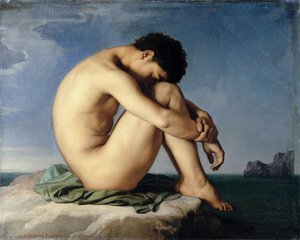
Flandrin’s oeuvre is a testament to his ability to navigate both the intimate and the monumental. His early works often focused on the delicate nuances of portraiture and the serene beauty of the human form in repose. A notable example, Jeune Homme Nu Assis au Bord de la Mer (1836), showcases his mastery of tonal gradation and light, presenting a scene of profound tranquility that earned him a permanent place within the esteemed collections of the Louvre. In these works, one observes a seamless blend of technical rigor and a soft, poetic atmosphere that invites deep contemplation.
As his career progressed, Flandrin moved toward larger-scale commissions that demanded a different level of narrative complexity. He became a master of the fresco, a medium that allowed him to integrate his art with the very fabric of religious architecture. His most enduring legacy lies in the monumental decorations for the cathedral of Nantes, where his biblical narratives breathe life into the stone. These works are not merely illustrations of scripture but are profound explorations of light, shadow, and divine presence, executed with a rhythmic grace that guides the viewer's eye through sacred history.
Legacy and Artistic Significance
The significance of Hippolyte Flandrin extends far beyond his technical proficiency. He represented a bridge between the rigid traditions of the early 19th century and a more emotive, spiritually resonant form of painting. As a respected member of the Académie des Beaux-Arts, he helped uphold the standards of French excellence while contributing to the evolution of religious art during a period of significant social change.
To study Flandrin is to encounter an artist who found harmony in the balance of opposites:
- Tradition and Innovation: He utilized the disciplined techniques of Ingres to express the profound spiritual depths of his era.
- Intimacy and Grandeur: His ability to move from the delicate Portrait of Madame Flandrin to massive cathedral frescoes demonstrates a versatile mastery of scale.
- Classical Form and Emotional Depth: While his figures possess the idealized perfection of antiquity, they are imbued with a palpable, human vulnerability.
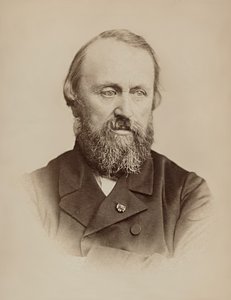
Hippolyte Flandrin
1809 - 1864 , France
Osnovne informacije
- Artistic Movement Or Style: Neoclassical
- Artists Who Influenced This Artist:
- Louis Hersent
- Jean Auguste Dominique Ingres
- Date Of Birth: March 23, 1809
- Date Of Death: March 21, 1864
- Full Name: Jean-Hippolyte Flandrin
- Nationality: French
- Notable Artworks:
- Jeune Homme Nu Assis au Bord de la Mer
- St. Clair Healing the Blind
- Jesus and the Little Children
- Dante and Virgil Visiting the Envious Men
- Euripides Writing His Tragedies
- Place Of Birth: Lyon, France
Povezani članci
Academic Realism's Finest: 10 Masterpieces for Art Lovers & Home Decor
Explore 10 defining Academic Realism masterpieces by Bouguereau, Gérôme & Cabanel. Discover the stories behind these iconic paintings and bring timeless art into your home with museum-quality reproductions from ArtsDot.com. Explore the full collection online!

Academic Realism: Technique, History & Enduring Influence on Art
Explore the captivating world of Academic Realism! Discover key artists, techniques & its lasting impact on art history. Expert insights & high-quality reproductions at ArtsDot.

Romantic Realism's Finest: 10 Masterpieces for Your Home | ArtsDot
Explore 10 defining masterpieces of Romantic Realism! Discover Courbet, Millet & Daumier's powerful paintings—capturing emotion and social realities. Find museum-quality reproductions for your home at ArtsDot.com.

Academic Art: Tradition, Technique & the Pursuit of Ideal Form in the 19th Century
Explore the world of Academic Art! Discover its history, key artists like Ingres & Bouguereau, defining techniques, and lasting influence on 19th-century painting. Learn about the Salon system and its legacy.

The Enduring Appeal of Realism: A Comprehensive Exploration of Representation in Art
Explore the captivating world of Realism! Discover key artists like Courbet, defining techniques & its lasting impact on art history. Expert insights and high-quality reproductions at ArtsDot.

