Meni
BESPLATNE KONSULTACIJE SA STRUČNJAKOM ZA UMETNOST
Pregledaj u prostoruPregledaj u prostoru AR pregledAR pregled Kupi print Kupi printKupi digitalnu sliku Kupi digitalnu sliku PošaljiPošalji
Detalji o deluDetalji o delu Dodaj u omiljene Dodaj u omiljene ПреузмиПреузми Slični predmetiSlični predmeti Rendgenski snimakRendgenski snimak SlajdoviSlajdovi

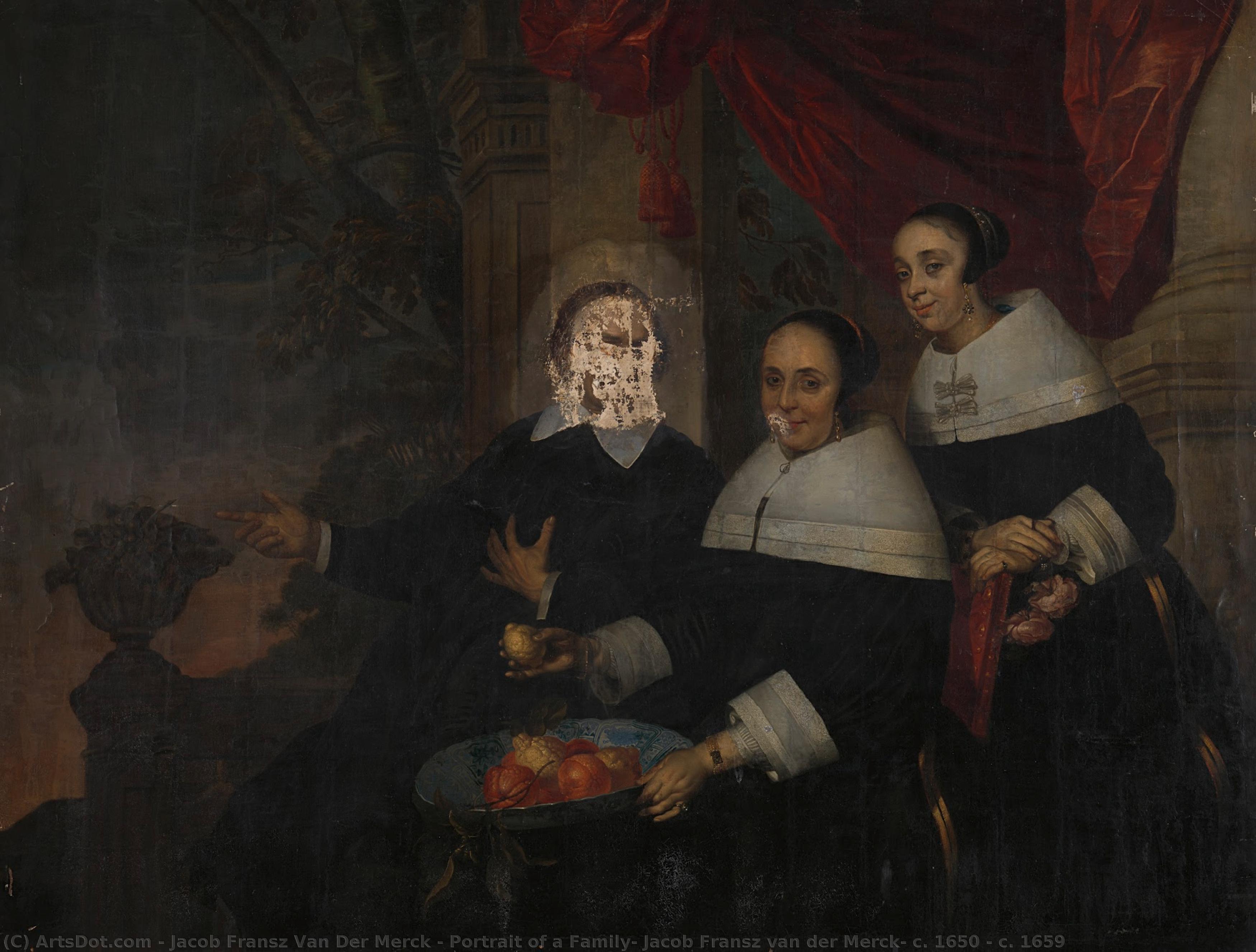
Portrait of a Family, Jacob Fransz van der Merck, c. 1650 - c. 1659

  • Datum nastanka1659
  • Dimenzije150.0 x 195.0 cm

Discover Jacob Franz van der Merck's Dutch Golden Age portraits & genre scenes. Explore his captivating works from the 17th century, a master of realism and storytelling.

Ručno rađena uljana reprodukcija

Ručno oslikano uljanim bojama na platnu u dimenzijama i okviru po vašem izboru, izrađeno po porudžbini od strane naših umetnika. (Kupi print Kupi printKupi digitalnu sliku Kupi digitalnu sliku)

Standardne dimenzije
po meri
CM
INCH

Izaberite jednu od naših unapred definisanih veličina koje odgovaraju originalnim proporcijama umetničkog dela.

širina
visina

Можете унети сопствене димензије како бисте прилагодили дело одређеном оквиру или простору. Ако одабрана величина не одговара пропорцијама оригинала, слика ће бити исечена или проширена додатним елементима који се ручно насликавају. Дигитални prikaz ће вам бити послат на одобрење пре почетка производње.
Имајте на уму да преглед на екрану не одражава стварно исецање или проширење. Само приказ (mockup) ће тачно приказати коначну композицију.
Иако су доступне прилагођене величине, препоручујемо да одаберете димензију из дефинисане листе како бисте сачували оригиналне пропорције.

Primeri onoga što se može promeniti: Zamena lica fotografijom kupca; Dodavanje ljubimca (npr. zamena mačke psom); Uključivanje skrivene poruke u pozadini; Promena pejzaža ili elemenata pozadine.
Nakon narudžbine, tim ArtsDot.com će klijentu putem e-pošte poslati uputstva i dostaviti prikaz predloženog rešenja

Isporuka širom sveta () za 3/4 nedelje umesto uobičajenih 5 nedelja. (4 септембар). Bez kompromisa po pitanju kvaliteta.

why_choose_icon
Besplatna ekspresna dostava širom sveta
why_choose_icon
Visokokvalitetno laneno platno
why_choose_icon
Kompletno osiguranje transporta
why_choose_icon
Garancija povraćaja carine i uvoznih dažbina
why_choose_icon
Garancija vernosti boja
why_choose_icon
Politika povrata u roku od 60 dana (samo u slučaju nedostataka)
why_choose_icon
Garancija povrata novca od 100%
why_choose_icon
Popust pri grupnoj kupovini

Ukupna cena

$ 263

reproduction

Portrait of a Family, Jacob Fransz van der Merck, c. 1650 - c. 1659

Tehnika reprodukcije

Dimenzije reprodukcije

-

Konačna cena

$ 263

This family portrait by Jacob van der Merck was one of two paintings that Adriaan Justus Enschedé, city archivist of Haarlem, presented to the forerunner of the Rijksmuseum in December 1874.6 The Nederlandsch Museum voor Geschiedenis en Kunst was still being governed at the time by the Commission of State Advisers for Monuments of History and Art, of which Enschedé had become a member shortly before. The donation was discussed at a committee meeting on 14 January 1875,7 and according to the minutes Enschedé had discovered both works in Amsterdam. The portrait by Van der Merck ‘lay flat on the floor to prevent peat getting into the cracks in the floor’, and the other painting, which was a copy after Abraham Liedts’s likeness of Admiral Pieter Florisz,8 was wrapped around the slabs of peat. Unfortunately, there is no mention of the location, so the earlier provenance of the pictures cannot be traced.9 Van der Merck’s canvas was thus in a very battered condition when it entered the Nederlandsch Museum and it was then probably restored. Nothing was said about its state when it was transferred from The Hague to Amsterdam in 1885.10 However, there is a note in the Rijksmuseum’s inventory book that it was partly overpainted. Today the man’s head has disappeared completely. It was very probably decided to rectify the previous intervention but that was done too radically.11 Despite its sorry condition, the work does give a reasonable idea of Van der Merck’s qualities as a portraitist. The balustrade and other architectural details suggest that the family is on the terrace of a building resembling a pavilion. The married couple are seated, with a younger woman, probably a daughter, standing on the right. It was not uncommon for companies to be depicted outdoors surrounded by greenery in the seventeenth century, but in the 1650s artists like Bartholomeus van der Helst increasingly placed them on a terrace with columns and other structural elements in the background, sometimes combined with a drapery. Anthony van Dyck had been using motifs like that in his portraits since the 1620s. The vertical shape behind Van der Merck’s male sitter might have been intended to be a circular pillar like the one in the top right corner, but it is no longer clearly distinguishable. Although the original effect may have been spoiled by wear, a clumsy handling of architectural details is also found in Van der Merck’s 1660 likeness of Willem van der Rijt and his family.12 There, too, he included a drapery with tassels, and judging by a painting he made of the governors of the Leiden Loridan almshouse it was a favourite device of his in group portraits.13 He also employed it in still lifes from time to time.14 The man shown here is using his right hand to indicate or activate something outside the painting. It would not have been the couple’s children, as is the case in Van der Merck’s far larger family portrait of 1653 in the Frans Hals Museum in Haarlem.15 Although there is no cusping visible, indicating that the picture may have been cut down,16 it is not certain that the composition has indeed been cropped. At any rate, the position of the signature on the cornice of the pillar does not give the impression that the canvas has been substantially trimmed on the left, the side the man is pointing at. According to the transfer list of 1885, the painting bears the year ‘1654’.17 That was adopted at first in the museum’s inventory book but later changed to ‘165.’, which is how it was catalogued in 1976.18 Not the slightest trace of any date can now be seen. Overzealous cleaning has removed it entirely, along with the last four letters of the signature. However, the reported year of 1654 would fit in well with the women’s dresses, especially the starched, lace-trimmed falling whisk collars and the wide, short cylindrical cuffs.19 If the date was read correctly at the time, the work is from the artist’s Hague period. The seated woman has a blue-and-white bowl in her lap filled with citrus fruit and is holding a lemon in her right hand, which could be a reference to marital fidelity in this context.20 Since such products were very expensive at the time, their combination with the dish of Chinese porcelain proclaims the wealth of the patron.21 Van der Merck’s talents for still lifes would have come in handy here. Richard Harmanni, 2023 See Key to abbreviations, Rijksmuseum painting catalogues and Acknowledgements

Biografija umetnika

early life and training

jacob fransz van der merck, a prominent dutch old masters painter, was born in 1610 in 's-gravendeel, netherlands. little is known about his early life, but it is assumed that he received training in the vicinity of delft, given his enrollment in the delft guild of st luke under the name jacob fransz van sgravendeel in 1628.

artistic career

van der merck's artistic career is marked by his contributions to various genres, including portraits, genre scenes, and still-lifes. his work has been offered at auction multiple times, with realized prices ranging from 1,731 usd to 191,964 usd. notably, his painting "portrait of a lady and a gentleman as venus and adonis" sold for 191,964 usd at bonhams new bond street in 2011.

notable works and collaborations

* portrait of a young girl (dutch golden age, oil on canvas) * collaboration with bartholomeus van bassen on the restoration of paintings in 1650 * commissioned portraits for the city of leiden, including likenesses of captains of the civic guard in 1657

museums and collections

* rijksmuseum, amsterdam (features a collection of van der merck's paintings) * leiden, museum de lakenhal (houses extant works, including portraits of governors of the loridan almshouse)

legacy and death

van der merck died in leiden in september 1664 and was buried in the pieterskerk. his legacy is preserved through his numerous paintings, which can be found in various museums and collections, including those featured on https://ArtsDot.com, a platform providing excellent reproduction prints of masterpieces.
  • view van der merck's artwork on https://ArtsDot.com/@/jacob franz. van der merck
  • explore more dutch old masters painters on /en/art/list/
  • discover the rijksmuseum's collection on https://www.rijksmuseum.nl/nl/collectie/sk-a-853/catalogus-entry
important note: this article is based on available information and may be subject to updates as more data becomes available.
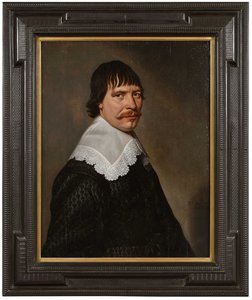
jacob franz. van der merck

jacob franz. van der merck

1610 - 1664 , Netherlands

Osnovne informacije

  • Artistic Movement Or Style: Caravaggism
  • Artists Or Movements Influenced By This Artist: ['Baroque']
  • Artists Who Influenced This Artist: ['Leonardo da Vinci']
  • Date Of Birth: 1571
  • Date Of Death: 1610
  • Full Name: Michelangelo Merisi da Caravaggio
  • Nationality: Italian
  • Notable Artworks:
    • The Calling of Saint Matthew
    • Supper at Emmaus
    • David and Goliath
  • Place Of Birth: Milan, Italy