 Pregledaj u prostoru
 Pošalji
 Podeli
 Detalji o delu

 Преузми
 Slični predmeti
 Rendgenski snimak
 Slajdovi
Ensor with Masks


 Pročitaj više
Giclee štampa / Umetnički otisak
Giclée štampa ili print na platnu muzejskog kvaliteta uz brzu proizvodnju i fleksibilne opcije završne obrade. ( Kupi ručno naslikanu sliku Kupi digitalnu sliku)




P118B $10

P118H $10

P118W $10

P438Z $10

P508JH $12

P508YH $12

P805H $10

P805Z $10

P919BZ $10

P919G $10

P919XJ $10

P959ZH $10

P968JZ $12

W106C $8

W218G $10

W218JH $8

W218Y $10

W307PJ $10

W316G $10

W316PJ $8

W316Y $10

W398PJ $8

W4111J $10

W500HY $15

W500JH $15

W692G $12

W849H $8

W940BG $15

W953PJ $8




Izaberite jednu od naših unapred definisanih veličina koje odgovaraju originalnim proporcijama umetničkog dela.

Možete uneti sopstvene dimenzije kako biste umetničko delo prilagodili specifičnom okviru ili prostoru. Ako odabrani format ne odgovara proporcijama originalne slike, mi ćemo ili iscrtati deo dela ili proširiti sliku pomoću ogledane ivice ili jednobojnog popunjavanja. Digitalni prikaz će vam biti poslat na odobrenje pre početka proizvodnje.
Imajte na umu da pregled na ekranu ne odražava stvarno iscrtavanje ili proširivanje. Samo će prikaz (mockup) precizno pokazati finalnu kompoziciju.
Iako su prilagođene dimenzije dostupne, preporučujemo da odaberete dimenziju sa unapred definisane liste kako biste očuvali originalne proporcije.
Dostava širom sveta () za 2 nedelje umesto uobičajenih 4/5 nedelja. (20 август)

Besplatna ekspresna dostava širom sveta

Visokokvalitetno laneno platno

Kompletno osiguranje transporta

Garancija povraćaja carine i uvoznih dažbina

Garancija vernosti boja

Politika povrata u roku od 60 dana (samo u slučaju nedostataka)

Garancija povrata novca od 100%

Popust pri grupnoj kupovini
 Opcija sa staklom dostupna je samo za dimenzije manje od 110 cm

Ensor with Masks
Giclee štampa / Umetnički otisak
Dimenzije reprodukcije
-


Konačna cena
$ 62
Opis predmeta
A Visceral Encounter with the Uncanny
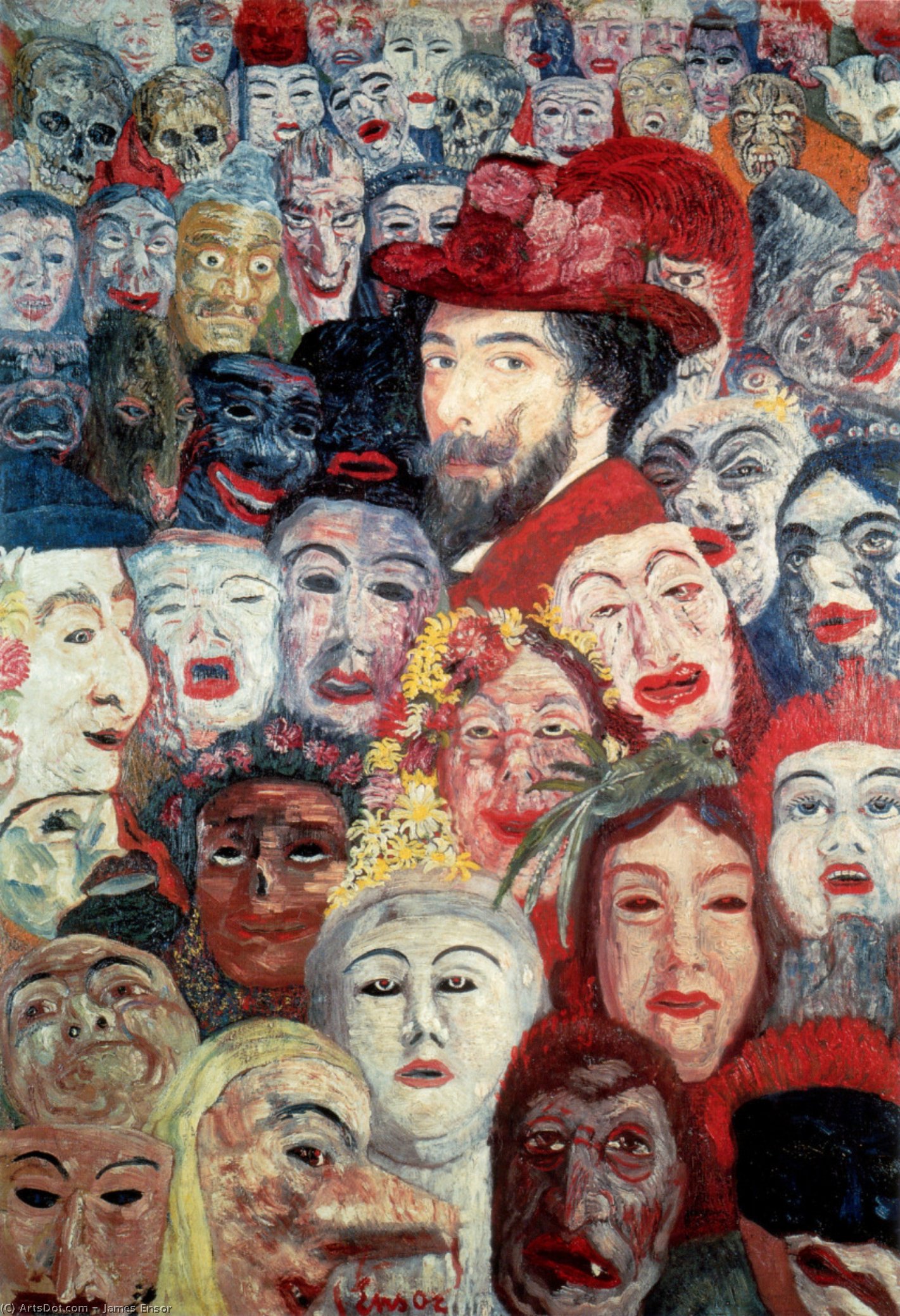
To stand before James Ensor’s "Ensor with Masks" is to step directly into a psychological labyrinth, where the boundaries between reality and artifice dissolve into a haunting tableau of human existence. Painted around 1935, this monumental work serves as a profound exploration of anxiety, capturing a moment that feels both deeply personal and universally unsettling. At the heart of the composition, Ensor places himself, yet he is far from a traditional subject; he is ensnared within a swirling, claustrophobic sea of faces. These are not mere portraits, but a collection of masks and caricatures—some grim, some vacant, others grotesque—that press against the edges of the frame, creating an atmosphere of inescapable social scrutiny. For the discerning collector or lover of fine art, this piece offers more than just visual intrigue; it provides a window into the turbulent psyche of one of Belgium's most influential masters.
The painting’s power lies in its masterful command of Expressionist technique. Ensor rejects the polished smoothness of academic realism, opting instead for a raw, tactile energy that can be felt through the very texture of the canvas. His use of thick impasto brushstrokes lends a sculptural quality to the work, where the paint itself seems to pulse with life and unease. The color palette is strategically jarring, utilizing bold, aggressive applications of reds, yellows, and deep blacks to heighten the emotional stakes. These colors do not merely decorate the scene; they act as emotional conduits, driving home the painting's central themes of tension and instability. For those looking to anchor a sophisticated interior with a piece of profound character, the dynamic interplay of light and heavy pigment in this work provides an unparalleled focal point.
The Symbolism of the Veiled Self
Beyond its striking visual surface, "Ensor with Masks" functions as a complex metaphor for the human condition and the masks we wear to navigate society. Growing up in the seaside town of Ostend, surrounded by his parents' souvenir shop filled with carnival masks and curiosities, Ensor developed a lifelong fascination with the concept of disguise. In this late masterpiece, the masks transcend their physical form to represent the various personas adopted to satisfy social conventions and conceal our true, often vulnerable, identities. The repetition of these faces creates a sense of overwhelming conformity, suggesting the difficulty of maintaining authenticity in a world of performative existence.
This profound symbolic depth makes the artwork an extraordinary choice for those who appreciate art that invites contemplation and conversation. It is a piece that demands to be lived with, offering new layers of meaning upon every viewing. Whether viewed as a precursor to Surrealism or a cornerstone of Expressionism, Ensor’s vision remains strikingly modern. Bringing a high-quality reproduction of this masterpiece into a curated space does more than decorate a wall; it introduces an intellectual and emotional gravity, inviting guests to peel back their own layers and engage with the beautiful, unsettling mystery of the human spirit.
Srodna umetnička dela
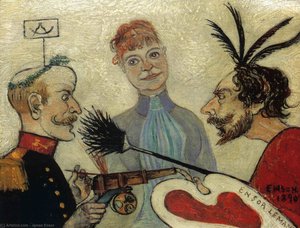
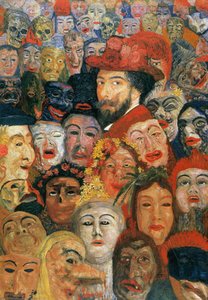
Biografija umetnika
James Ensor: A Pioneer of Expressionism and Surrealism
James Sidney Edouard, Baron Ensor (Ostend, 13 April 1860 – 19 November 1949) was a Belgian painter and printmaker who stands as one of the most influential figures in the development of Expressionism and Surrealism. Born into an English father and Belgian mother amidst the vibrant atmosphere of Ostend’s seaside resort town, Ensor’s upbringing instilled within him a profound fascination with observation and detail—a foundation upon which he would construct his distinctive artistic vision.
Early Influences and Artistic Training
From a young age, Ensor demonstrated an exceptional talent for drawing and painting. Encouraged by his parents' operation of a souvenir shop brimming with curiosities and carnival masks – a veritable cabinet of wonders that ignited his imagination – he pursued formal artistic training at the Académie Royale des Beaux-Arts in Brussels. Despite encountering resistance from the rigid academic conventions of the time, Ensor quickly recognized the necessity of forging his own path, prioritizing experimentation and personal expression above all else.
The Emergence of Grotesque Vision
Around 1886–87, Ensor embarked on a transformative artistic journey, rejecting Impressionistic ideals in favor of a bold embrace of grotesque imagery. Influenced by Rembrandt’s masterful use of chiaroscuro, the unsettling visions of Francisco Goya, and the evocative symbolism of Japanese woodcuts, he developed a highly personal iconography characterized by jarring juxtapositions of color and form.
Major Works and Recurring Themes
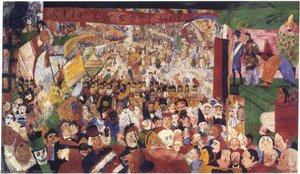
Ensor's oeuvre is marked by an unparalleled exploration of psychological complexity and social critique. Paintings like *The Oyster-eater* (1882) exemplify his meticulous attention to detail and his ability to convey profound emotional resonance, while *Christ’s Entry into Brussels* (1888–89), arguably his magnum opus, remains a monumental satire of religious hypocrisy—a painting initially met with vehement disapproval but now universally recognized as a cornerstone of Expressionist art.
Legacy and Influence
James Ensor's uncompromising artistic vision profoundly impacted subsequent generations of artists. His rejection of academic formalism, coupled with his fearless confrontation of taboo subjects and his masterful manipulation of visual language—particularly the use of bold brushstrokes and vibrant hues—established him as a pivotal figure in the genesis of Expressionism and Surrealism. Today, Ensor’s work continues to inspire awe and provoke contemplation, serving as a timeless reminder that art possesses the capacity to unsettle conventions and illuminate the darkest recesses of human consciousness.
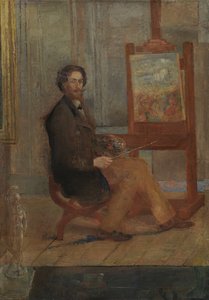
Јемас Енсор
1860 - 1949 , Бележија
Osnovne informacije
- Artistic Movement Or Style: Expressionism, Surrealism
- Artists Who Influenced This Artist:
- Bruegel the Elder
- Francisco Goya
- Whistler
- Date Of Birth: April 13, 1860
- Date Of Death: November 19, 1949
- Full Name: James Sidney Edouard Ensor
- Nationality: Belgian
- Notable Artworks:
- The Scandalized Masks
- Skeletons Fighting...
- Christ's Entry into Brussels
- Place Of Birth: Ostend, Belgium
Povezani članci
James Ensor's Grotesque Visions: Social Commentary & Artistic Innovation
Explore the unsettling yet captivating world of James Ensor, a pioneer of Expressionism. Discover his satirical masterpieces, symbolic imagery & lasting influence on modern art. High-quality reproductions available at ArtsDot.
Džems Abbot MekNil Whistler: 25 Remek-dela Majstora Tonalizma | ArtsDot
Istražite 25 remek-dela Džemsa Abota MekNila Whistler-a! Uronite u svet Tonalizma, portreta i prelepog pejzaža. Kupite vrhunske reprodukcije slika na ArtsDot.com i obogatite svoj enterijer luksuznom umetnošću.

Sir Alfred Munnings' Masterpieces: 25 Paintings That Define Equine Art | ArtsDot
Explore 25 iconic Sir Alfred Munnings paintings! Discover the beauty of British Impressionism, equine art & rural England. Find museum-quality reproductions and elevate your home decor with ArtsDot. Explore the full collection online.
Mikhail Larionov: Rayonism, Primitivism & the Dawn of Russian Avant-Garde Painting
Explore the revolutionary art of Mikhail Larionov & the Russian Avant-Garde. Discover Rayonism, Primitivism's influence, and his lasting impact on modern painting. Expert insights for collectors.
Figurative Expressionism: Emotional Intensity & Subjective Reality in 20th-Century Art
Explore the powerful world of Figurative Expressionism with ArtsDot. Discover key artists like Kirchner & Beckmann, understand its emotional depth, and learn how to collect this influential 20th-century art movement.