

 Pregledaj u prostoru
 Pošalji
 Podeli
 Detalji o delu

 Преузми
 Slični predmeti
 Rendgenski snimak
 Slajdovi
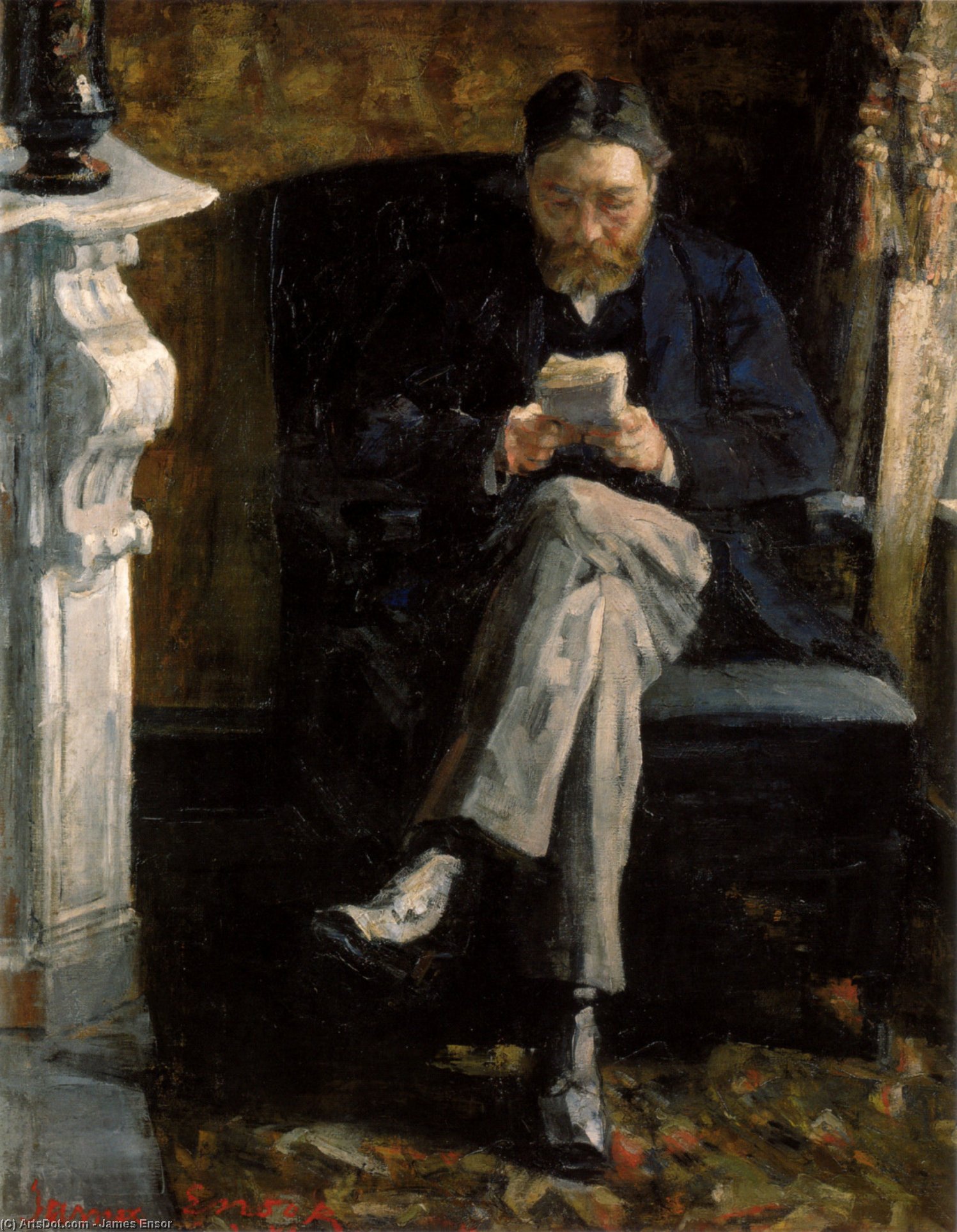
Portrait of the Artist's Father
 Oil On Canvas
- WallArt
- Realism
 1881
1881 100.0 x 80.0 cm
 Pročitaj više
Kupite digitalnu sliku visoke rezolucije i poboljšanog kvaliteta, koja je znatno superiornija od onoga što vidite u online prikazu.
Svaka datoteka je pedantno pripremljena od strane naših stručnjaka koristeći napredne alate i profesionalnu ručnu retušu. Osiguravamo da svaka slika ima izuzetnu oštrinu, preciznu reprodukciju boja i fine detalje.
Konačna datoteka se dostavlja putem e-pošte u roku od 72 sata, optimizovana za neposrednu upotrebu u profesionalnim, izdavačkim i štamparskim okruženjima. To je isti kvalitet kojem veruju vrhunski studiji dizajna, izdavači i galerije.
Digitalna slika
Preuzmite datoteku visoke rezolucije za ličnu upotrebu, štampanje i kreativne projekte. ( Kupi print Kupi ručno naslikanu sliku)
Uključeno uz svaku porudžbinu digitalne slike
Profesionalna digitalna isporuka, zagarantovana
Kada odaberete ArtsDot.com, ne dobijate samo sliku – vi primate profesionalno unapređeno digitalno umetničko delo, izrađeno sa najvećom preciznošću i uz garanciju zadovoljstva. Evo svega što automatski dolazi uz vašu porudžbinu:

Brza dostava putem e-pošte
Vaša digitalna slika visoke rezolucije biće vam poslata putem e-pošte u roku od 72 sata od poručivanja – spremna za trenutnu upotrebu.

Digitalna datoteka unapređena veštačkom inteligencijom
Vaše umetničko delo je profesionalno optimizovano korišćenjem naprednih AI alata i ručne obrade, čime se osiguravaju maksimalni detalji, oštrina i preciznost boja.

Besplatna ponovna isporuka doživotno
Slučajno ste obrisali ili izgubili svoju datoteku? Ne brinite – poslaćemo vam je ponovo u bilo kom trenutku, potpuno besplatno.

Bez troškova uvoza – zauvek
Uživajte u svojim umetničkim delima trenutno, bez carine, dažbina ili troškova dostave – digitalni download je uvek bez poreza.

Garancija vernosti boja
Uz pomoć profesionalnih alata i upravljanja bojama, osiguravamo da vaša digitalna slika što vernije odražava originalne boje.

Garancija zadovoljstva u roku od 60 dana
Ako niste zadovoljni svojom digitalnom slikom, revidirat ćemo je ili vratiti 100% novca u roku od 60 dana – bez ikakvih pitanja.

100% garancija povrata novca
Niste zadovoljni? Obezbedite pun povrat novca u roku od 60 dana od trenutka kada ste primili svoju digitalnu datoteku – bez suvišnih pitanja.

Popusti na velike porudžbine
Kupite 3 slike, uštedite 10% - Kupite 5 slika, uštedite 15% - Kupite 10+ slika, uštedite 20%. Odlično za kreativne projekte, galerije i agencije.
Opis kolekcionarskog dela
A Study in Quietude and Shadow: Unpacking James Ensor’s ‘Portrait of the Artist’s Father’
James Ensor’s “Portrait of the Artist’s Father,” painted in 1881, is not merely a likeness rendered in oil; it's a profound meditation on memory, communication, and the weight of experience. This intimate scene, depicting an elderly man absorbed in a letter within the confines of his study, immediately draws the viewer into a world of subdued tones and contemplative stillness. The painting’s power lies not in grand gestures or dramatic narrative, but rather in its quiet observation of a solitary moment – a testament to Ensor's masterful ability to distill complex emotions onto canvas.
The color palette is deliberately restrained, dominated by muted earth browns, grays, and the subtle ochre of the fireplace. These colors evoke a sense of age, perhaps reflecting both the subject’s years and the somber atmosphere of the room. The directional lighting, carefully sculpted to highlight the man's face and the letter he holds, creates a dramatic interplay of light and shadow, adding depth and emphasizing his internal focus. Notice how the rough texture of the paint, particularly evident in the fabric and the walls, lends a tactile quality to the scene – as if one could almost reach out and feel the worn surface beneath their fingertips.
The Language of Realism Infused with Symbolism
Ensor’s approach firmly aligns with Realism, yet it transcends simple representation. He meticulously renders the details of the man's face—the wrinkles etched by time, the thoughtful gaze—with a remarkable level of accuracy. However, this realism is subtly interwoven with symbolic elements. The letter itself becomes a potent symbol, representing not just written communication but also the flow of memory, the echoes of past experiences, and perhaps even unspoken regrets. The architectural setting – the armchair, the fireplace, the books (implied) – speaks to a life lived within walls, a life rooted in tradition and contemplation.
Considering Ensor’s biography is crucial to understanding this work. Born in Ostend, Belgium, to an English father and a Belgian mother, he carried within him a unique perspective shaped by cultural duality. This inherent tension likely fueled his lifelong exploration of masks and disguise, themes that permeate much of his oeuvre. His early years spent amidst the vibrant chaos of a seaside resort town undoubtedly contributed to his keen observation of human behavior and his fascination with the theatricality of everyday life. His brief but impactful time at the Académie Royale des Beaux-Arts in Brussels proved ultimately restrictive; he sought a path that allowed him to express his distinctive vision, free from academic constraints.
Technique and the Artist’s Hand
The painting's surface is alive with the artist’s hand. Visible brushstrokes are not concealed but embraced, contributing significantly to the work’s textural richness and sense of immediacy. Ensor employed a layering technique – *impasto* – particularly noticeable in the folds of the clothing and the walls, creating a tangible depth that invites close inspection. This deliberate roughness contrasts with the smoother rendering of the man's face, further emphasizing the focus on his internal state. The composition itself is carefully constructed, utilizing a shallow perspective to draw the viewer into the intimate space of the study, while subtly employing geometric forms – the fireplace’s structure – against the organic curves of the chair and the human form.
A Portrait of Reflection: Emotional Resonance and Timeless Appeal
“Portrait of the Artist’s Father” is more than just a depiction of an elderly man; it's a poignant exploration of time, memory, and the quiet dignity of aging. The painting evokes a sense of melancholy and introspection, inviting us to contemplate our own pasts and the enduring power of human connection. It’s a work that speaks volumes through its silence, offering a glimpse into the soul of an individual lost in thought. ArtsDot offers meticulously crafted hand-painted reproductions of this captivating masterpiece, allowing you to bring this evocative image into your home or office – a timeless testament to James Ensor's artistic genius.
Srodna umetnička dela
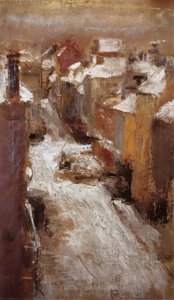
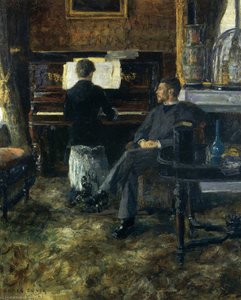
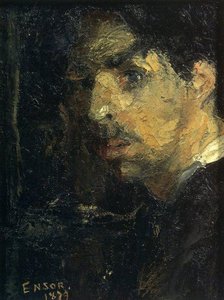
Biografija umetnika
James Ensor: A Pioneer of Expressionism and Surrealism
James Sidney Edouard, Baron Ensor (Ostend, 13 April 1860 – 19 November 1949) was a Belgian painter and printmaker who stands as one of the most influential figures in the development of Expressionism and Surrealism. Born into an English father and Belgian mother amidst the vibrant atmosphere of Ostend’s seaside resort town, Ensor’s upbringing instilled within him a profound fascination with observation and detail—a foundation upon which he would construct his distinctive artistic vision.
Early Influences and Artistic Training
From a young age, Ensor demonstrated an exceptional talent for drawing and painting. Encouraged by his parents' operation of a souvenir shop brimming with curiosities and carnival masks – a veritable cabinet of wonders that ignited his imagination – he pursued formal artistic training at the Académie Royale des Beaux-Arts in Brussels. Despite encountering resistance from the rigid academic conventions of the time, Ensor quickly recognized the necessity of forging his own path, prioritizing experimentation and personal expression above all else.
The Emergence of Grotesque Vision
Around 1886–87, Ensor embarked on a transformative artistic journey, rejecting Impressionistic ideals in favor of a bold embrace of grotesque imagery. Influenced by Rembrandt’s masterful use of chiaroscuro, the unsettling visions of Francisco Goya, and the evocative symbolism of Japanese woodcuts, he developed a highly personal iconography characterized by jarring juxtapositions of color and form.
Major Works and Recurring Themes
Ensor's oeuvre is marked by an unparalleled exploration of psychological complexity and social critique. Paintings like *The Oyster-eater* (1882) exemplify his meticulous attention to detail and his ability to convey profound emotional resonance, while *Christ’s Entry into Brussels* (1888–89), arguably his magnum opus, remains a monumental satire of religious hypocrisy—a painting initially met with vehement disapproval but now universally recognized as a cornerstone of Expressionist art.
Legacy and Influence
James Ensor's uncompromising artistic vision profoundly impacted subsequent generations of artists. His rejection of academic formalism, coupled with his fearless confrontation of taboo subjects and his masterful manipulation of visual language—particularly the use of bold brushstrokes and vibrant hues—established him as a pivotal figure in the genesis of Expressionism and Surrealism. Today, Ensor’s work continues to inspire awe and provoke contemplation, serving as a timeless reminder that art possesses the capacity to unsettle conventions and illuminate the darkest recesses of human consciousness.
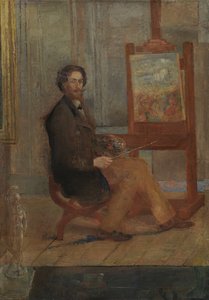
Јемас Енсор
1860 - 1949 , Бележија
Kratke činjenice
- Artistic Movement Or Style: Expressionism, Surrealism
- Artists Who Influenced This Artist:
- Bruegel the Elder
- Francisco Goya
- Whistler
- Date Of Birth: April 13, 1860
- Date Of Death: November 19, 1949
- Full Name: James Sidney Edouard Ensor
- Nationality: Belgian
- Notable Artworks:
- The Scandalized Masks
- Skeletons Fighting...
- Christ's Entry into Brussels
- Place Of Birth: Ostend, Belgium

