

 Pregledaj u prostoru
 Pošalji
 Podeli
 Detalji o delu

 Преузми
 Slični predmeti
 Rendgenski snimak
 Slajdovi
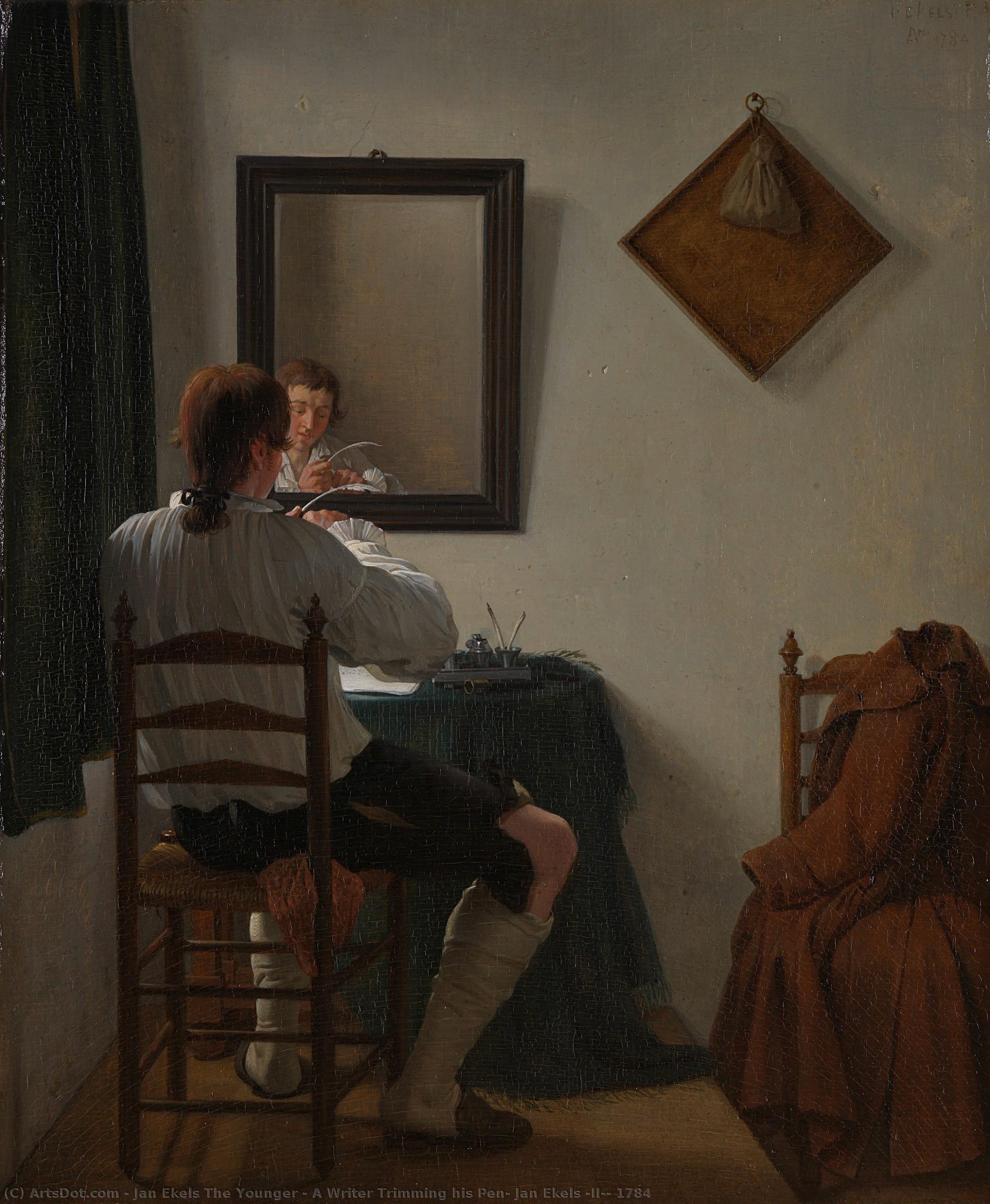
A Writer Trimming his Pen, Jan Ekels (II), 1784
 1784
1784 28.0 x 24.0 cm
 Pročitaj više
Ručno rađena uljana reprodukcija
Ručno oslikano uljanim bojama na platnu u dimenzijama i okviru po vašem izboru, izrađeno po porudžbini od strane naših umetnika. ( Kupi print Kupi digitalnu sliku)




































Izaberite jednu od naših unapred definisanih veličina koje odgovaraju originalnim proporcijama umetničkog dela.

Можете унети сопствене димензије како бисте прилагодили дело одређеном оквиру или простору. Ако одабрана величина не одговара пропорцијама оригинала, слика ће бити исечена или проширена додатним елементима који се ручно насликавају. Дигитални prikaz ће вам бити послат на одобрење пре почетка производње.
Имајте на уму да преглед на екрану не одражава стварно исецање или проширење. Само приказ (mockup) ће тачно приказати коначну композицију.
Иако су доступне прилагођене величине, препоручујемо да одаберете димензију из дефинисане листе како бисте сачували оригиналне пропорције.
Nakon narudžbine, tim ArtsDot.com će klijentu putem e-pošte poslati uputstva i dostaviti prikaz predloženog rešenja
Isporuka širom sveta () za 3/4 nedelje umesto uobičajenih 5 nedelja. (21 август). Bez kompromisa po pitanju kvaliteta.

Besplatna ekspresna dostava širom sveta

Visokokvalitetno laneno platno

Kompletno osiguranje transporta

Garancija povraćaja carine i uvoznih dažbina

Garancija vernosti boja

Politika povrata u roku od 60 dana (samo u slučaju nedostataka)

Garancija povrata novca od 100%

Popust pri grupnoj kupovini
 Opcija sa staklom dostupna je samo za dimenzije manje od 110 cm

A Writer Trimming his Pen, Jan Ekels (II), 1784
Tehnika reprodukcije
Dimenzije reprodukcije
-


Konačna cena
$ 263
Opis umetničkog dela
Srodna umetnička dela






Biografija umetnika
A Legacy of Light and Domesticity: The Life of Jan Ekels the Younger
In the vibrant, canal-lined streets of late 18th-century Amsterdam, a period of profound transition between the ornate flourishes of the Baroque and the disciplined clarity of Neoclassicism, Jan Hermannus Ekels emerged as a master of the intimate. Born in 1759 into a lineage of artistic distinction, Ekels was destined for the brush. As the son of Jan Ekels the Elder, he was raised within the very atmosphere of creation, receiving his foundational training under his father’s watchful eye at their residence on the Herengracht. This early immersion in the craft instilled in him a profound reverence for the Dutch tradition of genre painting—a style that found extraordinary beauty in the quiet, unadorned moments of daily existence.
The trajectory of Ekels’s talent took a transformative turn when he ventured beyond the borders of the Netherlands. Between 1776 and 1778, his studies in Paris exposed him to the burgeoning currents of French Neoclassicism, most notably the subtle, emotive realism of Jean Siméon Chardin. This encounter with the French school breathed new life into his technique, infusing his work with a refined compositional grace and a sophisticated handling of light that would become his hallmark. Upon his return to Amsterdam, he was no longer merely a student of tradition, but an artist capable of synthesizing the meticulous observation of the Dutch masters with the elegant restraint of the French avant-garde.
The Art of Imitation and Innovation
Ekels possessed a rare and remarkable ability to inhabit the stylistic souls of the Old Masters. He did not merely copy; he emulated their brilliance, paying profound homage to the legendary Jacob Molenaer, Gerard Ter Borch, and Gabriel Metsu. His canvases became windows into a nostalgic past, where domestic interiors were populated by believable, breathing characters engaged in the rhythmic rituals of life. Whether depicting a writer meticulously trimming his pen or the quiet solitude of a man reading by a window, Ekels utilized light and shadow to imbue these mundane scenes with a sense of psychological depth and timelessness.
His technical prowess was formally recognized early in his career when he secured the prestigious first prize at the Drawing Academy in 1781. This achievement, accompanied by a medal and a seminal treatise on painting by Gerard de Lairesse, signaled his arrival as a significant force in the Dutch art world. His work often featured a masterful interplay of textures—the sheen of silk, the grain of wood, and the soft glow of candlelight—all rendered with a precision that commanded respect from both peers and patrons alike.
A Life Cut Short by Tragedy
Despite his rising prominence, Ekels’s life was marked by a poignant brevity. A spirited traveler, he once embarked on an expedition along the Rhine in 1783, venturing into Düsseldorf where he gained admission to the esteemed Felix Meritis society. This period of exploration and intellectual engagement reflected a man deeply connected to the broader European artistic landscape. He lived a life of relative independence, residing in a comfortable hotel at Nieuwe Dozenstraat after inheriting his mother’s estate, yet he remained a figure somewhat apart, never having married.
The brilliance of his career was tragically extinguished at the age of only 34. Following a sudden stroke, Ekels passed away in 1793, leaving behind a body of work that serves as a bridge between eras. Though his time was short, his contribution to Dutch genre painting remains indelible. He left a legacy characterized by:
- Stylistic Synthesis: The seamless blending of Dutch observational realism with French Neoclassical elegance.
- Masterful Emulation: A profound ability to interpret and revitalize the techniques of 17th-century masters like Ter Borch and Metsu.
- Genre Excellence: The elevation of everyday domestic scenes into works of significant emotional and aesthetic weight.
Today, the works of Jan Ekels the Younger continue to captivate collectors and historians alike, offering a luminous glimpse into an era where the beauty of the ordinary was elevated to the heights of fine art.
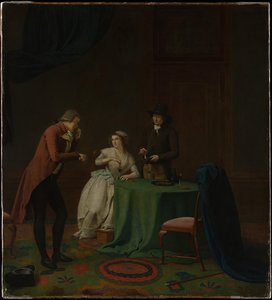
Jan Ekels the Younger
1759 - 1793 , Netherlands
Osnovne informacije
- Artistic Movement Or Style: Genre Painting; Imitation Old Masters
- Artists Or Movements Influenced By This Artist: ['Neoclassicism']
- Artists Who Influenced This Artist:
- Jan Molenaer
- Gerard Ter Borch
- Gabriel Metsu
- Date Of Birth: Amsterdam, Netherlands (1759)
- Date Of Death: 1793
- Full Name: Jan Ekels the Younger
- Nationality: Dutch
- Notable Artworks:
- Conversation Piece (The Sense of Smell)
- A Writer Trimming his Pen
- Place Of Birth: Amsterdam

