

 Pregledaj u prostoru
 Pošalji
 Podeli
 Detalji o delu

 Преузми
 Slični predmeti
 Rendgenski snimak
 Slajdovi
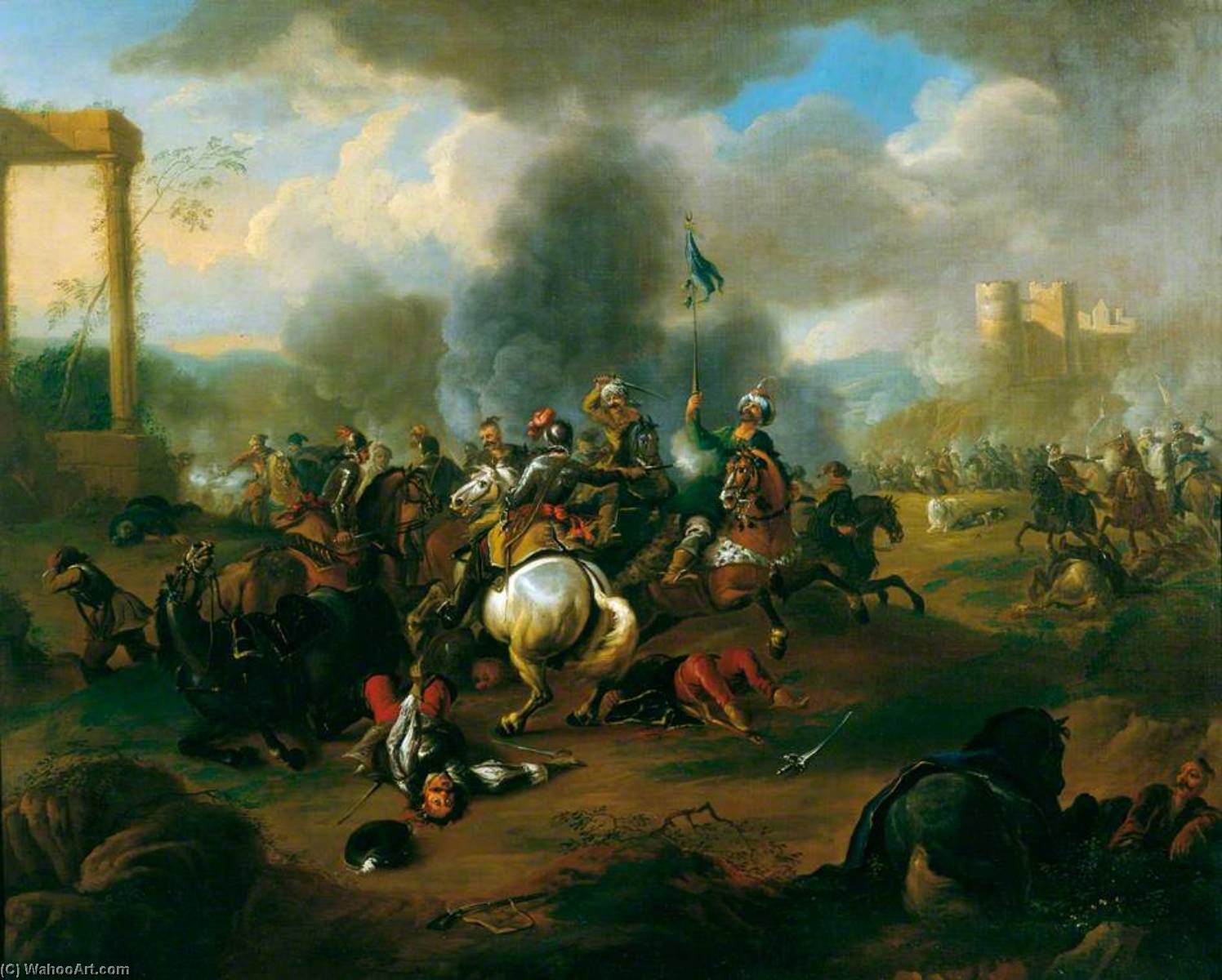
Battle Scene from the Wars of the Ottoman Empire in Europe
 111.0 x 138.0 cm
 Government Art Collection
 Pročitaj više
Ručno rađena uljana reprodukcija
Ručno oslikano uljanim bojama na platnu u dimenzijama i okviru po vašem izboru, izrađeno po porudžbini od strane naših umetnika. ( Kupi print Kupi digitalnu sliku)




































Izaberite jednu od naših unapred definisanih veličina koje odgovaraju originalnim proporcijama umetničkog dela.

Можете унети сопствене димензије како бисте прилагодили дело одређеном оквиру или простору. Ако одабрана величина не одговара пропорцијама оригинала, слика ће бити исечена или проширена додатним елементима који се ручно насликавају. Дигитални prikaz ће вам бити послат на одобрење пре почетка производње.
Имајте на уму да преглед на екрану не одражава стварно исецање или проширење. Само приказ (mockup) ће тачно приказати коначну композицију.
Иако су доступне прилагођене величине, препоручујемо да одаберете димензију из дефинисане листе како бисте сачували оригиналне пропорције.
Nakon narudžbine, tim ArtsDot.com će klijentu putem e-pošte poslati uputstva i dostaviti prikaz predloženog rešenja
Isporuka širom sveta () za 3/4 nedelje umesto uobičajenih 5 nedelja. (30 август). Bez kompromisa po pitanju kvaliteta.

Besplatna ekspresna dostava širom sveta

Visokokvalitetno laneno platno

Kompletno osiguranje transporta

Garancija povraćaja carine i uvoznih dažbina

Garancija vernosti boja

Politika povrata u roku od 60 dana (samo u slučaju nedostataka)

Garancija povrata novca od 100%

Popust pri grupnoj kupovini
 Opcija sa staklom dostupna je samo za dimenzije manje od 110 cm

Battle Scene from the Wars of the Ottoman Empire in Europe
Tehnika reprodukcije
Dimenzije reprodukcije
-


Konačna cena
$ 263
Srodna umetnička dela










Biografija umetnika
The Master of Equestrian Drama: The Life and Legacy of Jan van Huchtenburgh
In the grand tapestry of the Dutch Golden Age, few artists captured the thundering pulse of military glory and the elegant grace of the equine form as vividly as Jan van Huchtenburgh. Born in Haarlem around 1647, his life was shaped by both the intimate bonds of family and the sweeping movements of European history. Following the early loss of his father, Jan found a guiding light in his elder brother, Jacob, whose artistic ambitions provided a foundation for Jan’s own burgeoning talent. Under the watchful eye of mentors like Thomas Wijck and the influential Nicolaes Pieterszoon Berchem, Jan began to master the delicate balance between anatomical precision and the atmospheric drama required to bring a battlefield to life.
His journey was not confined to the borders of the Netherlands; it was a pilgrimage through the very heart of European artistic innovation. His travels to Italy allowed him to breathe in the dramatic chiaroscuro of the Italian masters, absorbing a sense of psychological depth that would later infuse his cavalry clashes with a haunting realism. This period of exploration reached a crescendo during his time in Paris, where he worked within the prestigious Manufacture des Gobelins. Collaborating with luminaries such as Charles Le Brun and Adam Frans van der Meulen, Jan contributed sketches that would eventually adorn grand tapestries, cementing his reputation as an artist capable of translating the chaos of war into a structured, aesthetic triumph.
A Canvas of Conflict and Command
The true essence of Huchtenburgh’s genius lies in his ability to transform the terrifying spectacle of combat into a choreographed ballet of muscle and steel. He was not merely a painter of scenes, but a chronicler of an era defined by imperial expansion and aristocratic prestige. His work often centered on the intense energy of cavalry engagements, where the swirling dust, the glint of sunlight on sabers, and the strained anatomy of charging horses created a sensory experience for the viewer. This mastery of movement was particularly evident in his service to Prince Eugene of Savoy. Accompanying the Prince on military campaigns, Jan produced a monumental series of ten battle scenes, including legendary depictions of the Battle of Blenheim and the Siege of Belgrade.
Beyond the smoke of the battlefield, Huchtenburg’s versatility extended to the more refined realms of equestrian portraiture and landscape. He possessed a rare ability to capture the nobility of the horse, treating each animal not just as a beast of burden, but as a protagonist in its own right. His later years in Amsterdam saw him engaging with the broader art market as an engraver, publisher, and dealer, ensuring that his influence reached far beyond the canvas. Through his meticulous attention to detail and his command over light and shadow, Jan van Huchtenburgh left behind a legacy that continues to evoke the spirit of the Baroque—a period where art served as both a mirror to the triumphs of man and a window into the sublime power of nature.
jan van huchtenburgh
1647 - 1733
Osnovne informacije
- Artistic Movement Or Style: Baroque
- Artists Or Movements Influenced By This Artist:
- Wouwerman
- Van der Meulen
- Artists Who Influenced This Artist:
- Nicolaes Pieterszoon Berchem
- Thomas Wijck
- Date Of Birth: 1647
- Date Of Death: 1733
- Full Name: Jan van Huchtenburgh
- Nationality: Dutch
- Notable Artworks:
- Landscape with Soldiers
- A Battle
- Battle Scene from the Wars of the Ottoman Empire in Europe
- Place Of Birth: Haarlem, Netherlands

