

 Pregledaj u prostoru
 Pošalji
 Podeli
 Detalji o delu

 Преузми
 Slični predmeti
 Rendgenski snimak
 Slajdovi
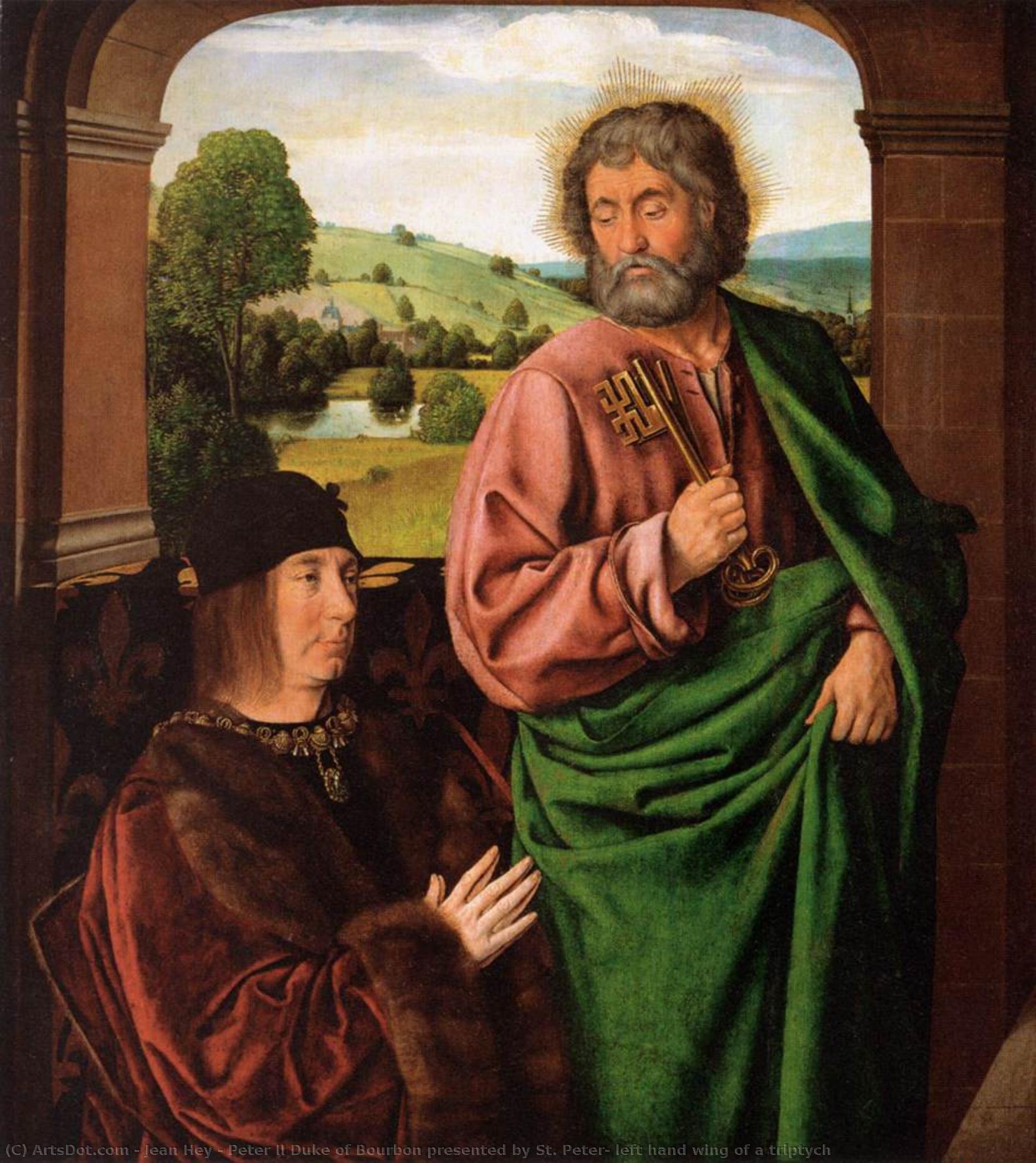
Peter II Duke of Bourbon presented by St. Peter, left hand wing of a triptych
 Oil On Panel
- WallArt
- Early Netherlandish
 1498
1498- Renaissance
 65.0 x 73.0 cm
 Louvre
 Pročitaj više
Ručno rađena uljana reprodukcija
Ručno oslikano uljanim bojama na platnu u dimenzijama i okviru po vašem izboru, izrađeno po porudžbini od strane naših umetnika. ( Kupi print Kupi digitalnu sliku)




P118B $10

P118H $10

P118W $10

P438Z $10

P508JH $12

P508YH $12

P805H $10

P805Z $10

P919BZ $10

P919G $10

P919XJ $10

P959ZH $10

P968JZ $12

W106C $8

W218G $10

W218JH $8

W218Y $10

W307PJ $10

W316G $10

W316PJ $8

W316Y $10

W398PJ $8

W4111J $10

W500HY $15

W500JH $15

W692G $12

W849H $8

W940BG $15

W953PJ $8




Izaberite jednu od naših unapred definisanih veličina koje odgovaraju originalnim proporcijama umetničkog dela.

Можете унети сопствене димензије како бисте прилагодили дело одређеном оквиру или простору. Ако одабрана величина не одговара пропорцијама оригинала, слика ће бити исечена или проширена додатним елементима који се ручно насликавају. Дигитални prikaz ће вам бити послат на одобрење пре почетка производње.
Имајте на уму да преглед на екрану не одражава стварно исецање или проширење. Само приказ (mockup) ће тачно приказати коначну композицију.
Иако су доступне прилагођене величине, препоручујемо да одаберете димензију из дефинисане листе како бисте сачували оригиналне пропорције.
Nakon narudžbine, tim ArtsDot.com će klijentu putem e-pošte poslati uputstva i dostaviti prikaz predloženog rešenja
Isporuka širom sveta () za 3/4 nedelje umesto uobičajenih 5 nedelja. (23 август). Bez kompromisa po pitanju kvaliteta.

Besplatna ekspresna dostava širom sveta

Visokokvalitetno laneno platno

Kompletno osiguranje transporta

Garancija povraćaja carine i uvoznih dažbina

Garancija vernosti boja

Politika povrata u roku od 60 dana (samo u slučaju nedostataka)

Garancija povrata novca od 100%

Popust pri grupnoj kupovini
 Opcija sa staklom dostupna je samo za dimenzije manje od 110 cm

Peter II Duke of Bourbon presented by St. Peter, left hand wing of a triptych
Tehnika reprodukcije
Dimenzije reprodukcije
-


Konačna cena
$ 263
Opis umetničkog dela
A Glimpse into Burgundian Devotion: Peter II Duke of Bourbon Presented by St. Peter
To stand before this panel is to step directly into the richly textured tapestry of late fifteenth-century Burgundian piety. Jean Hey’s depiction, Peter II Duke of Bourbon presented by St. Peter, is far more than a mere portrait; it is a carefully constructed theological statement rendered with breathtaking finesse. The composition immediately draws the eye to the solemn interaction between the two central figures—the standing figure, embodying the divine presence perhaps as Christ, and the seated nobleman, Peter II Duke of Bourbon. Both are adorned with crowns, suggesting not only earthly status but also spiritual authority, inviting the viewer into a dialogue concerning patronage, sainthood, and temporal power.
Mastery in Technique and Atmosphere
Jean Hey’s technique here speaks volumes about his mastery of the period's emerging realism. One can almost feel the delicate application of paint that gives life to the folds of their religious vestments. His signature subtle sfumato shading lends an ethereal quality to the scene, softening the edges and deepening the psychological resonance between the subjects. The attention paid to minute details—the texture of the fabric, the solemnity in their gazes, even the presence of a book or document situated between them—testifies to the painstaking craftsmanship characteristic of the era. This piece showcases an artist deeply invested in narrative realism while maintaining a profound sense of sacred mystery.
Symbolism and Historical Context
The inclusion of St. Peter alongside a powerful secular figure like Duke Bourbon is rich with symbolic weight. It speaks to the intertwining relationship between the Church and nobility during the late Gothic period, where earthly rulers sought divine sanction for their lineage and authority. The presence of other figures subtly populating the periphery suggests a broader celestial or historical context surrounding this central presentation. Owning a reproduction of this work allows one to connect with that pivotal moment in history—a time when art served as both devotional aid and potent political propaganda, all wrapped within exquisite artistry.
An Emotional Resonance for the Modern Collector
For the contemporary collector or designer, this artwork offers an unparalleled depth of character. It is a piece that commands quiet contemplation. Its rich narrative quality elevates it beyond mere decoration; it becomes a focal point imbued with history and spiritual gravitas. Whether placed in a formal study, a library, or a richly appointed hall, its presence suggests an appreciation for enduring craftsmanship and profound storytelling. Reproducing this panel allows one to bring the sophisticated elegance and deep emotional resonance of the Burgundian court into your own space, making it a truly conversation-starting heirloom.
Srodna umetnička dela
Biografija umetnika
The Enigmatic Shadow of the Bourbon Court
In the twilight of the fifteenth century, amidst the opulent courts of France and Burgundy, there emerged a painter whose name would become synonymous with a profound, quiet mastery. Jean Hey, often whispered in art historical circles as the Master of Moulins, remains one of the most captivating enigmas of the Early Netherlandish period. While the biographical details of his life are shrouded in the mists of time—with only scant records suggesting he may have been active around 1475 and perhaps spent his final years in Paris—his brushwork speaks with an unmistakable and enduring voice. His identity, once a puzzle of fragmented documentation, now stands as a testament to a period where artistic brilliance often transcended the need for personal fame.
The origins of Hey’s talent are steeped in scholarly speculation, fueling a narrative of cross-cultural influence that defines his very essence. Many historians believe his stylistic foundations were laid under the tutelage of Hugo van der Goes, the titan of Flemish Primitivism. This connection is evident in the way Hey breathes life into his subjects through a meticulous attention to detail and a sophisticated use of light. His work represents a sublime intersection of Northern Renaissance realism and a burgeoning French elegance, creating a visual language that is both structurally rigorous and emotionally tender.
A Masterpiece of Devotion: The Moulins Triptych
The pinnacle of Jean Hey’s career, and perhaps the most significant achievement of his entire oeuvre, is the monumental Moulins Triptych housed in the Moulins Cathedral. Completed around 1494-1495, this work serves as a breathtaking window into the spiritual and political heart of the Bourbon court. The central panel, depicting the Madonna and Child adored by celestial angels, radiates a serene divinity that anchors the entire composition. However, it is the flanking wings that truly ground the divine in the earthly realm, presenting poignant portraits of the era's nobility.
Through these panels, Hey captures the essence of Burgundian prestige with unparalleled skill:
- Peter II, Duke of Bourbon: Presented by Saint Peter, this portrait showcases the artist's ability to render heavy fabrics and the solemn dignity of high office.
- Anne de Beaujeu, Duchess of Bourbon: A masterpiece of Early Renaissance elegance, where subtle sfumato shading captures the delicate features and aristocratic grace of one of France's most powerful women.
- The Presence of Suzanne: The inclusion of the Duke’s daughter adds a layer of familial intimacy to the grand religious narrative, showcasing Hey's talent for humanizing the divine.
Legacy of Light and Detail
Beyond the grand scale of his triptychs, Jean Hey’s smaller works—ranging from intimate portraits to profound biblical scenes—reveal a painter obsessed with the interplay of light and texture. In works such as The Annunciation and Meeting at the Golden Gate, one observes a dramatic use of lighting that predates many later Renaissance developments, lending a sense of theatricality to sacred moments. His ability to render the tactile quality of velvet, the cold sheen of armor, and the soft glow of skin remains a hallmark of his technical prowess.
The historical significance of Jean Hey lies not just in the beauty of his surviving panels, but in his role as a bridge between traditions. He took the meticulous, almost scientific realism of the Netherlandish masters and infused it with a lyrical, French sensibility. Though his life was brief and much of his biography remains lost to history, his legacy is preserved in every meticulously painted fold of drapery and every soulful gaze captured on panel. He remains a pivotal figure whose work continues to illuminate the transition from the medieval spirit to the dawn of the modern era.
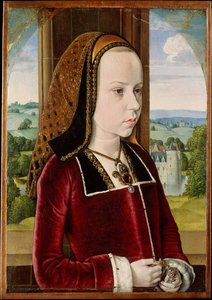
Jean Hey
1475 - 1505 , United Kingdom
Osnovne informacije
- Artistic Movement Or Style: Early Netherlandish
- Artists Or Movements Influenced By This Artist: ['Bourbon Court']
- Artists Who Influenced This Artist: ['Hugo van der Goes']
- Date Of Death: c. 1505
- Full Name: Jean Hey
- Nationality: Dutch
- Notable Artworks:
- The Annunciation
- Portrait of Charles II of Bourbon
- Meeting at the Golden Gate
- Moulins Triptych
- Place Of Birth: United Kingdom
Povezani članci
Illuminating Realism: Early Netherlandish Painting (15th-16th Centuries)
Explore the captivating world of Early Netherlandish painting! Discover Jan van Eyck, Hans Memling & more. Uncover symbolism, techniques & the legacy of these Flemish masters. A comprehensive guide for art enthusiasts.
Illuminating Realism: Early Netherlandish Painting (15th-16th Centuries)
Explore the captivating world of Early Netherlandish painting (15th-16th centuries). Discover Jan van Eyck, Hans Memling & more. Uncover revolutionary techniques and hidden symbolism in this definitive guide.
Illuminating Realism: A Comprehensive Exploration of the Early Netherlandish Renaissance Movement
Explore the captivating world of Early Netherlandish painting! Discover Jan van Eyck & other Flemish masters, their revolutionary techniques, hidden symbolism, and lasting legacy. A comprehensive guide for art enthusiasts.

Early Netherlandish Masters: 10 Paintings That Revolutionized Art & Decor
Journey into the world of Early Netherlandish painting! Explore 10 masterpieces by Jan van Eyck, Rogier van der Weyden & more. Discover stunning detail, symbolism & Renaissance art for your home decor. Find museum-quality reproductions on ArtsDot.com
Jan Gossart: Bridging Netherlandish Realism & Renaissance Humanism – A Comprehensive Exploration
Explore the captivating world of Jan Gossart, a pivotal figure bridging Netherlandish realism & Renaissance humanism. Discover his masterpieces, patronage, and lasting influence – an essential guide for discerning art collectors.

