


 Pregledaj u prostoru
 Pošalji
 Podeli
 Detalji o delu

 Преузми
 Slični predmeti
 Rendgenski snimak
 Slajdovi
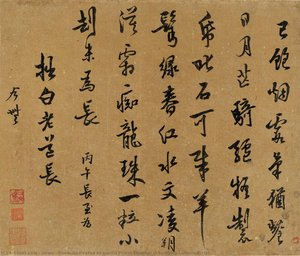
Poem Dedicated to Daoist Priest Zhuobai in Running-cursive Script
 1666
1666 26.0 x 30.0 cm
 Pročitaj više
Giclee štampa / Umetnički otisak
Giclée štampa ili print na platnu muzejskog kvaliteta uz brzu proizvodnju i fleksibilne opcije završne obrade. ( Kupi ručno naslikanu sliku Kupi digitalnu sliku)




































Izaberite jednu od naših unapred definisanih veličina koje odgovaraju originalnim proporcijama umetničkog dela.

Možete uneti sopstvene dimenzije kako biste umetničko delo prilagodili specifičnom okviru ili prostoru. Ako odabrani format ne odgovara proporcijama originalne slike, mi ćemo ili iscrtati deo dela ili proširiti sliku pomoću ogledane ivice ili jednobojnog popunjavanja. Digitalni prikaz će vam biti poslat na odobrenje pre početka proizvodnje.
Imajte na umu da pregled na ekranu ne odražava stvarno iscrtavanje ili proširivanje. Samo će prikaz (mockup) precizno pokazati finalnu kompoziciju.
Iako su prilagođene dimenzije dostupne, preporučujemo da odaberete dimenziju sa unapred definisane liste kako biste očuvali originalne proporcije.
Dostava širom sveta () za 2 nedelje umesto uobičajenih 4/5 nedelja. (28 август)

Besplatna ekspresna dostava širom sveta

Visokokvalitetno laneno platno

Kompletno osiguranje transporta

Garancija povraćaja carine i uvoznih dažbina

Garancija vernosti boja

Politika povrata u roku od 60 dana (samo u slučaju nedostataka)

Garancija povrata novca od 100%

Popust pri grupnoj kupovini
 Opcija sa staklom dostupna je samo za dimenzije manje od 110 cm

Poem Dedicated to Daoist Priest Zhuobai in Running-cursive Script
Giclee štampa / Umetnički otisak
Dimenzije reprodukcije
-


Konačna cena
$ 62
Srodna umetnička dela

Biografija umetnika
The Poet Painter of Lingnan: The Life and Legacy of Jinwu
In the vibrant cultural landscape of 17th-century China, few figures captured the spiritual and rhythmic essence of the era as profoundly as Jinwu. Born Shi Jinwu in 1633 within the Guangdong Province, he emerged not merely as a practitioner of art, but as a master craftsman whose brushstrokes bridged the gap between the earthly and the divine. As a pivotal figure of the Lingnan School, Jinwu lived through a period of immense cultural transformation, contributing to a movement that sought to redefine artistic expression by blending traditional rigor with a newfound, expressive vitality. While the early details of his life remain partially veiled by the mists of history, his impact on Chinese calligraphy and painting remains etched in the enduring elegance of his surviving works.
The foundation of Jinwu’s mastery lay in his rigorous early training, which centered on the disciplined art of running-cursive script. This particular form of calligraphy, characterized by its fluid, interconnected strokes, served as the heartbeat of his creative output. Under the guidance of esteemed masters who revered the traditions of the Song and Yuan dynasties, Jinwu learned to move beyond simple replication, instead embracing a philosophy that prioritized individual interpretation and emotional sincerity. He drew deep inspiration from the Ming Dynasty literati painters, whose emphasis on conveying profound internal truths through subtle visual nuances became a cornerstone of his aesthetic. This training instilled in him a rare ability to imbue even the simplest line with a sense of life and movement.
A Symphony of Script and Spirit
To observe a work by Jinwu is to witness a deliberate reflection of Daoist philosophy. His command over the running-cursive script was so masterful that his calligraphy often created an illusion of perpetual motion, mirroring the natural, unceasing rhythms of the cosmos. This sense of cosmic flow was not merely a technical achievement but a spiritual pursuit; for Jinwu, the movement of the brush was an extension of the Dao itself. His themes frequently drifted toward the sacred, finding profound inspiration in the figures of Daoist priests and Buddhist monks. These subjects allowed him to explore the spiritual fervor of Lingnan society, translating religious devotion into a visual language of grace and meticulous detail.
Beyond his religious iconography, Jinwu’s versatility allowed him to master diverse genres that expanded the emotional range of his oeuvre:
- Serene Landscapes: His landscapes were imbued with a profound tranquility, inviting viewers into meditative states of contemplation.
- Expressive Portraits: Through portraiture, he captured the essence of character, utilizing the subtle nuances learned from the literati tradition.
- Calligraphic Masterpieces: Works such as his Poem Dedicated to Daoist Priest Zhuobai demonstrate his ability to marry poetic sentiment with dynamic, rhythmic inkwork.
The historical significance of Jinwu lies in his ability to harmonize the technical precision of classical Chinese art with a deeply personal, emotive spirit. By weaving together the elegance of calligraphy with the spiritual depth of Daoist and Buddhist themes, he helped solidify the identity of the Lingnan School. His legacy remains a testament to the power of art to serve as a vessel for both cultural heritage and individual transcendence, ensuring that his name continues to resonate within the annals of Chinese art history.
Jinwu
1633 - 1681 , China
Osnovne informacije
- Artistic Movement Or Style: Running-cursive script calligraphy
- Artists Or Movements Influenced By This Artist:
- Shen Xiang
- Xu Kun
- Artists Who Influenced This Artist: ['Song Dynasty painters']
- Date Of Birth: 1633
- Date Of Death: 1681
- Full Name: Jinwu
- Nationality: Chinese
- Notable Artworks: ['Poem Dedicated to Daoist Priest Zhuobai in Running-cursive Script']
- Place Of Birth: China

