 Pregledaj u prostoru
 Pošalji
 Podeli
 Detalji o delu

 Преузми
 Slični predmeti
 Rendgenski snimak
 Slajdovi
Lucrecia Arana


 Pročitaj više
Ručno rađena uljana reprodukcija
Ručno oslikano uljanim bojama na platnu u dimenzijama i okviru po vašem izboru, izrađeno po porudžbini od strane naših umetnika. ( Kupi print Kupi digitalnu sliku)




P118B $10

P118H $10

P118W $10

P438Z $10

P508JH $12

P508YH $12

P805H $10

P805Z $10

P919BZ $10

P919G $10

P919XJ $10

P959ZH $10

P968JZ $12

W106C $8

W218G $10

W218JH $8

W218Y $10

W307PJ $10

W316G $10

W316PJ $8

W316Y $10

W398PJ $8

W4111J $10

W500HY $15

W500JH $15

W692G $12

W849H $8

W940BG $15

W953PJ $8




Izaberite jednu od naših unapred definisanih veličina koje odgovaraju originalnim proporcijama umetničkog dela.

Можете унети сопствене димензије како бисте прилагодили дело одређеном оквиру или простору. Ако одабрана величина не одговара пропорцијама оригинала, слика ће бити исечена или проширена додатним елементима који се ручно насликавају. Дигитални prikaz ће вам бити послат на одобрење пре почетка производње.
Имајте на уму да преглед на екрану не одражава стварно исецање или проширење. Само приказ (mockup) ће тачно приказати коначну композицију.
Иако су доступне прилагођене величине, препоручујемо да одаберете димензију из дефинисане листе како бисте сачували оригиналне пропорције.
Nakon narudžbine, tim ArtsDot.com će klijentu putem e-pošte poslati uputstva i dostaviti prikaz predloženog rešenja
Isporuka širom sveta () za 3/4 nedelje umesto uobičajenih 5 nedelja. (22 август). Bez kompromisa po pitanju kvaliteta.

Besplatna ekspresna dostava širom sveta

Visokokvalitetno laneno platno

Kompletno osiguranje transporta

Garancija povraćaja carine i uvoznih dažbina

Garancija vernosti boja

Politika povrata u roku od 60 dana (samo u slučaju nedostataka)

Garancija povrata novca od 100%

Popust pri grupnoj kupovini
 Opcija sa staklom dostupna je samo za dimenzije manje od 110 cm

Lucrecia Arana
Tehnika reprodukcije
Dimenzije reprodukcije
-


Konačna cena
$ 263
Opis umetničkog dela
Lucrecia Arana: A Portrait of Quiet Contemplation by Joaquín Sorolla
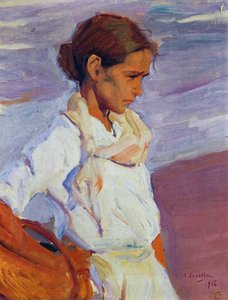
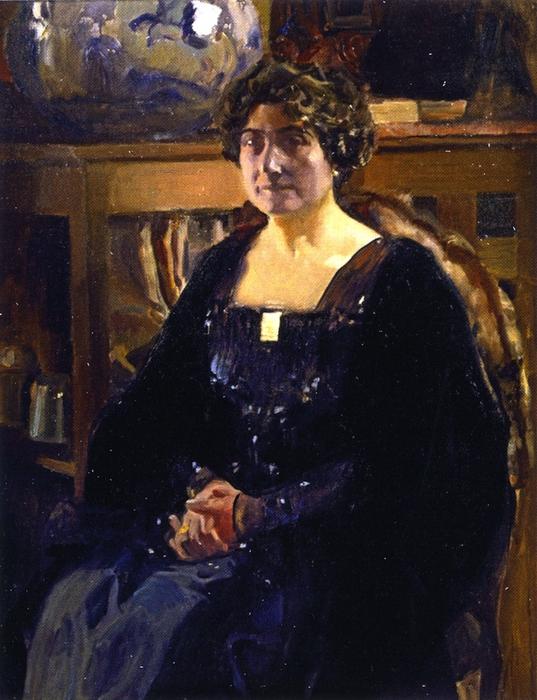
Joaquín Sorolla’s “Lucrecia Arana,” painted in 1919, is more than just a portrait; it's an exquisite distillation of the Spanish artist’s signature style – a luminous exploration of light and human emotion. Created during a period of immense artistic innovation, this oil on canvas work captures a moment of profound stillness, inviting the viewer into the intimate space of a woman lost in thought. The painting resides within the Museo de Bellas Artes de Valencia, a testament to Sorolla’s enduring legacy as one of Spain's most celebrated Impressionist painters.
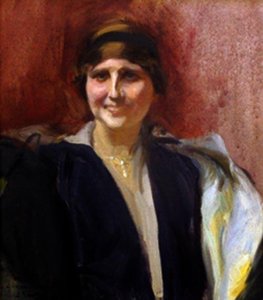
- Subject and Composition: The central figure is Lucrecia Arana herself, depicted with a remarkable sense of realism blended seamlessly with Sorolla’s characteristic brushwork. Her brown hair cascades naturally, framing a face marked by a serious yet gentle expression as she gazes directly at the viewer. The composition is carefully balanced, drawing attention to her posture and the subtle details of her attire – a simple black dress adorned with a delicate pearl necklace.
- Technical Brilliance: Sorolla’s mastery of light is immediately apparent. He employs broken brushstrokes and vibrant color palettes to capture the play of sunlight filtering through an unseen window, illuminating the scene with a warm, almost ethereal glow. The use of oil on canvas allows for incredible depth and richness in the colors, particularly evident in the textures of the fabrics and the subtle variations in her skin tone.
- Contextual Significance: Painted in 1919, “Lucrecia Arana” reflects Sorolla’s mature style, honed over decades of observing and depicting everyday life in Spain. His work often focused on capturing fleeting moments of beauty – a characteristic that aligns perfectly with the Impressionist movement's emphasis on capturing the transient effects of light and atmosphere.
The Influence of Light and Color
Sorolla’s approach to color is central to the painting’s emotional impact. He doesn't simply represent hues; he uses them to evoke feeling. The dominant tones – warm browns, muted blues, and subtle greens – create a sense of tranquility and introspection. Notice how the light reflects off the surfaces, creating highlights and shadows that add depth and dimension to the scene. This masterful manipulation of light is what truly elevates “Lucrecia Arana” beyond a simple portrait; it transforms it into a study of atmosphere and emotion.
- Impressionistic Techniques: Sorolla’s use of broken color, characteristic of Impressionism, allows the eye to blend the colors optically, creating a shimmering effect that is particularly noticeable in the fabrics and the light.
- Color Palette: The subdued yet harmonious color palette contributes significantly to the painting's contemplative mood. It reflects Sorolla’s belief that color should be used not just to represent reality but also to express emotion.
Symbolism and Interpretation
Beyond its technical brilliance, “Lucrecia Arana” invites contemplation about the sitter’s inner life. The background – a study or reading area filled with books – suggests a mind engaged in thought, perhaps lost in literary pursuits or philosophical reflection. The vase, placed deliberately near the top left corner, adds an element of decorative elegance while subtly drawing the eye back to the central figure. The serious expression on Lucrecia Arana’s face encourages viewers to consider her thoughts and feelings, creating a powerful connection between the subject and the observer.
- Books as Symbolism: The inclusion of books symbolizes knowledge, contemplation, and perhaps even a yearning for escape.
- The Vase's Placement: The vase’s placement is not merely decorative; it subtly directs the viewer’s attention back to the central figure, reinforcing her importance within the composition.
Owning a Piece of Sorolla’s Legacy
Handmade oil painting reproductions of “Lucrecia Arana” are now available at ArtsDot.com, offering art lovers the opportunity to experience the beauty and emotional depth of this iconic work firsthand. Each reproduction is meticulously crafted using traditional techniques, ensuring that it captures the essence of Sorolla’s original masterpiece with remarkable fidelity. Whether you are a seasoned collector or simply seeking to add a touch of Spanish elegance to your interior design, a “Lucrecia Arana” reproduction is an investment in art and a celebration of one of Spain's most beloved artists.
Srodna umetnička dela
Biografija umetnika
Joaquín Sorolla y Bastida – A Life Bathed in Light
Joaquín Sorolla y Bastida, a name synonymous with the radiant light and vibrant energy of Spain, was more than just a painter; he was a chronicler of his nation’s soul. Born in Valencia in 1863, Sorolla's early life was marked by tragedy. Orphaned at the tender age of two following a cholera epidemic that claimed both parents, young Joaquín and his sister were raised by their maternal aunt and uncle. This early experience with loss perhaps instilled within him a profound appreciation for the fleeting beauty of life – a sentiment that would permeate his art. Though hardship shadowed his beginnings, it did not dim the spark of artistic talent that quickly became apparent. He received initial instruction in Valencia, demonstrating an aptitude that led to studies under established artists like Cayetano Capuz and José Benlliure, eventually culminating in a four-year grant to study in Rome. It was there, amidst the classical grandeur of Italy, that Sorolla began to forge his unique artistic path, absorbing influences while simultaneously developing a style distinctly his own.Early Life and Influences
Joaquín Sorolla’s formative years instilled within him a deep sensitivity to loss – an experience profoundly shaping his artistic vision. Born on February 27, 1863, in Valencia, Spain, he was the eldest child of Joaquín Sorolla Bastida, a tradesman, and Concepción Bastida. Tragically, both parents succumbed to cholera just two years later, leaving him and his sister under the care of their maternal aunt and uncle. This early exposure to sorrow undoubtedly fueled his desire to capture moments of beauty before they vanished—a preoccupation that would become central to his oeuvre. Recognizing his exceptional talent at a young age, Sorolla pursued formal artistic training in Valencia, studying under prominent figures like Cayetano Capuz and José Benlliure. His dedication to mastering technique was further solidified by a scholarship enabling him to embark on a four-year journey of artistic exploration in Rome, Italy—a pivotal moment that exposed him to the stylistic innovations of Impressionism and Luminism. The influence of artists such as Francisco Pradilla Ortiz and Jules Bastien-Lepage proved particularly formative, shaping Sorolla’s approach to composition and color palettes.Rome and Artistic Development
Sorolla's time in Rome marked a decisive turning point in his artistic evolution. He enrolled at the Spanish Academy, immersing himself in the study of classical sculpture and painting—a deliberate effort to absorb the stylistic heritage of antiquity while simultaneously experimenting with new techniques. The atmosphere of the Italian capital fostered an openness to experimentation that would characterize his subsequent work. Sorolla’s fascination with Impressionism was palpable; he meticulously observed the effects of sunlight on surfaces, striving to reproduce its shimmering brilliance and transient nuances. This pursuit of luminosity—a hallmark of Luminism—became a defining element of his artistic style. He diligently copied works by masters like Velázquez and Rembrandt, honing his observational skills and refining his understanding of tonal gradation. Furthermore, Sorolla’s engagement with Parisian art circles exposed him to the avant-garde currents circulating at the time, broadening his artistic horizons and enriching his stylistic repertoire.The Valencian Coast: A Celebration of Light
Sorolla's artistic sensibilities found their most compelling expression in his depictions of the Valencian coast—a landscape he regarded as a source of endless inspiration. Unlike many artists of his era who favored studio settings, Sorolla championed *plein air* painting—working outdoors directly confronted with the challenges and rewards of capturing fleeting light conditions. This commitment to observation resulted in canvases brimming with vitality and immediacy—images infused with the warmth of Mediterranean sunshine and the dynamism of coastal life. His iconic beach scenes—such as Children on the Seashore and Sewing the Sail—are not merely picturesque representations; they are profound meditations on beauty, joy, and the ephemeral nature of existence. Sorolla’s technique—characterized by loose, energetic brushstrokes—was revolutionary for its time. He employed a bold palette dominated by yellows, oranges, and blues—colors he skillfully manipulated to convey the illusion of shimmering light and atmospheric haze. The resulting canvases possess an unparalleled sense of spontaneity and emotional depth—a testament to Sorolla’s mastery of Luminism and his unwavering devotion to capturing the essence of his beloved homeland.Legacy and Recognition
Joaquín Sorolla y Bastida achieved international renown during his lifetime, becoming one of Spain's most celebrated artists. His prolific output encompassed portraits, landscapes, historical narratives, and monumental murals—each infused with a distinctive stylistic signature. He exhibited extensively throughout Europe and the United States, garnering critical acclaim and securing commissions from prominent patrons. Sorolla’s magnum opus, Vision of Spain—a series of fourteen canvases commissioned by Archer Milton Huntington—stands as an enduring monument to his artistic vision and technical prowess. Completed posthumously, these murals captured the spirit of Spain's diverse regional cultures—celebrating its traditions, costumes, and landscapes with breathtaking grandeur. Sorolla’s influence extended far beyond his own era, inspiring generations of artists who embraced Luminism and sought to emulate his masterful technique. Today, Sorolla’s paintings reside in major museums worldwide—including the Museo Sorolla in Madrid—where they continue to captivate audiences with their luminous beauty and emotional resonance—affirming his place as one of Spain's greatest artistic treasures.
Joaquin Sorolla
1863 - 1923 , Испанија
Osnovne informacije
- Artistic Movement Or Style: Реализам, Луминизм, Импрессионизм
- Artists Who Influenced This Artist:
- Франсиско Прадила
- Жуль Бастиен-Лепаж
- АдОльф фон Мenzel
- Date Of Birth: 27 фебруара 1863.
- Date Of Death: 10 августа 1923.
- Full Name: Joaquín Sorolla y Bastida
- Nationality: Шпанија
- Notable Artworks:
- Италијанка са цвећењем
- Време купања
- Трагедија наслеђа
- Типични Соролиански
- Деца на обали
- Place Of Birth: Валенсија, Шпанија
Povezani članci
Joaquín Sorolla: Capturing Spanish Light & Life – A Legacy of Impressionism
Explore the luminous world of Joaquín Sorolla, Spanish master of Impressionism. Discover his life, techniques & legacy – a guide for art collectors and enthusiasts. Invest in timeless beauty.

The Enduring Legacy of Oil on Canvas: Technique, History & Aesthetic Impact
Explore the rich history & techniques of oil painting – from Renaissance masters to Impressionism. Discover pigments, layering methods, and why this timeless medium endures. Expert insights for artists & art enthusiasts.

Oil on Canvas: A Historical & Technical Exploration of a Timeless Artistic Medium
Explore the rich history & enduring techniques of oil painting on canvas. Discover the science behind its longevity, conservation practices, and contemporary relevance. Expert insights for art enthusiasts.

The Enduring Power of Painting: A Historical & Contemporary Exploration of Form and Emotion
Explore the rich history & enduring techniques of oil painting with ArtsDot. Discover masterpieces, learn about art collecting, and find authentic handmade reproductions crafted by skilled artists.
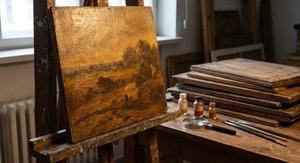
Oil on Board: A Historical Survey of Technique, Aesthetic Qualities & Enduring Appeal
Explore the rich history of oil on board painting! Discover techniques, aesthetic qualities & enduring appeal from early masters to modern practice. Expert insights for collectors and art enthusiasts.