

 Pregledaj u prostoru
 Pošalji
 Podeli
 Detalji o delu

 Преузми
 Slični predmeti
 Rendgenski snimak
 Slajdovi
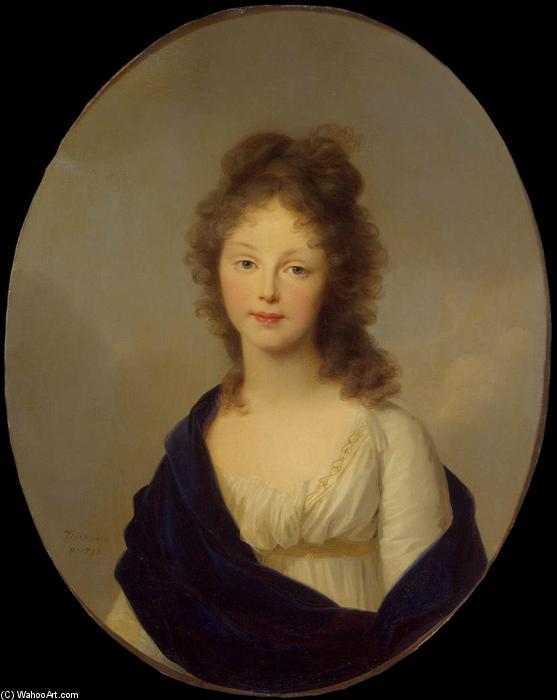
Portrait of Queen Luise of Prussia
 Acrylic On Canvas
- WallArt
- Rococo Neoclassicism
 1798
1798 76.0 x 61.0 cm
 Hermitage Museum
 Pročitaj više
Giclee štampa / Umetnički otisak
Giclée štampa ili print na platnu muzejskog kvaliteta uz brzu proizvodnju i fleksibilne opcije završne obrade. ( Kupi ručno naslikanu sliku Kupi digitalnu sliku)




P118B $10

P118H $10

P118W $10

P438Z $10

P508JH $12

P508YH $12

P805H $10

P805Z $10

P919BZ $10

P919G $10

P919XJ $10

P959ZH $10

P968JZ $12

W106C $8

W218G $10

W218JH $8

W218Y $10

W307PJ $10

W316G $10

W316PJ $8

W316Y $10

W398PJ $8

W4111J $10

W500HY $15

W500JH $15

W692G $12

W849H $8

W940BG $15

W953PJ $8




Izaberite jednu od naših unapred definisanih veličina koje odgovaraju originalnim proporcijama umetničkog dela.

Možete uneti sopstvene dimenzije kako biste umetničko delo prilagodili specifičnom okviru ili prostoru. Ako odabrani format ne odgovara proporcijama originalne slike, mi ćemo ili iscrtati deo dela ili proširiti sliku pomoću ogledane ivice ili jednobojnog popunjavanja. Digitalni prikaz će vam biti poslat na odobrenje pre početka proizvodnje.
Imajte na umu da pregled na ekranu ne odražava stvarno iscrtavanje ili proširivanje. Samo će prikaz (mockup) precizno pokazati finalnu kompoziciju.
Iako su prilagođene dimenzije dostupne, preporučujemo da odaberete dimenziju sa unapred definisane liste kako biste očuvali originalne proporcije.
Dostava širom sveta () za 2 nedelje umesto uobičajenih 4/5 nedelja. (5 септембар)

Besplatna ekspresna dostava širom sveta

Visokokvalitetno laneno platno

Kompletno osiguranje transporta

Garancija povraćaja carine i uvoznih dažbina

Garancija vernosti boja

Politika povrata u roku od 60 dana (samo u slučaju nedostataka)

Garancija povrata novca od 100%

Popust pri grupnoj kupovini
 Opcija sa staklom dostupna je samo za dimenzije manje od 110 cm

Portrait of Queen Luise of Prussia
Giclee štampa / Umetnički otisak
Dimenzije reprodukcije
-


Konačna cena
$ 62
Portrait of Queen Luise of Prussia – A Study in Regal Restraint
Johann Friedrich August Tischbein’s “Portrait of Queen Luise of Prussia,” painted in 1798, is more than just a likeness; it's a carefully constructed tableau of power, melancholy, and the quiet dignity demanded by royal circumstance. The painting immediately draws the eye to the subject – Queen Luise, a woman whose life, tragically cut short at the age of thirty-three, was defined by both privilege and profound isolation. Tischbein masterfully captures her gaze; it’s direct, intelligent, yet subtly withdrawn, hinting at a deep well of unspoken thoughts and experiences.
The composition is remarkably restrained, typical of the Neoclassical style gaining prominence during the late 18th century. The palette is muted – predominantly blues, creams, and browns – reflecting the somber atmosphere surrounding the Queen’s life. Her gown, a rich blue velvet, speaks to her status, while the subtle folds and drapery are rendered with meticulous detail, showcasing Tischbein's skill in capturing texture and form. Note the careful placement of the pearls adorning her neck; they aren’t ostentatious but rather serve as quiet emblems of royal authority.
A Royal Portrait Within a Turbulent Era
Painted during a period of significant political upheaval – the French Revolution was already casting its shadow across Europe – the portrait offers a poignant glimpse into the anxieties and uncertainties of the era. Luise’s Prussia, though powerful, was increasingly threatened by revolutionary fervor. Her marriage to Friedrich-Wilhelm II, intended to solidify an alliance between Prussia and the Netherlands, ultimately proved fraught with challenges, marked by political maneuvering and personal discord. Tischbein, a keen observer of his time, subtly reflects this instability through the Queen’s expression – a hint of sadness underlies her composure.
Furthermore, Luise's life was inextricably linked to the complex dynastic politics of the Prussian court. Her father, Frederick William II, was a formidable ruler known for his military prowess and ruthless ambition. Her early years were shaped by the strictures of royal upbringing, emphasizing duty, decorum, and strategic alliances. Tischbein’s portrait isn't merely a depiction of a woman; it’s an embodiment of these expectations – a visual representation of a Queen navigating a treacherous world.
Symbolism and the Language of Portraiture
Beyond its immediate realism, the painting is rich in symbolic detail. The Queen’s posture—her hands resting gracefully on her lap—conveys both strength and vulnerability. The carefully arranged background – a simple, dark wall – serves to isolate Luise, emphasizing her importance as the central figure. It's a deliberate choice that underscores her position at the apex of power, yet simultaneously hints at her confinement within the rigid expectations of royal life.
The ponytail in her hair, a relatively modern styling choice for the time, is particularly noteworthy. It suggests a desire to assert individuality amidst the constraints of tradition – a subtle rebellion against the prescribed image of the regal woman. It’s a small detail that speaks volumes about Luise's character and her quiet determination.
A Timeless Reflection
"Portrait of Queen Luise of Prussia" is more than just a historical document; it’s a profoundly moving portrait of a woman caught between duty, desire, and the limitations imposed by her station. Tischbein’s masterful technique, combined with his astute understanding of human psychology, creates an image that continues to resonate with viewers today. It serves as a poignant reminder of the complexities of royal life and the enduring power of art to capture both the outward appearance and the hidden depths of the human spirit.
Srodna umetnička dela
Biografija umetnika
The Legacy of the Leipziger Tischbein
Johann Friedrich August Tischbein, a name whispered with reverence in the corridors of German art history, remains an enduring symbol of late 18th-century refinement. Known affectionately as the Leipziger Tischbein, his life was a tapestry woven from the threads of a distinguished artistic lineage. Born in Maastricht, Netherlands, in 1750, he was the son of the celebrated set painter Johann Valentin Tischbein. This early immersion in the theatrical and visual arts provided him with a unique foundation, blending the grand scale of stagecraft with the intimate precision required for portraiture. His formative years were shaped under the watchful eye of his uncle, Johann Heinrich Tischbein, in Kassel, where he mastered the lingering elegance of Baroque principles before the winds of Neoclassicism began to reshape the European landscape.
The trajectory of Tischbein’s genius was irrevocably altered by his wanderlust and his pursuit of excellence beyond German borders. In 1768, a transformative journey took him to Paris, the beating heart of artistic innovation. Within the vibrant studios of Johann Georg Wille, Tischbein underwent a profound stylistic evolution. He moved away from the heavy ornamentation of his youth, embracing instead the clarity, structure, and meticulous detail that defined the emerging Neoclassical movement. This Parisian sojourn did more than refine his brushwork; it expanded his intellectual horizons, allowing him to absorb the very essence of French sophistication which he would later translate into his German commissions.
A Journey Through the Heart of Europe
Tischbein’s artistic maturation continued through an ambitious expedition across Italy in 1777, a voyage that served as both a pilgrimage and a professional milestone. It was during this period of intense cultural immersion that he encountered the burgeoning talent of Jacques-Louis David. This meeting of minds between two masters of the era fostered a lasting collaboration, linking Tischbein to the vanguard of the Napoleonic artistic revolution. The influence of the Italian landscape and the classical ideals found in Rome infused his work with a timelessness, blending the structural rigor learned in Paris with a newfound sense of grace and historical depth.
Upon his return to Germany, Tischbein’s reputation preceded him, leading to a prestigious appointment as court painter to Friedrich Karl August, Prince of Waldeck and Pyrmont. His role was not merely that of a decorator of faces but a custodian of status and identity. As he settled into the artistic circles of Weimar, his work became a bridge between the old world of aristocratic splendor and the new era of enlightened portraiture. His ability to capture both the physical likeness and the psychological nuance of his subjects made him a sought-after figure among the European elite.
Artistic Mastery and Educational Influence
Beyond the canvas, Tischbein’s contribution to the art world was deeply rooted in his commitment to pedagogy and institutional growth. His influence extended far beyond his own studio through his leadership roles in Leipzig. As a director and overseer of the academy’s visual arts program, he played a crucial role in shaping the next generation of German painters. His dedication to formalizing art education ensured that the technical precision and aesthetic values he championed would endure long after his passing in 1812.
The significance of Johann Friedrich August Tischbein lies in his unique position as a transitional figure. His oeuvre represents a masterful synthesis of several eras:
- The Baroque Foundation: A lingering appreciation for drama and depth inherited from his father’s theatrical legacy.
- Neoclassical Precision: The disciplined, clean lines and anatomical accuracy acquired in the studios of Paris.
- The Spirit of Enlightenment: A focus on clarity, truth, and the dignified representation of the individual.
Today, his works stand as a testament to an era of profound cultural shift, reminding us of a time when portraiture was not merely about capturing a likeness, but about documenting the very soul of an age in transition.
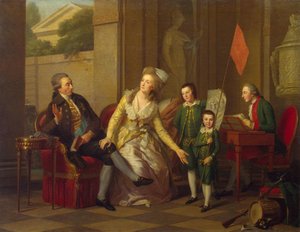
Johann Friedrich August Tischbein
1750 - 1812 , Netherlands
Osnovne informacije
- Artistic Movement Or Style: Classical Rococo
- Artists Or Movements Influenced By This Artist: ['Jacob David']
- Artists Who Influenced This Artist:
- Johann Valentin Tischbein
- Johannes Georg Wille
- Date Of Birth: March 9, 1750
- Date Of Death: June 21, 1812
- Full Name: Johann Friedrich August Tischbein
- Nationality: German
- Notable Artworks:
- Portrait of Salomon Rendorp
- Portrait of Willem Arnold Alting
- William V
- Place Of Birth: Maastricht, Netherlands
Povezani članci

Барокна драма: Уношење величине и емоција у савремене ентеријере
Откријте барокну драму и унесите величину у ваш ентеријер! ArtsDot нуди ручно насликане репродукције, персонализоване портрете и стручне консултације за љубитеље класичне уметности. Потражите савршено дело већ данас!

The Enduring Power of Painting: A Historical & Contemporary Exploration of Form and Emotion
Explore the rich history & enduring techniques of oil painting with ArtsDot. Discover masterpieces, learn about art collecting, and find authentic handmade reproductions crafted by skilled artists.

The Dramatic Flourish: Exploring the Baroque Movement's Enduring Legacy in Art History
Explore the dramatic world of Baroque art! Discover iconic artists like Caravaggio & Rubens, defining techniques, and its lasting impact on art history. Expert insights for collectors & enthusiasts at ArtsDot.

The Enduring Legacy of Oil on Canvas: Technique, History & Aesthetic Impact
Explore the rich history & techniques of oil painting – from Renaissance masters to Impressionism. Discover pigments, layering methods, and why this timeless medium endures. Expert insights for artists & art enthusiasts.

Barok Majstor dela: Top 10 Umjetničkih Remeka za Vaš Dom
Otkrijte 10 remek dela koja su definisala baroknu umetnost! Karavagio, Bernini i više – istražite priče iza ovih ikoničnih slika. Inspiracija za vaš dom? Pogledajte kolekciju na ArtsDot.com!

