 Pregledaj u prostoru
 Pošalji
 Podeli
 Detalji o delu

 Преузми
 Slični predmeti
 Rendgenski snimak
 Slajdovi
Елиезер и Ребека код колодца
 Akril na platnu
- Umetnost za zidove
- Venetian Baroque
 1670
1670 123.0 x 159.0 cm
 Hermitage Museum
 Pročitaj više
Ručno rađena uljana reprodukcija
Ručno oslikano uljanim bojama na platnu u dimenzijama i okviru po vašem izboru, izrađeno po porudžbini od strane naših umetnika. ( Kupi print Kupi digitalnu sliku)




P118B $10

P118H $10

P118W $10

P438Z $10

P508JH $12

P508YH $12

P805H $10

P805Z $10

P919BZ $10

P919G $10

P919XJ $10

P959ZH $10

P968JZ $12

W106C $8

W218G $10

W218JH $8

W218Y $10

W307PJ $10

W316G $10

W316PJ $8

W316Y $10

W398PJ $8

W4111J $10

W500HY $15

W500JH $15

W692G $12

W849H $8

W940BG $15

W953PJ $8




Izaberite jednu od naših unapred definisanih veličina koje odgovaraju originalnim proporcijama umetničkog dela.

Можете унети сопствене димензије како бисте прилагодили дело одређеном оквиру или простору. Ако одабрана величина не одговара пропорцијама оригинала, слика ће бити исечена или проширена додатним елементима који се ручно насликавају. Дигитални prikaz ће вам бити послат на одобрење пре почетка производње.
Имајте на уму да преглед на екрану не одражава стварно исецање или проширење. Само приказ (mockup) ће тачно приказати коначну композицију.
Иако су доступне прилагођене величине, препоручујемо да одаберете димензију из дефинисане листе како бисте сачували оригиналне пропорције.
Nakon narudžbine, tim ArtsDot.com će klijentu putem e-pošte poslati uputstva i dostaviti prikaz predloženog rešenja
Isporuka širom sveta () za 3/4 nedelje umesto uobičajenih 5 nedelja. (22 август). Bez kompromisa po pitanju kvaliteta.

Besplatna ekspresna dostava širom sveta

Visokokvalitetno laneno platno

Kompletno osiguranje transporta

Garancija povraćaja carine i uvoznih dažbina

Garancija vernosti boja

Politika povrata u roku od 60 dana (samo u slučaju nedostataka)

Garancija povrata novca od 100%

Popust pri grupnoj kupovini
 Opcija sa staklom dostupna je samo za dimenzije manje od 110 cm

Елиезер и Ребека код колодца
Tehnika reprodukcije
Dimenzije reprodukcije
-


Konačna cena
$ 263
Opis umetničkog dela
Eliezer and Rebecca at the Well – A Venetian Baroque Masterpiece
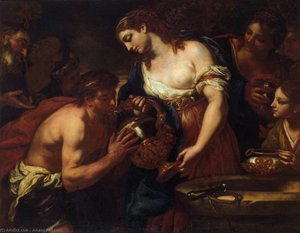
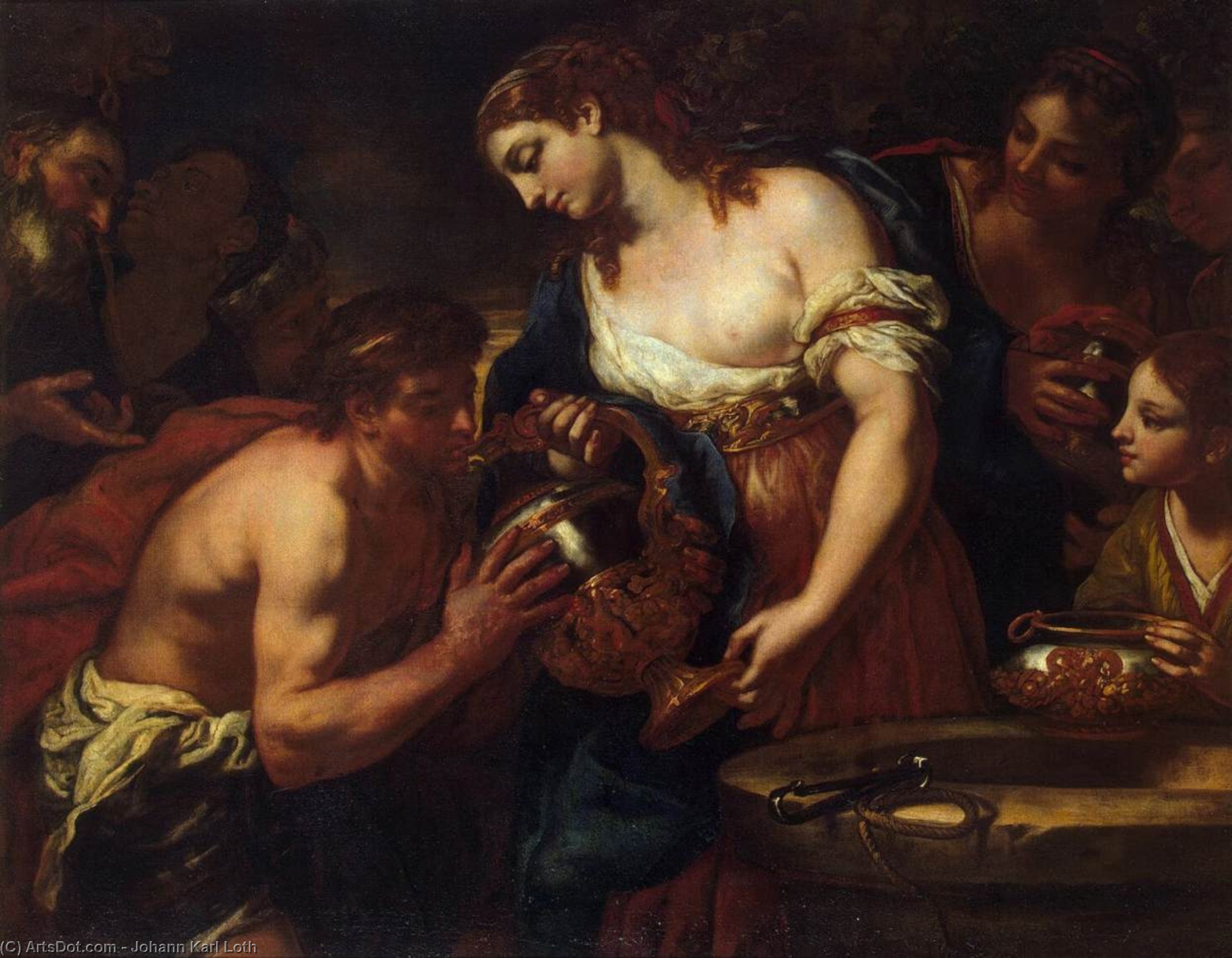
Johann Karl Loth’s “Eliezer and Rebecca at the Well,” painted around 1670, stands as a testament to the grandeur and complexity of Venetian Baroque art. Executed on canvas measuring 123 x 159 cm and currently housed in The Hermitage Museum in St. Petersburg, this monumental scene captures a pivotal moment from biblical narrative – the encounter between Eliezer and Rebecca at Jacob’s Well—and embodies the artistic ideals prevalent during Loth’s time. It's a painting that speaks volumes about faith, tradition, and the meticulous craftsmanship of its creator.A Symphony of Detail: Style and Technique
Loth’s style aligns perfectly with the Venetian Baroque aesthetic, characterized by dramatic lighting, opulent color palettes, and an emphasis on theatrical composition. Like many artists working in Venice during this period, Loth skillfully employed chiaroscuro—the interplay between light and dark—to sculpt figures and heighten emotional impact. The artist meticulously rendered textures, from the rough stone of Jacob’s Well to the folds of Rebecca's robe, demonstrating a mastery of oil paint technique that was considered exceptional for its time. Notice how the artist uses subtle gradations of color to create depth and realism, transporting viewers into the heart of this biblical drama.Historical Context: The Venetian Artistic Renaissance
The painting emerged during a period of remarkable artistic flourishing in Venice—a city renowned for its patronage of the arts and its commitment to humanist ideals. Loth’s work reflects the broader cultural currents shaping Europe at the time, where artists sought inspiration from classical mythology and biblical stories to convey moral lessons and elevate the human spirit. The Venetian Republic actively fostered creativity, commissioning ambitious projects that showcased artistic innovation and solidified Venice's position as a center of European culture. This painting is not merely an illustration; it’s a product of its environment—a visual embodiment of Venetian intellectual and artistic ambition.Symbolism: Narrative Depth Beyond the Surface
“Eliezer and Rebecca at the Well” transcends mere storytelling, layering symbolic meanings that resonate with Christian theology. The well itself represents spiritual nourishment and purification, mirroring the biblical narrative’s central theme of divine grace. Eliezer and Rebecca's gestures—Rebecca offering water to Eliezer—symbolize compassion, generosity, and mutual respect – virtues considered paramount in Renaissance morality. Furthermore, the surrounding figures contribute to the painting’s symbolic richness, representing humanity’s yearning for salvation and God’s benevolent providence. Loth skillfully uses visual cues to communicate profound spiritual truths.Emotional Impact: Capturing Human Emotion
Ultimately, Loth succeeds in conveying a palpable sense of emotion—a quiet dignity mingled with anticipation—that draws viewers into the scene. The artist's masterful depiction of facial expressions captures the characters’ inner states, inviting contemplation on themes of faith and human connection. The composition directs the eye towards Rebecca, emphasizing her role as a beacon of virtue amidst the bustling crowd. “Eliezer and Rebecca at the Well” remains an enduring masterpiece because it speaks directly to our emotions, reminding us of the timeless beauty and significance of biblical narratives.Srodna umetnička dela

Biografija umetnika
Johann Karl Loth: Venetian Baroque Master
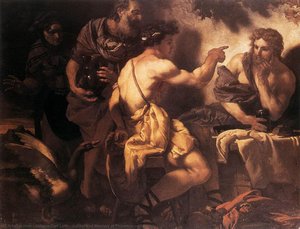
Johann Carl Loth, born around 1632 in Munich, stands as a prominent figure within the Venetian Baroque artistic landscape—a realm dominated by titans like Pietro Titian and Giovanni Battista Gaetano Crespi. Though overshadowed by his contemporaries in terms of fame during his lifetime, Loth’s prolific output and distinctive style cemented his place as one of the “three grand masters” dubbed “karel,” alongside Karel Duijardin and Karel Maratta—a designation bestowed upon him by Arnold Houbraken, a respected biographer of the era. This honor underscores Loth’s considerable influence and recognition within the artistic circles of Amsterdam and Venice.- Early Life & Training: Loth’s formative years were spent under the tutelage of his father, Johann Ulrich Loth, a painter himself, who instilled in him a foundational understanding of artistic principles. Evidence suggests that Loth was also influenced by Giovan Battista Langetti, another influential Venetian artist known for his dramatic compositions and masterful use of chiaroscuro—techniques that would become hallmarks of Loth’s own oeuvre.
- Venetian Career & Collaborations: Loth’s artistic journey truly blossomed in Venice, where he established himself as a respected painter from 1663 until his death in 1698. This period witnessed invaluable collaborations with Pietro Liberi, a fellow Venetian artist who shared Loth’s penchant for grand historical narratives and theatrical visual storytelling. Together, they tackled ambitious commissions—primarily for the Habsburg court in Vienna—demonstrating a commitment to elevating artistic standards.
- Notable Commissions & Artistic Style: Loth achieved considerable renown through his involvement with Emperor Leopold I, securing prestigious assignments that showcased his skill and ambition. His distinctive style is characterized by densely populated scenes depicting biblical narratives or mythological tales—often imbued with dramatic lighting effects (tenebrism) and meticulous attention to detail. Consider particularly “Jupiter and Mercury at Philemon and Baucis,” completed in 1659 for the Kunsthistorisches Museum, where Loth skillfully captures a pivotal moment from Greek mythology.
- Legacy & Influence: Loth’s artistic legacy extends beyond his individual masterpieces. He nurtured numerous pupils—including Michael Wenzel Halbax, santo prunati, Johann Michael Rottmayr, Hans Adam Weissenkircher, Daniel Seiter, and Baron Peter Strudel—who carried forward his stylistic innovations and contributed to the vibrant Venetian art scene. His connections with artists like Willem Drost and Jan Vermeer van Utrecht further solidified his position as a central figure in the artistic community of his time.
- Museum Presence & Historical Significance: Loth’s works are prominently displayed in museums across Europe, notably the Art Institute of Chicago and the National Gallery London. The chapel at Burghley House in England houses two impressive paintings—a testament to Loth's enduring artistic impact. His contribution to Venetian Baroque painting is significant not only for its visual grandeur but also for its embodiment of the period’s intellectual currents—particularly the revival of classical ideals and the exploration of religious themes with profound emotional resonance.
johann karl loth
1632 - 1698
Osnovne informacije
- Artistic Movement Or Style: Baroque
- Artists Or Movements Influenced By This Artist: ['Classical Mythology Art']
- Artists Who Influenced This Artist:
- Giovanni Battista Langetti
- Franz Loth
- Date Of Death: 1698
- Full Name: Johann Karl Loth
- Nationality: German
- Notable Artworks:
- Jupiter and Mercury at Philemon and Baucis
- Karl mercury piping to argus
- Holy Family and God the Father
- Place Of Birth: Munich
Povezani članci

Jacopo Tintoretto: 25 Remek-dela Venecijanskog Majstora | Reprodukcije i Inspiracija za Dom
Uronite u svet Jacopa Tintoreta! Otkrijte 25 remek-dela venecijanskog renesansnog majstora. Istražite dramatične kompozicije, bogate boje i istoriju umetnosti na ArtsDot.com. Reprodukcije slika za luksuzni enterijer.

The Dramatic Flourish: Exploring the Baroque Movement's Enduring Legacy in Art History
Explore the dramatic world of Baroque art! Discover iconic artists like Caravaggio & Rubens, defining techniques, and its lasting impact on art history. Expert insights for collectors & enthusiasts at ArtsDot.

Barok Majstor dela: Top 10 Umjetničkih Remeka za Vaš Dom
Otkrijte 10 remek dela koja su definisala baroknu umetnost! Karavagio, Bernini i više – istražite priče iza ovih ikoničnih slika. Inspiracija za vaš dom? Pogledajte kolekciju na ArtsDot.com!

The Visceral Stage: Exploring Dramatic Narratives & Emotional Intensity in Baroque Art
Explore the dramatic world of Baroque art! Discover iconic masters like Caravaggio & Rembrandt, their techniques, and the movement's lasting impact. Expert insights for collectors & enthusiasts at ArtsDot.
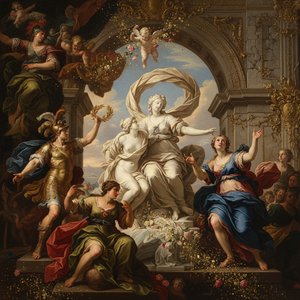
Theatricality & Triumph: Baroque Drama in Painting & Sculpture
Explore the dramatic world of Baroque art! Discover its history, defining characteristics, & lasting influence on painting & sculpture. Expert insights into Caravaggio, Zurbarán, and Bernini – plus high-quality reproductions at ArtsDot.