 Pregledaj u prostoru
 Pošalji
 Podeli
 Detalji o delu

 Преузми
 Slični predmeti
 Rendgenski snimak
 Slajdovi
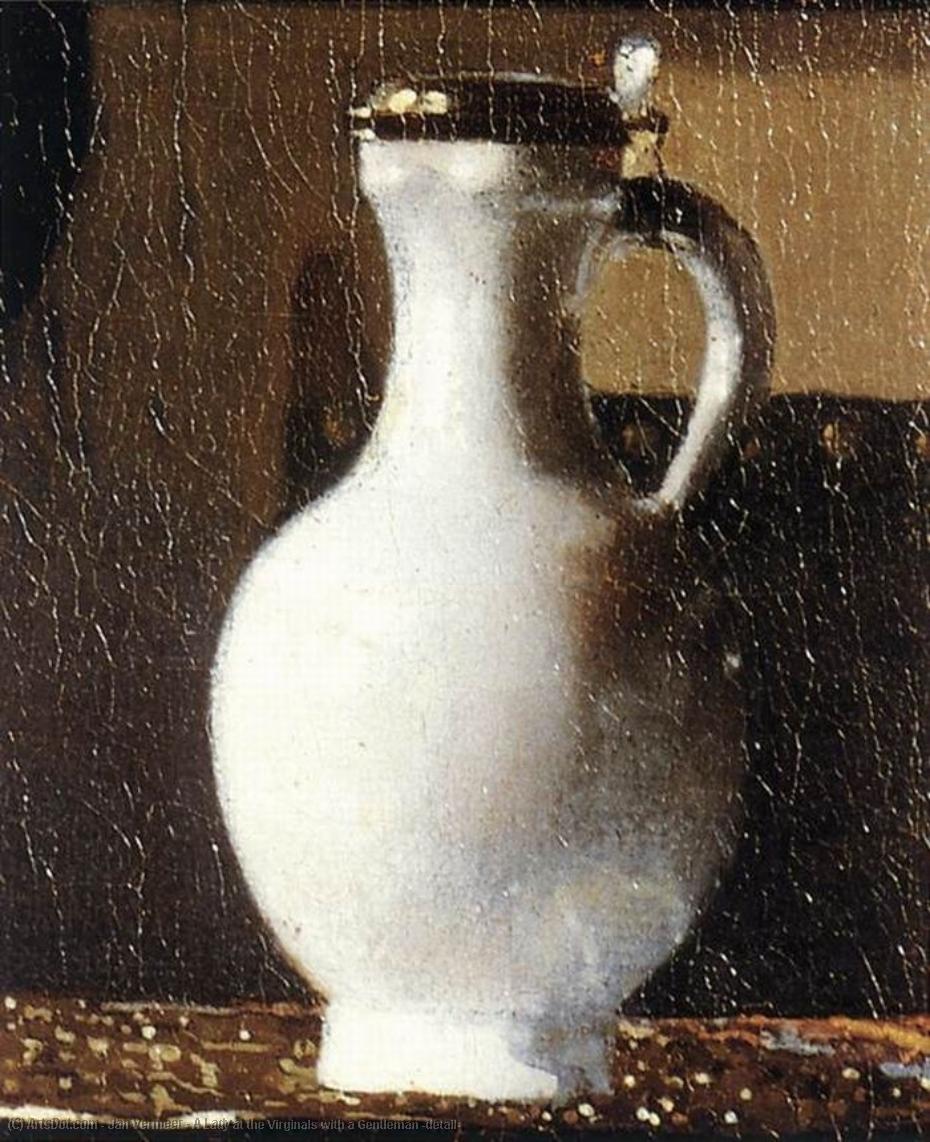
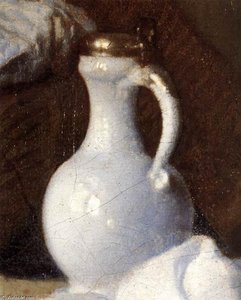
A Lady at the Virginals with a Gentleman (detail)


 Pročitaj više
Giclee štampa / Umetnički otisak
Giclée štampa ili print na platnu muzejskog kvaliteta uz brzu proizvodnju i fleksibilne opcije završne obrade. ( Kupi ručno naslikanu sliku Kupi digitalnu sliku)




P118B $10

P118H $10

P118W $10

P438Z $10

P508JH $12

P508YH $12

P805H $10

P805Z $10

P919BZ $10

P919G $10

P919XJ $10

P959ZH $10

P968JZ $12

W106C $8

W218G $10

W218JH $8

W218Y $10

W307PJ $10

W316G $10

W316PJ $8

W316Y $10

W398PJ $8

W4111J $10

W500HY $15

W500JH $15

W692G $12

W849H $8

W940BG $15

W953PJ $8




Izaberite jednu od naših unapred definisanih veličina koje odgovaraju originalnim proporcijama umetničkog dela.

Možete uneti sopstvene dimenzije kako biste umetničko delo prilagodili specifičnom okviru ili prostoru. Ako odabrani format ne odgovara proporcijama originalne slike, mi ćemo ili iscrtati deo dela ili proširiti sliku pomoću ogledane ivice ili jednobojnog popunjavanja. Digitalni prikaz će vam biti poslat na odobrenje pre početka proizvodnje.
Imajte na umu da pregled na ekranu ne odražava stvarno iscrtavanje ili proširivanje. Samo će prikaz (mockup) precizno pokazati finalnu kompoziciju.
Iako su prilagođene dimenzije dostupne, preporučujemo da odaberete dimenziju sa unapred definisane liste kako biste očuvali originalne proporcije.
Dostava širom sveta () za 2 nedelje umesto uobičajenih 4/5 nedelja. (3 септембар)

Besplatna ekspresna dostava širom sveta

Visokokvalitetno laneno platno

Kompletno osiguranje transporta

Garancija povraćaja carine i uvoznih dažbina

Garancija vernosti boja

Politika povrata u roku od 60 dana (samo u slučaju nedostataka)

Garancija povrata novca od 100%

Popust pri grupnoj kupovini
 Opcija sa staklom dostupna je samo za dimenzije manje od 110 cm

A Lady at the Virginals with a Gentleman (detail)
Giclee štampa / Umetnički otisak
Dimenzije reprodukcije
-


Konačna cena
$ 62
A Window Into Delft: Unveiling Vermeer’s “A Lady at the Virginals with a Gentleman”
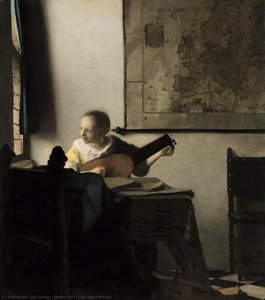
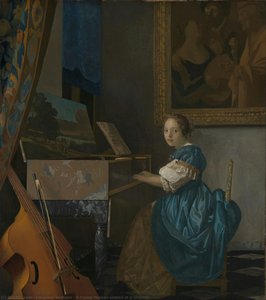
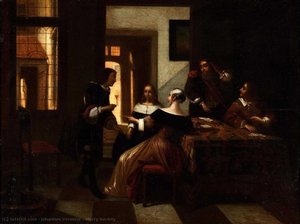
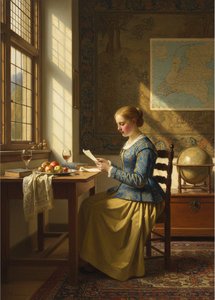
Johannes Vermeer's "A Lady at the Virginals with a Gentleman," painted in 1662, isn’t merely a depiction of a musical scene; it’s a meticulously crafted portal into the quiet domesticity and burgeoning social life of 17th-century Delft. This oil on canvas masterpiece, currently residing within the Royal Collection at Buckingham Palace, transcends its subject matter to become a profound meditation on intimacy, music, and the subtle dance between observation and interpretation. Vermeer’s genius lies not just in his technical skill – though that is undeniably remarkable – but in his ability to imbue ordinary moments with an extraordinary sense of depth and feeling.
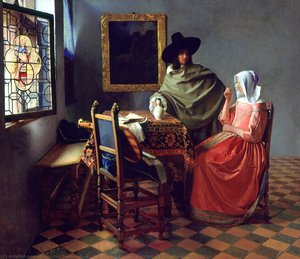
The painting immediately draws the eye to the central figure, a young woman absorbed in playing a virginal. Her posture, her focused gaze, and the delicate gestures of her hands speak volumes about her dedication to the music she produces. Beside her stands a gentleman, his mouth slightly agape – a gesture that has fueled centuries of speculation. Is he truly listening intently? Is he captivated by the melody, perhaps even moved to sing along? Or does this open-mouthed expression hint at something more personal, a nascent affection or a shared understanding beyond the confines of the music lesson? Vermeer deliberately leaves this ambiguity unresolved, inviting the viewer to project their own emotions and interpretations onto the scene.
The Language of Light and Shadow: Vermeer’s Signature Style
Vermeer was a master of light, and “A Lady at the Virginals with a Gentleman” is a testament to his profound understanding of its effects. He employs a technique known as *chiaroscuro*, skillfully manipulating light and shadow to create a sense of depth, volume, and atmosphere. The soft, diffused light streaming through the window on the left side of the painting illuminates the figures and objects with an almost ethereal glow, while the darker recesses of the room – the tiled floor, the draped rug, the shadows cast by the furniture – contribute to the overall sense of intimacy and enclosure. Notice how Vermeer uses this interplay of light to draw our attention to specific details: the sheen on the white water jug, the texture of the carpet, the delicate curves of the virginal’s keys.
Furthermore, Vermeer's consistent use of recurring motifs – the draped rug, the white water jug, various instruments, and the tiled floor – is a hallmark of his style. These familiar elements create a sense of stability and grounding within the scene, while also subtly reinforcing the painting’s overall composition. It’s as if Vermeer was consciously constructing a visual vocabulary, layering meaning upon meaning through these repeated symbols.
A Glimpse into 17th-Century Dutch Society
“A Lady at the Virginals with a Gentleman” offers a fascinating glimpse into the social and cultural landscape of Delft in the mid-17th century. Music lessons were a common pastime for young women of the upper classes, providing them with an education and cultivating their musical talents. The presence of the gentleman suggests a potential courtship or a developing relationship – a theme frequently explored in Netherlandish art during this period. The scene reflects a world where music was not merely entertainment but also a means of social connection and personal expression.
Beyond the immediate subject matter, the painting speaks to broader themes of domesticity, leisure, and the role of women in society. Vermeer’s meticulous attention to detail reveals a deep appreciation for the beauty and tranquility of everyday life – a perspective that resonated powerfully with his contemporaries and continues to captivate viewers today.
Bringing Vermeer Home: Reproductions of Exceptional Quality
ArtsDot.com is proud to offer meticulously crafted, hand-painted oil painting reproductions of “A Lady at the Virginals with a Gentleman.” Our skilled artists utilize the finest pigments and archival materials to ensure that each reproduction faithfully captures the nuances of Vermeer’s original masterpiece. We strive for an exact match in color, texture, and lighting, creating a stunningly authentic representation that will grace any room with its timeless beauty.
Whether you are an art enthusiast, a collector, or simply seeking to add a touch of elegance to your interior design, a ArtsDot.com reproduction of this iconic painting is an investment in artistry and history. Learn more about Johannes Vermeer and his works on ArtsDot.com, and discover the story behind “The Music Lesson” on Wikipedia.
Srodna umetnička dela
Biografija umetnika
Јоханес Вермеер: Мајстор светлости и тишине
У свету уметности, мало је имена које буди толику дивљење и мистерију као Јоханес Вермеер. Рођен у Делфту, Холандији, 1632. године, овај сликар постао је синоним за интимност и спокојство седамнаестовековног живота. Иако је његов живот остао донекле заогрнут завесом тајни, Вермеерово наслеђе сија кроз његову малу, али изузетну колекцију слика, које нас и даље задивљују својом лепотом и елеганцијом. Његов отац, Рејнијер Јансоон, био је ткач свиле и трговац уметношћу – професија која је младим Јоханесом пружила рану изложеност светлу материјала, композиције и деликатног баланса између стваралаштва и трговине. Овај први сусрет са уметничким светом положио је основу за његову каснију визију. У 1653. години оженио се Катарина Болнес, католичком женом, што је додало слој комплексности његовом животу у претежно протестантском Делфту.Развој уметничког генија: Од историјских сцена до интимних призора
Вермееров пут у свет сликарства започео се сликањем историјских и митолошких сцена, али је брзо схватио да његова истинска страст лежи у жанровним сликама које ће обележити његово наслеђе. Није га занимало приказивање великих наратива или херојских подугх, већ је налазио лепоту и значај у свакодневном животу – жена која чита писмо за отвореним прозором, млекарка која улива своју робу, израдилац чипка који са пажњом ради. Ово нису биле само слике сваког дана; то су биле пажљиво конструисане студије светлости, боје и човечије присутности. Његова техника била је мукотрпа, обележена одлучношћу и готово научним приступом оптици. Није често нацртао или произвео велики број верзија исте композиције. Свака слика била је промишљен подухват, изграђен слој по слој са танким глазурама боје које су стварале луминозан квалитет неупоредив у било ком другом сликарском труду. Ова пажљива процеса резултирала је релативно малим опусом – само око 34 слика се општеприхваћено приписују његовом стваралаштву – али свака од њих је сведочанство о његовој непоколебљивој посвећености и уметничкој моћи.Светлост, перспектива и илузија стварности
Шта истински издваја Вермеера је његов неупоредив поступак руковања светлошћу. Он није само осветљавао своје сцене; он их је *дефинисао* светлом. Није било оштре или драматичне илуминације, већ меког, расипаног сјаја који се чинило да емитује из саме слике. Овај ефекат постигнут је комбинацијом пажљивог посматрања и техничке вештине – дубоког разумевања како светлост одбија са различитих површина и способности да те опсервације пренесе на платно са изузетном тачношћу. Користио је технику познату као *камера обскура*, уређај који је пројектовао слику на површину, што му је вероватно помогло у његовом прецизном приказу перспективе и детаља. Међутим, Вермеер није само копирао оно што је видео; он је то тумачио кроз своју сопствену уметничку сензибилност, прожетавајући сваку сцену емоционалним резонансом и психолошком дубином. Његови ентеријери нису само простори; они су цели свет, испуњени суптилним нијансама и скривеним значењима. Постављање објекта, угао светлости, израз на лицу субјекта – све то доприноси пажљиво оркестрираној композицији која позива гледаоце да стоје и размишљају.Наслеђе поново откривено: Вермееров трајан утицај
Упркос свом таленту, Вермеер је током живота доживео само скромну признавање. Борио се са финансијским проблемима, оптерећен породичним дуговима и економском рецесијом 1670-их. Његова смрт у децембру 1675. године оставила је његову жену и децу у тешком положају. Готово два века, његов рад је остао донекле заборављен, засенчен успешнијим и познатијим уметницима. У 19. веку Вермеер је поново „откривен“ од стране историчара уметности као што су Густав Фридрих Ваген и Теофил Торе-Бургер, који су прокламовани његовим генијалом и представили његове слике широј публици. Ово откривање изазвало је бум интересовања, а Вермееров углед наставља да расте и данас. Данас је омиљен као један од највећих сликара Холандског златног доба – мајстор светлости, боје и композиције чија дела и даље задивљују и инспиришу. Његов утицај се може видети у делима безброј уметника који су следили његове стопе, привлачени његовом способношћу да ухвати лепоту и достојанство сваког дана.- Позната дела: *Млекарка*, *Призор Делфта*, *Девојка са бисерном огрлицом*, *Уметност сликања*, *Љубавни писмо*.
- Теме које се истражују у његовом раду укључују домаћинство, светлост и сенку, перспективу и тиху лепоту сваког дана.
Јоханес Вермеер
1632 - 1675 , Holandija
Osnovne informacije
- Datum Rođenja: 31. oktobar 1632.
- Datum Smrti: 15. decembar 1675.
- Istaknuta Dela:
- Слика са perom
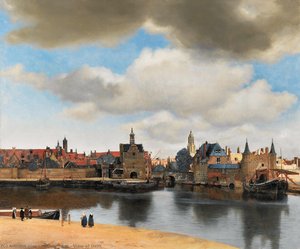
- Pogled na Delft
- Devojčica sa bisernom ogrlicom
- Veštica slikanja
- Ljubavna pisma
- Mesto Rođenja: Delft, Holandija
- Nacionalnost: Holanđanin
- Puno Ime: Јоханес Вермеер
- Umetnici Pod Uticajem: Generacije umetnika
- Umetnički Pokret: Holandska zlatna era
- Uticajni Umetnici:
- Pieter de Hooch
- Gerard ter Borch
Povezani članci

Zlatno doba Holandske umetnosti: Top 10 remek dela za vaš dom
Otkrijte remek dela Holandskog zlatnog doba! Uronite u svet Rembrandta, Vermeera i drugih majstora. 10 ikoničnih slika koje su definisale umetnost. Inspiracija za vaš dom i kolekciju - ekskluzivne reprodukcije na ArtsDot.com!
Johannes Vermeer: Light, Intimacy & the Dutch Golden Age – A Comprehensive Exploration
Explore the life, techniques & enduring legacy of Johannes Vermeer, a master of Dutch Golden Age painting. Discover symbolism in his iconic works like 'The Milkmaid' and learn about his revolutionary use of light.

Golden Age Reflections: Dutch Baroque Painting & Cultural Innovation
Explore the Dutch Golden Age of painting! Discover key artists like Vermeer & ter Borch, their innovative techniques, and the rich cultural context behind these Baroque masterpieces. Learn about collecting & appreciating this iconic art period.

Illuminating Innovation: Exploring the Dutch Golden Age of Painting
Explore the Dutch Golden Age of painting with ArtsDot. Discover Rembrandt, Vermeer & other Masters. Learn about key characteristics, iconic artworks, and lasting influence. Expert insights for collectors & enthusiasts.

Illuminating Realism: Exploring the Dutch Golden Age of Painting (1600-1700)
Explore the Dutch Golden Age of painting (1600-1700) with ArtsDot. Discover Rembrandt, Vermeer & other masters. Learn about techniques, history & find museum-quality reproductions.