

 Pregledaj u prostoru
 Pošalji
 Podeli
 Detalji o delu

 Преузми
 Slični predmeti
 Rendgenski snimak
 Slajdovi
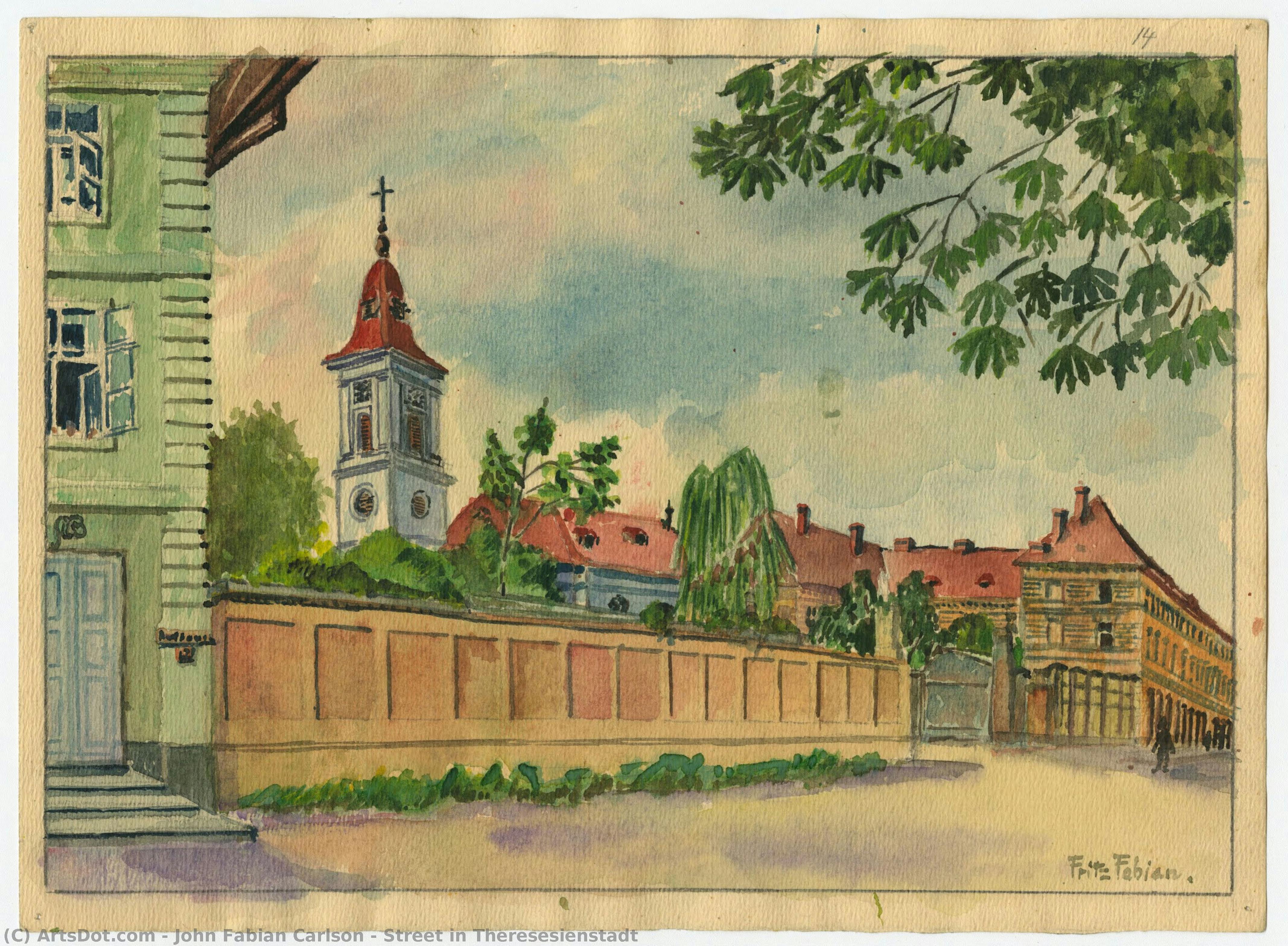
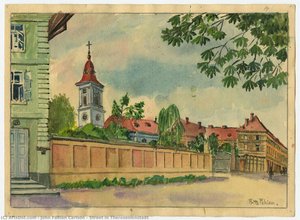
Street in Theresesienstadt
 Watercolor
- WallArt
- Impressionism
 1944
1944- Modern
 30.0 x 22.0 cm
 Leo Baeck Institute
 Pročitaj više
Kupite digitalnu sliku visoke rezolucije i poboljšanog kvaliteta, koja je znatno superiornija od onoga što vidite u online prikazu.
Svaka datoteka je pedantno pripremljena od strane naših stručnjaka koristeći napredne alate i profesionalnu ručnu retušu. Osiguravamo da svaka slika ima izuzetnu oštrinu, preciznu reprodukciju boja i fine detalje.
Konačna datoteka se dostavlja putem e-pošte u roku od 72 sata, optimizovana za neposrednu upotrebu u profesionalnim, izdavačkim i štamparskim okruženjima. To je isti kvalitet kojem veruju vrhunski studiji dizajna, izdavači i galerije.
Digitalna slika
Preuzmite datoteku visoke rezolucije za ličnu upotrebu, štampanje i kreativne projekte. ( Kupi print Kupi ručno naslikanu sliku)
Uključeno uz svaku porudžbinu digitalne slike
Profesionalna digitalna isporuka, zagarantovana
Kada odaberete ArtsDot.com, ne dobijate samo sliku – vi primate profesionalno unapređeno digitalno umetničko delo, izrađeno sa najvećom preciznošću i uz garanciju zadovoljstva. Evo svega što automatski dolazi uz vašu porudžbinu:

Brza dostava putem e-pošte
Vaša digitalna slika visoke rezolucije biće vam poslata putem e-pošte u roku od 72 sata od poručivanja – spremna za trenutnu upotrebu.

Digitalna datoteka unapređena veštačkom inteligencijom
Vaše umetničko delo je profesionalno optimizovano korišćenjem naprednih AI alata i ručne obrade, čime se osiguravaju maksimalni detalji, oštrina i preciznost boja.

Besplatna ponovna isporuka doživotno
Slučajno ste obrisali ili izgubili svoju datoteku? Ne brinite – poslaćemo vam je ponovo u bilo kom trenutku, potpuno besplatno.

Bez troškova uvoza – zauvek
Uživajte u svojim umetničkim delima trenutno, bez carine, dažbina ili troškova dostave – digitalni download je uvek bez poreza.

Garancija vernosti boja
Uz pomoć profesionalnih alata i upravljanja bojama, osiguravamo da vaša digitalna slika što vernije odražava originalne boje.

Garancija zadovoljstva u roku od 60 dana
Ako niste zadovoljni svojom digitalnom slikom, revidirat ćemo je ili vratiti 100% novca u roku od 60 dana – bez ikakvih pitanja.

100% garancija povrata novca
Niste zadovoljni? Obezbedite pun povrat novca u roku od 60 dana od trenutka kada ste primili svoju digitalnu datoteku – bez suvišnih pitanja.

Popusti na velike porudžbine
Kupite 3 slike, uštedite 10% - Kupite 5 slika, uštedite 15% - Kupite 10+ slika, uštedite 20%. Odlično za kreativne projekte, galerije i agencije.
A Somber Glimpse into History: Street in Theresesienstadt
In the delicate, translucent layers of John Fabian Carlson’s 1944 watercolor, Street in Theresesienstadt, we encounter a scene that transcends mere landscape painting to become a profound historical witness. While Carlson is celebrated as a master of luminous winter landscapes and the ethereal glow of American Impressionism, this particular work carries a weight far heavier than the soft snowfall of his more famous compositions. The watercolor captures a street scene within the confines of the Theresienstadt concentration camp, presenting a view that is simultaneously mundane and hauntingly significant. Through his expert command of the medium, Carlson invites the viewer to walk alongside the figures in the street, navigating a world defined by both architectural permanence and human fragility.
The composition is structured around the stark reality of enclosure, where a formidable brick wall serves as a boundary between the town and the unknown. A church rises above the skyline, its presence offering a silent, spiritual sentinel over the inhabitants below. Carlson utilizes the fluid nature of watercolor to create a sense of atmosphere that feels both airy and oppressive. The light, though captured with his signature impressionistic touch, does not merely illuminate; it exposes the quiet movement of people traversing the cobblestones. Small details, such as the two birds caught in flight and the subtle presence of a clock in the lower corner, ground the piece in a fleeting moment of time, reminding us that even within the most harrowing historical contexts, life continues its rhythmic, albeit shadowed, progression.
Technically, the painting showcases Carlson’s ability to balance fine detail with broad, emotive washes. The way the pigment settles into the paper creates a textured depth that mimics the grit of the street and the weathered surfaces of the architecture. For the collector or interior designer, this piece offers more than just aesthetic beauty; it provides a conversational centerpiece that demands reflection. It is an artwork of immense emotional gravity, suitable for spaces dedicated to contemplation, history, or the preservation of memory. To possess a reproduction of this work is to hold a fragment of a difficult truth, rendered with the grace and technical mastery of a pioneer of the American Impressionist movement.
Srodna umetnička dela
Biografija umetnika
The Luminous Silence: The Life and Legacy of John Fabian Carlson
In the quietude of a frozen landscape, where the world seems to hold its breath beneath a heavy blanket of white, one finds the true essence of John Fabian Carlson. A Swedish-born American Impressionist, Carlson possessed a rare, meditative ability to translate the biting chill of winter into a visual symphony of light and texture. Born on May 5, 1874, in the pastoral landscapes of Kolsebo, Sweden, his early years were steeped in the folklore and rugged natural beauty of his homeland. This foundational connection to the earth would later manifest in his American works as a profound sensitivity to the atmospheric shifts of the seasons, particularly the ethereal, crystalline moments that define the winter solstice.
After emigrating to the United States in 1884 and settling in Buffalo, New York, Carlson began a rigorous artistic journey that would bridge European tradition with American innovation. His education at the Art Students League of Buffalo under Lucius Wolcott Hitchcock—a student of the great masters Renoir and Degas—provided him with a meticulous foundation in observation. This training instilled in him a lifelong dedication to capturing the fleeting nuances of light. As his talent blossomed, Carlson sought further refinement, eventually securing a scholarship to the Byrdcliffe Colony in Woodstock, New and York. It was within this vibrant artistic community, alongside luminaries such as Robert Henri, that Carlson’s fascination with the grandeur of nature solidified, setting the stage for his emergence as a master of the landscape.
A Mastery of Light and Texture
Carlson’s technical prowess lay in his ability to manipulate medium and movement to evoke the tactile reality of snow and ice. Whether working in the fluid, translucent layers of watercolor or the robust, impasto textures of oil, his work remained anchored in the Tonalist tradition. He did not merely paint a scene; he built an atmosphere. His technique often involved layering thin washes of color to create depth, followed by vigorous, textured brushstrokes that mimicked the uneven crust of a snow-covered mountainside or the delicate frost clinging to a woodland branch.
His repertoire was as diverse as the landscapes he traversed. While most celebrated for his serene, snow-laden vistas, Carlson also explored the rugged majesty of the Canadian Rockies and the sweeping expanses of the American Far West. His ability to balance fine detail with broad, emotive washes allowed him to capture both the microscopic beauty of a frozen leaf and the overwhelming scale of a mountain range. This duality made his work deeply engaging, inviting viewers to wander through his compositions, discovering quiet details hidden within the vast, white silence.
The Educator and the Historical Witness
Beyond the canvas, Carlson was a pivotal figure in the American art landscape as a teacher and author. He was a co-founder of the Woodstock School of Landscape Painting and established his own namesake school, leaving an indelible mark on generations of aspiring artists. His 1928 publication, Elementary Principles of Landscape Painting (later known as Carlson's Guide to Landscape Painting), remains a testament to his deep understanding of the mechanics of light, color, and composition.
Yet, there is a poignant depth to Carlson’s legacy that extends beyond the tranquil beauty of his winter scenes. In the twilight of his life, his work took on a somber, historical weight. His 1944 watercolor, Street in Theresesienstadt, serves as a haunting departure from his usual pastoral themes. In this piece, the artist’s mastery of light is used to expose the stark reality of a concentration camp street, where the architectural permanence of brick walls meets the fragile movement of human life. This ability to pivot from the sublime beauty of nature to the profound gravity of human history cements John Fabian Carlson not just as a painter of landscapes, but as a profound witness to the enduring complexity of the human experience.
Kratke činjenice
- Artistic Movement Or Style: Impressionism
- Artists Or Movements Influenced By This Artist: ['American Impressionism']
- Artists Who Influenced This Artist: ['Lucius Wolcott Hitchcock']
- Date Of Birth: May 5, 1874
- Date Of Death: May 19, 1945
- Full Name: John Fabian Carlson
- Nationality: Swedish-American
- Notable Artworks:
- Winter, Woodstock
- Snowy Waters
- Street in Theresesienstadt
- Place Of Birth: Kolsebo, Sweden

