

 Pregledaj u prostoru
 Pošalji
 Podeli
 Detalji o delu

 Преузми
 Slični predmeti
 Rendgenski snimak
 Slajdovi
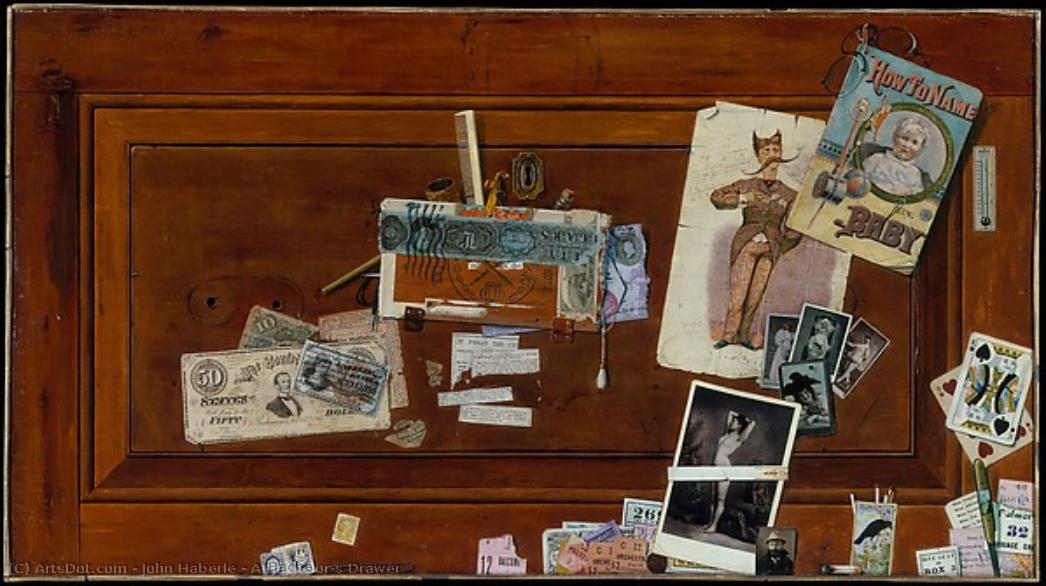
A Bachelor's Drawer
 Oil On Canvas
- WallArt
- trompe l’oeil realism
 1890
1890- 19th Century
 51.0 x 91.0 cm
 Metropolitan Museum of Art
 Pročitaj više
Giclee štampa / Umetnički otisak
Giclée štampa ili print na platnu muzejskog kvaliteta uz brzu proizvodnju i fleksibilne opcije završne obrade. ( Kupi ručno naslikanu sliku Kupi digitalnu sliku)




P118B $10

P118H $10

P118W $10

P438Z $10

P508JH $12

P508YH $12

P805H $10

P805Z $10

P919BZ $10

P919G $10

P919XJ $10

P959ZH $10

P968JZ $12

W106C $8

W218G $10

W218JH $8

W218Y $10

W307PJ $10

W316G $10

W316PJ $8

W316Y $10

W398PJ $8

W4111J $10

W500HY $15

W500JH $15

W692G $12

W849H $8

W940BG $15

W953PJ $8




Izaberite jednu od naših unapred definisanih veličina koje odgovaraju originalnim proporcijama umetničkog dela.

Možete uneti sopstvene dimenzije kako biste umetničko delo prilagodili specifičnom okviru ili prostoru. Ako odabrani format ne odgovara proporcijama originalne slike, mi ćemo ili iscrtati deo dela ili proširiti sliku pomoću ogledane ivice ili jednobojnog popunjavanja. Digitalni prikaz će vam biti poslat na odobrenje pre početka proizvodnje.
Imajte na umu da pregled na ekranu ne odražava stvarno iscrtavanje ili proširivanje. Samo će prikaz (mockup) precizno pokazati finalnu kompoziciju.
Iako su prilagođene dimenzije dostupne, preporučujemo da odaberete dimenziju sa unapred definisane liste kako biste očuvali originalne proporcije.
Dostava širom sveta () za 2 nedelje umesto uobičajenih 4/5 nedelja. (7 септембар)

Besplatna ekspresna dostava širom sveta

Visokokvalitetno laneno platno

Kompletno osiguranje transporta

Garancija povraćaja carine i uvoznih dažbina

Garancija vernosti boja

Politika povraćaja u roku od 100 dana (isključivo u slučaju nedostataka)

Garancija povrata novca od 100%

Popust pri grupnoj kupovini
 Opcija sa staklom dostupna je samo za dimenzije manje od 110 cm

A Bachelor's Drawer
Giclee štampa / Umetnički otisak
Dimenzije reprodukcije
-


Konačna cena
$ 62
John Haberle: The Illusionist of Everyday Life
John Haberle (1856 – 1933) stands as a singular figure in American painting, renowned for his masterful execution of trompe l'oeil—a technique that deliberately deceives the eye into perceiving illusion rather than reality. Unlike many of his contemporaries who sought grandeur and dramatic expression, Haberle focused on capturing the quiet beauty and subtle complexities found within commonplace objects, transforming them into mesmerizing visual puzzles. His legacy rests not in monumental canvases but in a series of exquisitely crafted still lifes that continue to fascinate art historians and collectors alike. Born in New Haven, Connecticut, Haberle’s early life was shaped by his German immigrant parents who instilled in him a strong work ethic and an appreciation for craftsmanship. Rejecting the conventional path of higher education, he apprenticed as an engraver at a young age—a skill that would prove invaluable to his later career as illustrator and exhibit preparator for the Peabody Museum of Natural History at Yale University, working under the supervision of paleontologist Othniel Charles Marsh. He began taking classes at the National Academy of Design in New York City in 1884, where he first encountered trompe l'oeil painting—a stylistic choice that would define his artistic output for decades to come. ### The Trompe L’Oeil Technique and Haberle’s Vision Haberle’s distinctive approach stemmed from a deep understanding of optical illusion. He meticulously studied how light interacts with surfaces, employing subtle gradations of color and shading to create the impression that objects exist beyond the confines of the painted surface. This technique—trompe l'oeil, literally “fool the eye”—was championed by artists throughout Europe during the late 19th century, but Haberle elevated it to an art form in its own right. He wasn’t merely depicting objects; he was crafting experiences for the viewer, inviting them into a world where perception itself becomes part of the artwork. As Alfred Frankenstein aptly noted, “Peto is moved by the pathos of used-up things. Haberle is wry and wacky, full of bravado, self-congratulating virtuosity, and sly flamboyance.” ### "A Bachelor's Drawer": A Portrait of Domestic Life “A Bachelor’s Drawer” (1890–1894), arguably Haberle’s most celebrated work, exemplifies this artistic philosophy. The painting depicts a cluttered wooden desk—a familiar domestic scene—populated by seemingly ordinary items: currency, postage stamps, photographs, playing cards, tickets, and newspaper clippings. These objects aren't presented in isolation but are arranged against a simulated drawer front, rendered with astonishing precision. Haberle’s masterful use of trompe l'oeil convinces the eye that these papers are actually protruding from the drawer, creating an illusion of depth and inviting contemplation about themes of freedom and transition—the end of bachelorhood itself. The inclusion of items like “How To Name The Baby” and a cartoon depicting a dyspeptic infant further underscores this narrative dimension. ### Symbolism and Emotional Resonance Beyond its technical brilliance, "A Bachelor’s Drawer" resonates with profound symbolic meaning. The carefully chosen objects represent not just material possessions but also aspirations, anxieties, and the rituals of everyday life. Haberle's self-portrait at the bottom edge of the canvas—a deliberate inclusion—suggests that he intended to imbue the artwork with autobiographical reflection. He captures a moment in time—the cusp of adulthood—with an understated elegance that speaks volumes about his artistic vision. The painting’s muted palette and meticulous detail contribute to its emotional impact, conveying a sense of quiet observation and subtle humor. ### Legacy and Influence John Haberle's contribution to American art is undeniable. He remains one of the three major figures practicing trompe l'oeil in the United States during the last quarter of the 19th century—alongside William Harnett and John F. Peto—establishing a unique aesthetic tradition that continues to inspire artists today. His unwavering dedication to mastering illusion, coupled with his ability to transform mundane subjects into captivating visual puzzles, cemented his place as an icon of American Impressionism and solidified his enduring legacy as “The Illusionist of Everyday Life.”Srodna umetnička dela
Biografija umetnika
The Illusionist of Everyday Life
John Haberle (1856 – 1933) stands as a singular figure in American painting, renowned for his masterful execution of trompe l'oeil—a technique that deliberately deceard the eye into perceiving illusion rather than reality. Unlike many of his contemporaries who sought grandeur and dramatic expression, Haberle focused on capturing the quiet beauty and subtle complexities found within commonplace objects, transforming them into mesmerizing visual puzzles. His legacy rests not in monumental canvases but in a series of exquisitely crafted still lifes that continue to fascinate art historians and collectors alike.
Born in New Haven, Connecticut, Haberle’s early life was shaped by his German immigrant parents who instilled in him a strong work ethic and an appreciation for craftsmanship. Rejecting the conventional path of higher education, he apprenticed as an engraver at a young age—a skill that would prove invaluable to his later career as illustrator and exhibit preparator for Yale University’s Peabody Museum of Natural History under the guidance of paleontologist Othniel Charles Marsh. This formative experience fostered meticulous observation and attention to detail, qualities that would become hallmarks of Haberle's artistic style.
Mastery of the Material World
His foray into painting began in 1884 at the National Academy of Design in New York City where he encountered trompe l’oeil firsthand—a technique championed by artists like William Harnett and John F. Peto. Haberle quickly embraced this innovative approach, recognizing its potential to elevate seemingly mundane subjects into objects of profound artistic contemplation. He eschewed the opulent styles favored by his peers, opting instead for a deliberately restrained palette and a focus on capturing the precise textures and contours of his chosen materials—primarily paper.
Haberle’s distinctive style is characterized by an unwavering commitment to illusionistic realism. His work often centers on the tactile qualities of ephemeral items: currency, postage stamps, envelopes, and scraps of newsprint. By meticulously rendering the slight curl of a paper edge or the subtle indentation of a stamp, he created a tension between the flat surface of the canvas and the perceived depth of the objects depicted. This mastery allowed him to turn the act of viewing into an interactive experience, where the viewer is constantly challenged to distinguish between the painted image and the physical object.
Legacy and Artistic Significance
The historical significance of John Haberle lies in his ability to find profound meaning within the trivial. While other artists of the late 19th century were preoccupied with the sweeping landscapes of American Impressionism or the heavy drama of Realism, Haberle turned inward toward the intimate and the overlooked. His work serves as a bridge between the precision of scientific illustration and the poetic ambiguity of fine art.
Through his dedication to the trompe l'oeil tradition, Haberle achieved several lasting contributions to American art:
- Elevation of the Mundane: He proved that even the most disposable elements of modern life, such as scraps of paper and old coins, possess inherent aesthetic value.
- Technical Precision: His background in engraving allowed him to push the boundaries of texture and light, setting a high standard for illusionistic painting in America.
- Psychological Engagement: His paintings invite a unique form of cognitive play, forcing the spectator to engage deeply with the mechanics of sight and perception.
Today, Haberle is remembered not merely as a skilled technician, but as an artist who mastered the art of deception to reveal a deeper truth about the beauty hidden within our everyday surroundings.
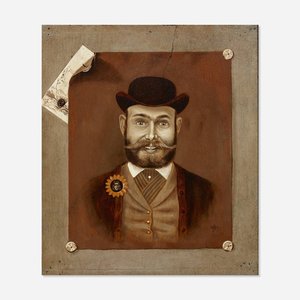
John Haberle
1856 - 1933 , United States of America
Osnovne informacije
- Artistic Movement Or Style: Trompe l'oeil
- Artists Or Movements Influenced By This Artist: ['Alfred Frankenstein']
- Artists Who Influenced This Artist: ['Othniel Charles Marsh']
- Date Of Birth: 1856
- Date Of Death: 1933
- Full Name: John Haberle
- Nationality: American
- Notable Artworks:
- A Misunderstanding
- The Slate: Memoranda
- Grapes on a Ledge
- Place Of Birth: New Haven, United States
Povezani članci
25 Remek-dela Džona Singera Sargenta: Portreti Elegancije i Svetlosti | ArtsDot
Uronite u svet Džona Singera Sargenta! Otkrijte 25 remek-dela impresionizma i realizma, od portreta Madame X do fascinantnih akvarela. Inspiracija za dekoraciju enterijera & luksuzne reprodukcije slika na ArtsDot.com.

25 Remek-dela Džona Konstebla: Lepota Engleske na Platnu | ArtsDot
Uronite u svet Džona Konstebla! Otkrijte 25 remek-dela engleskog pejzaža, romantizma i seoske idile. Kupite reprodukcije slika vrhunskog kvaliteta za dekoraciju enterijera na ArtsDot.com.
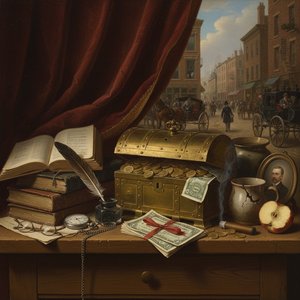
William Michael Harnett: Still Life, Realism & the American Pursuit of Materiality
Explore the captivating still lifes of William Michael Harnett, a master of American realism and trompe l'oeil painting. Discover his technique, legacy & the cultural context behind his iconic works.
Silent Narratives: Exploring the Enduring Appeal of Still Life Painting Across Centuries
Explore the rich history of still life painting with ArtsDot. Discover Dutch Masters, decode vanitas symbolism & learn about collecting timeless art. Expert insights and museum-quality reproductions.
Od klasične mrtve prirode do savremene apstrakcije: Uzdižući prostore vile kroz umetničku reprodukciju stila i elegancije
Otkrijte bogatu istoriju mrtve prirode i kako umetničke reprodukcije transformišu prostore vile u elegantan ambijent. Saveti stručnjaka, simbolizam dela & investicioni potencijal.