

 Pošalji
 Podeli
 Detalji o delu

 Преузми
 Slični predmeti
 Slajdovi
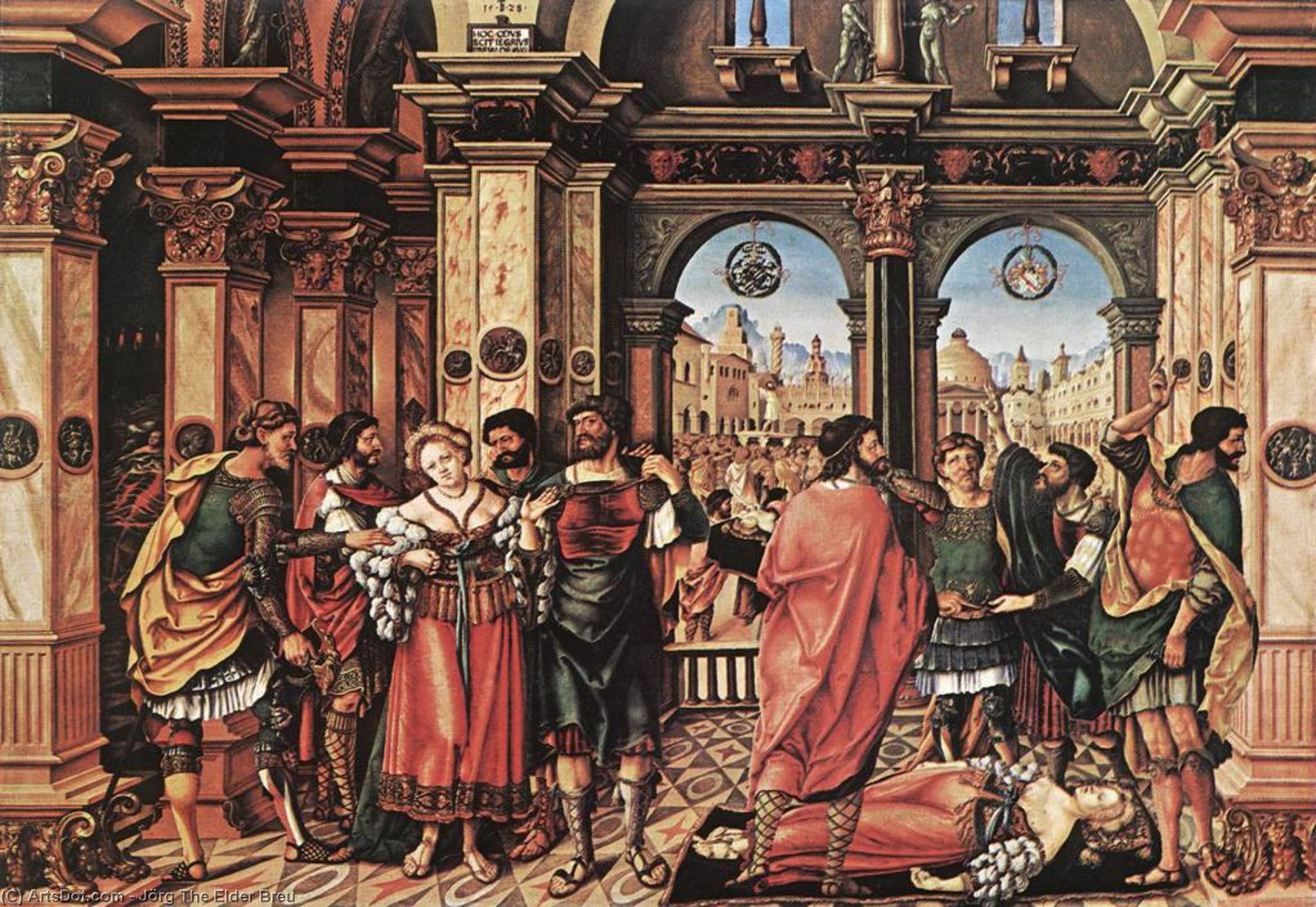
The Suicide of Lucretia
 Fresco
- Renaissance
 1528
1528- Renaissance
 103.0 x 148.0 cm
 Alte Pinakothek
 Pročitaj više
Giclee štampa / Umetnički otisak
Giclée štampa ili print na platnu muzejskog kvaliteta uz brzu proizvodnju i fleksibilne opcije završne obrade. ( Kupi ručno naslikanu sliku Kupi digitalnu sliku)




































Izaberite jednu od naših unapred definisanih veličina koje odgovaraju originalnim proporcijama umetničkog dela.

Možete uneti sopstvene dimenzije kako biste umetničko delo prilagodili specifičnom okviru ili prostoru. Ako odabrani format ne odgovara proporcijama originalne slike, mi ćemo ili iscrtati deo dela ili proširiti sliku pomoću ogledane ivice ili jednobojnog popunjavanja. Digitalni prikaz će vam biti poslat na odobrenje pre početka proizvodnje.
Imajte na umu da pregled na ekranu ne odražava stvarno iscrtavanje ili proširivanje. Samo će prikaz (mockup) precizno pokazati finalnu kompoziciju.
Iako su prilagođene dimenzije dostupne, preporučujemo da odaberete dimenziju sa unapred definisane liste kako biste očuvali originalne proporcije.
Dostava širom sveta () za 2 nedelje umesto uobičajenih 4/5 nedelja. (29 август)

Besplatna ekspresna dostava širom sveta

Visokokvalitetno laneno platno

Kompletno osiguranje transporta

Garancija povraćaja carine i uvoznih dažbina

Garancija vernosti boja

Politika povrata u roku od 60 dana (samo u slučaju nedostataka)

Garancija povrata novca od 100%

Popust pri grupnoj kupovini
 Opcija sa staklom dostupna je samo za dimenzije manje od 110 cm

The Suicide of Lucretia
Giclee štampa / Umetnički otisak
Dimenzije reprodukcije
-


Konačna cena
$ 62
A Moment Frozen in Tragedy: The Suicide of Lucretia
To stand before this depiction of The Suicide of Lucretia is to be enveloped by an atmosphere so thick with dramatic tension, it feels almost palpable. Painted around 1528 by Jörg the Elder Breu, this fresco fragment captures a moment of profound historical and moral reckoning. The scene unfolds within what appears to be an intimate, yet dramatically charged chamber. At the heart of the composition lies the figure of Lucretia, whose prone form immediately draws the eye, suggesting a finality that speaks volumes without uttering a single word. She is not merely depicted; she is memorialized in her ultimate act of defiance and sacrifice.
Mastery of Renaissance Drama and Technique
Jörg Breu the Elder, a master craftsman from Augsburg, brings to this work the characteristic intensity of German Renaissance painting. While his biography speaks of altarpieces and devotional panels, here we see his skill applied to a narrative moment brimming with human drama. The technique employed suggests fresco or a highly finished panel painting, allowing for rich tonal gradations that deepen the somber mood. Observe the meticulous detail: the hanging clock on the wall serves not only as a marker of time but perhaps as a relentless reminder of life's passage against the backdrop of irreversible choice. Even the inclusion of seemingly peripheral elements—the bowl nearby, or the two delicate birds perched in the upper and lower corners—are handled with an almost symbolic precision that elevates the scene beyond mere storytelling.
Symbolism and the Weight of Honor
The narrative itself draws upon potent classical themes. Lucretia’s story is one steeped in Roman virtue, honor, and political turmoil. Her plight forces the viewer to confront weighty questions about personal integrity versus societal expectation. The surrounding men are not passive observers; their gazes are weighted with judgment, concern, or perhaps complicity. Every figure seems caught in a complex web of obligation and emotion. Artistically, the contrast between the stillness of the deceased woman and the agitated presence of those around her creates a powerful visual dialectic—the silence of death against the noise of human consequence.
Creating an Atmosphere for Modern Spaces
For the collector or designer seeking to infuse a space with profound cultural resonance, this piece offers unparalleled depth. Reproducing such a work allows one to bring the dramatic gravitas of the German Renaissance into contemporary interiors. It is not simply decoration; it is a focal point for contemplation. The somber palette and the intense emotional narrative lend themselves beautifully to formal drawing rooms or libraries where intellectual conversation thrives. Owning this reproduction means owning a piece of history’s most potent visual poetry, inviting viewers to pause, reflect, and engage with the timeless struggle between duty and self.
Srodna umetnička dela
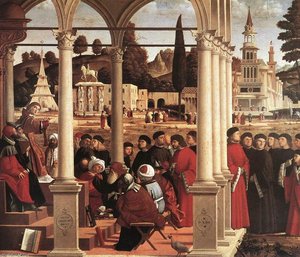
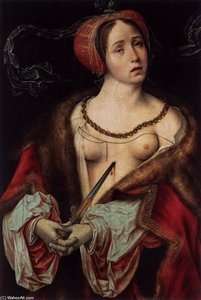
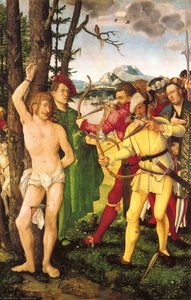
Biografija umetnika
Jörg Breu the Elder: A Master of Augsburg’s Renaissance
Born in Augsburg around 1475, Jörg Breu the Elder emerged as a significant figure within the burgeoning artistic landscape of late fifteenth-century Germany. His early life, shrouded in relative obscurity – he was the son of a weaver – belies the remarkable trajectory he would forge as a painter and master craftsman. Breu’s journey began with an apprenticeship under Ulrich Apt the Elder, a respected artist in Augsburg, providing him with a foundational understanding of traditional German painting techniques. However, it wasn't merely imitation that defined his artistic development; Breu possessed a keen eye for detail and a willingness to experiment, ultimately establishing himself as a key member of the influential Lederer circle – a group known for its innovative approach to religious art.
Breu’s early career was marked by a prolific output of altarpieces and devotional panels, primarily executed in the rich, jewel-toned palette characteristic of the Danube School. His work during this period demonstrates a masterful command of perspective and a growing interest in incorporating elements of naturalism into his compositions. A particularly striking example is the ‘Bernhard Altar,’ currently housed at the Städel Museum in Frankfurt, which showcases his skill in depicting scenes from the life of Saint Bernard with a remarkable attention to detail and a subtle use of atmospheric perspective. The painting’s earthy tones and symbolic representation of labor—monks harvesting wheat—offer a compelling glimpse into the social and religious concerns of Augsburg at the time.
Travels and Influences: Italy and Beyond
Breu's artistic development took a significant turn with his travels to Austria in 1500-02, where he created elaborate multi-panel altarpieces for monasteries like Melk Abbey. These early Austrian commissions established him as a highly sought-after artist, capable of executing complex and ambitious projects. However, Breu’s ambition extended beyond the Danube region; he undertook two significant journeys to Italy – once around 1508 and again in 1514/15 – experiences that profoundly shaped his artistic style.
These Italian sojourns exposed him to the innovations of Renaissance art, particularly the work of masters like Masaccio and Botticelli. He absorbed their techniques for linear perspective, anatomical accuracy, and a greater emphasis on naturalistic representation. Returning to Augsburg, Breu skillfully integrated these influences into his own style, creating works that retained the traditional German aesthetic while incorporating elements of Italian dynamism and elegance. The ‘Crucifixion’ painting, available on ArtsDot.com, exemplifies this synthesis – it displays both the solemnity of medieval iconography and a nascent understanding of Renaissance spatial techniques.
Religious Themes and Artistic Style
Breu's artistic output was overwhelmingly focused on religious subjects, reflecting the prevailing devotional climate of his time. He frequently depicted scenes from the lives of saints, biblical narratives, and representations of the Virgin Mary – all rendered with a meticulous attention to detail and a deep understanding of theological symbolism. His compositions often feature a balanced arrangement of figures within carefully constructed spaces, utilizing rich colors and intricate patterns to create visually arresting images.
A key characteristic of Breu’s style is his use of woodcuts and drawings, particularly for stained glass designs. These works demonstrate his versatility as an artist and his ability to translate complex visual ideas into concise and effective forms. His work on the Fugger Chapel in St Anne's showcases this skill, with intricate border drawings that add a layer of decorative richness to the overall design. Furthermore, Breu’s chronicle, meticulously kept from 1512 until his death, offers valuable insights into the social and religious context of Augsburg during the Reformation era, revealing a complex individual grappling with both traditional beliefs and emerging Protestant ideas.
Legacy and Artistic Lineage
Jörg Breu the Elder’s influence extended beyond his own lifetime. After his death in 1537, his son, Jörg Breu the Younger, continued to lead the Augsburg workshop until his own passing a decade later. The younger Breu maintained many of his father's artistic principles and techniques, ensuring the continuation of the family’s legacy within the city’s thriving art scene.
Breu’s work is now recognized as a crucial link between the late Gothic tradition and the early Renaissance in Germany. His paintings offer a valuable window into the cultural and religious life of Augsburg during a period of significant social and artistic transformation. His legacy endures through his surviving works, which are displayed in museums across Europe, and through the continued study of his life and art by scholars seeking to understand the complexities of German Renaissance painting.
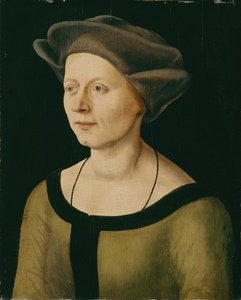
jörg the elder breu
1475 - 1537 , Germany
Osnovne informacije
- Artistic Movement Or Style: German Danube School
- Artists Or Movements Influenced By This Artist:
- Lederer circle
- Hans Burgkmair
- Artists Who Influenced This Artist: ['Ulrich Apt the Elder']
- Date Of Birth: 1475 Augsburg, Germany
- Date Of Death: 1537
- Full Name: Jörg Breu the Elder
- Nationality: German
- Notable Artworks:
- Crucifixion
- Bernhard Altar
- The Suicide of Lucretia
- Place Of Birth: Augsburg, Germany
Povezani članci

Porodična freska nasleđe: Očuvanje kulture i identiteta kroz zidno slikarstvo – Istorijski uvid za kolekcionare
Istražite bogatu istoriju zidnog slikarstva i njegov značaj za očuvanje kulture i porodičnog nasleđa. Ekskluzivni uvid za kolekcionare, restauratore i ljubitelje umetnosti. Saznajte više o tehnikama, vrednosti i budućnosti ove drevne veštine.

The Enduring Legacy of Fresco Painting: Techniques, History & Contemporary Relevance
Explore the rich history & enduring artistry of fresco painting – from Giotto to Michelangelo! Discover techniques, conservation efforts, & modern applications. Learn how ArtsDot brings this timeless art form to your home.

The Enduring Legacy of Fresco: Technique, History & Artistic Expression Across Cultures
Explore the rich history & enduring legacy of fresco painting! Discover ancient techniques, Giotto's masterpieces, and modern applications. Expert insights for art lovers & professionals.
Umetnička dela koja oživljavaju prostor: Emocionalna snaga personalizovane freske u enterijeru
Otkrijte emocionalnu snagu personalizovane freske! Ekskluzivni vodič o istoriji, tehnikama i primeni freski u luksuznom dizajnu enterijera. Kreirajte jedinstveno umetničko delo za vaš dom.
The Enduring Legacy of Fresco: Technique, History & Artistic Expression
Explore the rich history & enduring artistry of fresco painting. Discover techniques from Giotto to Michelangelo, conservation efforts, & modern applications. Learn how ArtsDot brings this timeless art form to your home.

