

 Pošalji
 Podeli
 Detalji o delu

 Преузми
 Slični predmeti
 Slajdovi
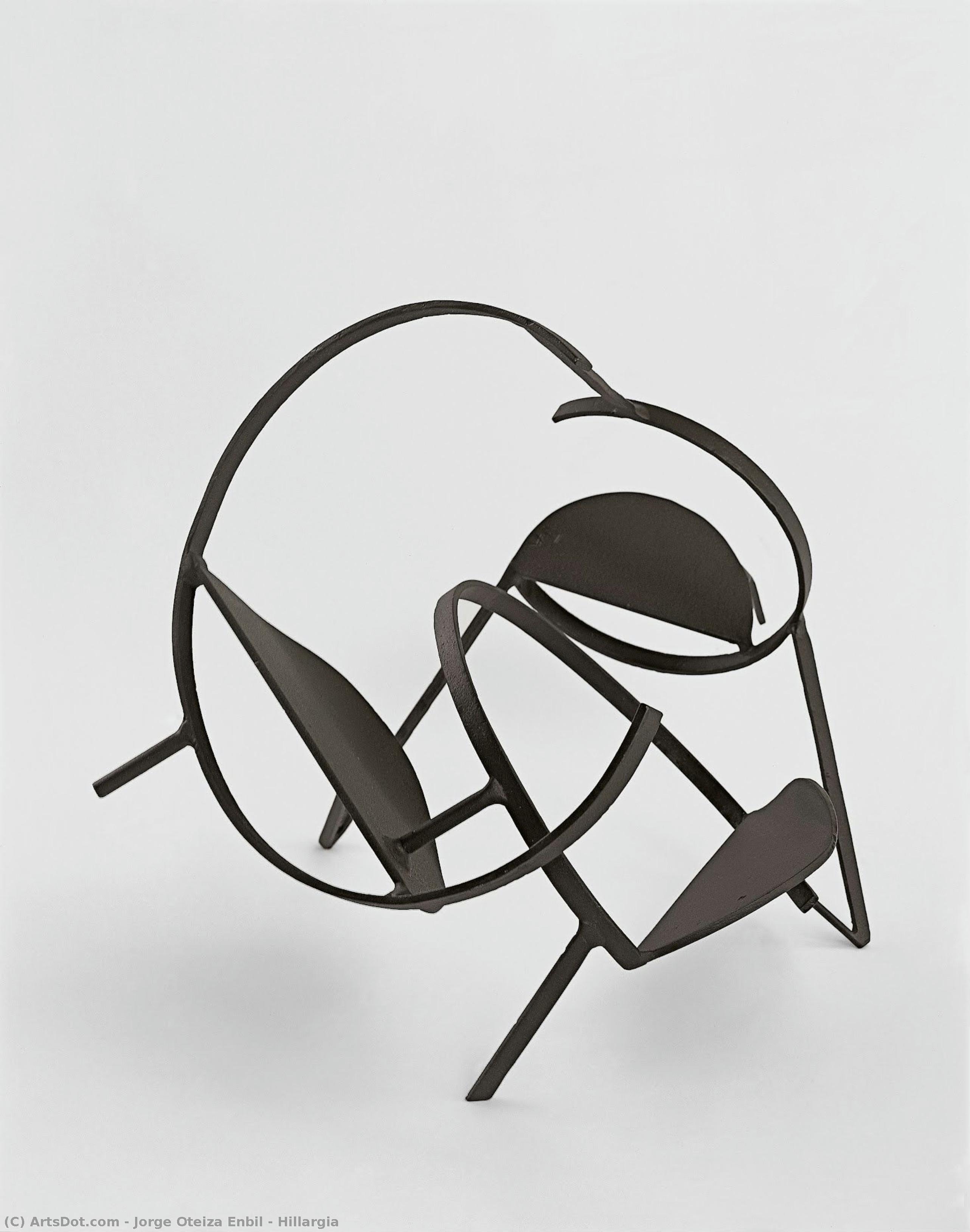
Hillargia
 Sculpture
- Sculpture
- Abstract Sculpture
 1957
1957 34.0 x 35.0 cm
 Guggenheim Museum Bilbao
 Pročitaj više
Ručno rađena uljana reprodukcija
Ručno oslikano uljanim bojama na platnu u dimenzijama i okviru po vašem izboru, izrađeno po porudžbini od strane naših umetnika. ( Kupi print Kupi digitalnu sliku)




































Izaberite jednu od naših unapred definisanih veličina koje odgovaraju originalnim proporcijama umetničkog dela.

Можете унети сопствене димензије како бисте прилагодили дело одређеном оквиру или простору. Ако одабрана величина не одговара пропорцијама оригинала, слика ће бити исечена или проширена додатним елементима који се ручно насликавају. Дигитални prikaz ће вам бити послат на одобрење пре почетка производње.
Имајте на уму да преглед на екрану не одражава стварно исецање или проширење. Само приказ (mockup) ће тачно приказати коначну композицију.
Иако су доступне прилагођене величине, препоручујемо да одаберете димензију из дефинисане листе како бисте сачували оригиналне пропорције.
Nakon narudžbine, tim ArtsDot.com će klijentu putem e-pošte poslati uputstva i dostaviti prikaz predloženog rešenja
Isporuka širom sveta () za 3/4 nedelje umesto uobičajenih 5 nedelja. (6 септембар). Bez kompromisa po pitanju kvaliteta.

Besplatna ekspresna dostava širom sveta

Visokokvalitetno laneno platno

Kompletno osiguranje transporta

Garancija povraćaja carine i uvoznih dažbina

Garancija vernosti boja

Politika povrata u roku od 100 dana (samo u slučaju nedostataka)

Garancija povrata novca od 100%

Popust pri grupnoj kupovini
 Opcija sa staklom dostupna je samo za dimenzije manje od 110 cm

Hillargia
Tehnika reprodukcije
Dimenzije reprodukcije
-


Konačna cena
$ 263
A Dialogue with Basque Roots: Exploring “Hillargia” by Jorge Oteiza
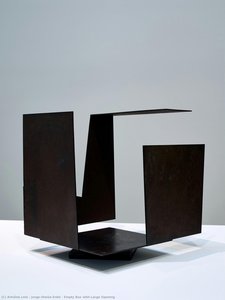
“Hillargia,” a captivating black and white photograph capturing Jorge Oteiza’s 1957 sculpture, is more than just a depiction of two stacked chairs; it's an invitation into the heart of Basque identity and a profound meditation on form, space, and the very nature of perception. Created during a pivotal period in Oteiza’s artistic evolution – following his decade-long sojourn in South America – this work embodies a shift towards abstraction while retaining a deep connection to his homeland's rich cultural heritage. The photograph itself, executed with meticulous detail, serves as a window into the sculpture’s essence, revealing its carefully considered composition and the subtle interplay of light and shadow.
Oteiza’s artistic journey is inextricably linked to the Basque landscape and traditions. Born in Orio, Gipuzkoa, he initially studied architecture but soon found himself drawn to sculpture, seeking a medium that could express the spirit of his people – a spirit deeply rooted in ritual, myth, and a unique relationship with the natural world. His time abroad exposed him to international artistic currents, yet he remained steadfastly committed to exploring themes central to Basque culture: the duality of tradition and modernity, the tension between stability and disruption, and the inherent symbolism embedded within everyday objects.
Deconstructing Form: Oteiza’s Approach
Oteiza's sculptural practice is characterized by a deliberate deconstruction of form. He frequently employed simple, readily available materials – often wood or stone – to create works that challenge conventional notions of beauty and functionality. “Hillargia” exemplifies this approach perfectly. The two chairs, seemingly ordinary objects, are presented in an inverted relationship, one resting precariously upon the other. This deliberate imbalance isn’t merely a visual trick; it represents a disruption of established order, a questioning of the assumed stability of both form and function. The clean lines and geometric shapes, reminiscent of modernist design principles, contrast with the inherent instability of the arrangement, creating a dynamic tension that invites contemplation.
Furthermore, Oteiza’s work is deeply informed by his concept of “Euskal Herriaren Artea” – Art of the Basque Country. This philosophy emphasizes the importance of understanding art as a means of expressing and preserving cultural identity. He believed that objects should not simply be beautiful or functional but should also carry symbolic weight, reflecting the values and beliefs of their creators and communities. The inverted chair can be interpreted as a symbol of this disruption – a challenge to conventional norms, a questioning of established hierarchies, and perhaps even a reflection on the complexities of Basque history.
The Photographic Capture: Light, Texture, and Detail
The photograph itself is a testament to the skill of its creator. The monochrome palette—a carefully chosen range of grays—amplifies the sculpture’s form and texture, eliminating distractions and focusing attention on the interplay of light and shadow. The diffused lighting reveals subtle variations in surface, suggesting the material – likely metal or stone – used in the original sculpture. The composition is straightforward, presenting a frontal view that emphasizes the spatial relationships between the chairs. The depth created through layering and shading adds to the sense of realism while simultaneously highlighting the artwork’s three-dimensional nature.
The photograph's dimensions—34 x 35 cm—are thoughtfully considered, providing an intimate scale that allows for close examination of the sculpture’s details. The date, 1957, places this work within a crucial period of Oteiza’s artistic development – a time when he was actively refining his unique style and exploring new ways to express Basque identity through abstract form. The photograph serves not just as a record of the sculpture but also as a window into the artist's creative process and the cultural context in which it was produced.
A Legacy of Innovation: Oteiza’s Enduring Influence
Jorge Oteiza remains one of the most significant figures in 20th-century Basque art. His work continues to inspire artists and designers around the world, demonstrating the power of abstraction to convey complex ideas and emotions. “Hillargia,” through its deceptively simple composition and profound symbolism, offers a compelling glimpse into the artist’s vision – a vision rooted in his heritage, informed by international influences, and ultimately dedicated to exploring the enduring questions of identity, form, and space.
Srodna umetnička dela




Biografija umetnika
Jorge Oteiza: Life and Legacy
Early Life and Education
- Born: Jorge de Oteiza Embil on October 21, 1908, in Orio, Gipuzkoa, Spain.
- Oteiza’s early life was marked by a strong connection to his Basque heritage and the surrounding landscape. This would profoundly influence his artistic vision.
- He initially pursued studies in architecture but soon gravitated towards sculpture and painting.
Years in South America (1935-1948)
- Exile and Artistic Development: In 1935, anticipating the Spanish Civil War, Oteiza moved to Buenos Aires, Argentina. This period was crucial for his artistic development.
- He experimented with various materials and techniques, moving away from traditional representational sculpture towards more abstract forms.
- His time in South America allowed him to develop a unique artistic voice, free from the constraints of European academic traditions.
Return to Spain and Artistic Maturity (1948-1975)
- Post-War Spain: Oteiza returned to Spain in 1948, a country still recovering from the Civil War and under Franco’s dictatorship.
- He became a leading figure in the Spanish avant-garde movement, challenging artistic norms and exploring new forms of expression.
- ‘Quosque tandem!’ (1963): This seminal essay articulated Oteiza’s aesthetic philosophy, rooted in Basque prehistoric art and anthropology. It explored the “soul” of the Basque people through their artistic heritage.
- He co-founded the artistic group Gaur in 1966, dedicated to promoting modern Basque art and culture.
Artistic Style and Influences
- Abstract Sculpture: Oteiza is best known for his abstract sculptures, often constructed from wood, stone, or steel. These works are characterized by their minimalist forms, geometric shapes, and empty spaces.
- Influences: His work draws inspiration from Basque mythology, prehistoric art, Constructivism, and the work of artists like Constantin Brâncuși and Henry Moore.
- He often employed a technique of “emptying” forms, creating sculptures that suggest both presence and absence. This reflects his philosophical interest in the relationship between being and nothingness.
Major Achievements and Recognition
- International Acclaim: Oteiza’s work gained international recognition through exhibitions in São Paulo, Paris, and London.
- He received numerous awards throughout his career, including the Prince of Asturias Prize for the Arts (1988) and the Gold Medal for Fine Arts (Spain).
- The Oteiza Museum: Following his death in 2003, a museum dedicated to his work was opened in Alzuza, Navarre, fulfilling his wish to create a space for preserving and studying his artistic legacy.
Historical Significance
- Pioneer of Basque Modern Art: Oteiza is considered one of the most important figures in 20th-century Spanish art, particularly for his role in defining a modern Basque artistic identity.
- His work challenged traditional notions of sculpture and explored profound philosophical themes.
- He left behind a vast body of work that continues to inspire artists and scholars today.
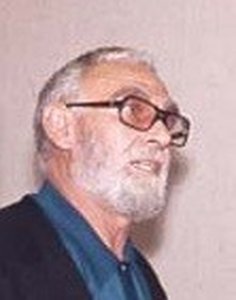
jorge oteiza enbil
1908 - 2003 , Spain
Osnovne informacije
- Birth Date: October 21, 1908
- Birth Place: Orio, Gipuzkoa, Spain
- Death Date: April 9, 2003
- Movement:
- Equipo 57
- Gaur
- Land art
- Name: Jorge Oteiza Enbil
- Nationality: Spanish, Basque
Povezani članci

Bronze Sculptures That Defined Art History | ArtsDot
Journey through art history with our Top 10 bronze sculptures! Explore masterpieces by Rodin, Michelangelo & more. Discover stories behind iconic statues and find museum-quality reproductions for your home decor at ArtsDot.com.

The Enduring Form: Exploring Themes & Techniques in Sculpture Across Historical Periods
Explore the rich history of sculpture from ancient masterpieces to contemporary innovations. Discover key techniques, influential artists & investment potential for discerning art collectors.

Dark Masterpieces: 10 Iconic Paintings Dominated by Black Tones |
Explore 10 iconic paintings dominated by black tones, from Rembrandt’s chiaroscuro to Goya's dark expressions. Discover the stories behind these masterpieces & find museum-quality art reproductions for your home at .

Bronze Age to Modern Masters: 10 Sculptures That Redefined Art | ArtsDot
Journey through art history with 10 legendary bronze sculptures – from Michelangelo's David to Rodin’s Thinker. Explore the stories, techniques & timeless beauty of these masterpieces. Find museum-quality reproductions & elevate your home decor on ArtsDot.com.

The Enduring Form: Sculpture Across History, Technique & Emotional Resonance
Explore the rich history of sculpture with ArtsDot. Discover key techniques, influential artists & investment potential for discerning collectors. Expert insights into valuing and collecting timeless masterpieces.