 Pregledaj u prostoru
 Pošalji
 Podeli
 Detalji o delu

 Преузми
 Slični predmeti
 Rendgenski snimak
 Slajdovi
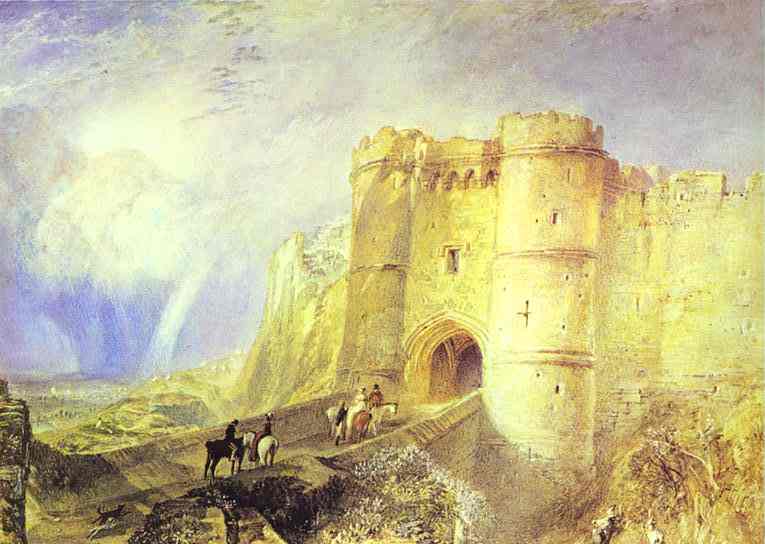
Carisbrook Castle, Isle of Wight


 Pročitaj više
Giclee štampa / Umetnički otisak
Giclée štampa ili print na platnu muzejskog kvaliteta uz brzu proizvodnju i fleksibilne opcije završne obrade. ( Kupi ručno naslikanu sliku Kupi digitalnu sliku)




































Izaberite jednu od naših unapred definisanih veličina koje odgovaraju originalnim proporcijama umetničkog dela.

Možete uneti sopstvene dimenzije kako biste umetničko delo prilagodili specifičnom okviru ili prostoru. Ako odabrani format ne odgovara proporcijama originalne slike, mi ćemo ili iscrtati deo dela ili proširiti sliku pomoću ogledane ivice ili jednobojnog popunjavanja. Digitalni prikaz će vam biti poslat na odobrenje pre početka proizvodnje.
Imajte na umu da pregled na ekranu ne odražava stvarno iscrtavanje ili proširivanje. Samo će prikaz (mockup) precizno pokazati finalnu kompoziciju.
Iako su prilagođene dimenzije dostupne, preporučujemo da odaberete dimenziju sa unapred definisane liste kako biste očuvali originalne proporcije.
Dostava širom sveta () za 2 nedelje umesto uobičajenih 4/5 nedelja. (27 август)

Besplatna ekspresna dostava širom sveta

Visokokvalitetno laneno platno

Kompletno osiguranje transporta

Garancija povraćaja carine i uvoznih dažbina

Garancija vernosti boja

Politika povrata u roku od 60 dana (samo u slučaju nedostataka)

Garancija povrata novca od 100%

Popust pri grupnoj kupovini
 Opcija sa staklom dostupna je samo za dimenzije manje od 110 cm

Carisbrook Castle, Isle of Wight
Giclee štampa / Umetnički otisak
Dimenzije reprodukcije
-


Konačna cena
$ 62
A Romantic Vision of Carisbrook Castle: A Turner-esque Masterpiece
This captivating artwork transports viewers to a bygone era, depicting Carisbrook Castle on the Isle of Wight in all its imposing grandeur. Painted around 1828, it evokes the spirit of J.M.W. Turner with its loose brushwork, atmospheric perspective, and dramatic use of light – hallmarks of the Romantic movement. The castle itself dominates the composition, perched atop a hill overlooking a vast, rolling landscape, suggesting strength, resilience, and a connection to history.
Style & Technique: Echoes of Turner
The painting is deeply rooted in the Romantic style, prioritizing emotional impact and imaginative vision over strict realism. Notice how the artist skillfully employs atmospheric perspective – distant elements are softened and muted, creating a sense of depth and vastness. The technique involves layering thin washes of oil paint on canvas to build up color and form, resulting in a luminous effect characteristic of Turner’s work. Observe the expressive use of lines; they aren't precise but rather fluid and dynamic, contributing to the overall feeling of movement and energy within the scene.
Historical Context & Symbolism
Carisbrook Castle holds significant historical importance as a Norman castle with centuries of history. The painting reflects a fascination with medieval architecture and military power prevalent during the 19th century. The figures on the pathway leading to the castle – soldiers and riders – hint at activity and perhaps even conflict, grounding the scene in a sense of narrative. Symbolically, the fortress represents strength, defense, and a connection to a romanticized past. The stormy sky above isn't merely atmospheric; it can be interpreted as symbolizing change, challenge, or even the turbulent nature of history itself.
Emotional Impact & Artistic Legacy
Beyond its historical depiction, this artwork aims to evoke a powerful emotional response. The dramatic lighting and swirling clouds create an ethereal and somewhat turbulent atmosphere, drawing the viewer into the scene. The painting’s success lies in its ability to capture not just the appearance of Carisbrook Castle but also the feeling of awe and wonder associated with it. It stands as a testament to the enduring legacy of Romantic art and its power to transport us to another time and place.
Key Features at a Glance:
- Subject: Carisbrook Castle, Isle of Wight
- Style: Romanticism
- Technique: Oil on canvas, layered washes, atmospheric perspective
- Date: 1828
- Influences: J.M.W. Turner
Srodna umetnička dela
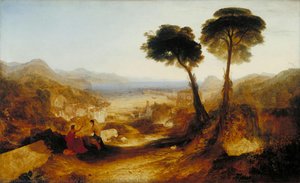
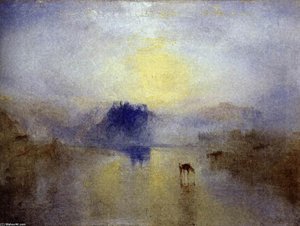
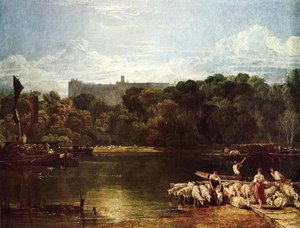
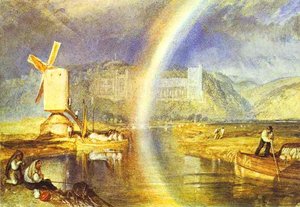
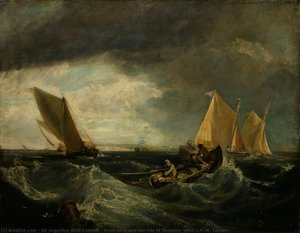
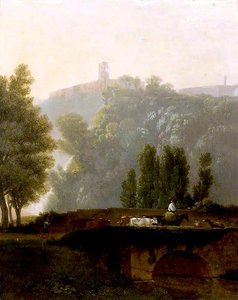
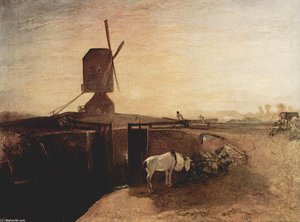
Biografija umetnika
The Luminary of Light: A Journey Through the Life and Art of J.M.W. Turner
Joseph Mallord William Turner, a name synonymous with the sublime power of landscape and the evocative dance of light, remains one of Britain’s most celebrated and influential artists. Born in Covent Garden, London, in 1775, Turner's journey from a barber’s son to a master painter was fueled by an innate talent, relentless dedication, and a visionary spirit that would forever alter the course of art history. From his earliest days sketching architectural details to his later, almost abstract explorations of atmosphere and color, Turner consistently pushed the boundaries of artistic expression. His formal training began at the Royal Academy Schools in 1789, where he quickly distinguished himself as a promising student. However, Turner was not content with merely replicating established styles; he sought to capture the very essence of nature – its raw power, its fleeting beauty, and its inherent drama. Early works reveal a meticulous attention to topographical detail, reflecting the prevailing artistic tastes of the time. Yet, even in these early pieces, hints of his future direction are visible—a sensitivity to light and shadow, a willingness to experiment with color, and an emerging fascination with the sublime. He was particularly drawn to the Romantic movement’s emphasis on emotion and imagination, rejecting the rationalism of Neoclassicism in favor of subjective experience.The Evolution of a Visionary: From Topography to Transcendence
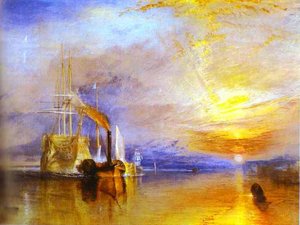
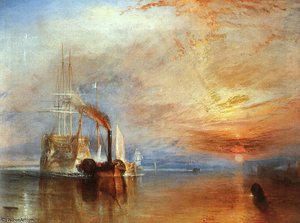
Turner’s artistic development was marked by constant experimentation and a growing desire to move beyond mere representation. Influenced by masters like Claude Lorrain and J.M.W. Cozens, he began to infuse his landscapes with a romantic sensibility, emphasizing emotional response over precise depiction. His travels throughout Europe, beginning in 1802, proved pivotal, exposing him to diverse landscapes and inspiring new approaches to composition and color. He wasn’t simply recording what he saw; he was interpreting it through the lens of his own unique vision. These expeditions broadened his artistic horizons and solidified his belief that art should strive for something beyond mere visual accuracy—a connection with the spiritual realm. The early 19th century witnessed a shift in Turner's style towards greater expressiveness. His seascapes, in particular, became increasingly dramatic, capturing the fury and majesty of the ocean with unprecedented intensity. Paintings like “The Fighting Temeraire Tugged to Her Last Berth to Be Broken Up” (1839) are not merely depictions of a ship being towed to its final resting place; they are poignant meditations on mortality, loss, and the relentless march of progress. The use of light in this work is particularly striking—a golden sunset casting a melancholic glow over the scene, symbolizing the passing of an era. Turner skillfully employed impasto technique – applying thick layers of paint – to convey texture and dynamism, creating surfaces that seemed to pulsate with energy.A Master of Atmosphere: Light, Color, and the Sublime
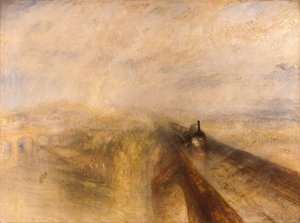
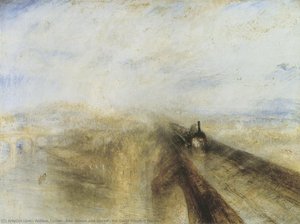
Turner’s later works are characterized by an almost radical departure from traditional artistic conventions. He increasingly prioritized atmosphere and color over form and detail, creating paintings that seem to dissolve into pure light and energy. Works like “Rain, Steam and Speed – The Great Western Railway” (1844) exemplify this approach—a swirling vortex of color and motion that captures the dynamism of the industrial age. Critics were often baffled by these later works, but their influence on subsequent generations of artists would prove profound. Turner’s unwavering commitment to artistic vision drove him to explore uncharted territories of perception, anticipating the Impressionists’ focus on capturing fleeting moments and subjective experiences. He wasn't simply painting landscapes; he was attempting to convey the very *feeling* of being in nature – the awe, the wonder, the terror.Turner's legacy extends far beyond his prolific output—over 550 oil paintings, 2,000 watercolors, and 30,000 works on paper. He left an indelible mark on the history of art, influencing countless artists who followed in his footsteps. The Impressionists, particularly Claude Monet, were deeply inspired by Turner’s exploration of light and color, while abstract expressionists like Mark Rothko acknowledged their debt to his atmospheric compositions.
Turner's willingness to challenge conventions, his relentless experimentation, and his unwavering commitment to artistic vision continue to resonate with artists and art lovers today. He remains a pivotal figure in the development of modern art, a true visionary who transformed the way we see and experience the world around us. His works are housed in major museums worldwide, including the Tate Britain in London, where visitors can immerse themselves in the luminous beauty and profound emotional depth of his extraordinary paintings.
Explore more of Turner’s works at ArtsDot.com/@/williamturner and discover his world through the Tate Collection: /sr/art/show/art-d3c5y9-sr/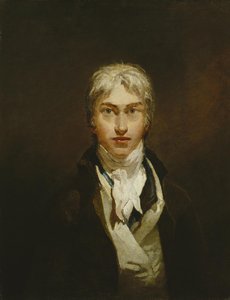
Јозеф Турнер
1775 - 1851 , Уједињено Краљевство
Osnovne informacije
- Artistic Movement Or Style: Романтизам
- Artists Or Movements Influenced By This Artist:
- Клод Лоран
- Марк Роћко
- Date Of Birth: Април 23, 1775
- Date Of Death: Децембар 19, 1851
- Full Name: Joseph Mallord William Turner
- Nationality: Велика Британија
- Notable Artworks:
- Бојта Темераир вучена у последњи дом за разбијање
- Великобританија и Велика западна железница
- Place Of Birth: Лондон, Велика Британија
Povezani članci

Glavna dela koja su definisala Romantični pejzaž: 10 remek-dela za vaš dom
Otkrijte 10 remek-dela romantičnog pejzažnog slikarstva! Uronite u svet Claude Lorraina, Caspara David Friedricha i Turnera. Ispričane priče umetnosti, inspiracija za dekoraciju doma. Kvalitetne reprodukcije na ArtsDot.com – istražite celu kolekciju online!
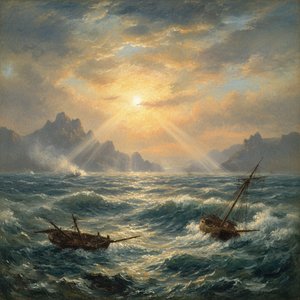
J.M.W. Turner: Light, Atmosphere & the Romantic Sublime
Explore the life & art of J.M.W. Turner, a master of Romantic landscape painting. Discover his innovative techniques, key works, and lasting influence on Impressionism. Find high-quality reproductions at ArtsDot.

Evocations of Place: A Historical Journey Through Landscape Art
Explore the rich history of landscape art with ArtsDot. Discover renowned artists, movements like Impressionism & Romanticism, and expert guidance for collecting timeless pieces. Find your perfect serene escape today!
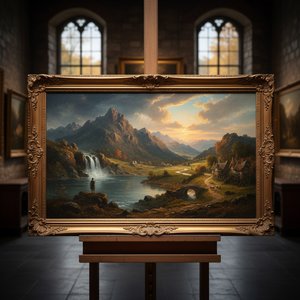
The Sublime and the Picturesque: Exploring Emotion & Nature in Romantic Landscape Painting
Explore the emotional power of Romantic landscape painting! Discover the sublime & picturesque traditions, key artists like Friedrich & Cole, and find your perfect artwork at ArtsDot.
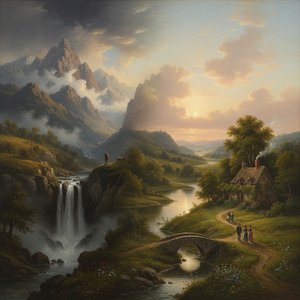
The Sublime and the Picturesque: Exploring Emotion & Nature in Romantic Landscape Painting
Explore the emotional power of Romantic landscape painting! Discover the sublime & picturesque aesthetics, key artists like Friedrich & Cole, and lasting influence on art history. Find your perfect piece at ArtsDot.