 Pregledaj u prostoru
 Pošalji
 Podeli
 Detalji o delu

 Преузми
 Slični predmeti
 Rendgenski snimak
 Slajdovi
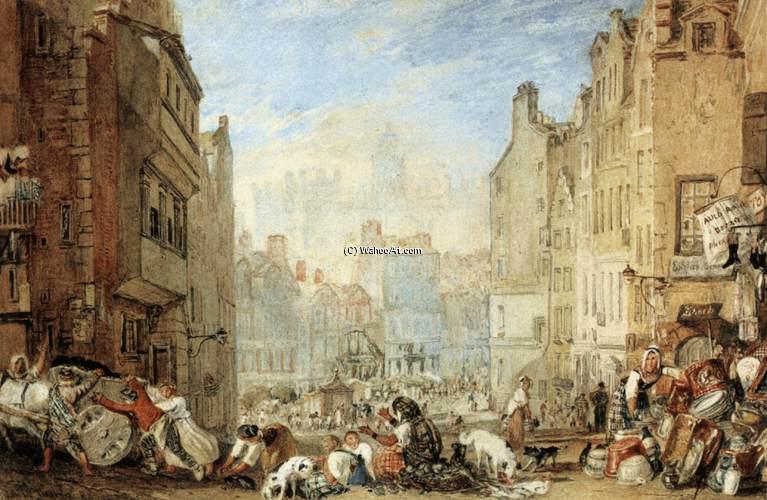
Heriot's Hospital, Edinburgh
 Acrylic On Canvas
- WallArt
- Romanticism
 1819
1819 166.0 x 250.0 cm
 National Gallery of Scotland
 Pročitaj više
Ručno rađena uljana reprodukcija
Ručno oslikano uljanim bojama na platnu u dimenzijama i okviru po vašem izboru, izrađeno po porudžbini od strane naših umetnika. ( Kupi print Kupi digitalnu sliku)




P118B $10

P118H $10

P118W $10

P438Z $10

P508JH $12

P508YH $12

P805H $10

P805Z $10

P919BZ $10

P919G $10

P919XJ $10

P959ZH $10

P968JZ $12

W106C $8

W218G $10

W218JH $8

W218Y $10

W307PJ $10

W316G $10

W316PJ $8

W316Y $10

W398PJ $8

W4111J $10

W500HY $15

W500JH $15

W692G $12

W849H $8

W940BG $15

W953PJ $8




Izaberite jednu od naših unapred definisanih veličina koje odgovaraju originalnim proporcijama umetničkog dela.

Можете унети сопствене димензије како бисте прилагодили дело одређеном оквиру или простору. Ако одабрана величина не одговара пропорцијама оригинала, слика ће бити исечена или проширена додатним елементима који се ручно насликавају. Дигитални prikaz ће вам бити послат на одобрење пре почетка производње.
Имајте на уму да преглед на екрану не одражава стварно исецање или проширење. Само приказ (mockup) ће тачно приказати коначну композицију.
Иако су доступне прилагођене величине, препоручујемо да одаберете димензију из дефинисане листе како бисте сачували оригиналне пропорције.
Nakon narudžbine, tim ArtsDot.com će klijentu putem e-pošte poslati uputstva i dostaviti prikaz predloženog rešenja
Isporuka širom sveta () za 3/4 nedelje umesto uobičajenih 5 nedelja. (24 август). Bez kompromisa po pitanju kvaliteta.

Besplatna ekspresna dostava širom sveta

Visokokvalitetno laneno platno

Kompletno osiguranje transporta

Garancija povraćaja carine i uvoznih dažbina

Garancija vernosti boja

Politika povrata u roku od 60 dana (samo u slučaju nedostataka)

Garancija povrata novca od 100%

Popust pri grupnoj kupovini
 Opcija sa staklom dostupna je samo za dimenzije manje od 110 cm

Heriot's Hospital, Edinburgh
Tehnika reprodukcije
Dimenzije reprodukcije
-


Konačna cena
$ 263
Opis umetničkog dela
The Bustling Heart of Edinburgh: Turner’s ‘Heriot’s Hospital’
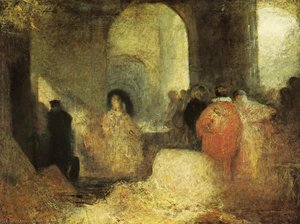
Joseph Mallord William Turner's “Heriot’s Hospital, Edinburgh,” painted in 1819, isn’t merely a depiction of a street scene; it’s a vibrant snapshot of urban life, imbued with the Romantic painter’s signature fascination for light, atmosphere, and the dynamic energy of a bustling city. This watercolor, now housed within the Scottish National Gallery, offers a captivating glimpse into 19th-century Edinburgh – a city brimming with both grandeur and gritty reality. The painting immediately draws the eye to the imposing silhouette of Heriot’s Hospital itself, a magnificent Renaissance structure that dominates the composition despite being somewhat obscured by the surrounding chaos. Turner doesn't present a static portrait; instead, he captures a moment of intense activity, a teeming confluence of people and commerce within the narrow confines of the West Bow – now Victoria Street.
Turner’s technique is immediately striking. He employs loose, expressive brushstrokes, layering washes of color to create an almost palpable sense of movement and depth. The light, particularly, is central to his approach. It's not a literal representation but rather an interpretation—a luminous haze that seems to emanate from the buildings themselves, softening edges and lending the scene a dreamlike quality. Notice how he uses darker tones in the foreground to draw the viewer’s eye towards the brighter, more distant elements of the composition. This masterful manipulation of light and shadow is characteristic of Turner's Romantic style, prioritizing emotional impact over precise detail.
A Window into Edinburgh’s Social Fabric
The scene unfolds with remarkable immediacy. The street is alive with a diverse cast of characters – merchants hawking their wares, laborers hauling goods, children playing amongst the throng, and a horse-drawn cart struggling up the steep incline. Turner meticulously captures these figures, imbuing them with personality and suggesting stories within each face. The inclusion of a sign reading “English School” is particularly intriguing; it’s possible Turner was subtly commenting on his own status as an English artist observing Scottish life, adding a layer of self-awareness to the work. The presence of a dog adds another touch of realism, grounding the scene in everyday experience.
Beyond the immediate depiction of commerce and daily routines, “Heriot’s Hospital” offers a valuable insight into Edinburgh's social structure during this period. The juxtaposition of grand architecture with humble dwellings highlights the city’s inherent contrasts – its wealth alongside poverty, its formality alongside informality. The hospital itself, founded by George Heriot in 1659 as a charitable institution for orphaned children, represents an ideal of civic responsibility and social welfare, standing as a beacon amidst the urban hustle.
Symbolism and Romantic Vision
Turner’s work is rich with symbolism. The steepness of the street, emphasized by the figures straining uphill with their burdens, can be interpreted as a metaphor for the challenges faced by ordinary people in 19th-century Edinburgh. The hazy atmosphere, characteristic of Turner's style, evokes a sense of mystery and timelessness, suggesting that the scene transcends its specific historical context. The overall composition feels almost theatrical – like a stage set designed to capture a fleeting moment of urban drama.
Furthermore, the painting embodies the core tenets of Romanticism: an appreciation for nature’s power, an emphasis on emotion and imagination, and a fascination with the sublime—that feeling of awe and wonder inspired by confronting something vast and overwhelming. Turner wasn't simply recording what he saw; he was translating his emotional response to the scene onto paper, creating a work that resonates deeply with viewers even today.
Bringing ‘Heriot’s Hospital’ Home
Reproductions of “Heriot’s Hospital” offer a remarkable opportunity to bring this captivating piece of Scottish history into your home. Whether you choose a fine art print or a meticulously crafted hand-painted reproduction, the vibrant colors and dynamic composition will undoubtedly serve as a focal point in any room. Consider framing it within a classic wooden frame to complement the painting’s historical aesthetic. This artwork is more than just decoration; it's a portal into another time and place—a testament to Turner’s genius and a celebration of Edinburgh’s enduring spirit.
Srodna umetnička dela
Biografija umetnika
The Luminary of Light: A Journey Through the Life and Art of J.M.W. Turner
Joseph Mallord William Turner, a name synonymous with the sublime power of landscape and the evocative dance of light, remains one of Britain’s most celebrated and influential artists. Born in Covent Garden, London, in 1775, Turner's journey from a barber’s son to a master painter was fueled by an innate talent, relentless dedication, and a visionary spirit that would forever alter the course of art history. From his earliest days sketching architectural details to his later, almost abstract explorations of atmosphere and color, Turner consistently pushed the boundaries of artistic expression. His formal training began at the Royal Academy Schools in 1789, where he quickly distinguished himself as a promising student. However, Turner was not content with merely replicating established styles; he sought to capture the very essence of nature – its raw power, its fleeting beauty, and its inherent drama. Early works reveal a meticulous attention to topographical detail, reflecting the prevailing artistic tastes of the time. Yet, even in these early pieces, hints of his future direction are visible—a sensitivity to light and shadow, a willingness to experiment with color, and an emerging fascination with the sublime. He was particularly drawn to the Romantic movement’s emphasis on emotion and imagination, rejecting the rationalism of Neoclassicism in favor of subjective experience.The Evolution of a Visionary: From Topography to Transcendence
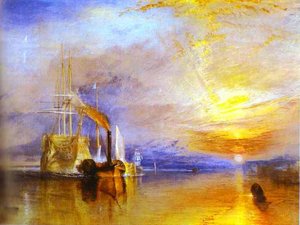
Turner’s artistic development was marked by constant experimentation and a growing desire to move beyond mere representation. Influenced by masters like Claude Lorrain and J.M.W. Cozens, he began to infuse his landscapes with a romantic sensibility, emphasizing emotional response over precise depiction. His travels throughout Europe, beginning in 1802, proved pivotal, exposing him to diverse landscapes and inspiring new approaches to composition and color. He wasn’t simply recording what he saw; he was interpreting it through the lens of his own unique vision. These expeditions broadened his artistic horizons and solidified his belief that art should strive for something beyond mere visual accuracy—a connection with the spiritual realm. The early 19th century witnessed a shift in Turner's style towards greater expressiveness. His seascapes, in particular, became increasingly dramatic, capturing the fury and majesty of the ocean with unprecedented intensity. Paintings like “The Fighting Temeraire Tugged to Her Last Berth to Be Broken Up” (1839) are not merely depictions of a ship being towed to its final resting place; they are poignant meditations on mortality, loss, and the relentless march of progress. The use of light in this work is particularly striking—a golden sunset casting a melancholic glow over the scene, symbolizing the passing of an era. Turner skillfully employed impasto technique – applying thick layers of paint – to convey texture and dynamism, creating surfaces that seemed to pulsate with energy.A Master of Atmosphere: Light, Color, and the Sublime
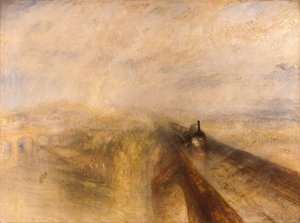
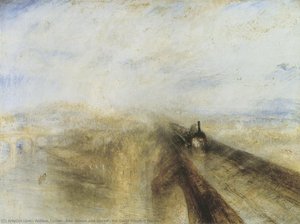
Turner’s later works are characterized by an almost radical departure from traditional artistic conventions. He increasingly prioritized atmosphere and color over form and detail, creating paintings that seem to dissolve into pure light and energy. Works like “Rain, Steam and Speed – The Great Western Railway” (1844) exemplify this approach—a swirling vortex of color and motion that captures the dynamism of the industrial age. Critics were often baffled by these later works, but their influence on subsequent generations of artists would prove profound. Turner’s unwavering commitment to artistic vision drove him to explore uncharted territories of perception, anticipating the Impressionists’ focus on capturing fleeting moments and subjective experiences. He wasn't simply painting landscapes; he was attempting to convey the very *feeling* of being in nature – the awe, the wonder, the terror.Turner's legacy extends far beyond his prolific output—over 550 oil paintings, 2,000 watercolors, and 30,000 works on paper. He left an indelible mark on the history of art, influencing countless artists who followed in his footsteps. The Impressionists, particularly Claude Monet, were deeply inspired by Turner’s exploration of light and color, while abstract expressionists like Mark Rothko acknowledged their debt to his atmospheric compositions.
Turner's willingness to challenge conventions, his relentless experimentation, and his unwavering commitment to artistic vision continue to resonate with artists and art lovers today. He remains a pivotal figure in the development of modern art, a true visionary who transformed the way we see and experience the world around us. His works are housed in major museums worldwide, including the Tate Britain in London, where visitors can immerse themselves in the luminous beauty and profound emotional depth of his extraordinary paintings.
Explore more of Turner’s works at ArtsDot.com/@/williamturner and discover his world through the Tate Collection: /sr/art/show/art-d3c5y9-sr/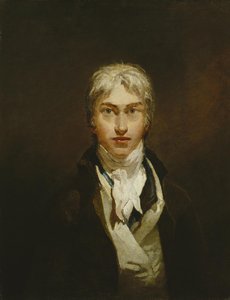
Јозеф Турнер
1775 - 1851 , Уједињено Краљевство
Osnovne informacije
- Artistic Movement Or Style: Романтизам
- Artists Or Movements Influenced By This Artist:
- Клод Лоран
- Марк Роћко
- Date Of Birth: Април 23, 1775
- Date Of Death: Децембар 19, 1851
- Full Name: Joseph Mallord William Turner
- Nationality: Велика Британија
- Notable Artworks:
- Бојта Темераир вучена у последњи дом за разбијање
- Великобританија и Велика западна железница
- Place Of Birth: Лондон, Велика Британија
Povezani članci

Watercolor Wonders: 10 Masterpieces That Redefined Art History | ArtsDot
Journey through 10 legendary watercolor masterpieces by Sargent, Turner & Homer! Explore iconic landscapes, portraits & floral art that redefined history. Find museum-quality reproductions and curated decor ideas at ArtsDot.com.

Ephemeral Visions: Exploring the Artistic Legacy & Contemporary Practice of Watercolor Painting
Explore the captivating world of watercolor painting! Discover its rich history, essential techniques, influential artists & collecting tips. A comprehensive guide for art enthusiasts from ArtsDot.

Ephemeral Visions: Exploring the History & Emotional Resonance of Watercolor Painting
Explore the captivating history of watercolor painting, from ancient techniques to modern masters like Kandinsky & Blake. Discover essential artists, collecting tips & the emotional power of this luminous medium. Expert insights for art enthusiasts.

Ephemeral Visions: Exploring the Artistic Legacy & Nuances of Watercolor Painting
Explore the captivating world of watercolor painting! Discover its rich history, essential techniques, influential artists & collecting tips from art experts. A comprehensive guide for enthusiasts.
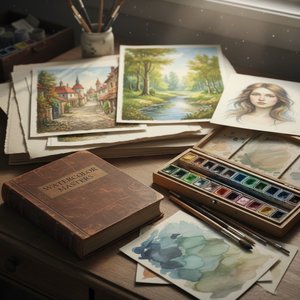
Акварел кроз векове: Историјски развој, технике и савремена пракса
Истражите историју акварела, технике и савремене трендове уз стручне увиде ArtsDot-а. Сазнајте више о познатим уметницима и материјалима за сликање акварелом. Купите квалитетне репродукције или наручите персонализовани портрет!