 Pregledaj u prostoru
 Pošalji
 Podeli
 Detalji o delu

 Преузми
 Slični predmeti
 Rendgenski snimak
 Slajdovi
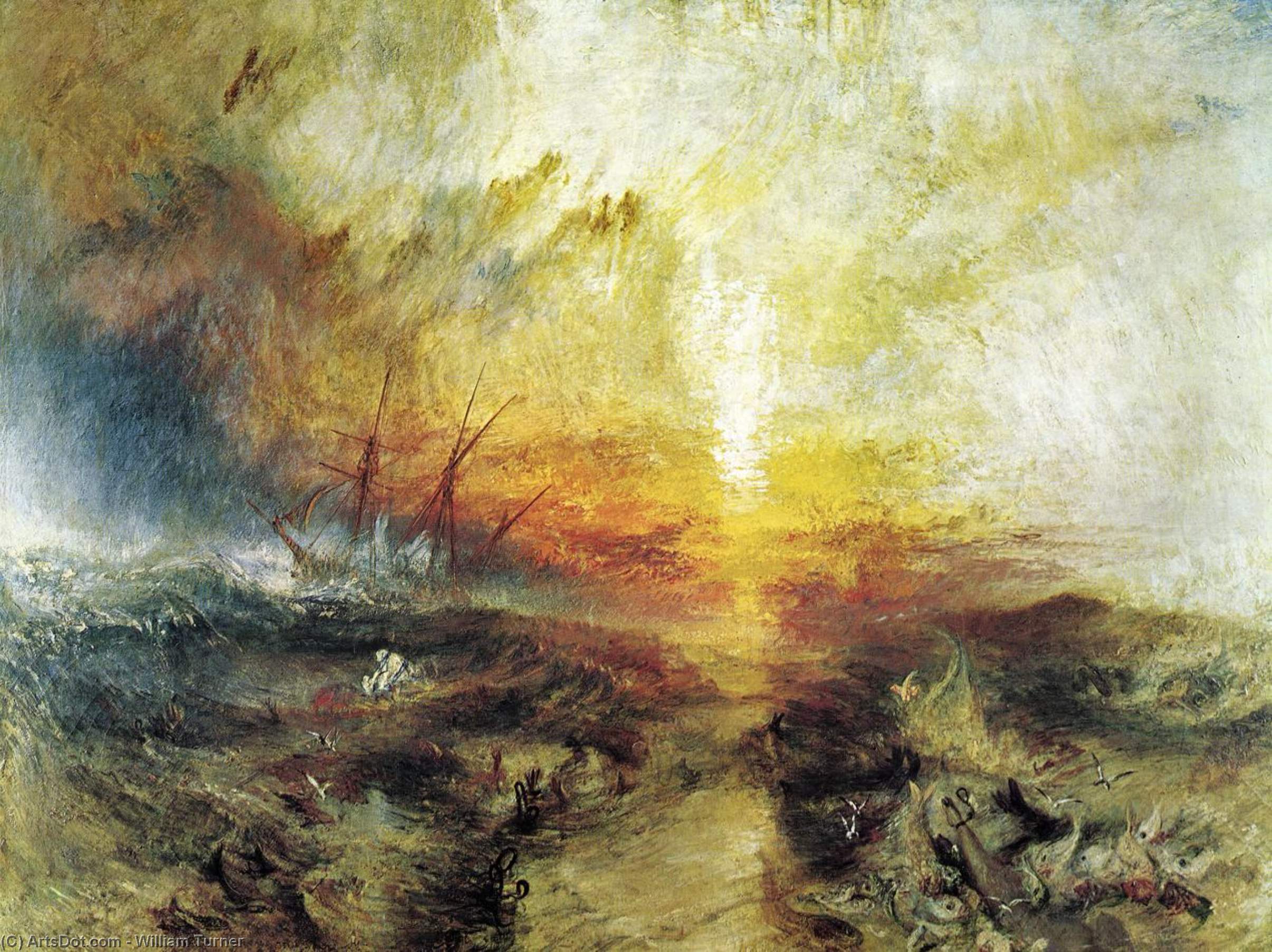
Slavers Throwing Overboard the Dead and Dying - Typhon Coming on
 Ulje na platnu
- Umetnost za zidove
- Romantic Maritime
 1840
1840 91.0 x 138.0 cm
 Muzej lepih umetnosti u Bostonu
 Pročitaj više
Ručno rađena uljana reprodukcija
Ručno oslikano uljanim bojama na platnu u dimenzijama i okviru po vašem izboru, izrađeno po porudžbini od strane naših umetnika. ( Kupi print Kupi digitalnu sliku)




P118B $10

P118H $10

P118W $10

P438Z $10

P508JH $12

P508YH $12

P805H $10

P805Z $10

P919BZ $10

P919G $10

P919XJ $10

P959ZH $10

P968JZ $12

W106C $8

W218G $10

W218JH $8

W218Y $10

W307PJ $10

W316G $10

W316PJ $8

W316Y $10

W398PJ $8

W4111J $10

W500HY $15

W500JH $15

W692G $12

W849H $8

W940BG $15

W953PJ $8




Izaberite jednu od naših unapred definisanih veličina koje odgovaraju originalnim proporcijama umetničkog dela.

Можете унети сопствене димензије како бисте прилагодили дело одређеном оквиру или простору. Ако одабрана величина не одговара пропорцијама оригинала, слика ће бити исечена или проширена додатним елементима који се ручно насликавају. Дигитални prikaz ће вам бити послат на одобрење пре почетка производње.
Имајте на уму да преглед на екрану не одражава стварно исецање или проширење. Само приказ (mockup) ће тачно приказати коначну композицију.
Иако су доступне прилагођене величине, препоручујемо да одаберете димензију из дефинисане листе како бисте сачували оригиналне пропорције.
Nakon narudžbine, tim ArtsDot.com će klijentu putem e-pošte poslati uputstva i dostaviti prikaz predloženog rešenja
Isporuka širom sveta () za 3/4 nedelje umesto uobičajenih 5 nedelja. (23 август). Bez kompromisa po pitanju kvaliteta.

Besplatna ekspresna dostava širom sveta

Visokokvalitetno laneno platno

Kompletno osiguranje transporta

Garancija povraćaja carine i uvoznih dažbina

Garancija vernosti boja

Politika povrata u roku od 60 dana (samo u slučaju nedostataka)

Garancija povrata novca od 100%

Popust pri grupnoj kupovini
 Opcija sa staklom dostupna je samo za dimenzije manje od 110 cm

Slavers Throwing Overboard the Dead and Dying - Typhon Coming on
Tehnika reprodukcije
Dimenzije reprodukcije
-


Konačna cena
$ 263
Opis umetničkog dela
The Tempestuous Heart of Humanity: J.M.W. Turner’s *Slavers Throwing Overboard the Dead and Dying*
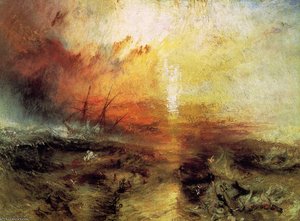
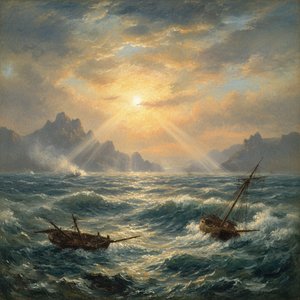
J.M.W. Turner's 1840 painting, *Slavers Throwing Overboard the Dead and Dying—Typhon Coming On*, isn’t merely a seascape; it’s a visceral indictment of human cruelty rendered with an almost unbearable intensity. Housed within the hallowed halls of the Museum of Fine Arts in Boston, this monumental oil on canvas commands attention not just for its scale (91 x 138 cm), but for the profound emotional weight it carries – a weight born from witnessing a horrific historical event and translating that horror into a timeless artistic statement. The painting’s genesis lies in Thomas Clarkson's influential account of the Zong massacre, an incident where a slave ship captain deliberately drowned enslaved people overboard to claim insurance money, effectively turning human lives into a commodity. Turner, deeply affected by this revelation, seized upon the event as a catalyst for a work that transcends simple representation and delves into the very soul of humanity’s capacity for both beauty and barbarity.
A Symphony of Color and Chaos: Artistic Technique and Style
Turner's signature style is fully realized in *Slavers Throwing Overboard*. He abandons the precise, detailed renderings favored by earlier generations, instead embracing a looser, more expressive approach. Thick impasto – layers of paint applied with visible brushstrokes – dominates the canvas, creating a turbulent surface that mirrors the chaotic sea and sky. The color palette is dominated by fiery oranges, deep reds, and bruised purples, reflecting the impending storm and the violence unfolding within it. These intense hues are juxtaposed against cooler blues and greys in the distant ship, highlighting the stark contrast between the destructive forces at play and the indifferent vastness of the ocean. The artist masterfully employs light and shadow to create a dramatic sense of depth and movement, drawing the viewer into the heart of the scene. Notice how the sunlight catches on the waves, creating fleeting moments of brilliance amidst the overall gloom – a subtle suggestion of hope swallowed by despair.
Symbolism Woven into the Storm: Interpreting the Scene
Beyond its immediate depiction of the Zong’s tragedy, *Slavers Throwing Overboard* is rich in symbolic meaning. The approaching typhoon isn't simply a dramatic backdrop; it represents divine retribution – nature itself reacting with fury to the monstrous act of human exploitation. The scattered bodies floating in the water are not just victims; they embody the countless lives lost and the enduring legacy of slavery. The distant ship, sailing towards the horizon, symbolizes the continuation of this system of oppression, oblivious to the devastation it leaves behind. Even the composition itself contributes to the painting’s symbolic power: the diagonal thrust of the waves creates a sense of instability and impending doom, mirroring the precariousness of human existence in the face of injustice. The inclusion of the slave ship in the background is crucial; it's not just a vessel, but a symbol of the entire trade.
A Legacy of Protest: Historical Context and Enduring Relevance
Painted during a period of intense abolitionist activity in Britain and America, *Slavers Throwing Overboard* served as a powerful visual protest against the transatlantic slave trade. Its exhibition at the Royal Academy coincided with significant anti-slavery campaigns, amplifying its message and contributing to the growing momentum for emancipation. Turner’s decision to depict such a brutal scene – one that would have been considered shocking at the time – demonstrated his commitment to social justice and his willingness to use art as a tool for change. Today, the painting continues to resonate with audiences worldwide, reminding us of the horrors of slavery and the ongoing struggle for racial equality. It’s a potent reminder that history is not simply a collection of dates and events, but a tapestry woven from human suffering and resilience.
Consider commissioning a high-quality reproduction of *Slavers Throwing Overboard* to bring this iconic artwork into your home or office – a powerful statement piece that speaks volumes about humanity’s capacity for both cruelty and compassion.
Srodna umetnička dela
Biografija umetnika
The Luminary of Light: A Journey Through the Life and Art of J.M.W. Turner
Joseph Mallord William Turner, a name synonymous with the sublime power of landscape and the evocative dance of light, remains one of Britain’s most celebrated and influential artists. Born in Covent Garden, London, in 1775, Turner's journey from a barber’s son to a master painter was fueled by an innate talent, relentless dedication, and a visionary spirit that would forever alter the course of art history. From his earliest days sketching architectural details to his later, almost abstract explorations of atmosphere and color, Turner consistently pushed the boundaries of artistic expression. His formal training began at the Royal Academy Schools in 1789, where he quickly distinguished himself as a promising student. However, Turner was not content with merely replicating established styles; he sought to capture the very essence of nature – its raw power, its fleeting beauty, and its inherent drama. Early works reveal a meticulous attention to topographical detail, reflecting the prevailing artistic tastes of the time. Yet, even in these early pieces, hints of his future direction are visible—a sensitivity to light and shadow, a willingness to experiment with color, and an emerging fascination with the sublime. He was particularly drawn to the Romantic movement’s emphasis on emotion and imagination, rejecting the rationalism of Neoclassicism in favor of subjective experience.The Evolution of a Visionary: From Topography to Transcendence
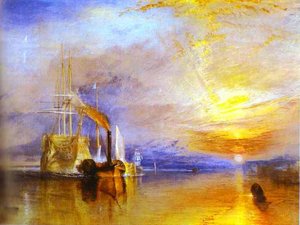
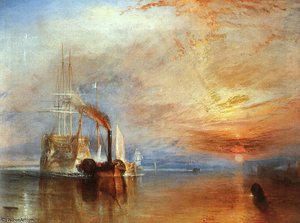
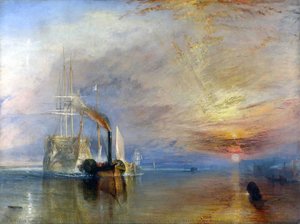
Turner’s artistic development was marked by constant experimentation and a growing desire to move beyond mere representation. Influenced by masters like Claude Lorrain and J.M.W. Cozens, he began to infuse his landscapes with a romantic sensibility, emphasizing emotional response over precise depiction. His travels throughout Europe, beginning in 1802, proved pivotal, exposing him to diverse landscapes and inspiring new approaches to composition and color. He wasn’t simply recording what he saw; he was interpreting it through the lens of his own unique vision. These expeditions broadened his artistic horizons and solidified his belief that art should strive for something beyond mere visual accuracy—a connection with the spiritual realm. The early 19th century witnessed a shift in Turner's style towards greater expressiveness. His seascapes, in particular, became increasingly dramatic, capturing the fury and majesty of the ocean with unprecedented intensity. Paintings like “The Fighting Temeraire Tugged to Her Last Berth to Be Broken Up” (1839) are not merely depictions of a ship being towed to its final resting place; they are poignant meditations on mortality, loss, and the relentless march of progress. The use of light in this work is particularly striking—a golden sunset casting a melancholic glow over the scene, symbolizing the passing of an era. Turner skillfully employed impasto technique – applying thick layers of paint – to convey texture and dynamism, creating surfaces that seemed to pulsate with energy.A Master of Atmosphere: Light, Color, and the Sublime
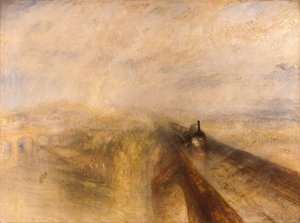
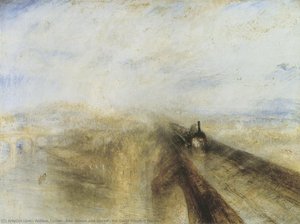
Turner’s later works are characterized by an almost radical departure from traditional artistic conventions. He increasingly prioritized atmosphere and color over form and detail, creating paintings that seem to dissolve into pure light and energy. Works like “Rain, Steam and Speed – The Great Western Railway” (1844) exemplify this approach—a swirling vortex of color and motion that captures the dynamism of the industrial age. Critics were often baffled by these later works, but their influence on subsequent generations of artists would prove profound. Turner’s unwavering commitment to artistic vision drove him to explore uncharted territories of perception, anticipating the Impressionists’ focus on capturing fleeting moments and subjective experiences. He wasn't simply painting landscapes; he was attempting to convey the very *feeling* of being in nature – the awe, the wonder, the terror.Turner's legacy extends far beyond his prolific output—over 550 oil paintings, 2,000 watercolors, and 30,000 works on paper. He left an indelible mark on the history of art, influencing countless artists who followed in his footsteps. The Impressionists, particularly Claude Monet, were deeply inspired by Turner’s exploration of light and color, while abstract expressionists like Mark Rothko acknowledged their debt to his atmospheric compositions.
Turner's willingness to challenge conventions, his relentless experimentation, and his unwavering commitment to artistic vision continue to resonate with artists and art lovers today. He remains a pivotal figure in the development of modern art, a true visionary who transformed the way we see and experience the world around us. His works are housed in major museums worldwide, including the Tate Britain in London, where visitors can immerse themselves in the luminous beauty and profound emotional depth of his extraordinary paintings.
Explore more of Turner’s works at ArtsDot.com/@/williamturner and discover his world through the Tate Collection: /sr/art/show/art-d3c5y9-sr/
Јозеф Турнер
1775 - 1851 , Уједињено Краљевство
Osnovne informacije
- Artistic Movement Or Style: Романтизам
- Artists Or Movements Influenced By This Artist:
- Клод Лоран
- Марк Роћко
- Date Of Birth: Април 23, 1775
- Date Of Death: Децембар 19, 1851
- Full Name: Joseph Mallord William Turner
- Nationality: Велика Британија
- Notable Artworks:
- Бојта Темераир вучена у последњи дом за разбијање
- Великобританија и Велика западна железница
- Place Of Birth: Лондон, Велика Британија
Povezani članci

Dostava i povrat
APS pruža stručnu svetsku isporuku umetnina uz negu na nivou muzeja, potpuno praćenje i garanciju povraćaja novca u roku od 30 dana. Od pomoći oko carine do Priority Production, verujte transparentnoj usluzi, sigurnom pakovanju i pouzdanom dostavom za kolekcionare, dizajnere i galerije.

The Enduring Legacy of Oil on Canvas: Technique, History & Aesthetic Impact
Explore the rich history & techniques of oil painting – from Renaissance masters to Impressionism. Discover pigments, layering methods, and why this timeless medium endures. Expert insights for artists & art enthusiasts.
J.M.W. Turner: Light, Atmosphere & the Romantic Sublime
Explore the life & art of J.M.W. Turner, a master of Romantic landscape painting. Discover his innovative techniques, key works, and lasting influence on Impressionism. Find high-quality reproductions at ArtsDot.

Oil on Canvas: A Historical & Technical Exploration of a Timeless Artistic Medium
Explore the rich history & enduring techniques of oil painting on canvas. Discover the science behind its longevity, conservation practices, and contemporary relevance. Expert insights for art enthusiasts.

The Enduring Power of Painting: A Historical & Contemporary Exploration of Form and Emotion
Explore the rich history & enduring techniques of oil painting with ArtsDot. Discover masterpieces, learn about art collecting, and find authentic handmade reproductions crafted by skilled artists.