

 Pregledaj u prostoru
 Pošalji
 Podeli
 Detalji o delu

 Преузми
 Slični predmeti
 Rendgenski snimak
 Slajdovi
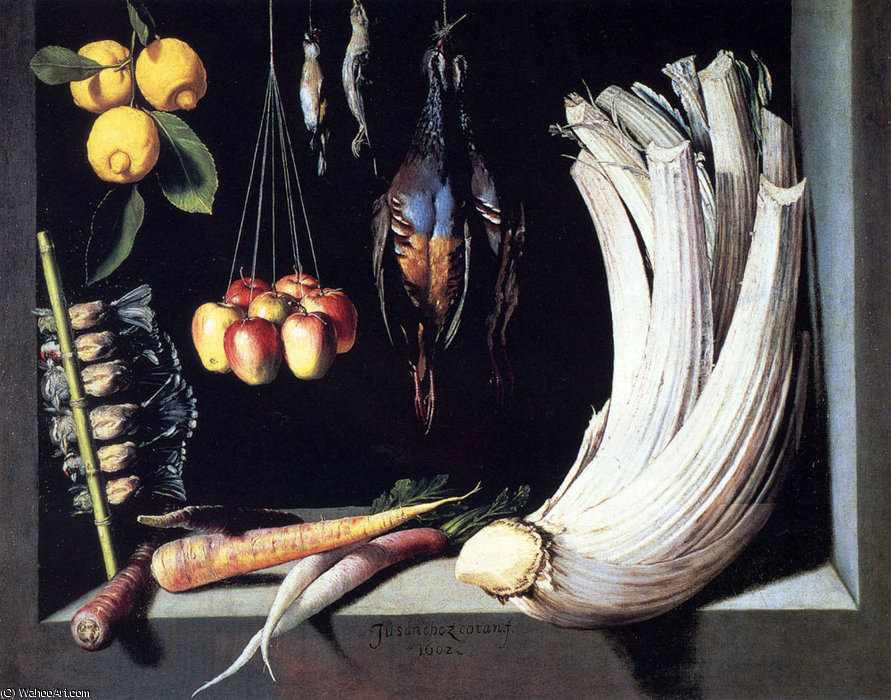
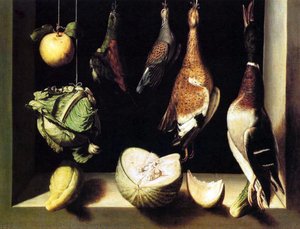
Still life with dead birds fruit and vegetables
 Pročitaj više
Ručno rađena uljana reprodukcija
Ručno oslikano uljanim bojama na platnu u dimenzijama i okviru po vašem izboru, izrađeno po porudžbini od strane naših umetnika. ( Kupi print Kupi digitalnu sliku)




































Izaberite jednu od naših unapred definisanih veličina koje odgovaraju originalnim proporcijama umetničkog dela.

Можете унети сопствене димензије како бисте прилагодили дело одређеном оквиру или простору. Ако одабрана величина не одговара пропорцијама оригинала, слика ће бити исечена или проширена додатним елементима који се ручно насликавају. Дигитални prikaz ће вам бити послат на одобрење пре почетка производње.
Имајте на уму да преглед на екрану не одражава стварно исецање или проширење. Само приказ (mockup) ће тачно приказати коначну композицију.
Иако су доступне прилагођене величине, препоручујемо да одаберете димензију из дефинисане листе како бисте сачували оригиналне пропорције.
Nakon narudžbine, tim ArtsDot.com će klijentu putem e-pošte poslati uputstva i dostaviti prikaz predloženog rešenja
Isporuka širom sveta () za 3/4 nedelje umesto uobičajenih 5 nedelja. (3 септембар). Bez kompromisa po pitanju kvaliteta.

Besplatna ekspresna dostava širom sveta

Visokokvalitetno laneno platno

Kompletno osiguranje transporta

Garancija povraćaja carine i uvoznih dažbina

Garancija vernosti boja

Politika povrata u roku od 60 dana (samo u slučaju nedostataka)

Garancija povrata novca od 100%

Popust pri grupnoj kupovini
 Opcija sa staklom dostupna je samo za dimenzije manje od 110 cm

Still life with dead birds fruit and vegetables
Tehnika reprodukcije
Dimenzije reprodukcije
-


Konačna cena
$ 263
Srodna umetnička dela
Biografija umetnika
The Silent Majesty of the Spanish Baroque
In the quiet, sun-drenched landscapes of 16th-century Spain, a singular vision began to emerge that would forever alter the course of European still life painting. Juan Sánchez Cotán, born in the historic town of Orgaz near Toledo around 1560, was not merely a painter of objects, but a poet of the profound. While his contemporaries often sought the grand drama of sweeping religious narratives or the ornate complexities of Mannerism, Cotán turned his gaze inward, finding the infinite within the infinitesimal. His work serves as a bridge between the fading echoes of the Renaissance and the burgeoning, shadow-drenched intensity of the Baroque era.
The foundations of his artistry were laid in the intellectual and spiritual crucible of Toledo. As a student of Blas de Prado, Cotán inherited a certain Mannerist elegance, yet he possessed an innate drive to strip away artifice. His early years were spent navigating the religious and aristocratic circles of Toledo, where he mastered the art of the altarpiece and the portrait. However, it was his transition toward the bodegón—the Spanish still life—that would secure his immortality. In these works, he achieved a level of realism that felt less like mere imitation and more like a spiritual encounter with the physical world.
The Geometry of Devotion
To look upon a Sánchez Cotán masterpiece is to enter a space of monastic stillness. His most celebrated period, roughly between 1602 and 1617, is defined by an almost mathematical precision. He frequently utilized a compositional device known as the shallow niche, where objects are arranged within a dark, recessed space that seems to push forward toward the viewer. Within these architectural confines, a cabbage, a melon, or a quince is suspended in a state of eternal grace. There is no clutter here; there is only the essential.
The technique employed by Cotán was nothing short of revolutionary for his time. He utilized tenebrism—the dramatic contrast between deep, impenetrable shadows and piercing highlights—to sculpt his subjects out of the darkness. This use of light does more than just define form; it imbues humble foodstuffs with a divine presence. A single drop of moisture on a cucumber or the textured skin of a lemon becomes a subject of intense contemplation. Through this meticulous attention to detail, Cotán transformed the mundane into the monumental, suggesting that the divine could be found in the simplest elements of creation.
His compositions are characterized by several defining elements:
- Mathematical Harmony: An arrangement of objects that feels balanced yet organic, often following a strict geometric logic.
- Austere Realism: A rejection of the ostentatious pronkstilleven style found in the Netherlands in favor of a stark, humble beauty.
- Spiritual Depth: The use of light to evoke a sense of mystery and religious meditation.
A Legacy Carved in Shadow
As his life progressed, Cotán’s path took a turn toward even deeper asceticism. In 1612, he moved to Granada, eventually dedicating himself to the Carthusian monastery. This period of intense religious devotion mirrored the austerity of his paintings, as he moved away from the complex still lifes of his Toledo years toward a life of quiet contemplation. Though his output changed, the spiritual essence that defined his earlier work remained a permanent fixture of his soul.
The historical significance of Juan Sánchez Cotán cannot be overstated. He was a pioneer who paved the way for the great masters of the Spanish Golden Age. Without his foundational realism and his mastery of light, the works of Francisco de Zurbarán might never have achieved their characteristic spiritual weight. He taught future generations that the smallest object, when viewed with enough reverence, can contain the entire universe. Today, his paintings remain much more than historical artifacts; they are windows into a world where silence speaks and where every shadow holds a secret.
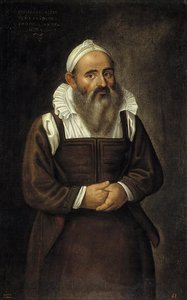
juan sanchez cotan
1560 - 1627 , Spain
Osnovne informacije
- Artistic Movement Or Style: Baroque Realism
- Artists Or Movements Influenced By This Artist: ['Zurbarán']
- Artists Who Influenced This Artist: ['Blas de Prado']
- Date Of Birth: 1560
- Full Name: Juan Sánchez Cotán
- Nationality: Spanish
- Notable Artworks:
- Quince, cabbage, melon and cucumber
- Virgin waking the boy
- Place Of Birth: Orgaz, Spain

