

 Pregledaj u prostoru
 Pošalji
 Podeli
 Detalji o delu

 Преузми
 Slični predmeti
 Rendgenski snimak
 Slajdovi
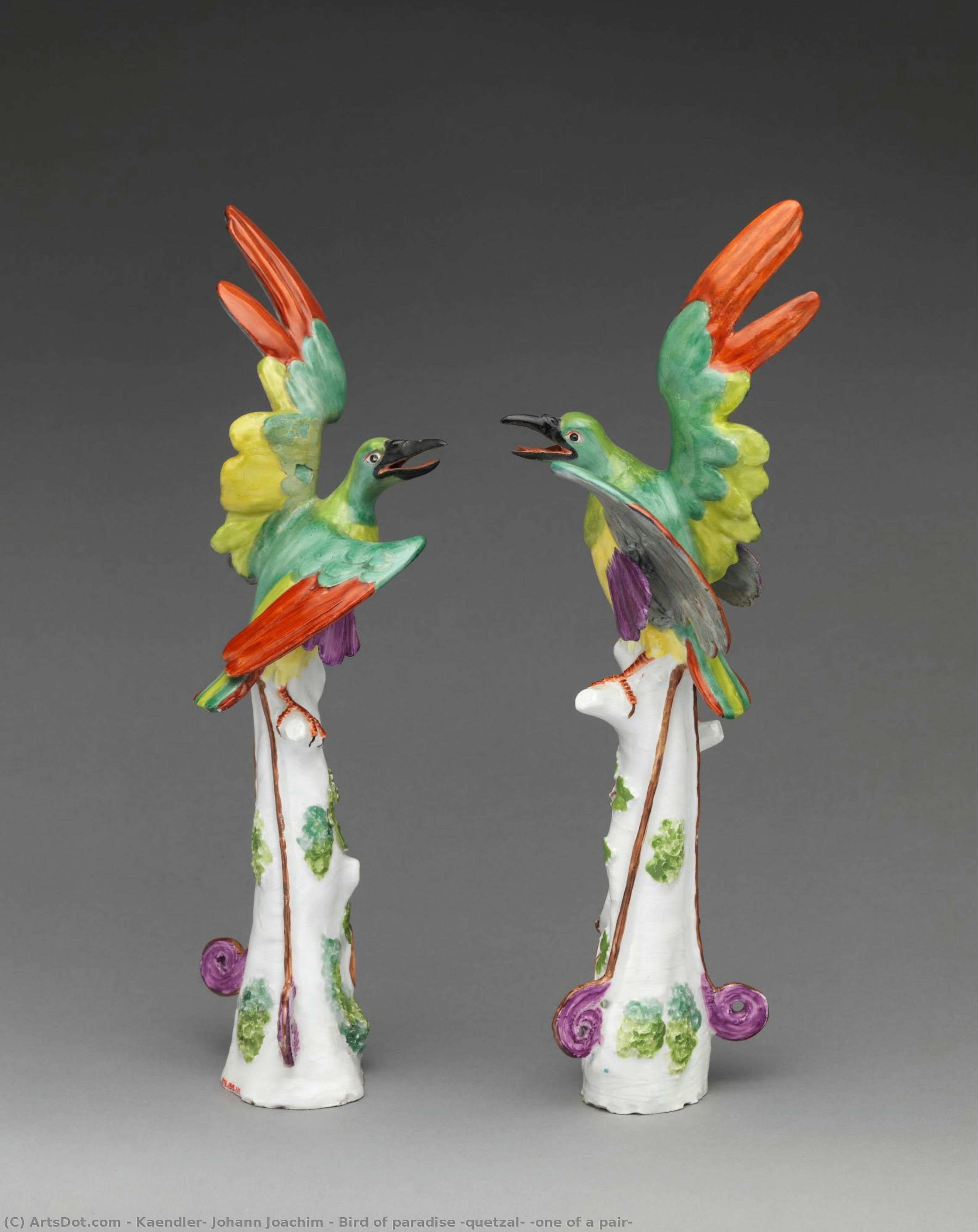
Bird of paradise (quetzal) (one of a pair)
 1733
1733 31.0 x 9.0 cm
 Metropolitan Museum of Art
 Pročitaj više
Kupite digitalnu sliku visoke rezolucije i poboljšanog kvaliteta, koja je znatno superiornija od onoga što vidite u online prikazu.
Svaka datoteka je pedantno pripremljena od strane naših stručnjaka koristeći napredne alate i profesionalnu ručnu retušu. Osiguravamo da svaka slika ima izuzetnu oštrinu, preciznu reprodukciju boja i fine detalje.
Konačna datoteka se dostavlja putem e-pošte u roku od 72 sata, optimizovana za neposrednu upotrebu u profesionalnim, izdavačkim i štamparskim okruženjima. To je isti kvalitet kojem veruju vrhunski studiji dizajna, izdavači i galerije.
Digitalna slika
Preuzmite datoteku visoke rezolucije za ličnu upotrebu, štampanje i kreativne projekte. ( Kupi print Kupi ručno naslikanu sliku)
Uključeno uz svaku porudžbinu digitalne slike
Profesionalna digitalna isporuka, zagarantovana
Kada odaberete ArtsDot.com, ne dobijate samo sliku – vi primate profesionalno unapređeno digitalno umetničko delo, izrađeno sa najvećom preciznošću i uz garanciju zadovoljstva. Evo svega što automatski dolazi uz vašu porudžbinu:

Brza dostava putem e-pošte
Vaša digitalna slika visoke rezolucije biće vam poslata putem e-pošte u roku od 72 sata od poručivanja – spremna za trenutnu upotrebu.

Digitalna datoteka unapređena veštačkom inteligencijom
Vaše umetničko delo je profesionalno optimizovano korišćenjem naprednih AI alata i ručne obrade, čime se osiguravaju maksimalni detalji, oštrina i preciznost boja.

Besplatna ponovna isporuka doživotno
Slučajno ste obrisali ili izgubili svoju datoteku? Ne brinite – poslaćemo vam je ponovo u bilo kom trenutku, potpuno besplatno.

Bez troškova uvoza – zauvek
Uživajte u svojim umetničkim delima trenutno, bez carine, dažbina ili troškova dostave – digitalni download je uvek bez poreza.

Garancija vernosti boja
Uz pomoć profesionalnih alata i upravljanja bojama, osiguravamo da vaša digitalna slika što vernije odražava originalne boje.

Garancija zadovoljstva u roku od 60 dana
Ako niste zadovoljni svojom digitalnom slikom, revidirat ćemo je ili vratiti 100% novca u roku od 60 dana – bez ikakvih pitanja.

100% garancija povrata novca
Niste zadovoljni? Obezbedite pun povrat novca u roku od 60 dana od trenutka kada ste primili svoju digitalnu datoteku – bez suvišnih pitanja.

Popusti na velike porudžbine
Kupite 3 slike, uštedite 10% - Kupite 5 slika, uštedite 15% - Kupite 10+ slika, uštedite 20%. Odlično za kreativne projekte, galerije i agencije.
Srodna umetnička dela








Biografija umetnika
Johann Joachim Kändler: The Soul of Meissen Porcelain
The world of eighteenth-century European art is often dominated by grand narratives – the rise of Rococo, the dominance of French courtly style, and the revolutionary fervor of Neoclassicism. Yet, within this larger context, a quieter, more intimate story unfolds: the meticulous artistry of Johann Joachim Kändler, the most influential modeller at Meissen porcelain manufactory. For over four decades, from 1731 until his death in 1775, Kändler shaped not just porcelain, but an entire aesthetic sensibility, imbuing the delicate white surfaces with a remarkable vitality and emotional depth rarely seen in contemporary ceramics.
Kändler’s journey to Meissen began as an apprentice under Johann Benjamin Thomae, a respected court sculptor in Dresden. This early training instilled in him a profound understanding of classical forms and a mastery of three-dimensional modeling – skills that would prove invaluable when he transitioned to the demanding world of porcelain. His appointment to Meissen in 1731 was a pivotal moment, marking the beginning of an era of unparalleled innovation for the fledgling factory. Initially, Kändler’s work reflected the prevailing trends of the time: elegant animal groups – pastoral scenes populated by deer, rabbits, and birds – rendered with a charming blend of realism and stylized grace. These pieces, often commissioned by wealthy European courts, showcased Meissen's technical prowess but lacked a distinct personality.
A turning point arrived when Kändler assumed the role of ‘modelmaster’ in 1733, succeeding Johann Jacob Kirchner. This position demanded not only exceptional modeling skills but also an understanding of the entire production process – from initial design to firing and glazing. Crucially, Kändler gained access to the ‘secrets’ of porcelain making, a closely guarded knowledge known as ‘Arcanist,’ allowing him to refine the formula for achieving that coveted translucent quality and delicate texture. This mastery extended beyond mere technical expertise; Kändler possessed an innate ability to imbue his creations with a sense of life – a subtle play of light and shadow, expressive gestures, and carefully rendered details that captured the essence of his subjects.
Kändler’s later works represent a significant shift in style. He moved beyond simple depictions of animals and mythological scenes, exploring more complex narratives and psychological portraits. His ‘She-Wolf with Three Wolf Cubs,’ for example, is not merely a charming illustration of motherhood but a powerful meditation on instinct, vulnerability, and the primal bond between mother and child. Similarly, his figures from classical mythology – Venus, Cupid, Mercury – are imbued with an emotional resonance that transcends mere decorative appeal. These pieces demonstrate Kändler’s growing sophistication as a storyteller, utilizing porcelain not just to represent subjects but to evoke feelings and ideas.
The Influence of Dresden Sculpture
Kändler's artistic development was inextricably linked to the rich sculptural tradition of Dresden. His early training under Thomae exposed him to the principles of Baroque sculpture – dynamic compositions, dramatic lighting, and a focus on conveying emotion through gesture and expression. This influence is evident in his porcelain figures, which often retain a sense of theatricality and movement reminiscent of classical sculptures. The strong musculature of his animals, the alert postures of his mythological figures, and the subtle nuances of their facial expressions all testify to Kändler’s deep understanding of three-dimensional form.
Furthermore, Kändler's work demonstrates a remarkable ability to synthesize disparate influences. He skillfully blended classical ideals with contemporary trends, creating a style that was both timeless and relevant. The elegance of his designs reflects the prevailing Rococo aesthetic, while the emotional depth of his figures draws upon the expressive power of Baroque sculpture. This synthesis – this careful balancing act between tradition and innovation – is what ultimately defines Kändler’s unique artistic vision.
Technique and Innovation at Meissen
Kändler's success as a modeller was not solely due to his artistic talent but also to his meticulous attention to detail and his innovative approach to porcelain production. He understood that the quality of the final product depended on every step in the process, from the initial modeling to the final firing. He experimented with different techniques – varying the thickness of the clay, manipulating the surface texture, and carefully controlling the temperature of the kiln – to achieve the desired effects.
Kändler’s role as ‘Arcanist’ granted him privileged access to the secrets of porcelain making, allowing him to refine the formula for achieving that coveted translucent quality and delicate texture. He was also instrumental in developing new glazing techniques, experimenting with different colors and finishes to create a wide range of effects. His work at Meissen helped establish the factory as a leader in porcelain production, renowned for its technical excellence and artistic innovation.
Legacy and Historical Significance
Johann Joachim Kändler’s contribution to the world of art is immense. He elevated Meissen porcelain from a mere decorative object to an expression of sophisticated artistry and cultural significance. His figures are not simply beautiful; they are imbued with meaning, emotion, and a profound understanding of human nature. Kändler's influence can be seen in countless subsequent works of art – from paintings and prints to other ceramic designs.
Today, Kändler’s porcelain is highly prized by collectors and museums around the world. His work represents a remarkable achievement in the history of ceramics, demonstrating the power of artistry to transform a humble material into an object of enduring beauty and cultural significance. The delicate elegance of his figures continues to captivate audiences centuries after their creation, reminding us of the genius of this extraordinary artist.
kaendler, johann joachim
1706 - 1775 , Germany
Kratke činjenice
- Artistic Movement Or Style: Meissen porcelain
- Artists Or Movements Influenced By This Artist: ['Neoclassicism']
- Artists Who Influenced This Artist: ['Johann Benjamin Thomae']
- Date Of Birth: June 15, 1706
- Date Of Death: May 18, 1775
- Full Name: Johann Joachim Kändler
- Nationality: German
- Notable Artworks:
- Bird of paradise
- She-wolf cubs
- Place Of Birth: Meissen, Germany

