

 Pregledaj u prostoru
 Pošalji
 Podeli
 Detalji o delu

 Преузми
 Slični predmeti
 Rendgenski snimak
 Slajdovi
 Stats
StatsKladno heaps


 Pročitaj više
Ručno rađena uljana reprodukcija
Ručno oslikano uljanim bojama na platnu u dimenzijama i okviru po vašem izboru, izrađeno po porudžbini od strane naših umetnika. ( Switch to Print Switch to Digital Image)




P118B $10

P118H $10

P118W $10

P438Z $10

P508JH $12

P508YH $12

P805H $10

P805Z $10

P919BZ $10

P919G $10

P919XJ $10

P959ZH $10

P968JZ $12

W106C $8

W218G $10

W218JH $8

W218Y $10

W307PJ $10

W316G $10

W316PJ $8

W316Y $10

W398PJ $8

W4111J $10

W500HY $15

W500JH $15

W692G $12

W849H $8

W940BG $15

W953PJ $8




Izaberite jednu od naših unapred definisanih veličina koje odgovaraju originalnim proporcijama umetničkog dela.

Можете унети сопствене димензије како бисте прилагодили дело одређеном оквиру или простору. Ако одабрана величина не одговара пропорцијама оригинала, слика ће бити исечена или проширена додатним елементима који се ручно насликавају. Дигитални prikaz ће вам бити послат на одобрење пре почетка производње.
Имајте на уму да преглед на екрану не одражава стварно исецање или проширење. Само приказ (mockup) ће тачно приказати коначну композицију.
Иако су доступне прилагођене величине, препоручујемо да одаберете димензију из дефинисане листе како бисте сачували оригиналне пропорције.
Nakon narudžbine, tim ArtsDot.com će klijentu putem e-pošte poslati uputstva i dostaviti prikaz predloženog rešenja
Isporuka širom sveta () za 3/4 nedelje umesto uobičajenih 5 nedelja. (8 септембар). Bez kompromisa po pitanju kvaliteta.

Besplatna ekspresna dostava širom sveta

Visokokvalitetno laneno platno

Kompletno osiguranje transporta

Garancija povraćaja carine i uvoznih dažbina

Garancija vernosti boja

Politika povraćaja u roku od 100 dana (isključivo u slučaju nedostataka)

Garancija povrata novca od 100%

Popust pri grupnoj kupovini
 Opcija sa staklom dostupna je samo za dimenzije manje od 110 cm

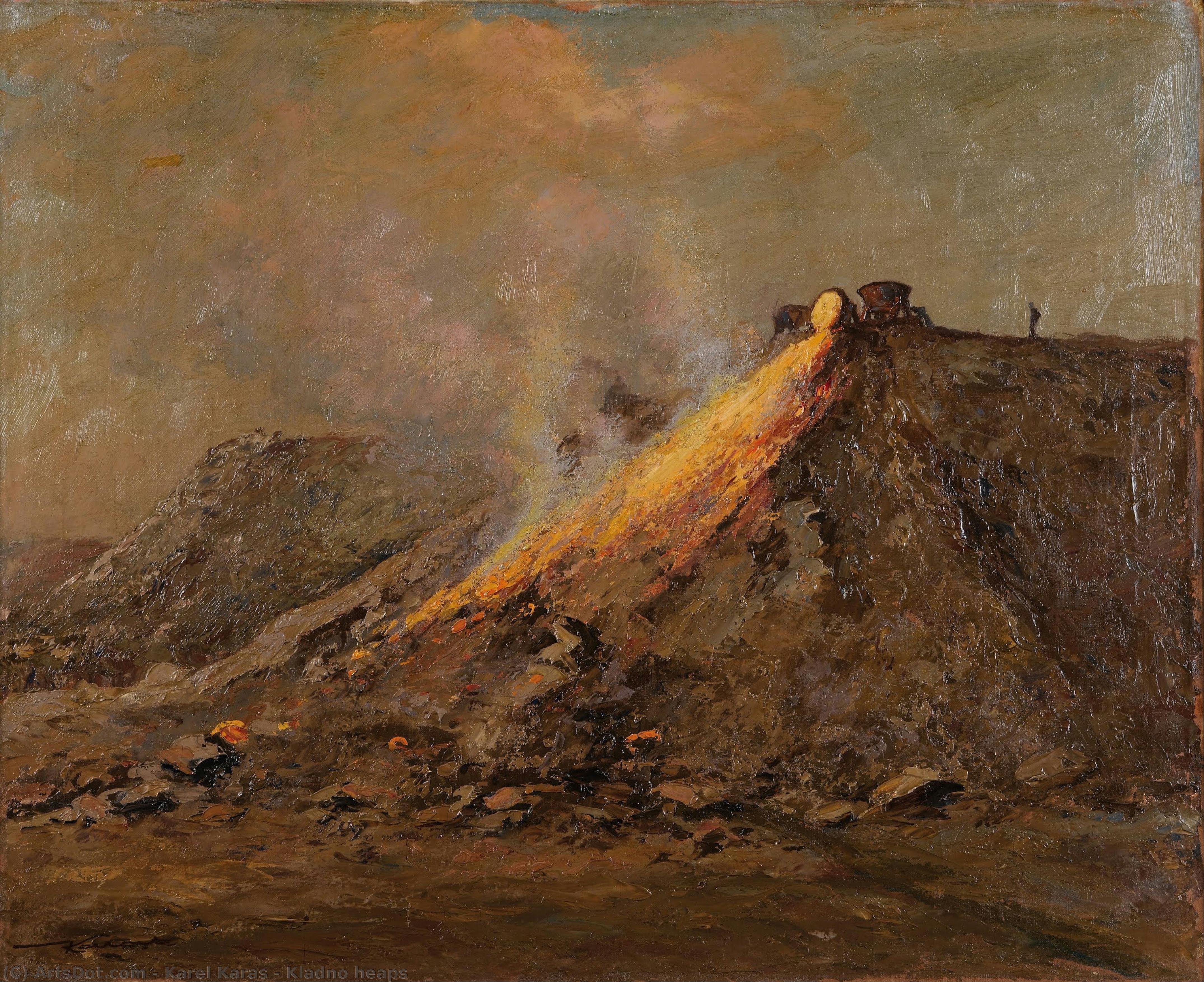
Kladno heaps
Tehnika reprodukcije
Dimenzije reprodukcije
-


Konačna cena
$ 263
A Symphony of Fire and Earth
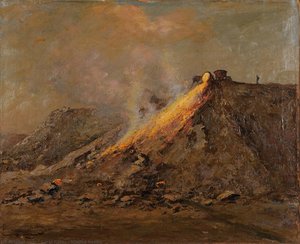
In the evocative masterpiece Kladno heaps, created in 1970 by the Czech visionary Karel Karas, we are invited into a world where the boundaries between nature’s raw power and human vulnerability dissolve. The painting presents a dramatic landscape dominated by a steep, imposing incline that seems to pulse with an internal, restless energy. At the summit of this earthen mound, a fierce conflagration erupts, casting brilliant oranges and searing yellows against a sky choked with thick, atmospheric smoke. This sudden burst of light serves as the heartbeat of the composition, cutting through the muted, somber tones of the surrounding terrain to create a visual tension that is both terrifying and mesmerizing.
The technique employed by Karas suggests a profound mastery of texture and emotional weight. Through visible, deliberate brushstrokes, the artist imbues the landscape with a tactile quality; one can almost feel the grit of the soil and the heat radiating from the flames. This expressive approach leans toward an impressionistic or expressionist sensibility, where the goal is not merely to replicate a scene, but to translate a visceral feeling onto the canvas. The interplay between the heavy, earth-toned shadows and the luminous, flickering fire creates a chiaroscuro effect that draws the eye relentlessly toward the center of the destruction, making the heat of the moment feel almost palpable to the viewer.
The Human Element Amidst the Inferno
What elevates Kladno heaps from a mere study of natural disaster to a profound meditation on existence is the subtle inclusion of a solitary figure. Positioned at the base of the burning hill, this small silhouette stands as a silent witness to the unfolding chaos. This tiny human presence provides a crucial sense of scale, emphasizing the overwhelming magnitude of the landscape, while simultaneously introducing a poignant layer of symbolism. The figure represents the fragility of life when confronted with the unstoppable forces of nature—a theme that resonates deeply within the context of Karas’s broader artistic exploration of memory and loss.
For the discerning collector or interior designer, this piece offers more than just visual splendor; it provides a focal point of intense intellectual and emotional depth. The painting captures the transient nature of existence, where beauty is found even within the heart of destruction. Its somber palette, punctuated by the violent brilliance of the fire, makes it an extraordinary addition to a curated space, offering a conversation piece that invites contemplation. Whether placed in a contemporary gallery setting or a classic study, Kladno heaps commands attention, acting as a window into a landscape where the elemental forces of our world are laid bare in all their tragic glory.
Srodna umetnička dela


Biografija umetnika
The Visionary of Earth and Fire
To encounter the work of Karel Karas is to step into a realm where the physical landscape dissolves into profound emotional resonance. While history often remembers the name through the haunting, melodic echoes of mid-century cinema, the true essence of Karas lies in his ability to translate the visceral textures of existence onto canvas. Born in 1892 in Prague, his early years were shaped by a disciplined apprenticeship as a sign painter and lacquer artist—a foundation that gifted him with an unparalleled mastery over color, light, and the tactile weight of his medium. This early training in the meticulous arts of lettering and varnishing instilled in him a reverence for detail that would later evolve into a powerful, expressionistic language capable of capturing both the serenity of the Czech countryside and the terrifying majesty of natural upheaval.
His artistic journey was one of continuous expansion, moving far beyond the boundaries of his initial training. After honing his skills at the School of Applied Arts in Prague and studying under masters such as Rudolf Vejrych and Jaroslav Kutman, Karas embarked on transformative travels through Bulgaria, Yugoslavia, Slovakia, and Subcarpathian Rus. These journeys were not merely geographical; they were spiritual expeditions that broadened his visual vocabulary. His canvases began to reflect a deep connection to the earth, particularly in his landscapes which often oscillated between quiet observation and dramatic intensity. He possessed a rare ability to imbue even the most somber terrain with a sense of internal life, making the very soil appear to pulse with a restless, hidden energy.
A Symphony of Light and Shadow
The technical brilliance of Karas is perhaps most strikingly realized in his later, more evocative works, such as the monumental Kladno heaps. In this masterpiece, we witness the artist at the height of his expressive powers, utilizing a technique that leans toward an impressionistic or expressionist sensibility. He does not merely replicate a scene; he translates a feeling. Through deliberate, visible brushstrokes, Karast creates a world where the boundaries between nature’s raw power and human vulnerability blur. The interplay of light is particularly masterful—a chiaroscuro effect where brilliant oranges and searing yellows erupt from thick, atmospheric smoke, cutting through heavy, earth-toned shadows to create a visual tension that is both terrifying and mesmerizing.
Beyond the sheer spectacle of fire and landscape, Karas’ work often carries a poignant layer of symbolism. He frequently introduced subtle human elements—a solitary silhouette or a tiny figure positioned against an overwhelming backdrop—to serve as a silent witness to the unfolding chaos of the natural world. This juxtaposition emphasizes the fragility of life when confronted by the infinite magnitude of the universe. His ability to weave such profound philosophical inquiries into his landscapes elevates his work from mere scenery to a meditation on existence itself, capturing the delicate balance between destruction and endurance.
Legacy and Historical Resonance
The historical significance of Karel Karas extends far beyond the borders of the Czech Republic. His life spanned some of the most turbulent eras of the 20th century, and his art remained a steadfast vessel for human emotion amidst political and social upheaval. Whether he was capturing the somber reality of the village of Lidice in the aftermath of war or exploring the abstract beauty of light on a distant hill, Karas remained committed to an honest portrayal of the human condition. His legacy is defined by this commitment to truth—a truth found not just in the accuracy of a line, but in the depth of a shadow and the warmth of a flame.
Today, the works of Karel Karas continue to resonate with contemporary viewers who seek art that speaks to the soul. His ability to bridge the gap between the decorative precision of his early training and the profound emotional weight of his mature style ensures his place in the pantheon of great Czech visionaries. To study his oeuvre is to witness a lifelong dialogue with the elements, a continuous effort to capture the fleeting, beautiful, and often tragic rhythms of life through the transformative power of paint.
karel karas
Czech Republic
Osnovne informacije
- Artistic Movement Or Style: Jazz music
- Artists Or Movements Influenced By This Artist: ['Film music']
- Artists Who Influenced This Artist: ['Antonín Dvořák']
- Date Of Birth: Living
- Full Name: Karel Karas
- Nationality: Czech
- Notable Artworks: ['The Third Man Theme']
- Place Of Birth: Czech Republic
Povezani članci
Evocations of Place: A Historical Journey Through Landscape Art
Explore the rich history of landscape art with ArtsDot. Discover renowned artists, movements like Impressionism & tonalism, and expert guidance for collecting timeless pieces. Find your perfect serene escape today!
Evoking Nature's Sublime: A Comprehensive Exploration of 19th-Century Landscape Painting
Explore the captivating world of 19th-century landscape painting! Discover renowned artists like Friedrich & Monet, key movements, and find the perfect artwork to bring nature's serenity into your home. Expert insights at ArtsDot.

Glavna dela koja su definisala Romantični pejzaž: 10 remek-dela za vaš dom
Otkrijte 10 remek-dela romantičnog pejzažnog slikarstva! Uronite u svet Claude Lorraina, Caspara David Friedricha i Turnera. Ispričane priče umetnosti, inspiracija za dekoraciju doma. Kvalitetne reprodukcije na ArtsDot.com – istražite celu kolekciju online!

25 Remek-dela Džona Konstebla: Lepota Engleske na Platnu | ArtsDot
Uronite u svet Džona Konstebla! Otkrijte 25 remek-dela engleskog pejzaža, romantizma i seoske idile. Kupite reprodukcije slika vrhunskog kvaliteta za dekoraciju enterijera na ArtsDot.com.

Evocations of Place: A Historical Journey Through Landscape Art
Explore the rich history of landscape art with ArtsDot. Discover renowned artists, movements like Impressionism & Romanticism, and expert guidance for collecting timeless pieces. Find your perfect serene escape today!