

 Pregledaj u prostoru
 Pošalji
 Podeli
 Detalji o delu

 Преузми
 Slični predmeti
 Rendgenski snimak
 Slajdovi
 Stats
StatsPassementerie Workshop


 Pročitaj više
Kupite digitalnu sliku visoke rezolucije i poboljšanog kvaliteta, koja je znatno superiornija od onoga što vidite u online prikazu.
Svaka datoteka je pedantno pripremljena od strane naših stručnjaka koristeći napredne alate i profesionalnu ručnu retušu. Osiguravamo da svaka slika ima izuzetnu oštrinu, preciznu reprodukciju boja i fine detalje.
Konačna datoteka se dostavlja putem e-pošte u roku od 72 sata, optimizovana za neposrednu upotrebu u profesionalnim, izdavačkim i štamparskim okruženjima. To je isti kvalitet kojem veruju vrhunski studiji dizajna, izdavači i galerije.
Digitalna slika
Preuzmite datoteku visoke rezolucije za ličnu upotrebu, štampanje i kreativne projekte. ( Switch to Print Kupi ručno naslikanu sliku)
Uključeno uz svaku porudžbinu digitalne slike
Profesionalna digitalna isporuka, zagarantovana
Kada odaberete ArtsDot.com, ne dobijate samo sliku – vi primate profesionalno unapređeno digitalno umetničko delo, izrađeno sa najvećom preciznošću i uz garanciju zadovoljstva. Evo svega što automatski dolazi uz vašu porudžbinu:

Brza dostava putem e-pošte
Vaša digitalna slika visoke rezolucije biće vam poslata putem e-pošte u roku od 72 sata od poručivanja – spremna za trenutnu upotrebu.

Digitalna datoteka unapređena veštačkom inteligencijom
Vaše umetničko delo je profesionalno optimizovano korišćenjem naprednih AI alata i ručne obrade, čime se osiguravaju maksimalni detalji, oštrina i preciznost boja.

Besplatna ponovna isporuka doživotno
Slučajno ste obrisali ili izgubili svoju datoteku? Ne brinite – poslaćemo vam je ponovo u bilo kom trenutku, potpuno besplatno.

Bez troškova uvoza – zauvek
Uživajte u svojim umetničkim delima trenutno, bez carine, dažbina ili troškova dostave – digitalni download je uvek bez poreza.

Garancija vernosti boja
Uz pomoć profesionalnih alata i upravljanja bojama, osiguravamo da vaša digitalna slika što vernije odražava originalne boje.

Garancija zadovoljstva od 100 dana
Ako niste zadovoljni svojom digitalnom slikom, izvršićemo reviziju ili ćemo vam vratiti 100% novca u roku od 100 dana – bez ikakvih pitanja.

100% garancija povrata novca
Niste zadovoljni? Dobijte puni povraćaj novca u roku od 100 dana od prijema digitalne datoteke – bez suvišnih pitanja.

Popusti na velike porudžbine
Kupite 3 slike, uštedite 10% - Kupite 5 slika, uštedite 15% - Kupite 10+ slika, uštedite 20%. Odlično za kreativne projekte, galerije i agencije.
A Tapestry of Diligence: The Soul of the Workshop
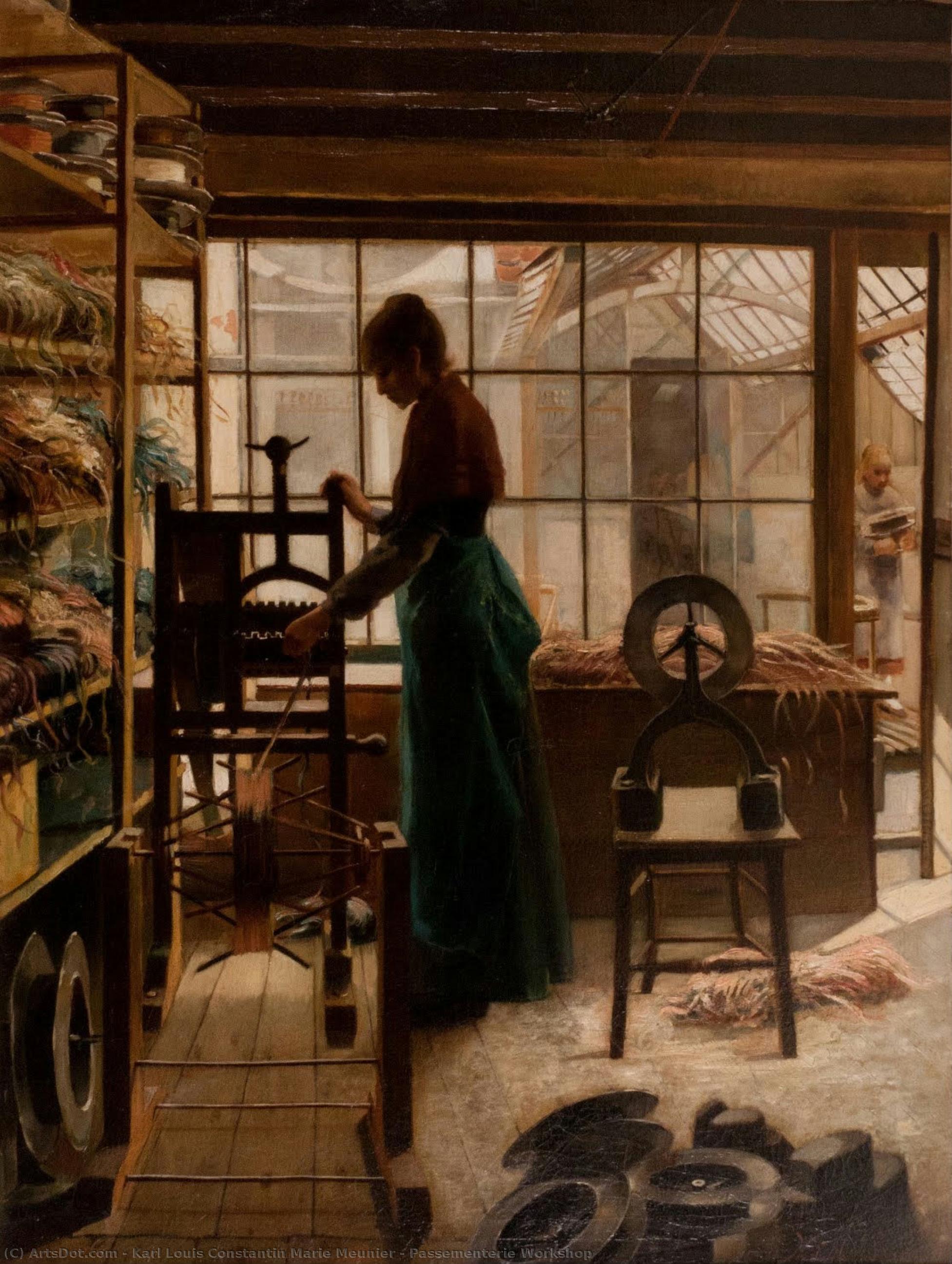
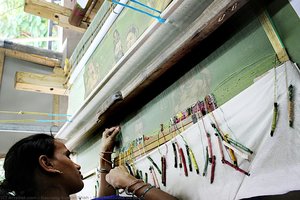
In the quiet, industrious atmosphere of Passementerie Workshop, painted in 1884, we are invited into a world where time is measured not by the ticking of a clock, but by the rhythmic movement of the loom. This evocative masterpiece by the Belgian artist Karl Louis Constantin Marie Meunier captures a moment of profound dedication. At the heart of the composition stands a woman, her figure anchored by the intricate machinery of her craft. The loom serves as the central protagonist of the scene, its wooden frame draped with spools of thread that suggest a continuous, flowing narrative of creation. As she works, the presence of others in the background hints at a shared communal effort, a collective pulse of labor that defines the era's industrial and artisanal spirit.
The painting is more than a mere depiction of manual labor; it is an intimate study of focus and the beauty found within repetitive, skilled motion. Every element, from the subtle placement of the chairs to the small bowl containing essential tools, contributes to a sense of lived-in reality. There is a quiet dignity in her posture, a testament to the artistry required to transform raw thread into exquisite fabric. For the collector or interior designer, this piece offers a window into a bygone era of craftsmanship, providing a focal point that radiates warmth, stability, and a deep respect for the human touch.
Impressionistic Light and Belgian Heritage
Meunier, the son of the renowned Constantin Meunier, brought a unique perspective to his work, blending the gritty realism of industrial life with the luminous, expressive qualities of the Impressionist movement. In this workshop scene, we see his mastery of light and color. The artist utilizes bold, confident brushstrokes to capture the interplay of light as it filters through the workspace, illuminating the textures of the threads and the weathered surfaces of the loom. This technique does not merely describe the scene; it breathes life into it, creating a palpable atmosphere that feels both nostalgic and immediate.
The historical context of the late 19th century is woven into the very fabric of the painting. As Belgium navigated the complexities of the industrial revolution, artists like Meunier sought to document the changing landscape of labor. Through his lens, the workshop becomes a sacred space of production. The use of color—ranging from the earthy tones of the wooden furniture to the vibrant pops of color from the spools—creates a visual rhythm that guides the eye across the canvas. This piece serves as an exquisite example of how Meunier could elevate a scene of everyday toil into a profound meditation on the beauty of persistence.
An Elegant Addition to the Modern Interior
For those seeking to curate a space that evokes sophistication and soulful depth, Passementerie Workshop offers unparalleled inspiration. Its rich textures and warm, muted palette make it an ideal centerpiece for a variety of interior styles, from classic European estates to contemporary lofts that value historical resonance. The painting’s ability to command attention through its subject matter rather than through sheer scale allows it to integrate seamlessly into a room, providing a sense of calm and intellectual engagement.
Owning a high-quality reproduction of this work means bringing a piece of Belgian art history into one's personal sanctuary. It is an invitation to pause and appreciate the meticulous beauty of the handmade. Whether placed in a study, a library, or a grand living area, this artwork acts as a conversation starter, prompting reflections on the enduring value of skill, patience, and the quiet majesty of the creative process.
Srodna umetnička dela


Biografija umetnika
The Brief but Brilliant Life of Karl Meunier
In the annals of Belgian art history, few names evoke such a poignant sense of lost potential as Karl Louis Constantin Marie Meunier. Born in 1864 in Saint-Josse-ten-Noode, Belgium, Karl was destined to be part of an artistic dynasty. As the son of the legendary sculptor and painter Constantin Meunier, his very existence was steeped in the rich, textured atmosphere of the Belgian art scene. His early years were shaped by a lineage of profound creativity, yet he sought to carve out a distinct identity that moved beyond the shadow of his father’s monumental social realism.
Karl's formal education took place at the prestigious Académie de Bruxelles, where he studied under the guidance of Ernest Blanc-Garin from 1881 until his untimely death in 1894. This period of intense training allowed him to master the delicate balance between technical precision and emotional expression. While his father often focused on the heavy, muscular dignity of the working class, Karl’s development saw him gravitating toward a more atmospheric approach, blending the structural lessons of the academy with the burgeoning light and color of the Impressionist movement.
A Vision of Landscapes and Industrial Soul
The work of Karl Meunier is characterized by a remarkable ability to capture the ephemeral qualities of the natural world. He was particularly adept at landscapes that felt alive, breathing with the moisture of the Belgian countryside and the shifting light of the seasons. His technique often utilized bold colors and expressive brushstrokes, a hallmark of his Impressionist influence, which allowed him to convey not just the sight of a scene, but its very temperament.
One of his most significant contributions to the art world was his series of engravings known as 'Le Pays Noir' (The Black Country). In these works, Meunier explored the industrial landscapes of Belgium, capturing the somber beauty of coal-mining regions. Through his mastery of engraving, he could translate the grit and smoke of industrial life into hauntingly beautiful compositions. This series stands as a testament to his ability to find aesthetic grace within the rugged, often harsh realities of the industrial age.
Beyond landscapes, Meunier’s repertoire included evocative figure paintings and still lifes that showcased his versatility:
- The Ford: A landscape painting that serves as a masterclass in capturing the essence of the natural world through light and water.
- Banquet: A rich still life that demonstrates his ability to handle abundance, texture, and the interplay of shadow and light.
- Figure Studies: Works that bridged the gap between the human form and the surrounding environment, often echoing the social themes present in his father's oeuvre but with a more personal, lyrical touch.
Legacy and Historical Significance
Though his life was tragically short, ending in Louvain at the age of only thirty, Karl Meunier left an indelible mark on the Belgian landscape. His ability to synthesize the heavy themes of Social Realism with the luminous freedom of Impressionism provided a unique bridge between two major movements of the late 19th century. His work does not merely document a period of history; it captures the soul of a nation in transition from agrarian roots to industrial power.
Today, his contributions are preserved in esteemed institutions such as the Musées Royaux des Beaux-Arts in Brussels, where his pieces sit alongside the masters of his era. To study Karl Meunier is to witness a fleeting moment of artistic brilliance—a life that, while brief, burned with an intensity that continues to resonate with collectors and historians alike. His legacy lives on through the enduring beauty of his landscapes and the profound emotional depth found within his strokes.
karl louis constantin marie meunier
1864 - 1894 , Belgium
Kratke činjenice
- Artistic Movement Or Style: Impressionism
- Artists Who Influenced This Artist:
- Constantin Meunier
- Ernest Blanc-Garin
- Date Of Birth: 1864
- Date Of Death: 1894
- Full Name: Karl Louis Constantin Marie Meunier
- Nationality: Belgian
- Notable Artworks:
- The Ford
- Banquet
- Le Pays Noir series
- Place Of Birth: Saint-Josse-ten-Noode, Belgium