

 Pregledaj u prostoru
 Pošalji
 Podeli
 Detalji o delu

 Преузми
 Slični predmeti
 Rendgenski snimak
 Slajdovi
Непознато једно
 Akril na platnu
- Umetnost za zidove
- Contemporary Minimalism
 2009
2009 120.0 x 80.0 cm
 Lentos Kunstmuseum Linz
 Pročitaj više
Kupite digitalnu sliku visoke rezolucije i poboljšanog kvaliteta, koja je znatno superiornija od onoga što vidite u online prikazu.
Svaka datoteka je pedantno pripremljena od strane naših stručnjaka koristeći napredne alate i profesionalnu ručnu retušu. Osiguravamo da svaka slika ima izuzetnu oštrinu, preciznu reprodukciju boja i fine detalje.
Konačna datoteka se dostavlja putem e-pošte u roku od 72 sata, optimizovana za neposrednu upotrebu u profesionalnim, izdavačkim i štamparskim okruženjima. To je isti kvalitet kojem veruju vrhunski studiji dizajna, izdavači i galerije.
Digitalna slika
Preuzmite datoteku visoke rezolucije za ličnu upotrebu, štampanje i kreativne projekte. ( Kupi print Kupi ručno naslikanu sliku)
Uključeno uz svaku porudžbinu digitalne slike
Profesionalna digitalna isporuka, zagarantovana
Kada odaberete ArtsDot.com, ne dobijate samo sliku – vi primate profesionalno unapređeno digitalno umetničko delo, izrađeno sa najvećom preciznošću i uz garanciju zadovoljstva. Evo svega što automatski dolazi uz vašu porudžbinu:

Brza dostava putem e-pošte
Vaša digitalna slika visoke rezolucije biće vam poslata putem e-pošte u roku od 72 sata od poručivanja – spremna za trenutnu upotrebu.

Digitalna datoteka unapređena veštačkom inteligencijom
Vaše umetničko delo je profesionalno optimizovano korišćenjem naprednih AI alata i ručne obrade, čime se osiguravaju maksimalni detalji, oštrina i preciznost boja.

Besplatna ponovna isporuka doživotno
Slučajno ste obrisali ili izgubili svoju datoteku? Ne brinite – poslaćemo vam je ponovo u bilo kom trenutku, potpuno besplatno.

Bez troškova uvoza – zauvek
Uživajte u svojim umetničkim delima trenutno, bez carine, dažbina ili troškova dostave – digitalni download je uvek bez poreza.

Garancija vernosti boja
Uz pomoć profesionalnih alata i upravljanja bojama, osiguravamo da vaša digitalna slika što vernije odražava originalne boje.

Garancija zadovoljstva od 100 dana
Ako niste zadovoljni svojom digitalnom slikom, izvršićemo reviziju ili ćemo vam vratiti 100% novca u roku od 100 dana – bez ikakvih pitanja.

100% garancija povrata novca
Niste zadovoljni? Dobijte puni povraćaj novca u roku od 100 dana od prijema digitalne datoteke – bez suvišnih pitanja.

Popusti na velike porudžbine
Kupite 3 slike, uštedite 10% - Kupite 5 slika, uštedite 15% - Kupite 10+ slika, uštedite 20%. Odlično za kreativne projekte, galerije i agencije.
Katharina Gruzei’s “Untitled 1”: A Nocturne of Reflection
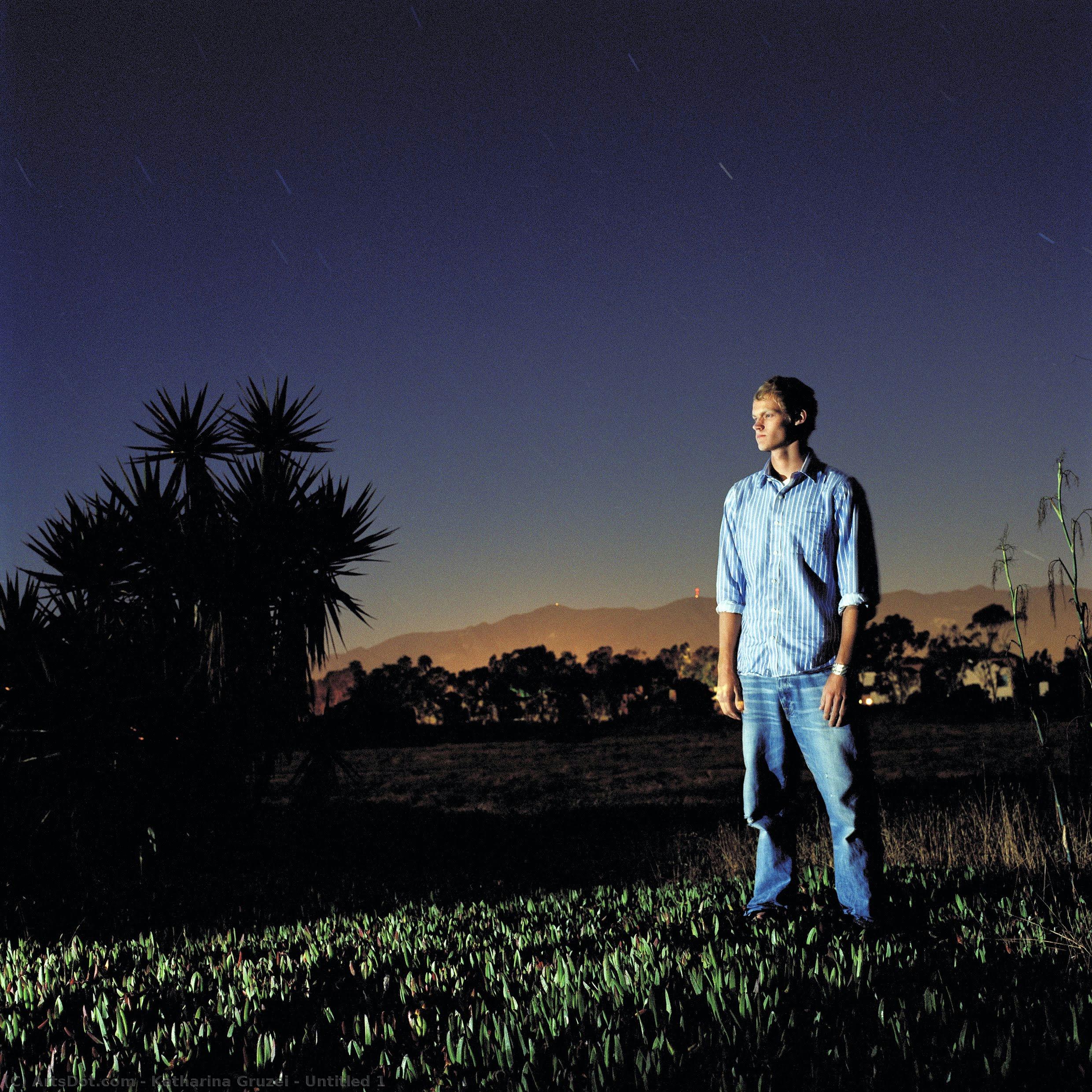
Katharina Gruzei's "Untitled 1" presents a striking monochrome portrait, capturing a solitary figure bathed in the ethereal glow of moonlight against the backdrop of palm trees and two clocks. This artwork transcends mere visual representation; it invites contemplation on themes of time, solitude, and observation—elements deeply rooted in Basquiat’s artistic ethos. Gruzei skillfully employs a technique reminiscent of Basquiat's own explorations into expressive abstraction, prioritizing texture and tonal variation over precise delineation. The artist utilizes oil paints on canvas to achieve a velvety surface that subtly captures the nuances of light and shadow, mirroring the contemplative gaze of the subject.- Subject Matter: The central figure embodies stillness and introspection, gazing upwards towards the celestial expanse. This posture speaks volumes about Basquiat’s fascination with confronting existential questions and seeking solace in the grandeur of nature.
- Style: Gruzei's approach aligns closely with Basquiat’s signature style – a blend of raw emotion and deliberate abstraction. It eschews representational accuracy for conveying mood and atmosphere, mirroring Basquiat’s rejection of conventional artistic conventions.
- Technique: The artist’s masterful use of oil paint creates a rich textural surface that enhances the artwork's visual impact. Gruzei expertly manipulates tonal gradations to evoke a sense of nocturnal serenity and heighten the emotional resonance of the scene.
- Historical Context: Gruzei’s work draws inspiration from Basquiat’s groundbreaking contributions to neo-expressionism, a movement characterized by its rejection of minimalism and embrace of emotive painting. Gruzei's exploration of texture and tonal subtlety echoes Basquiat’s stylistic innovations.
- Symbolism: The palm trees symbolize resilience and adaptability—qualities that resonate with Basquiat’s own experiences navigating the complexities of urban life and artistic ambition. Similarly, the clocks represent the relentless march of time and invite viewers to consider their own lives against this backdrop.
Srodna umetnička dela


Biografija umetnika
Jean-Michel Basquiat: A Voice From the Streets and Beyond
Jean-Michel Basquiat’s story is one of astonishing speed, meteoric rise, and tragically premature end – a whirlwind journey from the gritty streets of Brooklyn to the hallowed halls of the art world. Born in 1960 to Haitian and Puerto Rican parents, his early life was marked by movement and uncertainty, culminating in a teenage exodus to Lower Manhattan where he immersed himself in the vibrant, rebellious culture of New York’s downtown scene. This formative period, steeped in graffiti, punk rock, and a burgeoning sense of social awareness, would profoundly shape his artistic vision and become the bedrock upon which his iconic style was built.
Initially known as SAMO – an abbreviation for “same old, same old” – Basquiat began tagging walls with cryptic statements alongside fellow artists like Al Diaz. These early works, often incorporating poetry and social commentary, established a unique voice and laid the groundwork for his later explorations of identity, power dynamics, and cultural critique. The "Times Square Show" in 1980, a collaborative exhibition featuring SAMO’s work, catapulted him into the spotlight, attracting the attention of art critics and collectors alike. It was here that Basquiat began to transition from street art to canvas, embracing a more formal artistic practice while retaining the raw energy and subversive spirit of his earlier graffiti.
The Rise of Neo-Expressionism and Market Forces
By 1981, Basquiat’s paintings were gaining significant recognition. The influential article “The Radiant Child” in *Rolling Stone* magazine, written by critic Rene Ricard, solidified his position as a rising star, describing him not simply as a painter but as an "individual" – a concept that resonated deeply within the rapidly evolving art market of the 1980s. This period coincided with a surge in interest in large-scale painting and a shift away from minimalist aesthetics, giving rise to Neo-Expressionism. Basquiat’s work perfectly embodied this movement, characterized by bold colors, expressive brushstrokes, and a willingness to confront difficult subjects.
His art was not merely aesthetic; it was deeply rooted in social commentary. He grappled with issues of race, class, and representation, often incorporating elements of African history, mythology, and Black culture into his compositions. As critic Ricard noted, Basquiat was acutely aware of the complexities of his position within the art world – simultaneously celebrated for his talent and subjected to stereotypes and tokenization. His work became a direct challenge to these contradictions, demanding recognition not just as an artist but as a person with a unique perspective.
A Visual Language of Symbols and References
Basquiat’s visual language was remarkably complex and layered, drawing on a diverse range of influences. His paintings frequently featured anatomical diagrams alongside text – lists, inventories, names, and phrases – creating a chaotic yet strangely coherent tapestry of information. These elements were often juxtaposed with symbols derived from African art, pop culture, and personal experiences. He employed techniques borrowed from jazz improvisation—building upon multiple references to create expansive, gestural compositions.
The artist’s use of words was particularly significant. He didn't simply decorate his canvases with text; he integrated it as a crucial component of the artwork itself, inviting viewers to decipher its meaning and engage in a dialogue with the work. Many of his images possessed multiple layers of interpretation, some deliberately ambiguous, others explicitly critical. He sought collisions of imagery and words, recreating the experience of navigating a world brimming with both excitement and oppression.
Legacy and Enduring Significance
Despite his tragically short life – he died in 1988 at the age of twenty-seven from a heroin overdose – Jean-Michel Basquiat’s impact on the art world is immeasurable. His work continues to be exhibited, studied, and collected with increasing fervor, and his influence can be seen in countless contemporary artists. The market for his paintings has soared over the decades, with works selling for tens of millions of dollars at auction – a testament to the enduring power of his vision.
Basquiat’s legacy extends beyond the realm of art; he remains a potent symbol of artistic rebellion, social critique, and the struggle for recognition. His story serves as a reminder of the complexities of fame, the challenges faced by marginalized artists, and the transformative potential of creative expression. His paintings are not just beautiful objects; they are windows into a turbulent era and a profound meditation on identity, history, and the human condition.

katharina gruzei
1982 - , Austria
Kratke činjenice
- Artistic Movement Or Style: Neo-Expressionism
- Artists Or Movements Influenced By This Artist:
- Jazz
- African art
- Artists Who Influenced This Artist:
- Andy Warhol
- Graffiti artists
- Date Of Birth: 1960
- Date Of Death: 1988
- Full Name: Jean-Michel Basquiat
- Nationality: American
- Notable Artworks:
- Untitled (1982)
- Dustheads
- Echoes in the Rain
- Place Of Birth: Brooklyn, New York