

 Pregledaj u prostoru
 Pošalji
 Podeli
 Detalji o delu

 Преузми
 Slični predmeti
 Rendgenski snimak
 Slajdovi
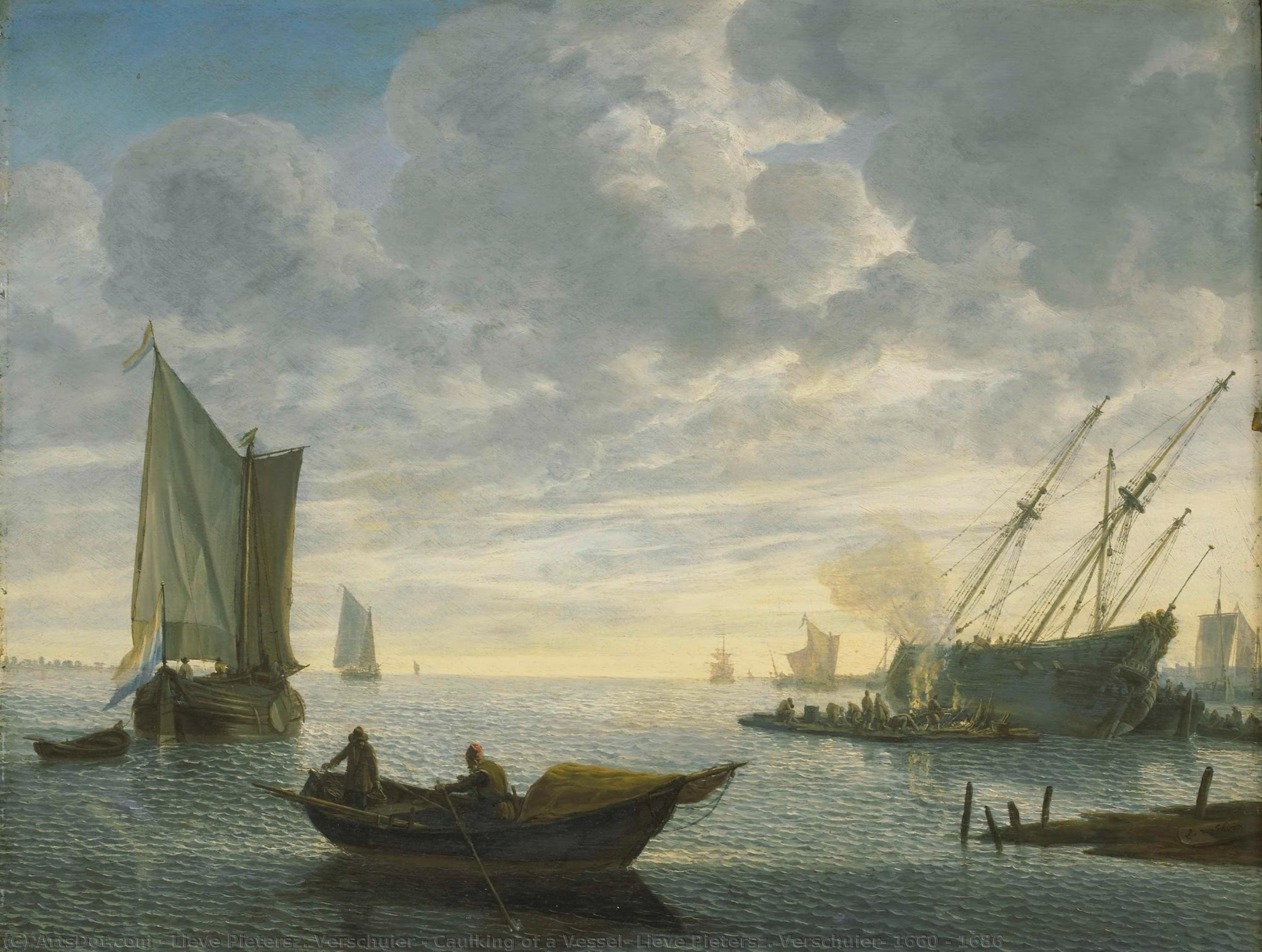
Caulking of a Vessel, Lieve Pietersz. Verschuier, 1660 - 1686
 1686
1686 38.0 x 49.0 cm
 Pročitaj više
Ručno rađena uljana reprodukcija
Ručno oslikano uljanim bojama na platnu u dimenzijama i okviru po vašem izboru, izrađeno po porudžbini od strane naših umetnika. ( Kupi print Kupi digitalnu sliku)




































Izaberite jednu od naših unapred definisanih veličina koje odgovaraju originalnim proporcijama umetničkog dela.

Можете унети сопствене димензије како бисте прилагодили дело одређеном оквиру или простору. Ако одабрана величина не одговара пропорцијама оригинала, слика ће бити исечена или проширена додатним елементима који се ручно насликавају. Дигитални prikaz ће вам бити послат на одобрење пре почетка производње.
Имајте на уму да преглед на екрану не одражава стварно исецање или проширење. Само приказ (mockup) ће тачно приказати коначну композицију.
Иако су доступне прилагођене величине, препоручујемо да одаберете димензију из дефинисане листе како бисте сачували оригиналне пропорције.
Nakon narudžbine, tim ArtsDot.com će klijentu putem e-pošte poslati uputstva i dostaviti prikaz predloženog rešenja
Isporuka širom sveta () za 3/4 nedelje umesto uobičajenih 5 nedelja. (5 септембар). Bez kompromisa po pitanju kvaliteta.

Besplatna ekspresna dostava širom sveta

Visokokvalitetno laneno platno

Kompletno osiguranje transporta

Garancija povraćaja carine i uvoznih dažbina

Garancija vernosti boja

Politika povrata u roku od 60 dana (samo u slučaju nedostataka)

Garancija povrata novca od 100%

Popust pri grupnoj kupovini
 Opcija sa staklom dostupna je samo za dimenzije manje od 110 cm

Caulking of a Vessel, Lieve Pietersz. Verschuier, 1660 - 1686
Tehnika reprodukcije
Dimenzije reprodukcije
-


Konačna cena
$ 313
Srodna umetnička dela









Biografija umetnika
A Life Upon the Waves: The World of Lieve Pietersz Verschuier
Lieve Pietersz Verschuier, a name perhaps less immediately recognizable than some of his Dutch Golden Age contemporaries, nevertheless occupies a vital and fascinating niche in the pantheon of 17th-century maritime painters. Born in Rotterdam, his life unfolded against a backdrop of burgeoning trade, naval power, and artistic innovation – all elements that would profoundly shape his oeuvre. While precise details regarding his early training remain somewhat elusive, documentation places him in Amsterdam by 1651, suggesting an apprenticeship or formative studies under the esteemed Simon de Vlieger, a master renowned for his dynamic seascapes. This initial exposure to De Vlieger’s style – characterized by its meticulous detail and atmospheric rendering of light – undoubtedly laid the foundation for Verschuier's own artistic path. However, Verschuier was not content merely to replicate; he embarked on a journey that would see him develop a distinctive voice within the crowded field of Dutch marine painting.Roman Sojourns and Artistic Refinement
A pivotal moment in Verschuier’s development came with his voyage to Rome in 1653. Traveling alongside Jan Vermeer van Utrecht, he immersed himself in the vibrant artistic culture of Italy. This period proved transformative, fostering friendships with fellow artists like Willem Droost and Johann Carl Loth, figures who broadened his perspective and exposed him to new aesthetic influences. While primarily known for his maritime subjects, Verschuier’s Roman sojourn clearly impacted his work, introducing a taste for Italianate landscapes – scenes imbued with classical architecture, dramatic skies, and a sense of idealized beauty. This fusion of Dutch realism with Italian romanticism became a hallmark of his style, setting him apart from many of his peers who focused solely on the depiction of ships and coastal waters. The influence isn’t merely stylistic; it speaks to Verschuier's intellectual curiosity and willingness to absorb diverse artistic traditions.Settling in Rotterdam: A Chronicler of Naval Life
Upon his return from Italy, Verschuier established himself in Rotterdam in 1667, a city deeply intertwined with maritime commerce and shipbuilding. He remained there for the rest of his life, dedicating himself to painting marine scenes and Italianate landscapes. This period represents the peak of his artistic production, as he became increasingly sought after by patrons eager to possess depictions of their vessels or evocative views of coastal regions. His paintings are not simply aesthetic representations; they serve as invaluable historical documents, offering a detailed glimpse into the art of shipbuilding during the 17th century. The precision with which he rendered rigging, hull construction, and naval flags speaks to a deep understanding of seafaring technology and practices. He wasn’t just painting ships; he was documenting an era.Technique and Symbolism: Beyond the Surface
Verschuier's technique is characterized by a masterful command of light and atmosphere, creating a sense of depth and realism that draws the viewer into the scene. He employed subtle gradations of color to depict the play of sunlight on water, the billowing of sails, and the texture of clouds. His brushwork, while detailed, avoids excessive rigidity, lending his paintings a dynamic quality that captures the movement and energy of the sea. Beyond technical skill, Verschuier’s work often incorporates symbolic elements. Calm seas could represent prosperity and peaceful trade, while stormy weather might allude to the risks and uncertainties inherent in maritime life. The inclusion of specific flags or heraldic devices on ships frequently identified patrons or commemorated naval victories. These subtle details elevate his paintings beyond mere depictions of vessels; they become narratives imbued with historical context and personal meaning.Legacy and Historical Significance
Though perhaps not as widely celebrated as some of the more prominent Dutch Masters, Lieve Pietersz Verschuier’s contribution to maritime art is undeniable. His paintings offer a unique window into the world of 17th-century seafaring, providing invaluable insights into shipbuilding techniques, naval practices, and the economic forces that drove the Dutch Golden Age.- His meticulous attention to detail makes his works prized by historians and collectors alike.
- The fusion of Dutch realism with Italianate landscapes demonstrates a sophisticated artistic sensibility.
- He stands as a testament to the power of art to document history, capture beauty, and reflect the spirit of an era.
Osnovne informacije
- Artistic Movement Or Style: Dutch Golden Age Painting
- Artists Or Movements Influenced By This Artist: ['Jan Vermeer van Utrecht']
- Artists Who Influenced This Artist: ['Simon de Vlieger']
- Date Of Death: 1686
- Full Name: Lieve Pietersz Verschuier
- Nationality: Dutch
- Notable Artworks:
- Caulking of a Vessel
- A Keelhauling
- Arrival of Charles II
- Place Of Birth: Rotterdam, Netherlands

