

 Pregledaj u prostoru
 Pošalji
 Podeli
 Detalji o delu

 Преузми
 Slični predmeti
 Rendgenski snimak
 Slajdovi
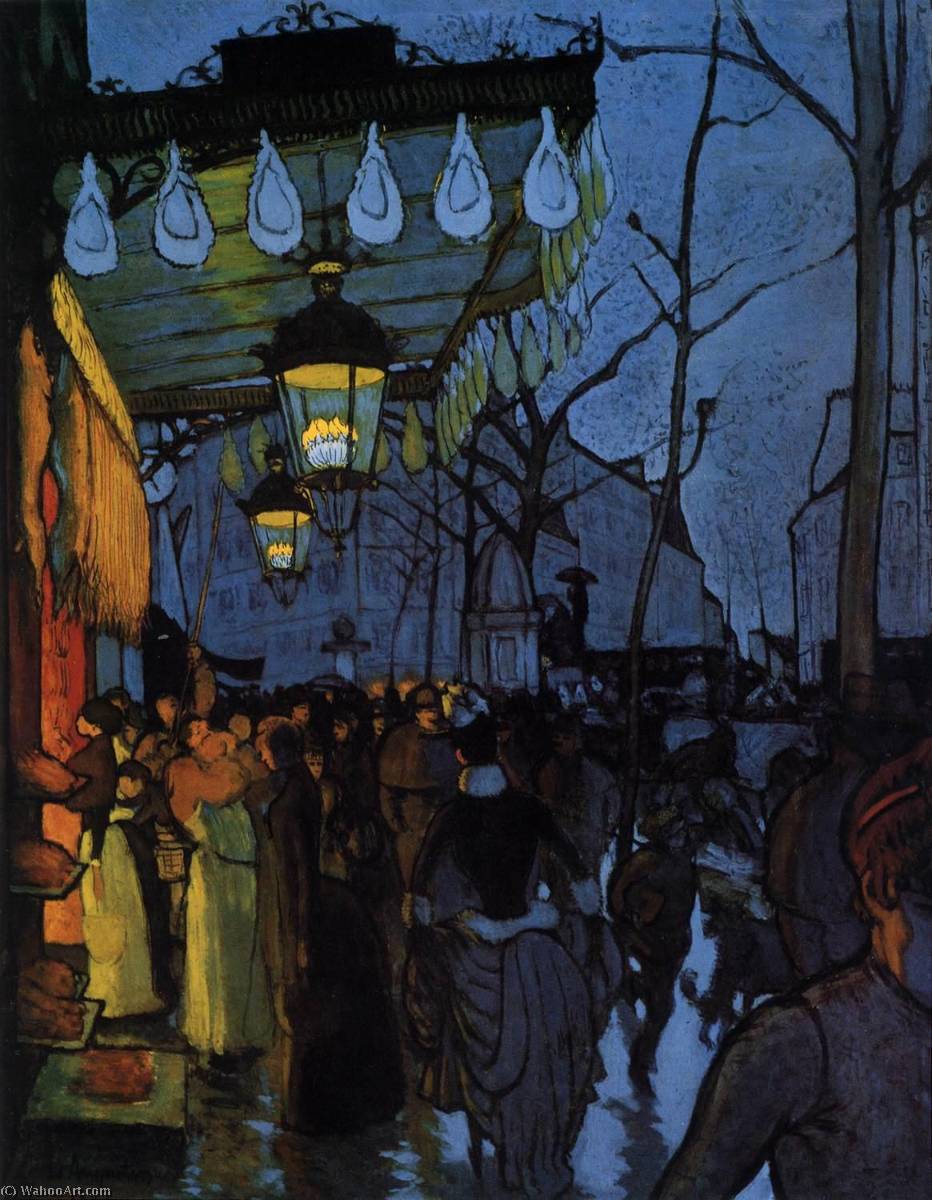
Avenue de Clichy Five O'Clock in the Evening
 Impressionism
 1887
1887- 19th Century
 69.0 x 54.0 cm
 Wadsworth Atheneum
 Pročitaj više
Kupite digitalnu sliku visoke rezolucije i poboljšanog kvaliteta, koja je znatno superiornija od onoga što vidite u online prikazu.
Svaka datoteka je pedantno pripremljena od strane naših stručnjaka koristeći napredne alate i profesionalnu ručnu retušu. Osiguravamo da svaka slika ima izuzetnu oštrinu, preciznu reprodukciju boja i fine detalje.
Konačna datoteka se dostavlja putem e-pošte u roku od 72 sata, optimizovana za neposrednu upotrebu u profesionalnim, izdavačkim i štamparskim okruženjima. To je isti kvalitet kojem veruju vrhunski studiji dizajna, izdavači i galerije.
Digitalna slika
Preuzmite datoteku visoke rezolucije za ličnu upotrebu, štampanje i kreativne projekte. ( Kupi print Kupi ručno naslikanu sliku)
Uključeno uz svaku porudžbinu digitalne slike
Profesionalna digitalna isporuka, zagarantovana
Kada odaberete ArtsDot.com, ne dobijate samo sliku – vi primate profesionalno unapređeno digitalno umetničko delo, izrađeno sa najvećom preciznošću i uz garanciju zadovoljstva. Evo svega što automatski dolazi uz vašu porudžbinu:

Brza dostava putem e-pošte
Vaša digitalna slika visoke rezolucije biće vam poslata putem e-pošte u roku od 72 sata od poručivanja – spremna za trenutnu upotrebu.

Digitalna datoteka unapređena veštačkom inteligencijom
Vaše umetničko delo je profesionalno optimizovano korišćenjem naprednih AI alata i ručne obrade, čime se osiguravaju maksimalni detalji, oštrina i preciznost boja.

Besplatna ponovna isporuka doživotno
Slučajno ste obrisali ili izgubili svoju datoteku? Ne brinite – poslaćemo vam je ponovo u bilo kom trenutku, potpuno besplatno.

Bez troškova uvoza – zauvek
Uživajte u svojim umetničkim delima trenutno, bez carine, dažbina ili troškova dostave – digitalni download je uvek bez poreza.

Garancija vernosti boja
Uz pomoć profesionalnih alata i upravljanja bojama, osiguravamo da vaša digitalna slika što vernije odražava originalne boje.

Garancija zadovoljstva od 100 dana
Ako niste zadovoljni svojom digitalnom slikom, izvršićemo reviziju ili ćemo vam vratiti 100% novca u roku od 100 dana – bez ikakvih pitanja.

100% garancija povrata novca
Niste zadovoljni? Dobijte puni povraćaj novca u roku od 100 dana od prijema digitalne datoteke – bez suvišnih pitanja.

Popusti na velike porudžbine
Kupite 3 slike, uštedite 10% - Kupite 5 slika, uštedite 15% - Kupite 10+ slika, uštedite 20%. Odlično za kreativne projekte, galerije i agencije.
A Nocturnal Symphony in Monochrome
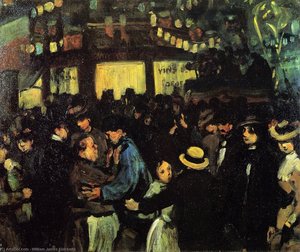
In the heart of late nineteenth-century Paris, amidst the gaslit streets and the rhythmic pulse of urban expansion, Louis Anquetin captured a fleeting moment of metropolitan life in Avenue de Clichy Five O'Clock in the Evening. This evocative work serves as a window into a world caught between the fading light of day and the burgeoning energy of the night. Rendered in a striking monochromatic palette, the painting strips away the distractions of color to focus the viewer’s attention on the raw essence of movement, shadow, and light. The scene unfolds before a grand architectural backdrop, where a magnificent chandelier hangs suspended like a captured star, casting an ethereal glow over the bustling crowd below. It is a composition that breathes with the vitality of the Belle Époque, inviting the observer to step into the shadows of a Parisian evening.
The technical mastery of Anquetin is on full display through his command of contrast and silhouette. By utilizing a black and white medium, he emphasizes the structural elegance of the figures and the architectural depth of the streetscape. The pedestrians, captured in mid-stride, become rhythmic elements within the composition; some appear as mere shadows drifting through the periphery, while others, closer to the foreground, possess a tangible presence. The inclusion of a horse near the center of the frame adds a touch of classical grace to the industrializing cityscape, bridging the gap between the traditional pastoral past and the modern, mechanical future. This interplay of light and dark creates a sense of depth that pulls the eye through the crowd, mimicking the wandering gaze of a flâneur strolling through the streets of Montmartre.
For the discerning collector or interior designer, this piece offers more than mere decoration; it provides an atmospheric anchor for a sophisticated space. The stark, dramatic tones of Avenue de Clichy lend themselves beautifully to contemporary minimalist settings, where they can act as a focal point of historical gravity, or they can complement classical, opulent interiors by adding a layer of nostalgic mystery. There is a profound emotional resonance in the way Anquetin depicts the anonymity of the crowd—a sense of shared human experience within the vast, impersonal machinery of the city. Owning a reproduction of this masterpiece is an invitation to preserve the romantic melancholy and the timeless elegance of a Paris that continues to haunt the collective imagination of the art world.
Srodna umetnička dela

Biografija umetnika
The Visionary Architect of Form: The Life and Legacy of Louis Anquetin
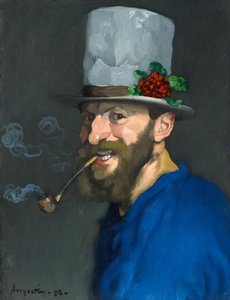
Born in the coastal atmosphere of Etretat, Normandy, in 1861, Louis Émile Anquetin emerged as a singular force within the turbulent landscape of late nineteenth-century French painting. His artistic journey was never one of mere imitation; instead, it was a profound exploration of how tradition could be dismantled and rebuilt through a modern lens. While his early years were touched by the burgeoning light of Impressionism, Anquetin possessed an innate restlessness that pushed him beyond the fleeting effects of atmosphere toward something more structural, more permanent, and deeply symbolic. Alongside his contemporary Henri de Toulouse-Lautrec, he navigated the vibrant, often chaotic art circles of Paris, shaped by the mentorship of Fernand Cormon, yet he always maintained a stylistic independence that would eventually redefine the boundaries of modern composition.
The most revolutionary chapter of Anquetin’s career arrived with the birth of Cloisonnism, a technique he pioneered in collaboration with Émile Bernard. This movement sought to reject the soft, blended edges of Impressionism in favor of a bold, graphic clarity inspired by the stark outlines of stained glass and the elegant simplicity of Japanese ukiyo-e prints. By applying flat areas of saturated color bounded by heavy black contours, Anquetin created works that possessed an almost sculptural weight. This method did more than just capture a scene; it distilled reality into its most essential, symbolic elements, creating a visual language that felt both ancient and avant-garde. Through this lens, the canvas became a space of deliberate design rather than a mere window onto nature.
A Synthesis of Grandeur and Modernity
As his career matured, Anquetin’s aesthetic underwent a fascinating metamorphosis, moving away from the flat planes of Cloisonnism toward a profound reverence for the Rubensian tradition. This shift represented a return to the grandeur of the Old Masters, characterized by an embrace of complex allegorical narratives and a meticulous attention to anatomical and compositional detail. He began to weave together the structural boldness of his earlier experiments with the sweeping, muscular energy of Peter Paul Rubens. In masterpieces such as “Rinaldo and Armida,” one can witness this breathtaking synthesis: the emotional depth and classical drama of the Baroque era meeting the modern sensibility of a painter who understood the power of the line.
Anquetin’s ability to navigate these disparate worlds—the ephemeral energy of Parisian street life and the timeless weight of historical myth—is what secures his place in art history. His works often capture the pulse of a changing world, such as the evocative “Avenue de Clichy Five O'Clock in the Evening,” where the bustling nocturnal energy of Paris is rendered with an elegant, almost cinematic grace. Whether through the intimate, delicate rendering of a “Portrait of a Young Woman with Long Hair” or the bold, graphic strength of his more experimental pieces, Anquetin’s oeuvre remains a testament to the power of stylistic evolution. He remains a vital figure for any collector seeking to understand the bridge between the classical past and the dawn of modernism.
Louis Anquetin
1861 - 1932 , France
Kratke činjenice
- Artistic Movement Or Style: Cloisonnism & Rubensian Style
- Artists Or Movements Influenced By This Artist: ['Rubens']
- Artists Who Influenced This Artist:
- Henri Toulouse-Lautrec
- Fernand Cormon
- Vincent van Gogh
- Date Of Birth: 26 January 1861
- Date Of Death: 19 August 1932
- Full Name: Louis Émile Anquetin
- Nationality: French
- Notable Artworks:
- Avenue de Clichy: Five o’clock in the evening
- Femme à la Voilette
- Le Pont Neuf
- Place Of Birth: Etretat, France