

 Pregledaj u prostoru
 Pošalji
 Podeli
 Detalji o delu

 Преузми
 Slični predmeti
 Rendgenski snimak
 Slajdovi
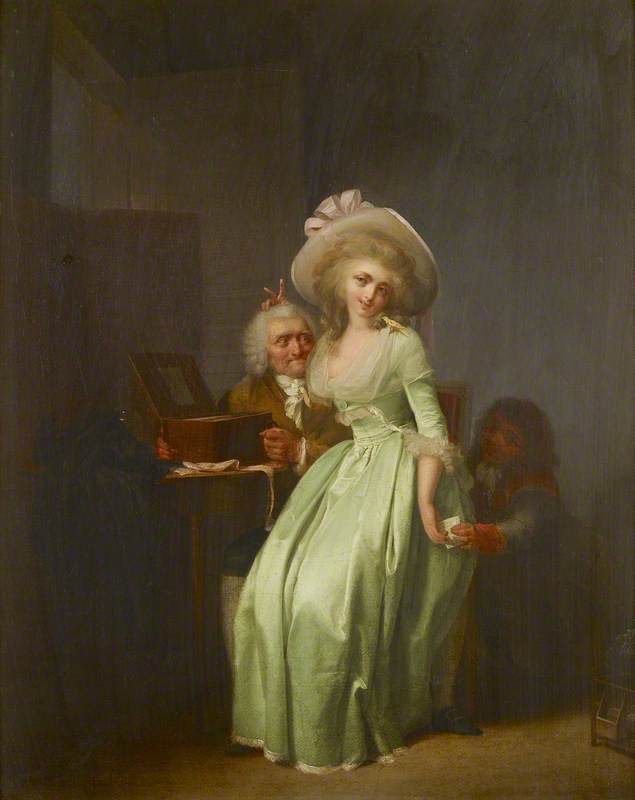
A young Woman mocking an elderly Admirer


 Pročitaj više
Giclee štampa / Umetnički otisak
Giclée štampa ili print na platnu muzejskog kvaliteta uz brzu proizvodnju i fleksibilne opcije završne obrade. ( Kupi ručno naslikanu sliku Kupi digitalnu sliku)




P118B $10

P118H $10

P118W $10

P438Z $10

P508JH $12

P508YH $12

P805H $10

P805Z $10

P919BZ $10

P919G $10

P919XJ $10

P959ZH $10

P968JZ $12

W106C $8

W218G $10

W218JH $8

W218Y $10

W307PJ $10

W316G $10

W316PJ $8

W316Y $10

W398PJ $8

W4111J $10

W500HY $15

W500JH $15

W692G $12

W849H $8

W940BG $15

W953PJ $8




Izaberite jednu od naših unapred definisanih veličina koje odgovaraju originalnim proporcijama umetničkog dela.

Možete uneti sopstvene dimenzije kako biste umetničko delo prilagodili specifičnom okviru ili prostoru. Ako odabrani format ne odgovara proporcijama originalne slike, mi ćemo ili iscrtati deo dela ili proširiti sliku pomoću ogledane ivice ili jednobojnog popunjavanja. Digitalni prikaz će vam biti poslat na odobrenje pre početka proizvodnje.
Imajte na umu da pregled na ekranu ne odražava stvarno iscrtavanje ili proširivanje. Samo će prikaz (mockup) precizno pokazati finalnu kompoziciju.
Iako su prilagođene dimenzije dostupne, preporučujemo da odaberete dimenziju sa unapred definisane liste kako biste očuvali originalne proporcije.
Dostava širom sveta () za 2 nedelje umesto uobičajenih 4/5 nedelja. (29 август)

Besplatna ekspresna dostava širom sveta

Visokokvalitetno laneno platno

Kompletno osiguranje transporta

Garancija povraćaja carine i uvoznih dažbina

Garancija vernosti boja

Politika povrata u roku od 60 dana (samo u slučaju nedostataka)

Garancija povrata novca od 100%

Popust pri grupnoj kupovini
 Opcija sa staklom dostupna je samo za dimenzije manje od 110 cm

A young Woman mocking an elderly Admirer
Giclee štampa / Umetnički otisak
Dimenzije reprodukcije
-


Konačna cena
$ 62
The Enigmatic Glance: Louis Léopold Boilly’s “A Young Woman Mocking an Elderly Admirer”
Louis Léopold Boilly's "A Young Woman Mocking an Elderly Admirer," housed within the Ashmolean Museum in Oxford, isn’t merely a painting; it’s a meticulously crafted snapshot of 19th-century Parisian life – a vibrant tableau brimming with social commentary and subtle psychological drama. Completed around 1800, this oil on canvas offers a glimpse into the bustling world of the French middle class, capturing a fleeting moment of playful defiance within a richly detailed domestic setting. The painting immediately draws the eye to its central figure: a young woman, dressed in a striking green gown adorned with a delicate white hat, who holds court with an air of confident amusement. Her gaze, direct and slightly challenging, pierces through the scene, engaging the viewer directly and hinting at a complex interplay of emotions.
The setting itself is crucial to understanding the painting’s narrative. A seated elderly gentleman, clad in a brown coat, occupies a table, seemingly engrossed in a book – an image of quiet contemplation. However, his attention is undeniably drawn to the young woman's performance, suggesting a dynamic of admiration and perhaps even gentle mockery. To the left, another figure adds further layers to the scene, their activity obscured but undoubtedly contributing to the overall atmosphere of social interaction. The dimly lit room, with its arched window offering a glimpse of an unseen exterior, creates a sense of intimacy while simultaneously emphasizing the enclosed nature of this particular moment.
Neoclassical Precision and Parisian Realism
Boilly’s artistic style is characterized by a remarkable blend of Neoclassical precision and a keen observation of everyday life. He was a master of *contre-peinture*, a technique that allowed him to create the illusion of three-dimensional objects within a flat surface – evident in the meticulously rendered details of the furniture, fabrics, and even the shadows cast across the room. This meticulous attention to detail is further enhanced by his skillful use of color, creating a harmonious yet subtly complex palette that reflects the nuances of light and atmosphere. The painting’s composition adheres closely to Neoclassical principles, with a balanced arrangement of figures and elements contributing to a sense of order and stability – a deliberate contrast to the often chaotic nature of Parisian society.
However, Boilly wasn't simply replicating reality; he was interpreting it. He possessed an astute understanding of human psychology and social dynamics, which he skillfully employed to convey subtle emotions and unspoken tensions. The young woman’s smirk, for instance, isn’t overtly aggressive but rather a playful challenge – a demonstration of her control over the situation and a subtle commentary on the expectations placed upon women in that era. The elderly gentleman's posture suggests a mixture of amusement and perhaps a touch of vulnerability, highlighting the complexities of social relationships.
Symbolism and Social Commentary
Beyond its immediate visual appeal, “A Young Woman Mocking an Elderly Admirer” offers a rich tapestry of symbolic meaning. The painting can be interpreted as a commentary on the shifting power dynamics between generations and genders in 19th-century France. The young woman’s defiance represents a rejection of traditional social constraints, while the elderly gentleman embodies the established order – a figure whose authority is subtly undermined by her playful challenge. The inclusion of the third figure adds another layer to this dynamic, suggesting the presence of an observer or perhaps a catalyst for the unfolding drama.
Furthermore, the painting reflects the broader social trends of the time – the rise of the middle class, the increasing urbanization of Paris, and the changing roles of men and women. Boilly’s meticulous depiction of Parisian life provides valuable insights into the customs, fashions, and attitudes of this era. The scene is a microcosm of society, capturing the tensions, contradictions, and complexities of everyday existence.
A Timeless Portrait of Human Interaction
“A Young Woman Mocking an Elderly Admirer” remains a captivating work of art due to its masterful execution, subtle symbolism, and enduring relevance. It’s more than just a pretty picture; it's a poignant meditation on human relationships, social dynamics, and the complexities of identity. Reproductions of this painting offer a remarkable opportunity to bring this evocative scene into your home or office, allowing you to appreciate Boilly’s artistic genius and gain a deeper understanding of 19th-century Parisian society. Consider framing it in a classic style to complement its Neoclassical aesthetic – a testament to the enduring beauty and timeless appeal of this extraordinary artwork.
Srodna umetnička dela
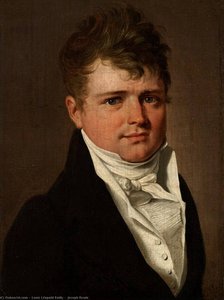
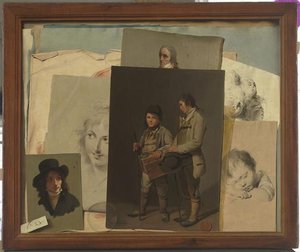
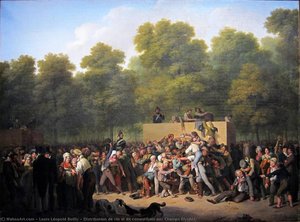
Biografija umetnika
Louis Léopold Boilly: Život u portretu i pariskom društvu
- Rođen: 5. jul 1761, La Bassée, Francuska
- Preminuo: 4. januar 1845, Pariz, Francuska
Rano detinjstvo i umetnički razvoj
- Boillijevo umetničko putovanje počelo je veoma rano; svoja prva dela stvarao je već sa dvanaest godina. Uglavnom samoukčen, svoje početno obrazovanje stekao je kroz trompe-l’oeil tehniku pod mentorstvom Dominique Doncrea.
- Njegov talenat prepoznat je od strane avgustininki iz Douai-ja 1774. godine, što je dovelo do poziva samog biskupa iz Arrasa. U ovom periodu stvorio je preko tri stotine malih portretnih slika.
- Njegova rana dela često su prikazivala ljubavne i poučne teme, pokazujući rastuću veštinu u hvatanju sličnosti i najfinijih detalja.
Umetnički stil i ključna dela
- Stil: Boillijev stil odlikuju pedantni detalji, pažljivo bojenje i fokus na prikazivanje svakodnevnog života francuske srednje klase. On je vešto spajao portretnu umetnost sa žanrovskim scenama.
- Evolucija: Nakon 1794. godine, njegove kompozicije postale su prepunije, odražavajući užurbani društveni život Pariza. Njegovi portreti stekli su široku slavu, a tokom svoje karijere naslikao je preko 5.000 njih.
- Značajna dela:
- Poklon udavača – Rano delo koje prikazuje ljubavne teme i pedantnu preciznost.
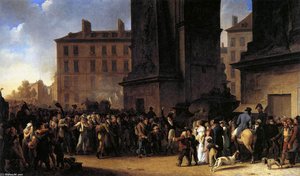
- Trijumf Marata – Patriotsko delo nastalo kako bi se izbeglo osuda tokom Perioda terora.
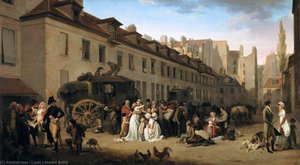
- Dolazak poštanske kočije u dvorište Messageries-a – Živopisni prikaz pariskog života i prevoza.
- Optičke iluzije: Boilly je bio fasciniran optikom, što se vidi u delima poput *Un Trompe-l'œil*, čime je uveo ovaj termin kako bi opisao svoju tehniku stvaranja realističnih slika koje imitiraju trodimenzionalne predmete.
Priznanja i nasleđe
- Uspeh na Salonu: Boilly je 1804. godine dobio medalju na Pariskom salonu, čime je učvrstio svoju reputaciju veštog umetnika.
- Ordenovanja: Dekorisan je kao vitez (Chevalier) Legije časti 1833. godine, u znak priznanja njegovog doprinosa francuskoj umetnosti.
- Porodični uticaj: Njegov sin, Alphonse Boilly, postao je profesionalni gravir, obavljajući svoj staž u New Yorku kod Ashera Browna Duranda.
- Istorijski značaj: Boillijeva dela pružaju neprocenjiv uvid u društvene običaje, modu i svakodnevni život francuske srednje klase tokom perioda velikih političkih previranja. Ostao je upamćen kao jedan od najslavnijih francuskih portretista i žanrovskih slikara.
Zbirke u muzejima
- Musée des Beaux Arts, Lille: Čuva Trijumf Marata pored drugih dela.
- Muzej Luvr: Poseduje odabrane delove iz Boillijevog bogatog opusa.
- National Gallery of Art (Washington D.C.): Drži nekoliko slika, uključujući *Samoportret*, *Les Amateurs de Tableaux* i *Publika u Salonu Luvra dok posmatra sliku "Sacre"*.
- Getty Museum: Poseduje kolekciju Boillijevih dela.
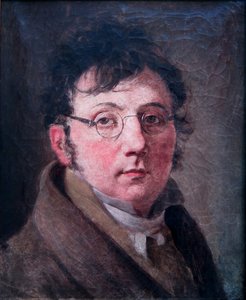
Lui Leopold Boji
1761 - 1845 , Francuska
Osnovne informacije
- Artistic Movement Or Style: Žanrovsko slikarstvo, Portretistika
- Artists Who Influenced This Artist:
- Gabriel Metsu
- Willem van Mieris
- Gerard ter Borch
- Date Of Birth: 5. jul 1761.
- Date Of Death: 4. januar 1845.
- Full Name: Louis Léopold Boilly
- Nationality: Francuz
- Notable Artworks:
- Poklon zalagaјca
- Maratov trijumf
- Dolazak poštanske kočije
- Place Of Birth: La Bassée, Francuska
Povezani članci
Reflections of an Era: Identity & Social Commentary in 19th-Century Portraiture
Explore the captivating world of 19th-century portraiture! Discover key artists, movements like Realism & Impressionism, and the powerful social commentary embedded within these iconic artworks. Expert insights at ArtsDot.
The Enduring Legacy of Formal Portraiture: Power, Identity & Artistic Exploration
Explore the rich history of formal portraiture & its enduring power to capture identity and shape perception. Discover investment-worthy artworks, expert appraisals, and custom reproduction services at ArtsDot.
Charles-André van Loo: A Study in Rococo Portraiture & the French Court's Artistic Dynamics
Explore the elegant world of Charles-André van Loo, a master of Rococo portraiture at the French court. Discover his life, techniques, and enduring influence on 18th-century art. Hand-painted reproductions available.
Jean-Georges Béraud: Capturing Parisian Life in the Belle Époque
Explore the captivating world of Jean-Georges Béraud, master painter of Belle Époque Paris. Discover his iconic scenes, artistic evolution, and social commentary. A deep dive into 19th-century French art.
The Grandeur of Presence: Exploring Representations of Stately Bearing in Western Portraiture
Explore the art of stately bearing in Western portraiture with expert analysis of Renaissance & Baroque masterpieces. Discover symbolism, techniques, and the legacy of iconic portraits – a guide for discerning collectors.

