 Pregledaj u prostoru
 Pošalji
 Podeli
 Detalji o delu

 Преузми
 Slični predmeti
 Rendgenski snimak
 Slajdovi
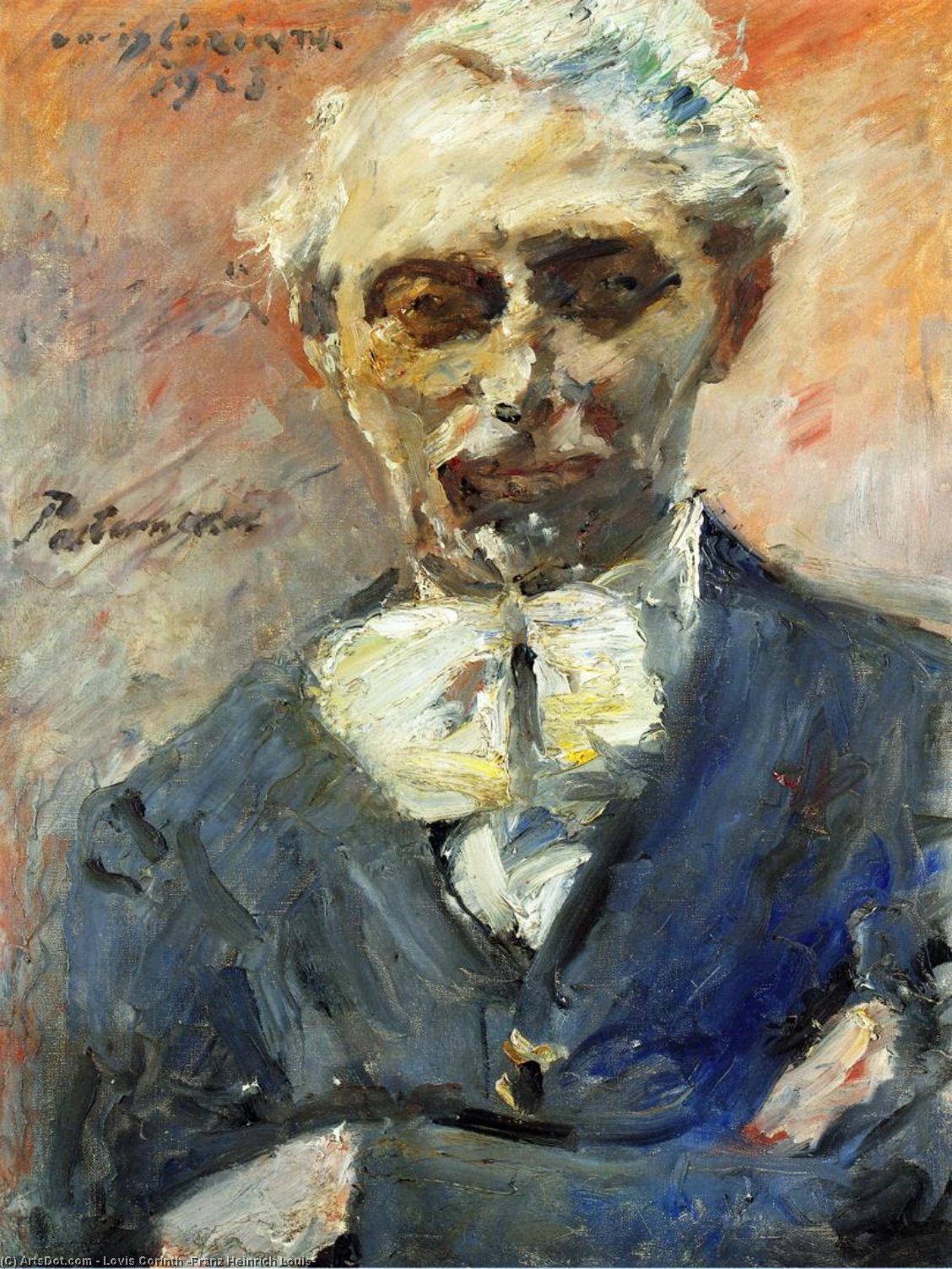
Portrait of the Painter Leonid Pasternak
 Oil On Canvas
- WallArt
- Early Modern Expressionism
 1923
1923- 19th Century
 80.0 x 60.0 cm
 Hamburger Kunsthalle
 Pročitaj više
Ručno rađena uljana reprodukcija
Ručno oslikano uljanim bojama na platnu u dimenzijama i okviru po vašem izboru, izrađeno po porudžbini od strane naših umetnika. ( Kupi print Kupi digitalnu sliku)




P118B $10

P118H $10

P118W $10

P438Z $10

P508JH $12

P508YH $12

P805H $10

P805Z $10

P919BZ $10

P919G $10

P919XJ $10

P959ZH $10

P968JZ $12

W106C $8

W218G $10

W218JH $8

W218Y $10

W307PJ $10

W316G $10

W316PJ $8

W316Y $10

W398PJ $8

W4111J $10

W500HY $15

W500JH $15

W692G $12

W849H $8

W940BG $15

W953PJ $8




Izaberite jednu od naših unapred definisanih veličina koje odgovaraju originalnim proporcijama umetničkog dela.

Можете унети сопствене димензије како бисте прилагодили дело одређеном оквиру или простору. Ако одабрана величина не одговара пропорцијама оригинала, слика ће бити исечена или проширена додатним елементима који се ручно насликавају. Дигитални prikaz ће вам бити послат на одобрење пре почетка производње.
Имајте на уму да преглед на екрану не одражава стварно исецање или проширење. Само приказ (mockup) ће тачно приказати коначну композицију.
Иако су доступне прилагођене величине, препоручујемо да одаберете димензију из дефинисане листе како бисте сачували оригиналне пропорције.
Nakon narudžbine, tim ArtsDot.com će klijentu putem e-pošte poslati uputstva i dostaviti prikaz predloženog rešenja
Isporuka širom sveta () za 3/4 nedelje umesto uobičajenih 5 nedelja. (24 август). Bez kompromisa po pitanju kvaliteta.

Besplatna ekspresna dostava širom sveta

Visokokvalitetno laneno platno

Kompletno osiguranje transporta

Garancija povraćaja carine i uvoznih dažbina

Garancija vernosti boja

Politika povrata u roku od 60 dana (samo u slučaju nedostataka)

Garancija povrata novca od 100%

Popust pri grupnoj kupovini
 Opcija sa staklom dostupna je samo za dimenzije manje od 110 cm

Portrait of the Painter Leonid Pasternak
Tehnika reprodukcije
Dimenzije reprodukcije
-


Konačna cena
$ 263
Opis umetničkog dela
A Portrait of Quiet Intensity: Lovis Corinth’s Leonid Pasternak
Lovis Corinth's "Portrait of the Painter Leonid Pasternak," created in 1923 and currently residing within the esteemed collection of the Hamburger Kunsthalle, is more than a simple likeness; it’s a profound meditation on artistic identity, the weight of observation, and the subtle complexities of human connection. The painting immediately draws the eye with its stark simplicity – a man, rendered in muted tones against a vibrant red backdrop – yet within this apparent restraint lies a remarkable depth of feeling. Corinth, a pivotal figure bridging Impressionism and Expressionism, masterfully captures Pasternak not merely as a subject, but as a thoughtful, introspective individual grappling with his own profession and the world around him.
Corinth’s technique is immediately recognizable: loose brushstrokes layered to create texture and atmosphere. The oil on canvas reveals a deliberate avoidance of photographic realism; instead, Corinth prioritizes capturing the *essence* of Pasternak – his posture, the slight downward tilt of his head, the subtle furrow in his brow. The red background isn’t merely decorative; it acts as a visual anchor, intensifying the sense of introspection and perhaps hinting at the passionate, sometimes turbulent world of artistic creation. Corinth's use of color is particularly noteworthy—a restrained palette of browns, greys, and ochres punctuated by the bold crimson, creating a harmonious yet subtly unsettling effect.
The Figure of the Artist in Transition
Painted during a period of significant artistic upheaval – the early 1920s following World War I – “Portrait of the Painter Leonid Pasternak” reflects the broader anxieties and uncertainties of the time. Corinth himself was navigating a shifting art world, moving away from earlier naturalistic tendencies towards a more emotionally charged style. The portrait can be interpreted as a visual representation of this transition; Pasternak’s gaze downward suggests contemplation, perhaps even a degree of melancholy, mirroring Corinth's own evolving artistic voice. The period following the war saw artists questioning established norms and exploring new ways to represent reality – often with a focus on subjective experience.
Further research into Lovis Corinth reveals his personal life was equally transformative. His marriage to Charlotte Berend-Corinth, a fellow artist and muse, profoundly influenced his work, particularly in the later years of his career. Charlotte’s presence is felt subtly within this portrait; her influence on Pasternak's demeanor—a quiet dignity and thoughtful observation—is palpable. The portrait speaks to a shared artistic sensibility and a mutual respect between two creative minds.
Symbolism and Emotional Resonance
The downward gaze of Pasternak is arguably the most compelling element of the painting. It’s not a look of defeat or sadness, but rather one of deep concentration, as if he's absorbing the world around him with an artist’s keen eye. This posture invites the viewer to step into his perspective, to share in his quiet contemplation. The simplicity of the composition—the man, the background, the gesture—amplifies this effect, creating a space for introspection and emotional connection. Corinth skillfully uses negative space to draw attention to Pasternak’s face and hands, emphasizing their expressive qualities.
The portrait ultimately transcends a simple likeness; it's a powerful evocation of the artist’s inner life—a testament to the enduring power of observation, reflection, and the quiet intensity that lies at the heart of artistic creation. Reproductions of this work offer a unique opportunity to experience Corinth’s masterful technique and profound insights into the human condition.
Srodna umetnička dela
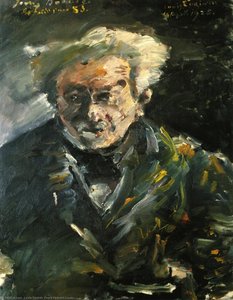
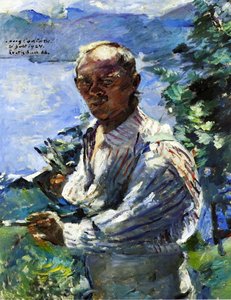
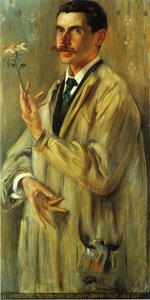
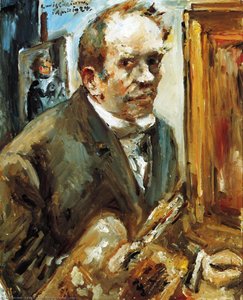
Biografija umetnika
A Life Forged in Paint: The World of Lovis Corinth
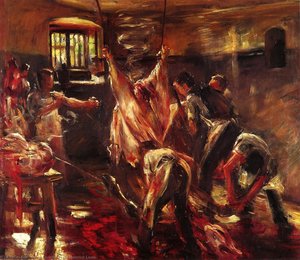
Lovis Corinth, born Franz Heinrich Louis on July 21, 1858, in the Prussian province of East Prussia, was a figure who embodied the tumultuous transition from the 19th to the early 20th-century art world. His journey wasn’t one of immediate acclaim but rather a gradual evolution fueled by relentless study, diverse influences, and ultimately, personal tragedy. Corinth's beginnings were rooted in the rural landscapes of his birthplace, Tapiau, where his father worked as a tanner. This early exposure to the physicality of labor and the raw beauty of nature would subtly permeate his later work, even amidst more sophisticated stylistic explorations. He initially pursued studies at the Academy of Königsberg in 1876, but quickly realized that academic tradition alone wouldn’t satisfy his artistic ambitions. A period of travel followed, taking him to Munich, Antwerp, and finally Paris – each city serving as a crucial stepping stone in his development. In Munich, he absorbed the meticulous realism championed by Ludwig von Löfftz, honing his observational skills and mastering technique. Antwerp introduced him to the dramatic Baroque intensity of Rubens, while Paris exposed him to the burgeoning Impressionist movement, though his initial response was one of cautious observation rather than immediate embrace. He wasn’t interested in idealized beauty; instead, he sought to capture the untamed power and inherent drama of the landscape. Corinth's formative years instilled in him a profound appreciation for both classical tradition and naturalistic representation—a duality that would shape his artistic vision throughout his life. His early paintings, like “In the Slaughterhouse” (1878), demonstrated an uncompromising commitment to depicting reality with unflinching honesty, confronting viewers with uncomfortable truths about mortality and decay. Yet even within this stark realism, a nascent emotional depth hinted at a willingness to explore psychological complexities—a characteristic that would become increasingly prominent in his later oeuvre. The influence of Courbet’s earthy palette and expressive brushwork was palpable in these early works, establishing Corinth as a disciple of the Barbizon School and signaling his initial engagement with avant-garde currents.From Naturalism to a Synthesis of Styles
Corinth's artistic development wasn't marked by swift revolutions but by a gradual assimilation and synthesis of diverse influences. His unwavering dedication to mastering technique—combined with an acute sensitivity to color and composition—allowed him to transcend stylistic boundaries and forge his own distinctive path. The Impressionist movement, initially viewed with skepticism, ultimately captivated Corinth’s imagination, prompting him to experiment with broken color and fleeting light effects. However, he didn't simply adopt these techniques wholesale; instead, he integrated them into his existing artistic framework, creating a style that blended impressionistic vibrancy with a distinctly German sensibility. This synthesis—evident in paintings like “Female Semi-Nude with Hat” (1906)—represented a pivotal moment in Corinth’s artistic evolution and foreshadowed the emergence of Expressionism as a dominant force in European art. He skillfully combined Rubensian dynamism with Impressionist luminosity, achieving unparalleled expressive power while maintaining compositional rigor.A Master of Portraiture and Landscape
Corinth's oeuvre encompassed a remarkable range of genres—from biblical scenes to mythological subjects—but he is perhaps best remembered for his portraits and landscapes. His approach to portraiture extended beyond mere likeness; it was an attempt to penetrate the psychological depths of his sitters, revealing their inner lives through subtle gestures, expressive eyes, and carefully considered poses. He possessed a remarkable ability to convey character and emotion with astonishing economy of means—a hallmark of Corinth’s artistic genius. Similarly, his landscapes weren't merely scenic representations; they were emotional responses to nature—infused with Corinth’s own passionate engagement with the natural world. The Walchensee region in Bavaria became a particular source of inspiration, providing him with a wealth of motifs that he explored repeatedly throughout his later years. These paintings—characterized by their bold colors, dynamic brushwork, and palpable energy—represent Corinth's mature style at its most powerful and expressive.Tragedy, Resilience, and Lasting Legacy
A transformative event in Corinth’s life occurred in December 1911 when he suffered a debilitating stroke that left him paralyzed on his left side. Despite facing immense physical challenges—and the looming threat of professional ruin—Corinth demonstrated unwavering determination and resilience, refusing to succumb to despair. With Charlotte Berend-Corinth by his side, he embarked upon a grueling regimen of rehabilitation exercises, relearning to paint with painstaking effort and adapting to his limitations—a testament to Corinth’s indomitable spirit. This period yielded some of his most poignant and emotionally resonant works—including “Self-Portrait” (various years)—reflecting the artist's profound introspection and confronting him with the realities of mortality. The experience profoundly deepened his artistic vision, prompting him to embrace a looser brushstroke and intensify color palette—anticipating many of the stylistic innovations that would define Expressionism. Corinth’s influence extended beyond his own painting; he served as president of the Berlin Secession from 1915 until his death in 1925, championing progressive artistic ideals and fostering a vibrant creative community. Lovis Corinth's legacy transcends mere aesthetic achievement—he remains a pivotal figure in German art history, embodying the spirit of artistic integrity and transforming personal adversity into profound expressive power. His enduring influence continues to inspire artists today, securing his place as one of the most significant painters of the early 20th century. ## Key Works & Their Significance- In the Slaughterhouse (1878): Demonstrates Corinth’s early mastery of technique and unflinching commitment to depicting reality with honesty—a bold confrontation with mortality and decay.
- Self-Portrait (various years): Offers a chronicle of Corinth's evolving self-perception and artistic style—revealing profound introspection and fearless exploration of identity.
- Female Semi-Nude with Hat (1906): Exemplifies Corinth’s blending of classical motifs with Impressionistic techniques—creating a sensuous portrait imbued with psychological complexity.
- Walchensee Series (various years): Represents Corinth's mature style at its most powerful and expressive—characterized by bold colors, dynamic brushwork, and palpable energy.
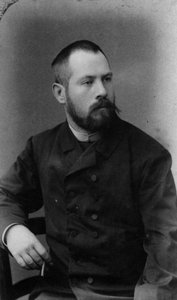
Ловис Корнит
1858 - 1925 , Немачка
Osnovne informacije
- Artistic Movement Or Style: Impressionism & Expressionism
- Artists Or Movements Influenced By This Artist: ['Expressionism']
- Artists Who Influenced This Artist:
- Courbet
- Rubens
- Date Of Birth: Jul 21, 1858
- Date Of Death: Jul 17, 1925
- Full Name: Franz Heinrich Louis Corinth
- Nationality: German
- Notable Artworks:
- In the Slaughter House
- Self-Portrait
- Female Semi-Nude
- Place Of Birth: Tauwade, Netherlands
Povezani članci
Lovis Corinth: Bridging Impressionism & Expressionism – A Study of Artistic Evolution
Explore the fascinating artistic journey of Lovis Corinth, a pivotal figure bridging Impressionism & Expressionism. Discover his evolution, key works, and lasting impact on modern art with ArtsDot.

The Enduring Legacy of Oil on Canvas: Technique, History & Aesthetic Impact
Explore the rich history & techniques of oil painting – from Renaissance masters to Impressionism. Discover pigments, layering methods, and why this timeless medium endures. Expert insights for artists & art enthusiasts.

Oil on Canvas: A Historical & Technical Exploration of a Timeless Artistic Medium
Explore the rich history & enduring techniques of oil painting on canvas. Discover the science behind its longevity, conservation practices, and contemporary relevance. Expert insights for art enthusiasts.

The Enduring Power of Painting: A Historical & Contemporary Exploration of Form and Emotion
Explore the rich history & enduring techniques of oil painting with ArtsDot. Discover masterpieces, learn about art collecting, and find authentic handmade reproductions crafted by skilled artists.

Trajnu Ostavština Uljanih Boja na Platnu: Tehnika, Istorija i Savremena Praksa
Istražite bogatu istoriju i savremene tehnike uljanog slikarstva. Saveti stručnjaka, analiza radova velikih majstora i vodiči za biranje kvalitetnih materijala. Otkrijte tajne očuvanja umetničkih dela!