

 Pregledaj u prostoru
 Pošalji
 Podeli
 Detalji o delu

 Преузми
 Slični predmeti
 Rendgenski snimak
 Slajdovi
 Stats
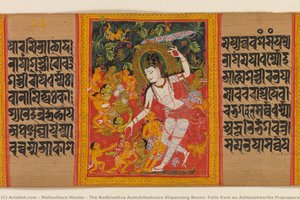
StatsGreen Tara Dispensing Boons to Ecstatic Devotees: Folio from a Manuscript of the Ashtasahasrika Prajnaparamita (Perfection of Wisdom)
 Manuscript
- Pala Buddhist Art
 1101
1101- High Medieval
 7.0 x 42.0 cm
 Pročitaj više
Ručno rađena uljana reprodukcija
Ručno oslikano uljanim bojama na platnu u dimenzijama i okviru po vašem izboru, izrađeno po porudžbini od strane naših umetnika. ( Switch to Print Switch to Digital Image)




P118B $10

P118H $10

P118W $10

P438Z $10

P508JH $12

P508YH $12

P805H $10

P805Z $10

P919BZ $10

P919G $10

P919XJ $10

P959ZH $10

P968JZ $12

W106C $8

W218G $10

W218JH $8

W218Y $10

W307PJ $10

W316G $10

W316PJ $8

W316Y $10

W398PJ $8

W4111J $10

W500HY $15

W500JH $15

W692G $12

W849H $8

W940BG $15

W953PJ $8




Izaberite jednu od naših unapred definisanih veličina koje odgovaraju originalnim proporcijama umetničkog dela.

Можете унети сопствене димензије како бисте прилагодили дело одређеном оквиру или простору. Ако одабрана величина не одговара пропорцијама оригинала, слика ће бити исечена или проширена додатним елементима који се ручно насликавају. Дигитални prikaz ће вам бити послат на одобрење пре почетка производње.
Имајте на уму да преглед на екрану не одражава стварно исецање или проширење. Само приказ (mockup) ће тачно приказати коначну композицију.
Иако су доступне прилагођене величине, препоручујемо да одаберете димензију из дефинисане листе како бисте сачували оригиналне пропорције.
Nakon narudžbine, tim ArtsDot.com će klijentu putem e-pošte poslati uputstva i dostaviti prikaz predloženog rešenja
Isporuka širom sveta () za 3/4 nedelje umesto uobičajenih 5 nedelja. (8 септембар). Bez kompromisa po pitanju kvaliteta.

Besplatna ekspresna dostava širom sveta

Visokokvalitetno laneno platno

Kompletno osiguranje transporta

Garancija povraćaja carine i uvoznih dažbina

Garancija vernosti boja

Politika povraćaja u roku od 100 dana (isključivo u slučaju nedostataka)

Garancija povrata novca od 100%

Popust pri grupnoj kupovini
 Opcija sa staklom dostupna je samo za dimenzije manje od 110 cm

Green Tara Dispensing Boons to Ecstatic Devotees: Folio from a Manuscript of the Ashtasahasrika Prajnaparamita (Perfection of Wisdom)
Tehnika reprodukcije
Dimenzije reprodukcije
-


Konačna cena
$ 263
A Vision of Compassion: The Divine Grace of Green Tara
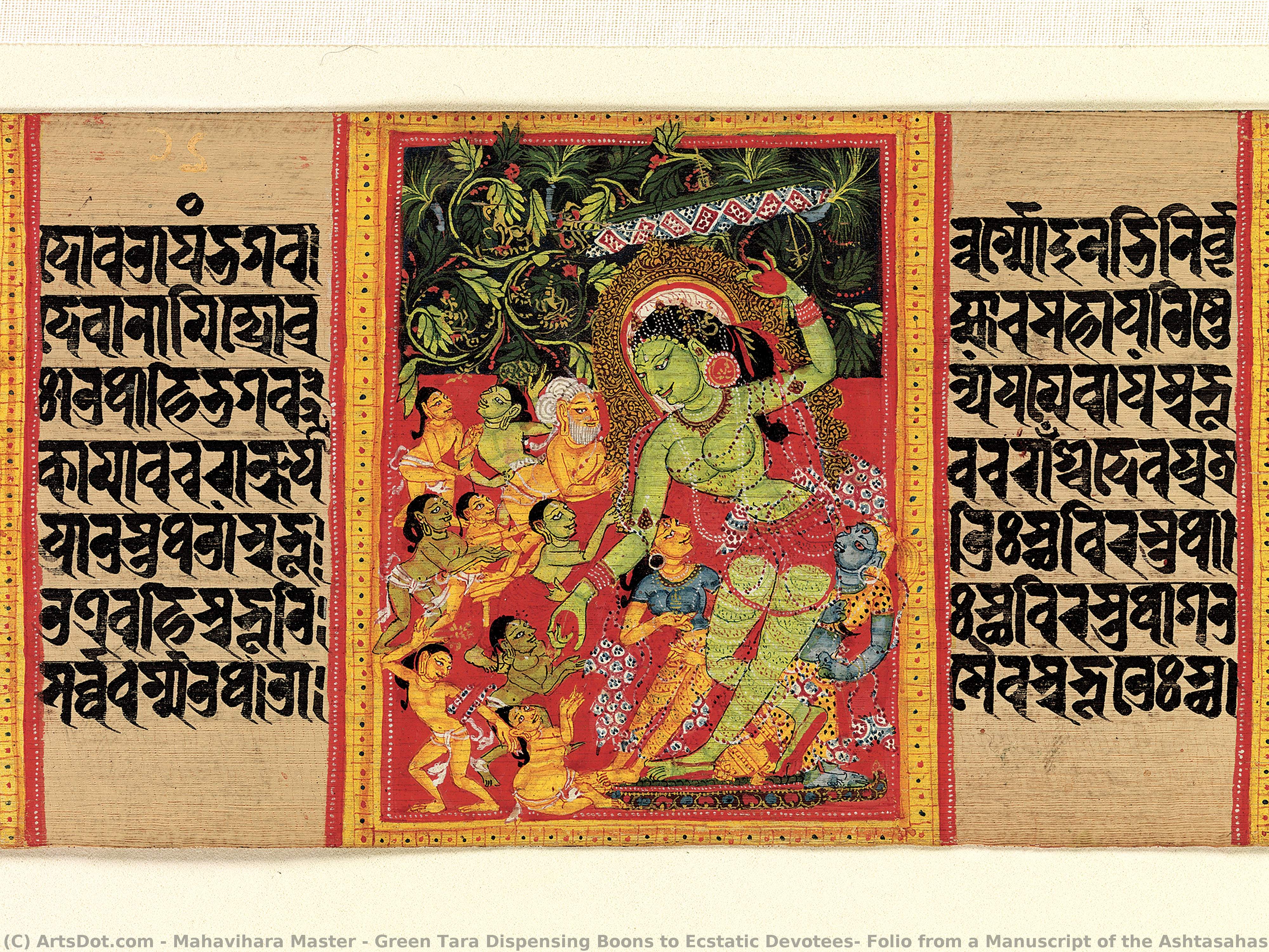
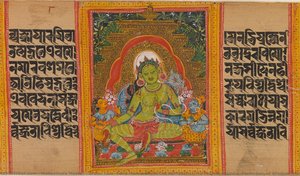
In the delicate, elongated world of eleventh-century Pala-era manuscript painting, few images resonate with as much profound tenderness as Green Tara Dispensing Boons to Ecstatic Devotees. This exquisite folio, a masterpiece from the Ashtasahasrika Prajnaparamita (Perfection of Wisdom) manuscript, serves as a window into a spiritual realm where the boundaries between the divine and the mortal dissolve. At the heart of this composition sits Green Tara, the bodhisattva of protection and compassion, captured in a moment of sublime generosity. Her presence is not merely static; she is rendered in a dynamic, twisting posture that breathes life into the palm-leaf medium, suggesting a rhythmic movement that connects her celestial essence to the earthly devotees gathered around her.
The artistry of the Mahavihara Master shines through in the meticulous way he balances intricate detail with emotional depth. As the eye wanders across the slender 7 x 42 cm surface, one is struck by the subtle interplay of color and form. The central figure of Tara is surrounded by a celestial assembly of at least twelve figures, each rendered with a grace that reflects the sophisticated aesthetic of the Somapura Mahavihara tradition. The artist employs a delicate technique to depict the varada mudra—the gesture of boon-granting—from which nectar drips with life-sustaining precision. This small, poignant detail, where nectar falls toward the mouth of a hungry ghost (preta), serves as a powerful metaphor for the alleviation of suffering and the infinite reach of Buddhist mercy.
Symbolism and the Mastery of Form
Beyond its aesthetic beauty, this artwork is a complex tapestry of religious symbolism designed to guide the viewer toward enlightenment. The contrast between the swollen, starving belly of the preta and the fluid, graceful limbs of Tara creates a visual tension that underscores the transformative power of compassion. The Mahavihara Master utilizes the unique format of the palm-leaf manuscript to experiment with volume and anatomy; unlike the more rigid, two-dimensional depictions of male bodhisattvas from this era, Tara’s form possesses a sculptural quality. This innovation suggests a deep connection to pan-Indian goddess traditions, blending Buddhist doctrine with a broader, more visceral sense of feminine divinity.
For the discerning collector or interior designer, this piece offers much more than mere decoration; it provides a focal point of meditative calm and spiritual sophistication. The vibrant yet harmonious palette, characteristic of the Pala period, brings an air of ancient wisdom into a modern space. Whether displayed as part of a curated collection of Eastern antiquities or used to anchor a room with a sense of historical gravity, a high-quality reproduction of this folio allows the timeless energy of Tara’s benevolence to permeate the contemporary environment. It is an invitation to contemplate the eternal cycle of devotion and the enduring hope for liberation from all forms of hardship.
Srodna umetnička dela
Biografija umetnika
Mahavihara Master: A Legacy of Buddhist Art from Bengal
Mahavihara Master, a name whispered in the halls of art history and revered within the Buddhist community, stands as one of the most significant figures in the artistic landscape of Pala-era India. Born in Bengaluru, India – though his precise birthdate remains shrouded in the mists of time – he emerged from the rich tradition of monastic painting centered around Somapura Mahavihara in modern-day Bangladesh. His work isn’t merely decorative; it's a profound visual meditation on Buddhist philosophy and practice, offering an intimate glimpse into the spiritual world of 12th-century Bengal.
Little is definitively known about his early life. He likely began his artistic training within the walls of Somapura Mahavihara, a renowned center of learning and artistic production during the Pala dynasty (8th to 12th centuries). This era witnessed a remarkable flourishing of Buddhist art in eastern India, fueled by royal patronage and a deep engagement with Mahayana Buddhism. The Master’s style reflects this environment – a harmonious blend of influences, incorporating elements from earlier Pan-Indian Ajanta styles while simultaneously forging a distinct regional identity.
The Ashtasahasrika Prajnaparamita Sutra: A Foundation for His Art
Mahavihara Master is most celebrated for his meticulous and profoundly moving illustrations of the Ashtasahasrika Prajnaparamita Sutra, a cornerstone text in Mahayana Buddhism. This vast treatise on the perfection of wisdom explores the path to enlightenment through profound contemplation and skillful means. The manuscript he illuminated – now shared between the National Museum in New Delhi and the Los Angeles County Museum of Art – is considered one of the finest examples of Pala-era Buddhist art, showcasing a remarkable level of detail and spiritual depth.
The sheer scale of the project demanded immense patience and skill. Each folio, meticulously rendered on palm leaves, depicts key moments within the sutra’s narrative, often featuring vibrant depictions of Bodhisattvas, deities, and enlightened beings. The Master's approach is characterized by a remarkable sense of volume – figures appear to emerge from the page with startling realism – achieved through subtle shading and masterful use of perspective. His color palette is equally restrained yet evocative, employing earthy tones and delicate washes to convey a profound sense of serenity and grace.
Key Works: Embodiments of Buddhist Wisdom
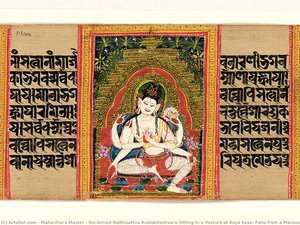
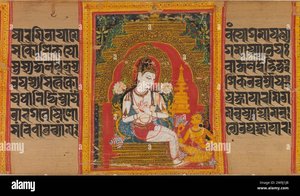
Among his most celebrated works are the depictions of Green Tara dispensing boons to ecstatic devotees and Avalokiteshvara, the Bodhisattva of Compassion. The “Green Tara” folio (circa 1101) is particularly striking for its dynamic composition and the palpable energy radiating from the central figure. She’s not merely a serene goddess; she's an active force of compassion, bestowing blessings upon her devotees with effortless grace. Similarly, the Avalokiteshvara folio captures the essence of his role as a guide to enlightenment, conveying both wisdom and empathy through his compassionate gaze and outstretched hands.
- Green Tara Dispensing Boons: A vibrant depiction showcasing the Bodhisattva’s boundless compassion.
- Bodhisattva Avalokiteshvara Dispensing Boons: An illustration emphasizing the path to enlightenment through wisdom and compassion.
Influence and Legacy
Mahavihara Master's work represents a pivotal moment in Indian Buddhist art, bridging the gap between earlier Pan-Indian styles and the evolving traditions of Bengal. His meticulous attention to detail, his profound understanding of Buddhist iconography, and his masterful use of color and perspective have secured his place as one of the most important artists of the Pala period. His influence can be seen in subsequent generations of Indian Buddhist painters, who continued to draw inspiration from his elegant style and spiritual depth.
Beyond its artistic merit, Mahavihara Master’s work offers a valuable window into the religious and cultural landscape of 12th-century Bengal. It reflects the fervent devotion to Buddhism that characterized the Pala dynasty, as well as the sophisticated intellectual traditions fostered within the monastic centers of the era. His legacy continues to inspire artists and scholars today, reminding us of the enduring power of Buddhist art to illuminate the path to enlightenment.
Further Exploration
The Bodhisattva Avalokiteshvara Dispensing Boons: Folio from an Ashtasahasrika Prajnaparamita Manuscript (Metropolitan Museum of Art)
Los Angeles County Museum of Art
Ravi Varma | Biography, Paintings, Royal Court Artist, & Printmaker (Britannica)
Mahavihara Master
India
Osnovne informacije
- Artistic Movement Or Style: Pala-era Buddhist
- Artists Or Movements Influenced By This Artist: ['Pala Empire']
- Artists Who Influenced This Artist: ['']
- Date Of Death: Living
- Full Name: Mahavihara Master
- Nationality: Indian
- Notable Artworks:
- Green Tara dispensing boons
- Bodhisattva Avalokiteshvara
- Place Of Birth: Bengaluru, India
Povezani članci
Chrome Green Masterpieces: 10 Famous Paintings & Their Alluring Hues |
Explore 10 famous paintings where 'Chrome Green' reigns supreme! Discover Monet, Manet & Van Gogh’s masterpieces. Learn the stories behind these iconic artworks and find museum-quality art reproductions for your home at .

Emerald Visions: Top 10 Paintings Dominated by Cadmium Green |
Explore 10 iconic paintings where cadmium green reigns supreme! From Monet to Van Gogh, discover the stories behind these masterpieces & the power of color. Find museum-quality art reproductions and elevate your home decor on .
Sage Green Masterpieces: 10 Famous Paintings & Timeless Decor Inspiration
Explore 10 famous paintings dominated by serene sage green tones! Discover Monet, Renoir & Manet masterpieces. Learn art history & find museum-quality reproductions for your home decor on .

Seafoam & Masterpieces: 10 Paintings Dominated by Medium Sea Green | ArtsDot
Dive into serenity with 10 famous paintings bathed in calming medium sea green. Explore Impressionist masterpieces by Monet, Degas & Renoir. Find museum-quality art reproductions and elevate your home decor at ArtsDot.com.
Verdant Visions: Exploring the Symbolism & Aesthetic Impact of Green in Art History
Explore the rich history & symbolism of green in art! Discover iconic paintings, techniques, and how to bring verdant harmony into your home with ArtsDot's expert guide.