

 Pregledaj u prostoru
 Pošalji
 Podeli
 Detalji o delu

 Преузми
 Slični predmeti
 Rendgenski snimak
 Slajdovi
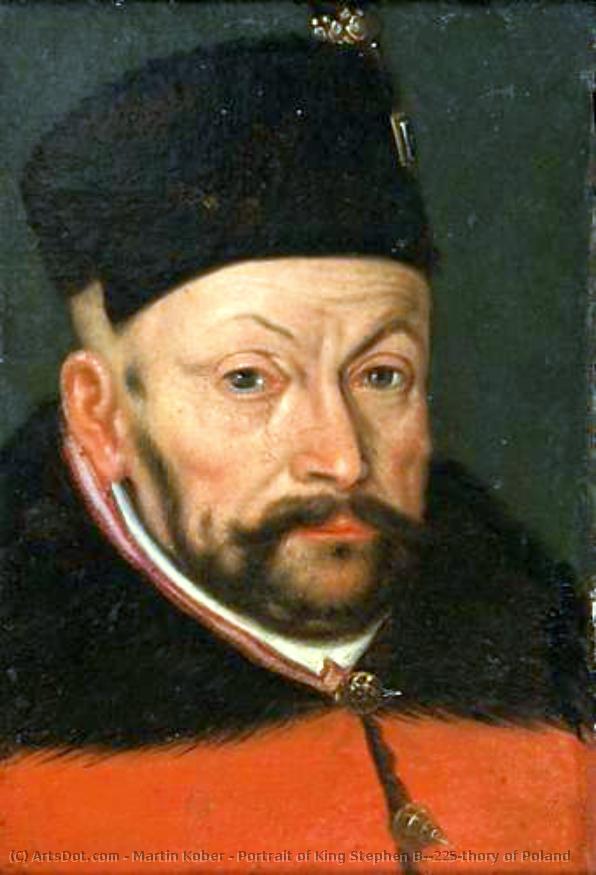
Portrait of King Stephen Báthory of Poland


 Pročitaj više
Giclee štampa / Umetnički otisak
Giclée štampa ili print na platnu muzejskog kvaliteta uz brzu proizvodnju i fleksibilne opcije završne obrade. ( Kupi ručno naslikanu sliku Kupi digitalnu sliku)




P118B $10

P118H $10

P118W $10

P438Z $10

P508JH $12

P508YH $12

P805H $10

P805Z $10

P919BZ $10

P919G $10

P919XJ $10

P959ZH $10

P968JZ $12

W106C $8

W218G $10

W218JH $8

W218Y $10

W307PJ $10

W316G $10

W316PJ $8

W316Y $10

W398PJ $8

W4111J $10

W500HY $15

W500JH $15

W692G $12

W849H $8

W940BG $15

W953PJ $8




Izaberite jednu od naših unapred definisanih veličina koje odgovaraju originalnim proporcijama umetničkog dela.

Možete uneti sopstvene dimenzije kako biste umetničko delo prilagodili specifičnom okviru ili prostoru. Ako odabrani format ne odgovara proporcijama originalne slike, mi ćemo ili iscrtati deo dela ili proširiti sliku pomoću ogledane ivice ili jednobojnog popunjavanja. Digitalni prikaz će vam biti poslat na odobrenje pre početka proizvodnje.
Imajte na umu da pregled na ekranu ne odražava stvarno iscrtavanje ili proširivanje. Samo će prikaz (mockup) precizno pokazati finalnu kompoziciju.
Iako su prilagođene dimenzije dostupne, preporučujemo da odaberete dimenziju sa unapred definisane liste kako biste očuvali originalne proporcije.
Dostava širom sveta () za 2 nedelje umesto uobičajenih 4/5 nedelja. (29 август)

Besplatna ekspresna dostava širom sveta

Visokokvalitetno laneno platno

Kompletno osiguranje transporta

Garancija povraćaja carine i uvoznih dažbina

Garancija vernosti boja

Politika povrata u roku od 60 dana (samo u slučaju nedostataka)

Garancija povrata novca od 100%

Popust pri grupnoj kupovini
 Opcija sa staklom dostupna je samo za dimenzije manje od 110 cm

Portrait of King Stephen Báthory of Poland
Giclee štampa / Umetnički otisak
Dimenzije reprodukcije
-


Konačna cena
$ 62
The Regal Presence of Stephen Báthory: A Renaissance Masterpiece by Marcin Kober
Marcin Kober’s “Portrait of King Stephen Báthory of Poland,” painted in 1583, is more than just a royal likeness; it's a meticulously crafted window into the heart of late Renaissance Europe and the burgeoning power of the Polish-Lithuanian Commonwealth. This arresting portrait, now housed within the Congregation of Missions Convent’s Historical-Missionary Museum in Kraków, captures not merely the physical appearance of Stephen Báthory but also his commanding presence, projecting an aura of authority and strategic intellect that defined his reign.
Kober, a pivotal figure in Polish art history, stands as arguably the first artist to systematically document the portraits of central European monarchs. Trained initially within the vibrant artistic community of Prague – influenced by the sophisticated Spanish court traditions – he brought this meticulous realism and decorative sensibility to Poland, establishing a new standard for royal iconography. The painting’s genesis lies in a period of significant political maneuvering; Báthory's election as king followed a complex succession struggle, highlighting the importance of visual representation in solidifying his legitimacy.
A Symphony of Warmth: Color and Composition
The portrait immediately draws the eye with its rich, layered palette dominated by deep reds, earthy browns, and subtle variations of gold. Kober masterfully employs these warm tones to create a sense of gravitas and power, mirroring the king’s status. The crimson garment, meticulously rendered with visible brushstrokes that suggest luxurious velvet, commands attention while contrasting sharply with the dark hues of his hat and fur collar – elements that subtly emphasize his regal bearing. The careful placement of the King's head within the frame, slightly turned to the right, establishes a direct engagement with the viewer, inviting contemplation and conveying an undeniable sense of command.
Compositionally, the portrait adheres to the traditional conventions of royal portraits from the period, yet Kober infuses it with a dynamism rarely seen in earlier depictions. The King’s gaze is intense and unwavering, projecting both wisdom and resolve. The subtle tilt of his head adds a touch of formality while simultaneously suggesting an active mind at work. The dark background serves to isolate the subject, further amplifying his importance and drawing attention to every detail of his attire and expression.
Crafting Reality: Technique and Materials
Kober’s technical skill is evident in every brushstroke. He utilizes a layered approach, building up color gradually through multiple applications of oil paint on canvas or panel – a technique that allows for remarkable depth and luminosity. The artist skillfully employs chiaroscuro—the dramatic contrast between light and shadow—to sculpt the King's face, highlighting his features and creating a sense of three-dimensionality. The texture of the fur collar is rendered with meticulous detail, suggesting its plushness and richness through carefully observed brushwork.
Notably, Kober’s technique isn’t one of smooth, idealized representation; rather, it embraces visible brushstrokes, lending a sense of immediacy and authenticity to the portrait. This deliberate choice reflects the Renaissance emphasis on naturalism and the artist's role as a craftsman—a testament to his dedication to capturing the essence of his subject.
Symbolic Weight: Authority and Legacy
Beyond its technical brilliance, “Portrait of King Stephen Báthory” is laden with symbolic meaning. The king’s attire – particularly the crimson garment – signifies his royal status and power. His direct gaze conveys authority and a sense of unwavering resolve, reflecting his role as a strong leader during a turbulent period in Polish history. The portrait served not only to commemorate a ruler but also to reinforce his legitimacy and project an image of strength and stability—crucial elements for any monarch seeking to maintain control.
Furthermore, the painting’s creation coincided with Báthory's significant military achievements, most notably his successful campaign against Russia in Livonia. This victory cemented his legacy as a skilled strategist and warrior, further enhancing the portrait’s symbolic value. It stands as a powerful testament to a king who skillfully navigated complex political landscapes and left an indelible mark on Polish history.
A Timeless Masterpiece: Reproduction Possibilities
Today, “Portrait of King Stephen Báthory” remains a captivating work of art, offering a glimpse into the world of Renaissance Poland. High-quality reproductions capture the painting’s rich colors and intricate details, allowing viewers to appreciate Kober's masterful technique and the portrait’s enduring symbolic power. Whether adorning a grand salon or a private study, this iconic image continues to evoke a sense of regal authority and timeless beauty.
Srodna umetnička dela

Biografija umetnika
The Architect of Royal Identity: The Life and Legacy of Marcin Kober
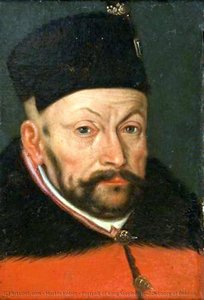
In the grand, sweeping tapestry of Central European history, few artists have played as vital a role in weaving the visual identity of monarchs as Marcin Kober. Born around 1550 in the vibrant city of Wrocław, Poland, Kober was far more than a mere chronicler of faces; he was a pioneer who transformed the way power was perceived and recorded. His journey began not in the courts of kings, but through the rigorous discipline of the guild system. As a young journeyman, he traveled through Germany, absorbing the diverse techniques and stylistic nuances of various workshops. This period of wandering was essential, providing him with a cosmopolitan artistic vocabulary that would later allow him to bridge the gap between the local traditions of the Polish-Lithuanian Commonwealth and the sophisticated, Spanish-influenced aesthetics of the Habsburg courts.
The true metamorphosis of Kober’s career occurred when his path intersected with the highest echelons of European royalty. By 1583, he had arrived in the Polish-Lithuanian Commonwealth, quickly ascending to the position of court painter for King Stephen Báthory and Queen Anna Jagiellon. It was during this era that Kober began to develop what would become known as the "Báthory School." His work during this period was characterized by a profound sense of Renaissance realism, where the physical likeness of the subject was married to a symbolic grandeur. He did not simply paint skin and fabric; he painted authority, legitimacy, and the divine right of kings. His ability to capture the commanding presence of Báthory established a visual language for Polish royalty that would endure for well over a century.
A Master of Courtly Elegance and Symbolism
Kober’s artistic evolution was deeply shaped by his time in Prague, a city that served as a melting pot of international styles under the reign of Emperor Rudolf II. In the vibrant atmosphere of the Imperial court, Kober encountered the subtle, decorative elegance of Spanish portraiture, which favored a meticulous attention to detail and a refined use of color. This influence is palpable in his later works, where the heavy, regal textures of velvet and lace are rendered with such precision that they seem almost tactile. His portraits became masterclasses in psychological depth; he possessed a rare ability to present a sovereign as both an untouchable icon of state and a human being possessing quiet strength and introspective grace.
The breadth of his technical mastery is perhaps best seen in the diversity of his formats. While his large-scale royal portraits commanded the halls of palaces, Kober also excelled in the intimate medium of miniatures. His Miniature of Queen Anna Habsburg serves as a breathtaking example of how he could condense an entire aura of majesty into a small, oval frame. In these smaller works, every brushstroke carries weight, using light and shadow to create a sense of three-dimensional life that transcends the physical limitations of the medium. His work was never merely decorative; it was a carefully constructed instrument of diplomacy and propaganda, designed to project an image of stability and continuity during turbulent political eras.
Historical Significance and the Polish Portrait Tradition
The historical importance of Marcin Kober cannot be overstated. Before his emergence, portraiture in Poland had not yet established itself as a dominant or specialized branch of fine art. Kober changed this trajectory forever, acting as the precursor to the Polish Sarmatian portrait genre. By integrating the sophisticated humanist ideals of the Renaissance with the specific cultural identity of the Polish nobility, he provided the foundation upon which future generations of Polish artists would build. His influence can be traced through the decades, as the iconography he established for the Vasa dynasty became the standard for how the Commonwealth viewed its own leadership.
Even as his career took him across borders—from the workshops of Germany to the Imperial splendor of Prague and back to the royal centers of Kraków and Warsaw—his core mission remained the same: the documentation of a changing world through the lens of royal dignity. Today, his works reside in prestigious museums across Europe, serving as silent witnesses to the grandeur of a bygone era. To study Kober is to study the very birth of a national artistic identity, making him one of the most significant figures in the history of Central European portraiture.
marcin kober
Poland
Osnovne informacije
- Artistic Movement Or Style: Renaissance
- Artists Or Movements Influenced By This Artist: ['Polish Sarmatian Portrait']
- Artists Who Influenced This Artist: ['Spanish Portraiture']
- Date Of Birth: ca. 1550
- Date Of Death: before 1598
- Full Name: Marcin Kober
- Nationality: Polish
- Notable Artworks:
- Portrait of Stephen Báthory
- Portrait of Queen Anne of Austria
- Portrait of King Stephen Bathory
- Place Of Birth: Wrocław, Poland
Povezani članci

Барокна драма: Уношење величине и емоција у савремене ентеријере
Откријте барокну драму и унесите величину у ваш ентеријер! ArtsDot нуди ручно насликане репродукције, персонализоване портрете и стручне консултације за љубитеље класичне уметности. Потражите савршено дело већ данас!

The Dramatic Flourish: Exploring the Baroque Movement's Enduring Legacy in Art History
Explore the dramatic world of Baroque art! Discover iconic artists like Caravaggio & Rubens, defining techniques, and its lasting impact on art history. Expert insights for collectors & enthusiasts at ArtsDot.

Barok Majstor dela: Top 10 Umjetničkih Remeka za Vaš Dom
Otkrijte 10 remek dela koja su definisala baroknu umetnost! Karavagio, Bernini i više – istražite priče iza ovih ikoničnih slika. Inspiracija za vaš dom? Pogledajte kolekciju na ArtsDot.com!

The Visceral Stage: Exploring Dramatic Narratives & Emotional Intensity in Baroque Art
Explore the dramatic world of Baroque art! Discover iconic masters like Caravaggio & Rembrandt, their techniques, and the movement's lasting impact. Expert insights for collectors & enthusiasts at ArtsDot.

Theatricality & Triumph: Baroque Drama in Painting & Sculpture
Explore the dramatic world of Baroque art! Discover its history, defining characteristics, & lasting influence on painting & sculpture. Expert insights into Caravaggio, Zurbarán, and Bernini – plus high-quality reproductions at ArtsDot.

