

 Pošalji
 Podeli
 Detalji o delu

 Преузми
 Slični predmeti
 Slajdovi
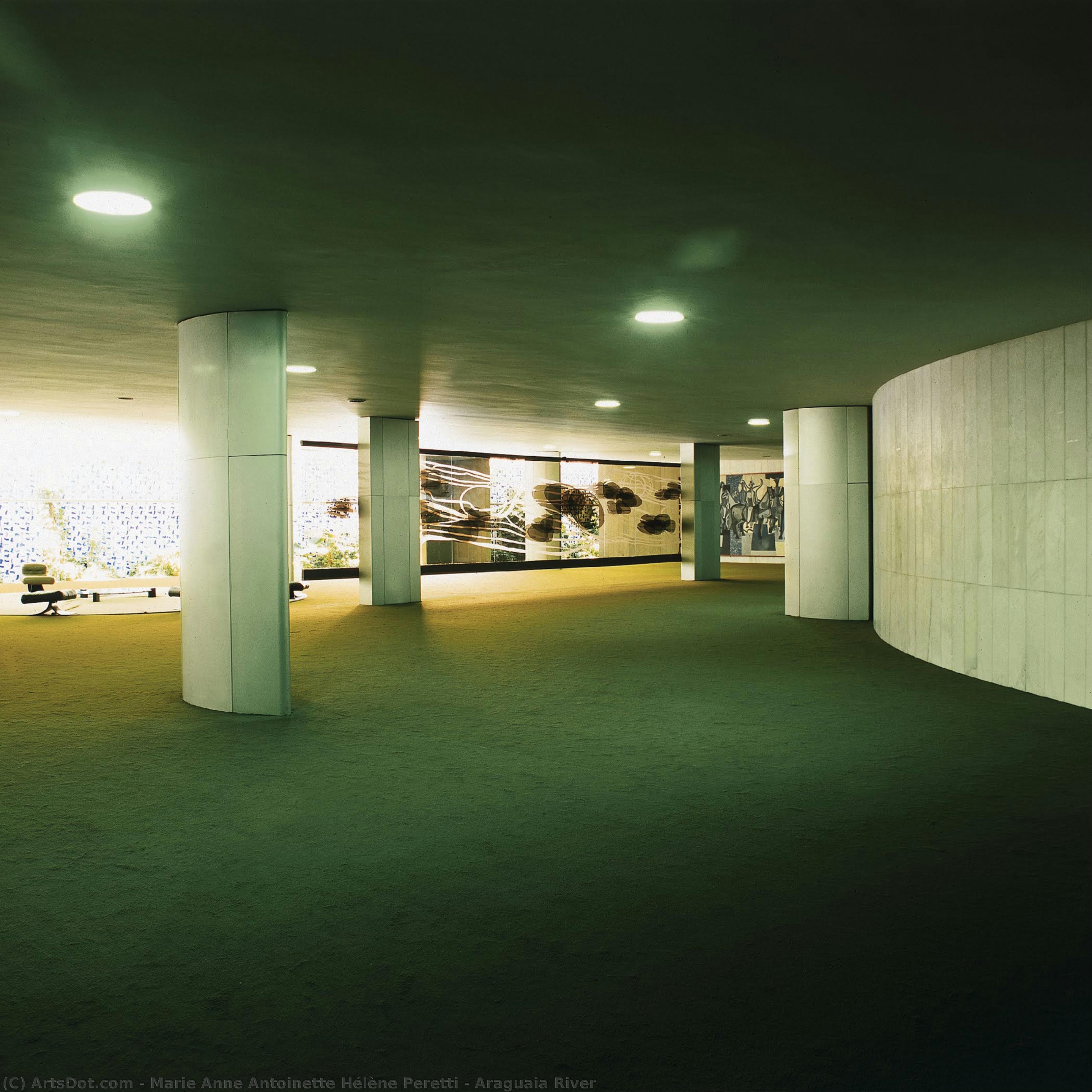
Araguaia River
 Giclée Print
- Digital
- Contemporary Realism
 1977
1977- 19th Century
 245.0 x 1310.0 cm
 Chamber of Deputies
 Pročitaj više
Ručno rađena uljana reprodukcija
Ručno oslikano uljanim bojama na platnu u dimenzijama i okviru po vašem izboru, izrađeno po porudžbini od strane naših umetnika. ( Kupi print Kupi digitalnu sliku)




































Izaberite jednu od naših unapred definisanih veličina koje odgovaraju originalnim proporcijama umetničkog dela.

Можете унети сопствене димензије како бисте прилагодили дело одређеном оквиру или простору. Ако одабрана величина не одговара пропорцијама оригинала, слика ће бити исечена или проширена додатним елементима који се ручно насликавају. Дигитални prikaz ће вам бити послат на одобрење пре почетка производње.
Имајте на уму да преглед на екрану не одражава стварно исецање или проширење. Само приказ (mockup) ће тачно приказати коначну композицију.
Иако су доступне прилагођене величине, препоручујемо да одаберете димензију из дефинисане листе како бисте сачували оригиналне пропорције.
Nakon narudžbine, tim ArtsDot.com će klijentu putem e-pošte poslati uputstva i dostaviti prikaz predloženog rešenja
Isporuka širom sveta () za 3/4 nedelje umesto uobičajenih 5 nedelja. (26 август). Bez kompromisa po pitanju kvaliteta.

Besplatna ekspresna dostava širom sveta

Visokokvalitetno laneno platno

Kompletno osiguranje transporta

Garancija povraćaja carine i uvoznih dažbina

Garancija vernosti boja

Politika povrata u roku od 60 dana (samo u slučaju nedostataka)

Garancija povrata novca od 100%

Popust pri grupnoj kupovini
 Opcija sa staklom dostupna je samo za dimenzije manje od 110 cm

Araguaia River
Tehnika reprodukcije
Dimenzije reprodukcije
-


Konačna cena
$ 263
Opis umetničkog dela
A Reflection on Space and Narrative: "Araguaia River" by Marianne Peretti
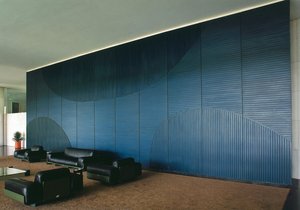
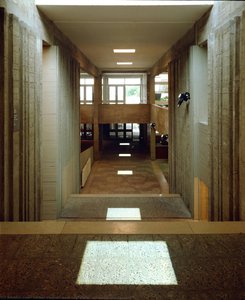
Marianne Peretti’s “Araguaia River,” created in 1977, is more than just a depiction of a room; it's an immersive meditation on space, memory, and the layered narratives woven into our environments. Executed with meticulous attention to detail, this artwork captures a moment frozen in time – a lobby or hallway within a building, rendered in stark black and white that amplifies its inherent drama. The photograph’s composition immediately draws the eye towards the expansive painting dominating the wall, mirroring the room's carpeted floor and creating an unsettling yet captivating sense of repetition and echo.
- Subject Matter: The artwork centers on a seemingly ordinary architectural space – a lobby or hallway. However, Peretti elevates this commonplace subject through her artistic lens, transforming it into a stage for contemplation.
- Style & Technique: Peretti’s style leans heavily towards realism, yet infused with an almost surreal quality due to the repetition and mirroring of elements. The photographic technique itself contributes to this effect, creating a sense of depth and illusion within the confined space. The use of black and white further intensifies the emotional impact, stripping away any distractions and focusing solely on form and light.
Historical Context: A Bridge Between Cultures
Born in Paris in 1927 to a French model and a Brazilian historian, Marianne Peretti’s life was intrinsically linked to both European artistic traditions and the burgeoning cultural exchange between France and Brazil. This dual heritage profoundly influenced her work, evident in her ability to translate architectural vision into luminous reality. The period of creation – 1977 – falls within a time of significant shifts in art history, moving away from purely representational styles towards explorations of abstraction and conceptual ideas. Peretti’s approach sits comfortably within this evolving landscape while retaining a strong connection to classical artistic principles.
- Influence: Peretti's training at the École Nationale Supérieure des Arts Décoratifs and Académie de la Grande Chaumière provided her with a rigorous foundation in drawing, composition, and perspective – skills she expertly deployed to create this compelling image.
- Era: The artwork reflects the late 20th-century interest in exploring interior spaces as subjects of artistic inquiry, mirroring trends seen in photography and painting at the time.
Symbolism & Emotional Impact
The repeated carpet patterns, echoing throughout the photograph and the large painting, create a disorienting effect, suggesting a labyrinthine quality to space itself. This repetition can be interpreted as a metaphor for memory – fragmented, layered, and often difficult to fully grasp. The stark black and white palette evokes feelings of isolation, contemplation, and perhaps even melancholy. The placement of the chairs and bench adds another layer of narrative, inviting the viewer to imagine the lives that have occupied this space, adding to the artwork’s profound sense of atmosphere.
- Color & Light: The absence of color amplifies the drama and emphasizes the interplay of light and shadow, creating a powerful visual experience.
- Composition: The deliberate arrangement of elements – the chairs, the painting, the floor – contributes to the artwork’s overall sense of unease and invites viewers to engage in their own interpretations.
A Statement Piece for Your Space
"Araguaia River" by Marianne Peretti is a captivating work that transcends its subject matter to become a profound meditation on space, time, and the human experience. This meticulously crafted reproduction, measuring 245 x 1310 cm, offers an exceptional opportunity to bring this evocative artwork into your home or office. Its timeless appeal makes it a perfect addition to any collection, offering both aesthetic pleasure and intellectual stimulation. A truly remarkable piece for discerning collectors and interior designers seeking to create a space of depth, intrigue, and lasting beauty.
Srodna umetnička dela

Biografija umetnika
A Life Woven in Light: The Artistic Journey of Marianne Peretti
Marianne Peretti, born Marie Anne Antoinette Hélène Peretti on December 13, 1927, in the heart of Paris, embodies a fascinating confluence of cultures and artistic disciplines. Her story is not merely that of an artist, but of a bridge between France and Brazil, a translator of architectural vision into luminous reality. Born to Antoinette Louise Clotilde Ruffier, a celebrated French model, and João de Medeiros Peretti, a Brazilian historian, she inherited a lineage steeped in beauty and intellectual curiosity. This early exposure undoubtedly shaped her aesthetic sensibility, fostering an appreciation for both the ephemeral grace of form and the enduring power of narrative. Peretti’s foundational artistic training began within the prestigious walls of the École Nationale Supérieure des Arts Décoratifs and continued at the Académie de la Grande Chaumière – institutions renowned for nurturing creativity and technical skill. These formative years saw her initial explorations in illustration, contributing to various books and magazines and culminating in her first public exposition, a promising debut that hinted at the artistic path she would forge.From Parisian Studios to Brazilian Landscapes
The pivotal moment in Peretti’s life arrived in 1953 with her relocation to Brazil, specifically São Paulo. This wasn't simply a geographical shift; it was an immersion into a vibrant new world of color, light, and architectural ambition. Brazil, at the time, was undergoing a period of intense modernization, fueled by a desire for national identity expressed through bold design and innovative construction. It was here that Peretti truly blossomed, winning the award for best book cover at the prestigious São Paulo Art Biennial – an early recognition of her unique talent and artistic vision. However, it wasn’t merely accolades that defined this period; it was a growing engagement with the architectural landscape around her, a collaboration that would soon become synonymous with her name. She began to work independently, exhibiting her art and forging connections within the burgeoning Brazilian art scene. This independence allowed her to refine her style, moving beyond illustration towards more sculptural and ultimately, her signature medium: stained glass.The Symbiotic Partnership with Oscar Niemeyer
Peretti’s artistic trajectory took a defining turn with her encounter with the visionary architect Oscar Niemeyer. This wasn't simply a professional relationship; it was a profound creative synergy. Niemeyer, known for his fluid curves and daring use of concrete, sought an artist who could translate his architectural language into another dimension – one that embraced light, color, and spirituality. Peretti proved to be the ideal partner. Their collaboration reached its zenith with the iconic Cathedral of Brasília, where she designed the breathtaking stained glass windows that bathe the interior in a celestial glow. These weren’t merely decorative elements; they were integral to the architectural experience, enhancing the sense of awe and transcendence within Niemeyer's masterpiece. The partnership extended beyond the cathedral, encompassing projects like the Panteão da Pátria, the Palace of the Jaburu, and various chambers within the Brazilian Congress, solidifying Peretti’s role as a key figure in shaping Brazil’s modern architectural identity.A Legacy Etched in Glass and Bronze
Marianne Peretti's influence extends far beyond Brasília. Her works grace numerous cities across Brazil – Recife, Rio de Janeiro, Belém – each piece reflecting her unique artistic voice and mastery of materials. In Recife, she created stunning stained glass designs for the chapel of the Federal Court of the 5th Region and the Court of Justice of Pernambuco, transforming these spaces into havens of light and contemplation. Her sculptures, often crafted in bronze, add a tactile dimension to her oeuvre, demonstrating her versatility as an artist. A particularly notable example is the bronze sculpture within the hall of the Professor Barreto Guimarães School of Public Accounts in Recife, a testament to her ability to create works that are both aesthetically compelling and conceptually resonant. She also created a transparent sculpture for the library of the Memorial of Latin America in São Paulo and a large bronze sculpture for the old Latin American Parliament building, further showcasing her commitment to public art and architectural integration.The Enduring Resonance of an Artistic Vision
Marianne Peretti passed away on April 25, 2022, in Recife, leaving behind a legacy that continues to inspire. Her work is not simply about the beauty of form or the technical skill of execution; it’s about creating spaces that evoke emotion, foster contemplation, and celebrate the power of human creativity. Her stained glass designs are particularly significant, transforming light into a tangible element, imbuing architectural structures with a sense of spirituality and wonder. She was a pioneer in her field, seamlessly blending art and architecture to create harmonious environments that resonate deeply with the public. Peretti’s partnership with Oscar Niemeyer cemented her place as a celebrated figure in Brazilian art history, demonstrating the transformative power of collaboration and the enduring impact of artistic vision. Her work stands as a testament to the beauty that can be created when cultures converge and creativity knows no bounds.
marie anne antoinette hélène peretti
1927 - 2022 , France
Osnovne informacije
- Artistic Movement Or Style: Modern Art, Stained Glass
- Date Of Birth: December 13, 1927
- Date Of Death: April 25, 2022
- Full Name: Marie Anne Antoinette Hélène Peretti
- Nationality: French-Brazilian
- Notable Artworks:
- Pasiphae
- Bird
- Wonderment
- Place Of Birth: Paris, France
Povezani članci

Dark Masterpieces: 10 Iconic Paintings Dominated by Black Tones |
Explore 10 iconic paintings dominated by black tones, from Rembrandt’s chiaroscuro to Goya's dark expressions. Discover the stories behind these masterpieces & find museum-quality art reproductions for your home at .

Giclée Prints: Archival Quality & Aesthetic Nuances for the Discerning Collector
Explore the world of giclée prints with ArtsDot. Learn about archival quality, aesthetic nuances & investment potential. Expert guidance for discerning art collectors seeking museum-quality reproductions and lasting value.
Mars Black Masterpieces: 10 Iconic Paintings & Timeless Art Decor Ideas
Delve into the power of 'Mars Black' with 10 iconic paintings by masters like Rembrandt & Caravaggio. Explore dramatic chiaroscuro, gothic art, and timeless beauty. Find museum-quality reproductions & elevate your home decor on .

Echoes of Time: Exploring the Enduring Appeal & Historical Context of Vintage Art Prints
Explore the captivating world of vintage art prints! Discover their history, collecting tips & enduring appeal. Expert insights on chromolithography and building a legacy collection with ArtsDot.

The Enduring Legacy of Fine Art Prints: Technique, History & Aesthetic Impact
Explore the rich history & techniques of fine art prints. Discover investment potential, assess authenticity, and learn how to preserve your collection with expert guidance. Trusted insights for discerning collectors.

