

 Pregledaj u prostoru
 Pošalji
 Podeli
 Detalji o delu

 Преузми
 Slični predmeti
 Rendgenski snimak
 Slajdovi
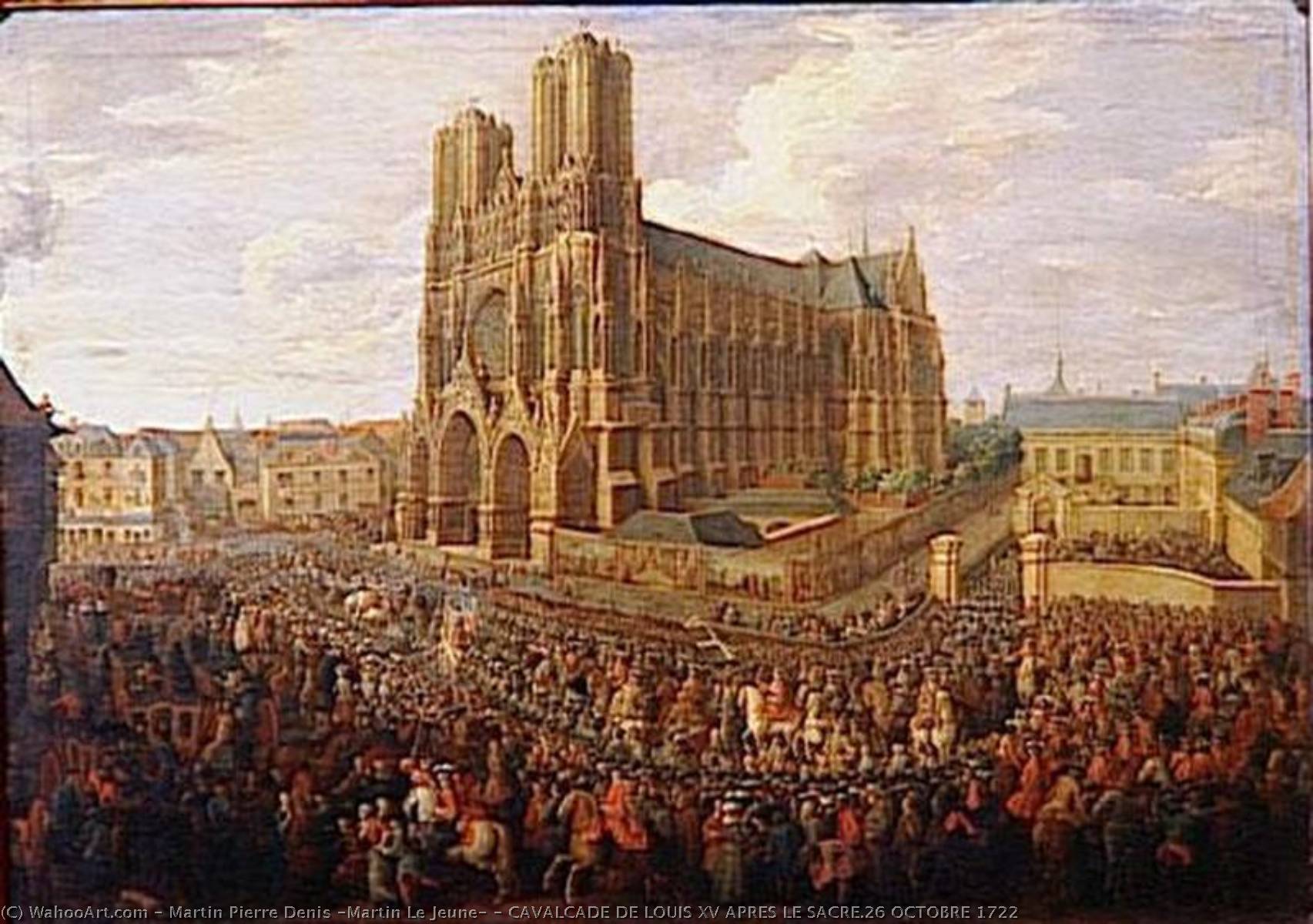
CAVALCADE DE LOUIS XV APRES LE SACRE.26 OCTOBRE 1722
 Pročitaj više
Ručno rađena uljana reprodukcija
Ručno oslikano uljanim bojama na platnu u dimenzijama i okviru po vašem izboru, izrađeno po porudžbini od strane naših umetnika. ( Kupi print Kupi digitalnu sliku)




































Izaberite jednu od naših unapred definisanih veličina koje odgovaraju originalnim proporcijama umetničkog dela.

Можете унети сопствене димензије како бисте прилагодили дело одређеном оквиру или простору. Ако одабрана величина не одговара пропорцијама оригинала, слика ће бити исечена или проширена додатним елементима који се ручно насликавају. Дигитални prikaz ће вам бити послат на одобрење пре почетка производње.
Имајте на уму да преглед на екрану не одражава стварно исецање или проширење. Само приказ (mockup) ће тачно приказати коначну композицију.
Иако су доступне прилагођене величине, препоручујемо да одаберете димензију из дефинисане листе како бисте сачували оригиналне пропорције.
Nakon narudžbine, tim ArtsDot.com će klijentu putem e-pošte poslati uputstva i dostaviti prikaz predloženog rešenja
Isporuka širom sveta () za 3/4 nedelje umesto uobičajenih 5 nedelja. (28 август). Bez kompromisa po pitanju kvaliteta.

Besplatna ekspresna dostava širom sveta

Visokokvalitetno laneno platno

Kompletno osiguranje transporta

Garancija povraćaja carine i uvoznih dažbina

Garancija vernosti boja

Politika povrata u roku od 60 dana (samo u slučaju nedostataka)

Garancija povrata novca od 100%

Popust pri grupnoj kupovini
 Opcija sa staklom dostupna je samo za dimenzije manje od 110 cm

CAVALCADE DE LOUIS XV APRES LE SACRE.26 OCTOBRE 1722
Tehnika reprodukcije
Dimenzije reprodukcije
-


Konačna cena
$ 538
Srodna umetnička dela









Biografija umetnika
Pierre-Denis Martin (1663–1742): The Shadow Painter of Versailles
The name Pierre-Denis Martin, often referred to as “Martin le Jeune” or “Martin des Gobelins,” might not immediately resonate with the casual art enthusiast. Yet, within the gilded halls of 18th-century France—particularly at the heart of Versailles and Fontainebleau—he was a significant figure, a meticulous craftsman whose skill lay in capturing the fleeting beauty of royal life and courtly grandeur. Martin wasn’t a flamboyant innovator like Watteau or Boucher; instead, he excelled as a diligent recorder, a painter who meticulously translated the visual world onto canvas with an almost photographic precision, earning him the somewhat enigmatic title of “the shadow painter.” His legacy rests not in revolutionary style but in his unparalleled ability to document the opulent rituals and refined aesthetics of the French monarchy.
Born in Paris in 1663, Martin’s early life remains shrouded in a degree of mystery. While he was identified as the nephew and pupil of Jean-Baptiste Martin, and later linked to Adam François van der Meulen through apprenticeship, his precise origins and formative influences are difficult to pinpoint with absolute certainty. What is known is that he began his career at the Gobelins Manufactory, where he honed his skills in producing decorative panels for royal residences – a crucial experience that instilled in him an appreciation for detail, composition, and the technical demands of large-scale painting. This early exposure to the meticulous processes of tapestry production undoubtedly shaped his later work, imbuing it with a sense of order and control.
A Court Painter’s Palette: Subjects and Style
Martin's career truly blossomed during his tenure at Versailles and Fontainebleau under the patronage of Louis XIV. He became a sought-after painter of royal portraits, particularly those depicting members of the extended family – cousins, nieces, and nephews – alongside scenes of courtly life. Unlike the idealized representations favored by some of his contemporaries, Martin’s portraits were remarkably realistic, capturing the subtle nuances of expression and the delicate textures of clothing and hair. He wasn't interested in creating heroic or romanticized images; instead, he presented a carefully observed likeness, often emphasizing the sitter’s age and character.
His most celebrated subjects included scenes of hunting parties at Fontainebleau, elaborate balls and banquets within the palace walls, and intimate gatherings in the royal apartments. These paintings are characterized by their meticulous detail, precise lighting, and a remarkable sense of spatial depth. Martin's compositions were often structured around architectural elements – grand staircases, ornate ceilings, and meticulously rendered furniture – creating a visual framework that emphasized the scale and magnificence of the court. He frequently employed a technique known as “contre-jour,” or light from the side, to create dramatic shadows and highlight key figures within the scene. This approach not only added depth but also conveyed a sense of realism and immediacy.
Influences and Artistic Connections
Martin’s artistic development was undoubtedly influenced by several key figures. His early training at the Gobelins, as well as his apprenticeship with Adam François van der Meulen, exposed him to the principles of classical composition and meticulous draftsmanship. However, he also drew inspiration from the work of contemporary artists such as Jean-Baptiste Greuze, whose realistic portraits and scenes of everyday life resonated with Martin’s own approach. Notably, there is a strong connection between his work and that of Pierre-François Martin-Laval, another painter working at the Gobelins, suggesting a shared artistic lineage and a collaborative spirit.
Furthermore, Martin's meticulous attention to detail and his fascination with light and shadow can be traced back to the influence of Rembrandt van Rijn. Like Rembrandt, Martin was adept at capturing the subtle nuances of human expression and creating a sense of atmosphere through the skillful manipulation of light and dark. It’s important to note that Martin’s style wasn't entirely independent; he frequently worked in collaboration with other artists, particularly within the workshop of Van der Meulen, adapting and refining his techniques based on collective experience.
Legacy and Historical Significance
Despite his considerable skill and prolific output, Martin remains a somewhat obscure figure in the history of French art. His work was often overshadowed by the more flamboyant styles of Watteau and Boucher, and he rarely received individual recognition during his lifetime. However, his meticulous paintings provide invaluable insights into the visual culture of 18th-century France, offering a detailed record of royal life and courtly rituals.
Martin’s legacy lies not in revolutionary innovation but in his unwavering commitment to realism and accuracy. His paintings are a testament to the importance of observation, draftsmanship, and technical skill—qualities that were highly valued by the French monarchy. Today, Martin's works can be found in major museums throughout France, including the Musée du Louvre and the Château de Versailles, where they continue to captivate viewers with their remarkable detail and evocative atmosphere. He stands as a quiet but essential witness to an era of unparalleled splendor and political intrigue, a painter who captured the shadows and light of a bygone world.
martin pierre denis (martin le jeune)
1663 - 1742
Osnovne informacije
- Artistic Movement Or Style: 18th Century Painter
- Artists Who Influenced This Artist: ['Adam François van der Meulen],\n "Artists or movements influenced by this artist": ["Classical French Art"]\n}']
- Date Of Birth: 1663
- Date Of Death: 1742
- Full Name: Pierre-Denis Martin (le jeune)
- Nationality: French
- Notable Artworks:
- Royal portraits
- Versailles scenes
- Fontainebleau views
- Marly Chateau paintings
- Place Of Birth: Paris, France

