

 Pregledaj u prostoru
 Pošalji
 Podeli
 Detalji o delu

 Преузми
 Slični predmeti
 Rendgenski snimak
 Slajdovi
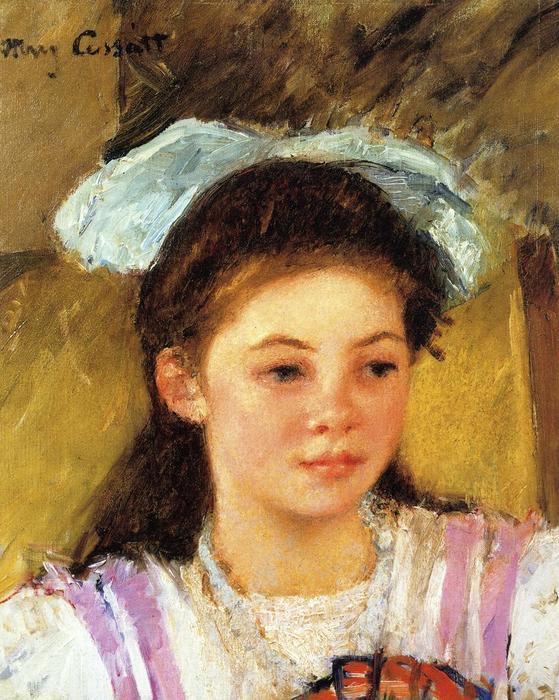
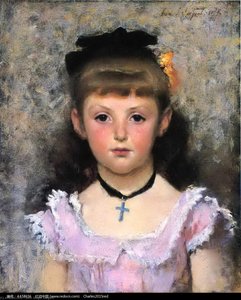
Ellen Mary Cassatt with a Large Bow in Her Hair
 Oil On Canvas
- WallArt
- Impressionist Style
 1909
1909- 19th Century
 41.0 x 32.0 cm
 Pročitaj više
Kupite digitalnu sliku visoke rezolucije i poboljšanog kvaliteta, koja je znatno superiornija od onoga što vidite u online prikazu.
Svaka datoteka je pedantno pripremljena od strane naših stručnjaka koristeći napredne alate i profesionalnu ručnu retušu. Osiguravamo da svaka slika ima izuzetnu oštrinu, preciznu reprodukciju boja i fine detalje.
Konačna datoteka se dostavlja putem e-pošte u roku od 72 sata, optimizovana za neposrednu upotrebu u profesionalnim, izdavačkim i štamparskim okruženjima. To je isti kvalitet kojem veruju vrhunski studiji dizajna, izdavači i galerije.
Digitalna slika
Preuzmite datoteku visoke rezolucije za ličnu upotrebu, štampanje i kreativne projekte. ( Kupi print Kupi ručno naslikanu sliku)
Uključeno uz svaku porudžbinu digitalne slike
Profesionalna digitalna isporuka, zagarantovana
Kada odaberete ArtsDot.com, ne dobijate samo sliku – vi primate profesionalno unapređeno digitalno umetničko delo, izrađeno sa najvećom preciznošću i uz garanciju zadovoljstva. Evo svega što automatski dolazi uz vašu porudžbinu:

Brza dostava putem e-pošte
Vaša digitalna slika visoke rezolucije biće vam poslata putem e-pošte u roku od 72 sata od poručivanja – spremna za trenutnu upotrebu.

Digitalna datoteka unapređena veštačkom inteligencijom
Vaše umetničko delo je profesionalno optimizovano korišćenjem naprednih AI alata i ručne obrade, čime se osiguravaju maksimalni detalji, oštrina i preciznost boja.

Besplatna ponovna isporuka doživotno
Slučajno ste obrisali ili izgubili svoju datoteku? Ne brinite – poslaćemo vam je ponovo u bilo kom trenutku, potpuno besplatno.

Bez troškova uvoza – zauvek
Uživajte u svojim umetničkim delima trenutno, bez carine, dažbina ili troškova dostave – digitalni download je uvek bez poreza.

Garancija vernosti boja
Uz pomoć profesionalnih alata i upravljanja bojama, osiguravamo da vaša digitalna slika što vernije odražava originalne boje.

Garancija zadovoljstva u roku od 60 dana
Ako niste zadovoljni svojom digitalnom slikom, revidirat ćemo je ili vratiti 100% novca u roku od 60 dana – bez ikakvih pitanja.

100% garancija povrata novca
Niste zadovoljni? Obezbedite pun povrat novca u roku od 60 dana od trenutka kada ste primili svoju digitalnu datoteku – bez suvišnih pitanja.

Popusti na velike porudžbine
Kupite 3 slike, uštedite 10% - Kupite 5 slika, uštedite 15% - Kupite 10+ slika, uštedite 20%. Odlično za kreativne projekte, galerije i agencije.
Mary Stevenson Cassatt's Intimate Portrait of Grace
Mary Stevenson Cassatt’s “Ellen Mary Cassatt with a Large Bow in Her Hair,” painted in 1909, is more than just a portrait; it’s a delicately rendered window into the quiet dignity and understated elegance of late 19th-century womanhood. Executed during her most prolific period, this work exemplifies Cassatt's mastery of Impressionist techniques – her ability to capture fleeting moments of light and emotion with remarkable sensitivity. Measuring 41 x 32 cm, the painting invites a close examination of its composition, color palette, and the subtle narrative it conveys.
- Subject & Composition: The central figure, Ellen Mary Cassatt herself, is presented in a seated pose, her direct gaze engaging the viewer with an air of self-assured composure. The inclusion of two other individuals – one on either side – subtly suggests a social interaction, perhaps a private conversation or shared moment, adding depth and context to the scene.
- Color & Technique: Cassatt’s use of muted colors—soft whites, pinks, and delicate greens—creates a serene atmosphere, characteristic of her Impressionist style. The artist employs loose, visible brushstrokes that contribute to the painting's textural richness and evoke a sense of immediacy.
- Material & Scale: Painted on canvas with oil paints, this piece showcases Cassatt’s preference for a medium that allowed for rich textures and vibrant colors, a hallmark of her artistic practice. The relatively small scale (41 x 32 cm) lends an intimate quality to the work, encouraging viewers to appreciate the details within.
A Window into Impressionist Domesticity
Cassatt’s focus on portraying women and children was revolutionary for her time, challenging the prevailing artistic conventions that largely ignored domestic life. This painting reflects a broader trend within Impressionism – a desire to capture everyday scenes and experiences with honesty and empathy. The subject matter itself—a young woman adorned with a beautiful bow— speaks to the importance of beauty and refinement in women’s lives during this era, while simultaneously offering a glimpse into the private sphere.
The painting's historical context is crucial to its understanding. Created in 1909, it represents Cassatt’s continued commitment to portraying the lives of women within her adopted homeland of France. Her work served as a powerful commentary on societal expectations and gender roles, subtly advocating for greater recognition of women’s contributions to art and culture.
Symbolism & Emotional Impact
The large bow in Ellen Mary Cassatt's hair is not merely an adornment; it symbolizes grace, elegance, and perhaps even a touch of youthful innocence. The direct gaze of the subject conveys confidence and intelligence, suggesting a woman comfortable in her own skin. The soft lighting and muted colors contribute to the painting’s overall mood of tranquility and intimacy, inviting viewers to contemplate the quiet beauty of everyday life.
Cassatt's legacy extends beyond this single work; she was one of the first American women to achieve international recognition as an artist. Her influence on subsequent generations of artists is undeniable, and her paintings continue to resonate with audiences today due to their emotional depth and technical brilliance. This piece stands as a testament to Cassatt’s vision and enduring artistic legacy.
Srodna umetnička dela
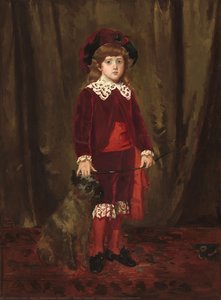
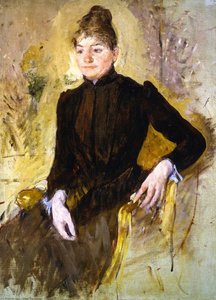
Biografija umetnika
A Life Dedicated to Impressionism and Domesticity
Mary Stevenson Cassatt, a name forever linked with intimate portrayals of women and children within the radiant world of late 19th-century Impressionism, forged an exceptional path as an American artist who discovered her artistic sanctuary in France. Born on May 22, 1844, in Allegheny City, Pennsylvania – now part of Pittsburgh – Cassatt’s upbringing was steeped in privilege and a cultivated awareness of culture. Her family, with roots tracing back to French Huguenots, placed high value on education and travel, instilling within young Mary a cosmopolitan perspective that would profoundly shape her artistic vision. While societal norms often confined women to domestic spheres, Cassatt's mother, Katherine Kelso Johnston, actively encouraged her daughter’s burgeoning interest in art, recognizing and nurturing a talent that defied convention. This early support proved invaluable as Cassatt navigated the challenges of pursuing a professional career within a male-dominated field.
From Philadelphia to Parisian Immersion
Cassatt's formal artistic training commenced at the Pennsylvania Academy of Fine Arts in Philadelphia at the age of fifteen, a bold step for a young woman during the Civil War era. Despite encountering skepticism and subtle discouragement from some instructors and fellow students, she persevered through years of diligent study. However, feeling constrained by the academy’s deliberate pace and traditional methods, Cassatt sought broader horizons. A pivotal moment arrived in 1866 when she relocated to Paris, accompanied by her mother and family friends as chaperones. This move marked a turning point in her artistic development. She studied privately with established artists affiliated with the École des Beaux-Arts, including Jean-Léon Gérôme, absorbing technical skills while simultaneously immersing herself in the burgeoning Parisian art scene. It was during this period that Cassatt began to gravitate toward the innovative ideas of the Impressionists, a group challenging academic conventions and striving to capture the fleeting moments of modern life. A particularly significant relationship blossomed with Edgar Degas, who recognized her exceptional talent and invited her to exhibit alongside the Impressionist circle. Their connection extended beyond exhibition; Degas became a mentor, encouraging Cassatt’s exploration of printmaking techniques, especially color aquatint, which would become an integral part of her artistic repertoire. He profoundly influenced her compositional choices, particularly in his emphasis on asymmetrical arrangements and cropped figures – elements that would come to define her unique style.
Capturing Modern Womanhood: Style and Themes
Cassatt’s artistic style evolved to embrace the hallmarks of Impressionism – visible brushstrokes, a focus on light and color, and a commitment to depicting contemporary life. Yet, she infused her work with a distinct clarity and precision that set it apart from some of her contemporaries. Unlike many male Impressionists who favored landscapes or Parisian nightlife, Cassatt centered her art around the social and private worlds of women, particularly mothers and children. She portrayed scenes of domesticity – bathing rituals, tea parties, quiet moments of connection – with remarkable intimacy and psychological depth. Her paintings are not merely depictions of everyday life; they are sensitive explorations of maternal bonds, female relationships, and the complexities of modern womanhood. Key works like The Boating Party (1894), The Child’s Bath (in various versions), and Little Girl in a Blue Armchair exemplify her ability to capture fleeting moments with both technical skill and emotional resonance. Furthermore, Cassatt was deeply influenced by Japanese *ukiyo-e* woodblock prints, evident in her compositions' flattened perspective, bold color choices, and elegant simplicity. This Japonisme influence added another layer of sophistication to her already distinctive style, influencing her use of pattern and the arrangement of forms within a space.
Notable Achievements & Legacy
Mary Cassatt’s contribution to Impressionism is undeniable. Her unwavering dedication to portraying women's lives with honesty and compassion challenged prevailing societal norms and elevated the status of female artists during her time. She became one of the “three great ladies” of Impressionism, alongside Berthe Morisot and Marie Bracquemond, demonstrating that artistic excellence transcended gender boundaries. Cassatt’s influence extended beyond her own paintings; she championed the collection of old masters and encouraged the embrace of Impressionist ideals within American art circles. Her legacy continues to inspire artists today, reminding us of the importance of portraying human experience with sensitivity and nuance. She remains a powerful symbol of artistic independence and a testament to the enduring power of art to illuminate the human condition.
Further Exploration
- Online Resources: Explore Mary Cassatt’s life and work further through resources like Wikipedia (https://en.wikipedia.org/wiki/Mary_Cassatt) and ArtsDot.
- Museum Collections: Discover her masterpieces in renowned museums worldwide, including the Art Institute of Chicago and the National Portrait Gallery in London.
- Related Artists: Delve into the works of Edgar Degas, Berthe Morisot, and Marie Bracquemond to understand the broader context of Impressionism and the contributions of women artists during this period.
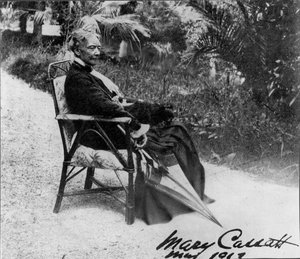
Meri Stenفين Касат
1843 - 1926 , САД
Kratke činjenice
- Artistic Movement Or Style: Импаресионизам
- Artists Or Movements Influenced By This Artist: ['Американ Импаресионизам']
- Artists Who Influenced This Artist:
- Едгар Дегас
- Жан Леон Гером
- Date Of Birth: Мај 22, 1844
- Date Of Death: Јуна 14, 1926
- Full Name: Mary Stevenson Cassatt
- Nationality: Американа
- Notable Artworks:
- Боатинг Партиј
- Дечије Куповање
- Малка Девојка у Сином Синару
- Place Of Birth: Аллегени Сити, САД

