 Pregledaj u prostoru
 Pošalji
 Podeli
 Detalji o delu

 Преузми
 Slični predmeti
 Rendgenski snimak
 Slajdovi
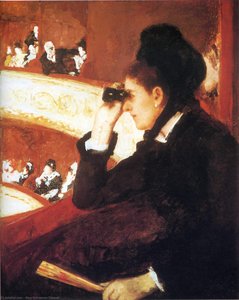
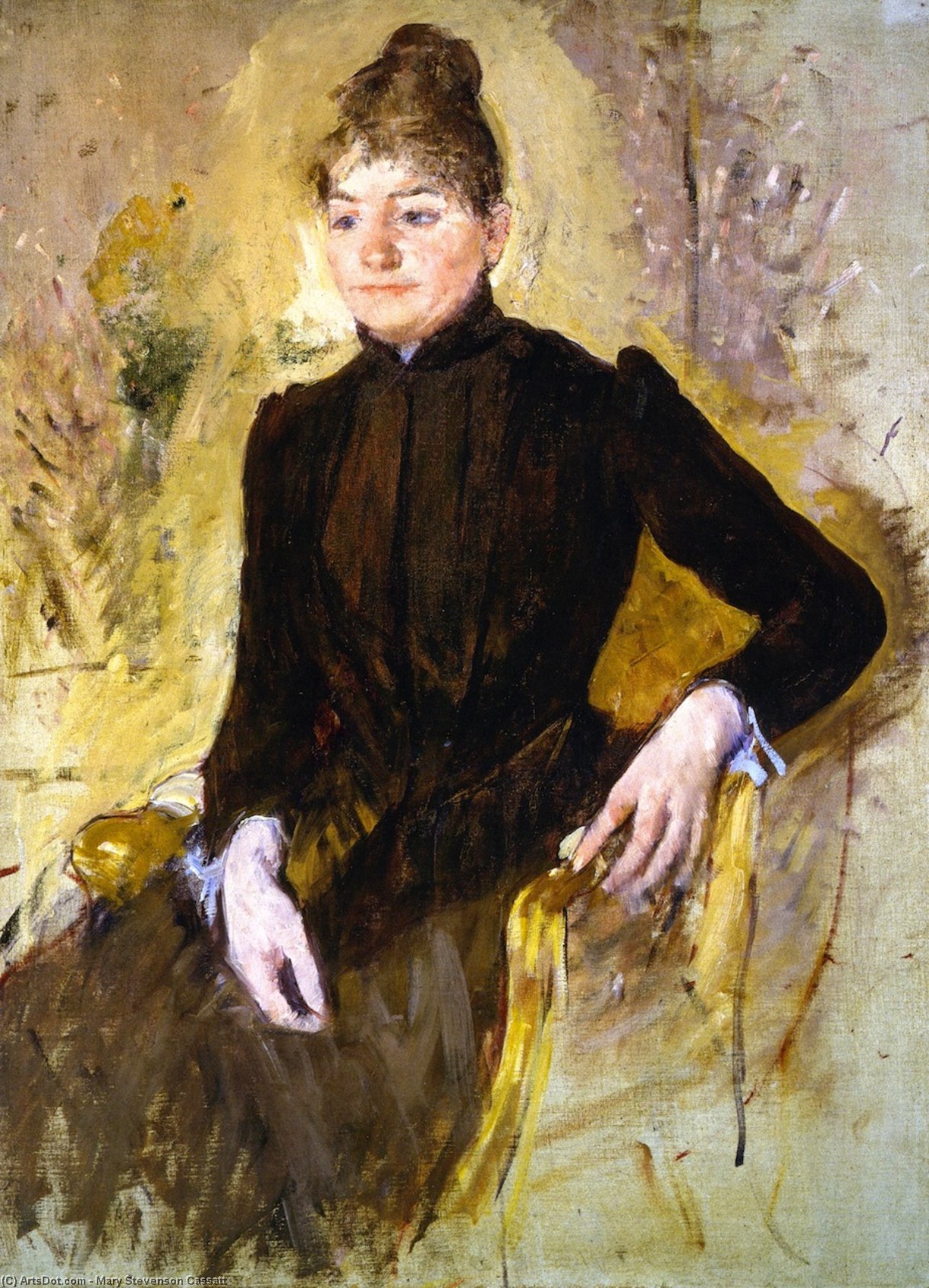
Woman in Black (also known as Portrait of a Woman)


 Pročitaj više
Giclee štampa / Umetnički otisak
Giclée štampa ili print na platnu muzejskog kvaliteta uz brzu proizvodnju i fleksibilne opcije završne obrade. ( Kupi ručno naslikanu sliku Kupi digitalnu sliku)




P118B $10

P118H $10

P118W $10

P438Z $10

P508JH $12

P508YH $12

P805H $10

P805Z $10

P919BZ $10

P919G $10

P919XJ $10

P959ZH $10

P968JZ $12

W106C $8

W218G $10

W218JH $8

W218Y $10

W307PJ $10

W316G $10

W316PJ $8

W316Y $10

W398PJ $8

W4111J $10

W500HY $15

W500JH $15

W692G $12

W849H $8

W940BG $15

W953PJ $8




Izaberite jednu od naših unapred definisanih veličina koje odgovaraju originalnim proporcijama umetničkog dela.

Možete uneti sopstvene dimenzije kako biste umetničko delo prilagodili specifičnom okviru ili prostoru. Ako odabrani format ne odgovara proporcijama originalne slike, mi ćemo ili iscrtati deo dela ili proširiti sliku pomoću ogledane ivice ili jednobojnog popunjavanja. Digitalni prikaz će vam biti poslat na odobrenje pre početka proizvodnje.
Imajte na umu da pregled na ekranu ne odražava stvarno iscrtavanje ili proširivanje. Samo će prikaz (mockup) precizno pokazati finalnu kompoziciju.
Iako su prilagođene dimenzije dostupne, preporučujemo da odaberete dimenziju sa unapred definisane liste kako biste očuvali originalne proporcije.
Dostava širom sveta () za 2 nedelje umesto uobičajenih 4/5 nedelja. (6 септембар)

Besplatna ekspresna dostava širom sveta

Visokokvalitetno laneno platno

Kompletno osiguranje transporta

Garancija povraćaja carine i uvoznih dažbina

Garancija vernosti boja

Politika povrata u roku od 60 dana (samo u slučaju nedostataka)

Garancija povrata novca od 100%

Popust pri grupnoj kupovini
 Opcija sa staklom dostupna je samo za dimenzije manje od 110 cm

Woman in Black (also known as Portrait of a Woman)
Giclee štampa / Umetnički otisak
Dimenzije reprodukcije
-


Konačna cena
$ 62
A Moment Frozen in Time: Mary Cassatt’s “Woman in Black”
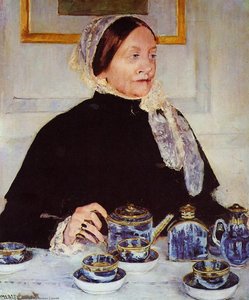
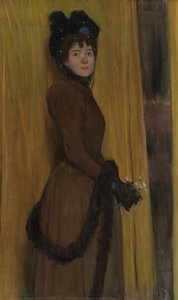
Mary Stevenson Cassatt's "Woman in Black," painted between 1881 and 1883, stands as a cornerstone of American Impressionism—a captivating glimpse into the domestic sphere during a period defined by rapid societal change. Held proudly at Birmingham Museums Trust, this oil on canvas transcends mere portraiture; it’s an exploration of female subjectivity and a masterful demonstration of Cassatt's innovative approach to capturing fleeting impressions.The Subject: Intimacy Within Domestic Space
Cassatt deliberately eschewed grand narratives or heroic figures, opting instead for a quiet tableau centered around a woman seated in a chair—a commonplace scene rendered with extraordinary sensitivity. The woman’s gaze directs towards the viewer, establishing an unspoken connection that speaks volumes about the role of women in Victorian society. Her posture exudes composure and thoughtfulness, conveying a profound stillness that invites contemplation. This deliberate choice wasn't simply stylistic; it reflected Cassatt’s own belief in portraying women as individuals experiencing life authentically—a radical departure from prevailing artistic conventions.Impressionistic Technique: Light and Color as Emotional Vessels
Cassatt’s technique exemplifies the core tenets of Impressionism, prioritizing the depiction of light and color to convey mood and atmosphere rather than striving for photographic realism. She employed loose brushstrokes—characteristic of the movement—to blend pigments on the canvas, creating a shimmering surface that captures the subtle nuances of illumination. The muted palette—dominated by browns and creams—contributes to the painting’s serene ambiance, mirroring the quiet dignity of the subject matter. Notice how Cassatt skillfully uses color to subtly define the woman's form against the textured background, enhancing the visual impact without resorting to harsh contrasts.Historical Context: Challenging Victorian Ideals
Painted during a time when women’s roles were largely confined to the home and motherhood, “Woman in Black” represents a subtle yet significant assertion of female autonomy. Cassatt's decision to depict a woman alone—engaged in an activity seemingly devoid of external stimulation—challenged the prevailing societal expectations surrounding femininity. The painting subtly critiques the restrictive confines imposed upon women while simultaneously celebrating their inner life and intellectual curiosity. It’s important to consider this context as it illuminates the broader significance of Cassatt’s artistic vision.Symbolism: Beyond Appearance – An Expression of Inner Reflection
The woman's gaze—directly confronting the viewer—is laden with symbolic weight. It suggests a quiet confidence and an awareness of her own presence, hinting at a refusal to passively accept societal norms. The chair itself serves as a visual anchor, grounding the figure in domestic space but simultaneously emphasizing her solitude. Furthermore, Cassatt’s masterful use of light—particularly diffused illumination—creates an ethereal quality that elevates the painting beyond mere representation, conveying a sense of inner peace and contemplative reflection.Emotional Impact: A Timeless Portrait of Dignity
“Woman in Black” resonates powerfully with viewers today because it captures something fundamental about the human experience: the ability to find beauty and meaning within quiet moments of solitude. Cassatt’s painting evokes feelings of serenity, grace, and understated elegance—qualities that endure across generations. It serves as a poignant reminder of the importance of inner contemplation and the enduring fascination with portraying women's lives in ways that honor their intellect and emotional depth. This remarkable artwork continues to inspire admiration for its artistic brilliance and its profound exploration of human psychology.Srodna umetnička dela
Biografija umetnika
A Life Dedicated to Impressionism and Domesticity
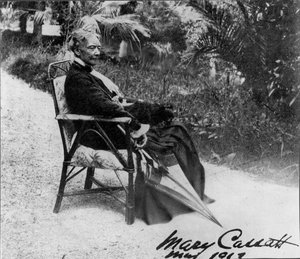
Mary Stevenson Cassatt, a name forever linked with intimate portrayals of women and children within the radiant world of late 19th-century Impressionism, forged an exceptional path as an American artist who discovered her artistic sanctuary in France. Born on May 22, 1844, in Allegheny City, Pennsylvania – now part of Pittsburgh – Cassatt’s upbringing was steeped in privilege and a cultivated awareness of culture. Her family, with roots tracing back to French Huguenots, placed high value on education and travel, instilling within young Mary a cosmopolitan perspective that would profoundly shape her artistic vision. While societal norms often confined women to domestic spheres, Cassatt's mother, Katherine Kelso Johnston, actively encouraged her daughter’s burgeoning interest in art, recognizing and nurturing a talent that defied convention. This early support proved invaluable as Cassatt navigated the challenges of pursuing a professional career within a male-dominated field.
From Philadelphia to Parisian Immersion
Cassatt's formal artistic training commenced at the Pennsylvania Academy of Fine Arts in Philadelphia at the age of fifteen, a bold step for a young woman during the Civil War era. Despite encountering skepticism and subtle discouragement from some instructors and fellow students, she persevered through years of diligent study. However, feeling constrained by the academy’s deliberate pace and traditional methods, Cassatt sought broader horizons. A pivotal moment arrived in 1866 when she relocated to Paris, accompanied by her mother and family friends as chaperones. This move marked a turning point in her artistic development. She studied privately with established artists affiliated with the École des Beaux-Arts, including Jean-Léon Gérôme, absorbing technical skills while simultaneously immersing herself in the burgeoning Parisian art scene. It was during this period that Cassatt began to gravitate toward the innovative ideas of the Impressionists, a group challenging academic conventions and striving to capture the fleeting moments of modern life. A particularly significant relationship blossomed with Edgar Degas, who recognized her exceptional talent and invited her to exhibit alongside the Impressionist circle. Their connection extended beyond exhibition; Degas became a mentor, encouraging Cassatt’s exploration of printmaking techniques, especially color aquatint, which would become an integral part of her artistic repertoire. He profoundly influenced her compositional choices, particularly in his emphasis on asymmetrical arrangements and cropped figures – elements that would come to define her unique style.
Capturing Modern Womanhood: Style and Themes
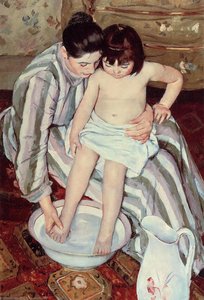
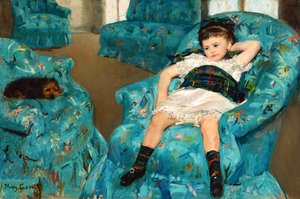
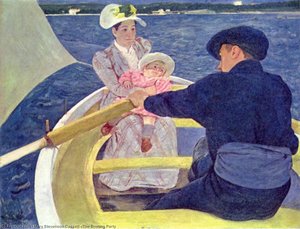
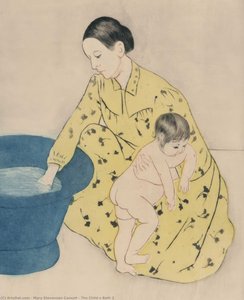
Cassatt’s artistic style evolved to embrace the hallmarks of Impressionism – visible brushstrokes, a focus on light and color, and a commitment to depicting contemporary life. Yet, she infused her work with a distinct clarity and precision that set it apart from some of her contemporaries. Unlike many male Impressionists who favored landscapes or Parisian nightlife, Cassatt centered her art around the social and private worlds of women, particularly mothers and children. She portrayed scenes of domesticity – bathing rituals, tea parties, quiet moments of connection – with remarkable intimacy and psychological depth. Her paintings are not merely depictions of everyday life; they are sensitive explorations of maternal bonds, female relationships, and the complexities of modern womanhood. Key works like The Boating Party (1894), The Child’s Bath (in various versions), and Little Girl in a Blue Armchair exemplify her ability to capture fleeting moments with both technical skill and emotional resonance. Furthermore, Cassatt was deeply influenced by Japanese *ukiyo-e* woodblock prints, evident in her compositions' flattened perspective, bold color choices, and elegant simplicity. This Japonisme influence added another layer of sophistication to her already distinctive style, influencing her use of pattern and the arrangement of forms within a space.
Notable Achievements & Legacy
Mary Cassatt’s contribution to Impressionism is undeniable. Her unwavering dedication to portraying women's lives with honesty and compassion challenged prevailing societal norms and elevated the status of female artists during her time. She became one of the “three great ladies” of Impressionism, alongside Berthe Morisot and Marie Bracquemond, demonstrating that artistic excellence transcended gender boundaries. Cassatt’s influence extended beyond her own paintings; she championed the collection of old masters and encouraged the embrace of Impressionist ideals within American art circles. Her legacy continues to inspire artists today, reminding us of the importance of portraying human experience with sensitivity and nuance. She remains a powerful symbol of artistic independence and a testament to the enduring power of art to illuminate the human condition.
Further Exploration
- Online Resources: Explore Mary Cassatt’s life and work further through resources like Wikipedia (https://en.wikipedia.org/wiki/Mary_Cassatt) and ArtsDot.
- Museum Collections: Discover her masterpieces in renowned museums worldwide, including the Art Institute of Chicago and the National Portrait Gallery in London.
- Related Artists: Delve into the works of Edgar Degas, Berthe Morisot, and Marie Bracquemond to understand the broader context of Impressionism and the contributions of women artists during this period.
Meri Stenفين Касат
1843 - 1926 , САД
Osnovne informacije
- Artistic Movement Or Style: Импаресионизам
- Artists Or Movements Influenced By This Artist: ['Американ Импаресионизам']
- Artists Who Influenced This Artist:
- Едгар Дегас
- Жан Леон Гером
- Date Of Birth: Мај 22, 1844
- Date Of Death: Јуна 14, 1926
- Full Name: Mary Stevenson Cassatt
- Nationality: Американа
- Notable Artworks:
- Боатинг Партиј
- Дечије Куповање
- Малка Девојка у Сином Синару
- Place Of Birth: Аллегени Сити, САД
Povezani članci

Capturing a Nation's Light: Exploring the American Impressionist Movement
Explore the captivating world of American Impressionism! Discover key artists, techniques & its lasting impact on art history. Find museum-quality reproductions and expert guidance at ArtsDot.
Mary Agnes Yerkes: A Study in American Impressionism & Atmospheric Light
Explore the captivating world of Mary Agnes Yerkes, a resilient American Impressionist painter renowned for her vibrant landscapes of the West & National Parks. Discover her unique style and enduring legacy.
Frederick Childe Hassam: American Impressionism's Chronicler of Light & Modern Life
Explore the captivating world of Frederick Childe Hassam, a pioneer of American Impressionism. Discover his iconic paintings capturing light, urban life & coastal beauty. Learn about his legacy and influence on American art history.

Dark Masterpieces: 10 Iconic Paintings Dominated by Black Tones |
Explore 10 iconic paintings dominated by black tones, from Rembrandt’s chiaroscuro to Goya's dark expressions. Discover the stories behind these masterpieces & find museum-quality art reproductions for your home at .
Mary Cassatt: Modernity, Motherhood & the Impressionist Gaze – A Timeless Legacy
Explore the life & art of Mary Cassatt, a pivotal American Impressionist renowned for intimate portrayals of women & children. Discover her unique style, legacy, and groundbreaking techniques at ArtsDot.