

 Pošalji
 Podeli
 Detalji o delu

 Преузми
 Slični predmeti
 Slajdovi
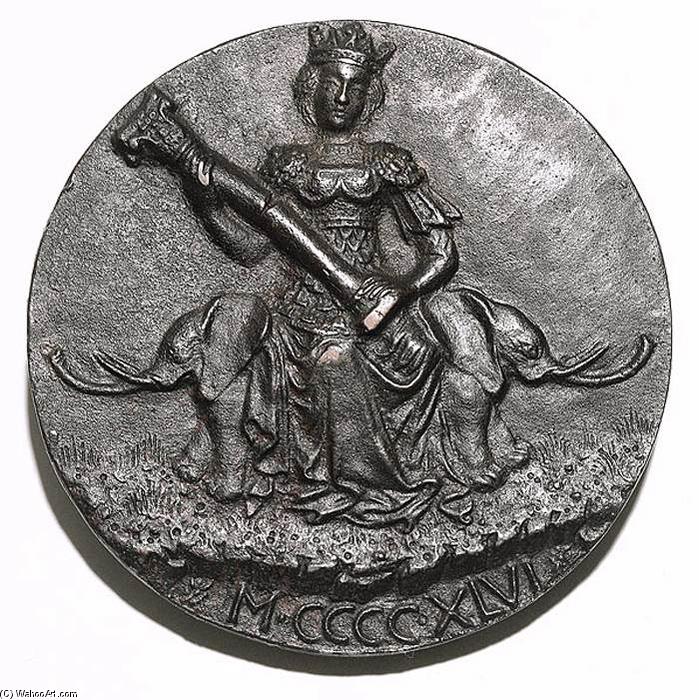
Fortitude, seated on two elephants (reverse)


 Pročitaj više
Kupite digitalnu sliku visoke rezolucije i poboljšanog kvaliteta, koja je znatno superiornija od onoga što vidite u online prikazu.
Svaka datoteka je pedantno pripremljena od strane naših stručnjaka koristeći napredne alate i profesionalnu ručnu retušu. Osiguravamo da svaka slika ima izuzetnu oštrinu, preciznu reprodukciju boja i fine detalje.
Konačna datoteka se dostavlja putem e-pošte u roku od 72 sata, optimizovana za neposrednu upotrebu u profesionalnim, izdavačkim i štamparskim okruženjima. To je isti kvalitet kojem veruju vrhunski studiji dizajna, izdavači i galerije.
Digitalna slika
Preuzmite datoteku visoke rezolucije za ličnu upotrebu, štampanje i kreativne projekte. ( Kupi print Kupi ručno naslikanu sliku)
Uključeno uz svaku porudžbinu digitalne slike
Profesionalna digitalna isporuka, zagarantovana
Kada odaberete ArtsDot.com, ne dobijate samo sliku – vi primate profesionalno unapređeno digitalno umetničko delo, izrađeno sa najvećom preciznošću i uz garanciju zadovoljstva. Evo svega što automatski dolazi uz vašu porudžbinu:

Brza dostava putem e-pošte
Vaša digitalna slika visoke rezolucije biće vam poslata putem e-pošte u roku od 72 sata od poručivanja – spremna za trenutnu upotrebu.

Digitalna datoteka unapređena veštačkom inteligencijom
Vaše umetničko delo je profesionalno optimizovano korišćenjem naprednih AI alata i ručne obrade, čime se osiguravaju maksimalni detalji, oštrina i preciznost boja.

Besplatna ponovna isporuka doživotno
Slučajno ste obrisali ili izgubili svoju datoteku? Ne brinite – poslaćemo vam je ponovo u bilo kom trenutku, potpuno besplatno.

Bez troškova uvoza – zauvek
Uživajte u svojim umetničkim delima trenutno, bez carine, dažbina ili troškova dostave – digitalni download je uvek bez poreza.

Garancija vernosti boja
Uz pomoć profesionalnih alata i upravljanja bojama, osiguravamo da vaša digitalna slika što vernije odražava originalne boje.

Garancija zadovoljstva u roku od 60 dana
Ako niste zadovoljni svojom digitalnom slikom, revidirat ćemo je ili vratiti 100% novca u roku od 60 dana – bez ikakvih pitanja.

100% garancija povrata novca
Niste zadovoljni? Obezbedite pun povrat novca u roku od 60 dana od trenutka kada ste primili svoju digitalnu datoteku – bez suvišnih pitanja.

Popusti na velike porudžbine
Kupite 3 slike, uštedite 10% - Kupite 5 slika, uštedite 15% - Kupite 10+ slika, uštedite 20%. Odlično za kreativne projekte, galerije i agencije.
Opis kolekcionarskog dela
Matteo di Andrea de’ Pasti: A Renaissance Master of Symbolism and Detail
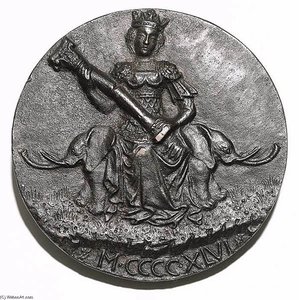
The bronze medal depicting Fortitude, seated on two elephants (reverse), stands as a testament to Matteo di Andrea de’ Pasti’s unparalleled skill in capturing the spirit of his era—the High Renaissance—and conveying profound symbolic meaning. Crafted around 1449, this artwork embodies the humanist ideals championed by artists like Alberti and Brunelleschi, reflecting a fascination with classical proportions and idealized forms that permeated Florentine artistic circles during Lorenzo de’ Medici's reign. More than just an aesthetically pleasing object, it represents a powerful emblem of courage and resilience—themes central to the Renaissance worldview.Composition and Technique: Embossed Relief – A Dialogue Between Form and Texture
The medal’s composition is strikingly symmetrical, centering on a female figure seated between two elephants. This deliberate arrangement underscores her importance as a representation of Fortitude itself. The sculptor achieved this remarkable level of detail through embossing—a technique involving hammering or pressing metal to raise designs onto its surface—demonstrating mastery over material manipulation and sculptural precision. Fine incised lines weave across the relief, creating subtle textures that mimic the naturalistic style favored by Pasti’s contemporaries. These lines aren't merely decorative; they contribute to the illusion of depth and dimensionality, drawing the viewer into a contemplative engagement with the artwork. The careful consideration of lighting—likely diffused overhead—further enhances this effect, casting soft shadows that accentuate the sculptural contours.Historical Context: Patronage and Symbolism in Renaissance Verona
Matteo di Andrea de’ Pasti flourished during a period marked by significant artistic innovation and royal patronage. His commissions for Sigismondo Pandolfo Malatesta, ruler of Rimini, exemplify the ambition and grandeur characteristic of the time—a desire to commemorate noble virtues and celebrate leadership through monumental sculpture and meticulously crafted medals. The elephant motif itself carries considerable symbolic weight, representing power, stability, and wisdom – qualities highly valued by rulers and artists alike. Furthermore, the Latin inscription “FORTITUDO” serves as a direct declaration of the medal’s purpose: to honor courage and fortitude—values considered essential for moral excellence during the Renaissance.Style and Artistic Influences: Echoes of Classical Antiquity
Pasti's style aligns seamlessly with the stylistic trends established by Alberti and Brunelleschi, reflecting an unwavering commitment to classical ideals. The flowing drapery of the female figure and the rounded anatomical forms demonstrate a profound understanding of human anatomy—a cornerstone of humanist art. Like many Renaissance sculptors, Pasti drew inspiration from ancient Greek and Roman sculptures, adapting their proportions and stylistic conventions to express contemporary concepts of virtue and honor. This fusion of classical tradition with humanist innovation resulted in an artwork that transcends mere ornamentation; it communicates complex ideas about courage and resilience through masterful craftsmanship and evocative imagery.Emotional Impact: A Legacy of Dignity and Remembrance
Ultimately, the Fortitude medal embodies a profound emotional resonance—a palpable sense of dignity and remembrance. Its enduring appeal lies not only in its exquisite beauty but also in its ability to convey timeless values. As a commemorative piece commissioned by Sigismondo Pandolfo Malatesta, it serves as a powerful reminder of the importance of moral fortitude and noble leadership—themes that continue to inspire admiration and contemplation centuries after Pasti’s lifetime. Its presence evokes feelings of strength, resilience, and honor – qualities celebrated throughout Renaissance art history.Srodna umetnička dela
Biografija umetnika
The Sculptor of Renaissance Splendor
Matteo di Andrea de’ Pasti stands as a pivotal figure in the artistic landscape of Verona and the broader Italian Renaissance, a master whose hands shaped the very essence of humanist ideals. Born in Verona around 1420, he emerged from a tradition steeped in Veronese sculptural excellence, inheriting techniques honed by masters such as Giovanni Battista Falcone and Andrea Mantegna. These foundational skills would prove instrumental in shaping his distinctive style, characterized by an exquisite ability to marry monumental scale with intricate, delicate detail. His life was a journey through the intellectual ferment of the Quattrocento, fueled by the humanist scholarship and artistic innovation that flowed from Florence under the influence of figures like Lorenzo de’ Medici.
The artistry of Pasti is deeply rooted in the embrace of classical proportions and idealized forms, mirroring the stylistic trends championed by the great architects Alberti and Brunelleschi. This connection to the classical past was not merely aesthetic but philosophical, reflecting a profound fascination with Greco-Roman aesthetics that permeated the era. His work often sought to capture the spirit of his age—the High Renaissance—conveying profound symbolic meaning through the medium of bronze and stone. Whether crafting a massive religious icon or a miniature commemorative medal, Pasti possessed an unparalleled skill in capturing both the physical likeness and the spiritual depth of his subjects.
A Visionary Collaboration and Royal Patronage
Perhaps the most enduring testament to Pasti’s genius is his legendary collaboration with the visionary architect Leone Battista Alberti. Together, they embarked on the ambitious design and construction of the Tempio Malatestiano in Rimini, a project that cemented their reputation as a formidable architect-sculptor duo. This cathedral church was more than a religious edifice; it was a meticulously crafted symbol of royal prestige and humanist ambition, commissioned by Sigismondo Pandolfo Malatesta. Within this breathtaking structure, Pasti’s sculptural decorations breathed life into the stone, including monumental statues of saints and biblical figures that demonstrated his mastery of expressive power and scale.
The breadth of Pasti’s influence is further evidenced by the illustrious patrons who sought his hand. His prolific output spanned commissions for influential figures such as Lionello d'Este, reflecting a flourishing artistic environment where civic pride and religious piety were celebrated through art. His talent for portraiture led him to produce numerous busts and medals for noble families across Italy, capturing the likenesses of prominent individuals with remarkable realism. This mastery extended even to the realm of metalwork, where his intricately crafted bronze medals became celebrated artifacts of Renaissance symbolism, often featuring complex allegories such as Fortitude seated upon elephants.
Legacy and Historical Significance
The historical trajectory of Matteo di Andrea de’ Pasti is as dramatic as the art he produced. In 1461, his reputation reached far beyond the borders of Italy when he was sent by Sigismondo Malatesta to the court of Mekhmed II in Istanbul. However, this grand diplomatic and artistic mission was cut short when he was arrested during his journey, a moment that serves as a poignant coda to a life of immense creative achievement. Though his career was marked by such turbulent interruptions, his impact on the sculptural tradition remains indelible.
Today, the legacy of Pasti is preserved in some of the world's most prestigious institutions, allowing modern viewers to connect with the grandeur of the Renaissance. His works serve as vital links to a period of unparalleled human achievement, embodying the following:
- Technical Mastery: The seamless integration of Gothic traditions with innovative Renaissance structural solutions.
- Humanist Expression: The use of idealized human forms to convey complex religious and civic narratives.
- Artistic Versatility: An ability to transition effortlessly between monumental cathedral sculpture and the delicate precision of commemorative medal making.
- Cultural Impact: A lasting presence in collections such as the Cleveland Museum of Art and the British Museum, where his pieces continue to inspire awe.
Kratke činjenice
- Artistic Movement Or Style: Renaissance
- Artists Or Movements Influenced By This Artist: ['Leone Battista Alberti']
- Date Of Birth: Verona, Italy ()
- Date Of Death: Living
- Full Name: Matteo di Andrea de' Pasti
- Nationality: Italian
- Notable Artworks:
- Bust of Leon Battista Alberti
- Fortitude, seated on two elephants (reverse)
- Tempio Malatestiana
- Place Of Birth: Verona

