

 Pregledaj u prostoru
 Pošalji
 Podeli
 Detalji o delu

 Преузми
 Slični predmeti
 Rendgenski snimak
 Slajdovi
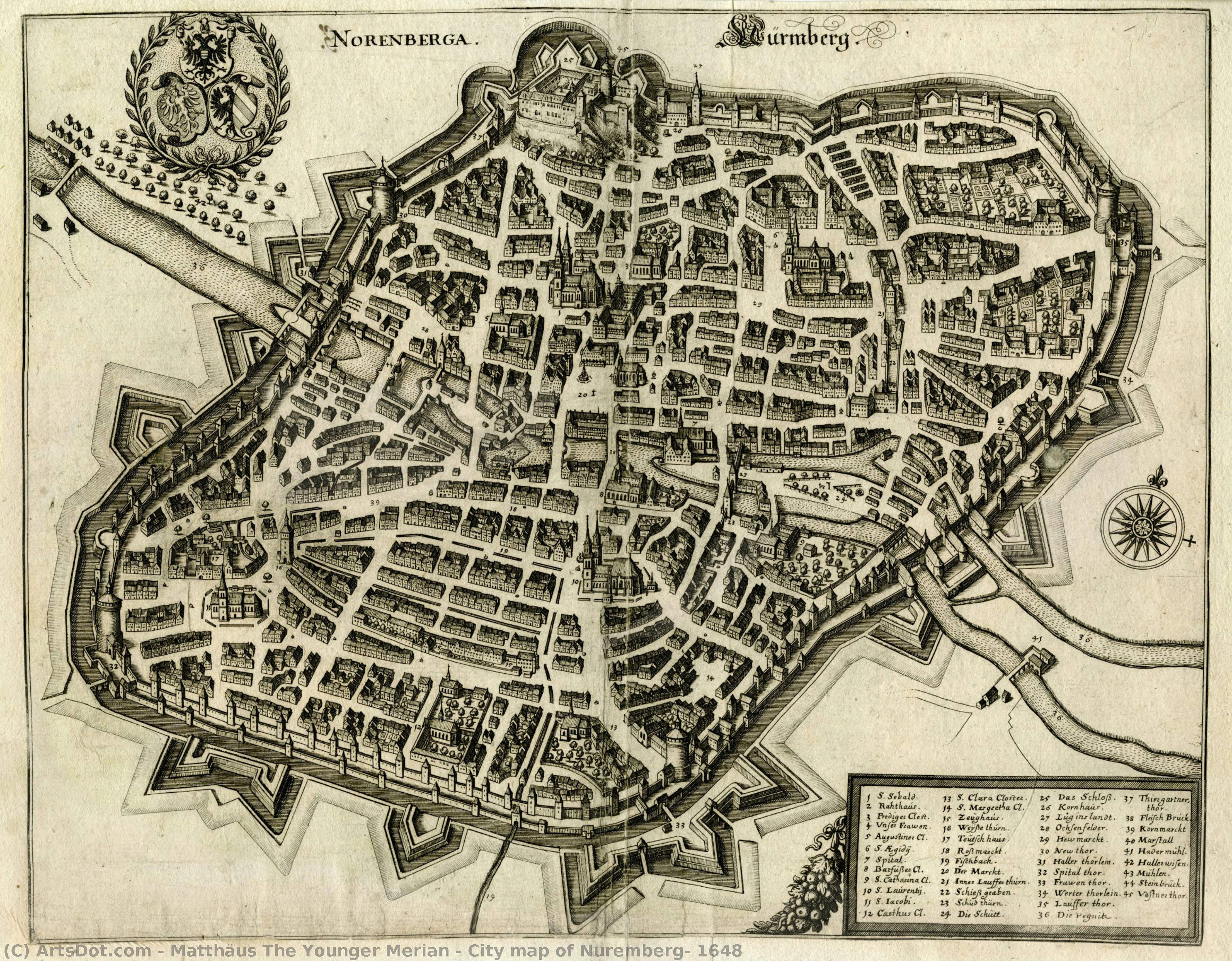
City map of Nuremberg, 1648


 Pročitaj više
Giclee štampa / Umetnički otisak
Giclée štampa ili print na platnu muzejskog kvaliteta uz brzu proizvodnju i fleksibilne opcije završne obrade. ( Kupi ručno naslikanu sliku Kupi digitalnu sliku)




P118B $10

P118H $10

P118W $10

P438Z $10

P508JH $12

P508YH $12

P805H $10

P805Z $10

P919BZ $10

P919G $10

P919XJ $10

P959ZH $10

P968JZ $12

W106C $8

W218G $10

W218JH $8

W218Y $10

W307PJ $10

W316G $10

W316PJ $8

W316Y $10

W398PJ $8

W4111J $10

W500HY $15

W500JH $15

W692G $12

W849H $8

W940BG $15

W953PJ $8




Izaberite jednu od naših unapred definisanih veličina koje odgovaraju originalnim proporcijama umetničkog dela.

Možete uneti sopstvene dimenzije kako biste umetničko delo prilagodili specifičnom okviru ili prostoru. Ako odabrani format ne odgovara proporcijama originalne slike, mi ćemo ili iscrtati deo dela ili proširiti sliku pomoću ogledane ivice ili jednobojnog popunjavanja. Digitalni prikaz će vam biti poslat na odobrenje pre početka proizvodnje.
Imajte na umu da pregled na ekranu ne odražava stvarno iscrtavanje ili proširivanje. Samo će prikaz (mockup) precizno pokazati finalnu kompoziciju.
Iako su prilagođene dimenzije dostupne, preporučujemo da odaberete dimenziju sa unapred definisane liste kako biste očuvali originalne proporcije.
Dostava širom sveta () za 2 nedelje umesto uobičajenih 4/5 nedelja. (27 август)

Besplatna ekspresna dostava širom sveta

Visokokvalitetno laneno platno

Kompletno osiguranje transporta

Garancija povraćaja carine i uvoznih dažbina

Garancija vernosti boja

Politika povrata u roku od 60 dana (samo u slučaju nedostataka)

Garancija povrata novca od 100%

Popust pri grupnoj kupovini
 Opcija sa staklom dostupna je samo za dimenzije manje od 110 cm

City map of Nuremberg, 1648
Giclee štampa / Umetnički otisak
Dimenzije reprodukcije
-


Konačna cena
$ 62
Opis predmeta
A Window into the Seventeenth Century
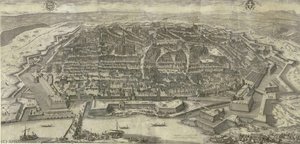
To gaze upon the City Map of Nuremberg, 1648 is to step through a portal into the heart of the Holy Roman Empire during a transformative era. Created by the master engraver Matthäus Merian the Younger, this exquisite work serves as much more than a mere cartographic tool; it is a breathtaking tapestry of historical memory and architectural grandeur. At its center, the imposing silhouette of the Nuremberg castle rises above the cityscape, acting as an anchor for the sprawling network of streets, bridges, and soaring church spires that define the urban landscape. The painting captures a moment in time when the meticulous detail of Baroque scientific illustration met the romantic allure of the cityscape, offering a view that is simultaneously precise and deeply atmospheric.
The artistry of Merian the Younger shines through in the intricate linework and the profound sense of depth achieved within the composition. As a pioneer of detailed observation, Merian utilized his mastery of engraving techniques to render every cobblestone, timber-framed house, and distant fortification with startling clarity. The technique allows for a play of light and shadow that breathes life into the static map, suggesting the movement of the small, scattered figures—the residents and travelers of 1648—who populate the scene. For the discerning collector, this piece offers a rare marriage of topographical accuracy and artistic soul, making it a centerpiece that invites prolonged contemplation.
Beyond its technical brilliance, the work carries a heavy emotional resonance, evoking a sense of nostalgia for a lost world of craftsmanship and communal structure. The sprawling layout of Nuremberg, with its complex layers of fortifications and religious landmarks, symbolizes the stability and cultural richness of the era. For interior designers and art enthusiasts alike, this reproduction provides an unparalleled opportunity to introduce a sense of heritage and intellectual depth into a space. Whether placed in a grand library, a sophisticated study, or a contemporary living area, the map acts as a conversation piece that bridges the gap between the scientific rigor of the seventeenth century and the aesthetic elegance of the modern home.
Srodna umetnička dela
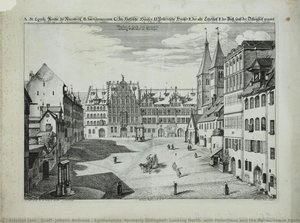
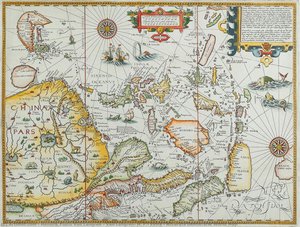
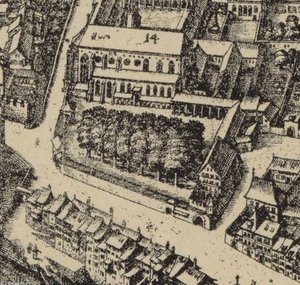
Biografija umetnika
A Legacy of Precision: The Life and Art of Matthäus Merian the Younger
In the grand tapestry of the seventeenth century, few threads are as intricate or as vital as those woven by Matthäus Merian the Younger. Born in the historic Swiss city of Basel in 1621, Merian was destined to inherit a profound artistic lineage. As the eldest son of the renowned engraver Matthäus Merian the Elder, his very existence was intertwined with the burgeoning world of scientific illustration and cartographic excellence. His early years were shaped by a rigorous apprenticeship under Dietrich Meyer in Zürich, where he mastered the foundational principles of Renaissance composition. This early training instilled in him a reverence for detail that would later define his career, allowing him to bridge the gap between the raw observation of nature and the refined elegance of Baroque artistry.
The journey of Merian’s development was one of constant movement across the vibrant cultural hubs of Europe. His travels took him through the artistic heartlands of Paris, Amsterdam, and London, where he encountered the transformative energies of the era's greatest masters. It is whispered in the annals of art history that his time in London brought him into the orbit of Anthonis van Dyck, an encounter that undoubtedly deepened his understanding of psychological depth and the regal grace required for high-society portraiture. These wanderings were not merely for leisure but were essential pilgrimages of style; by absorbing the dramatic chiaroscuro of the Caravaggisti and the atmospheric realism found in the Low Countries, Merian developed a versatile hand capable of both the microscopic precision of an engraver and the sweeping grandeur of a painter.
The Architect of Landscapes and the Cartographic Vision
While his talent for portraiture earned him prestige among the nobility, Merian’s most enduring contribution to the historical record lies in his monumental work as a publisher and topographical illustrator. Following the passing of his father in 1650, Merian, alongside his brother Caspar, took up the mantle of the family publishing house in Frankfurt. This period marked the height of his collaborative genius. Together, they continued the production of the Topographia Germaniae and the Theatrum Europaeum—works that were far more than mere maps. They were breathtaking visual encyclopedias that captured the very soul of the German landscapes, documenting cities, flora, fauna, and the shifting political boundaries of a continent in flux.
To look upon a Merian engraving is to witness a marriage of science and art. His work demanded an unparalleled level of accuracy, yet it was never devoid of aesthetic wonder. He possessed the rare ability to render the rugged textures of a forest or the intricate architecture of a cathedral with such fidelity that his prints served as essential tools for both scholars and travelers alike. This dedication to scientific observation ensured that his name would be forever linked to the Age of Enlightenment, providing a visual foundation upon which future generations of naturalists and historians would build their understanding of the natural world.
Portraiture, Altarpieces, and Final Reflections
Beyond the meticulous lines of his maps, Merian the Younger achieved significant acclaim as a portraitist of the European elite. His ability to capture the dignity of his subjects was perhaps most famously demonstrated during the coronation of Leopold I in Frankfurt in 1658. Whether he was portraying the Swedish military leader Carl Gustaf Wrangel or creating intimate, symbolic works like The Pregnant Countess Wrangel, Merian infused his subjects with a sense of timelessness and grace. His skill extended even into the sacred realm, where he composed moving altarpieces for prestigious locations such as the Bamberg Cathedral and the Barfüßerkirche in Frankfurt, proving that his artistic range could encompass both the secular majesty of kings and the spiritual devotion of the church.
As the seventeenth century drew to a close, Merian’s influence continued to resonate through the works of his pupils, including the talented Bartholomäus Kilian. Though the family publishing house eventually saw a decline in output, the artistic standard set by Matthäus remained an unshakeable benchmark. When he passed away in Frankfurt on February 15, 1687, he left behind a world that was more clearly mapped, more beautifully documented, and more artistically enriched. His life remains a testament to the power of observation—a legacy where every etched line serves as a window into the splendor of the Baroque era.
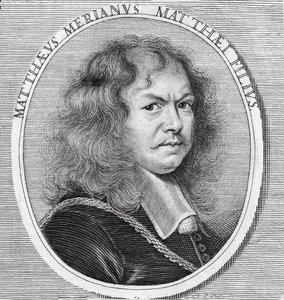
matthäus the younger merian
1621 - 1687 , Switzerland
Osnovne informacije
- Artistic Movement Or Style: Baroque
- Artists Or Movements Influenced By This Artist: Renaissance
- Artists Who Influenced This Artist: Dietrich Meyer
- Date Of Birth: March 25, 1621
- Date Of Death: February 15, 1687
- Full Name: Matthäus Merian the Younger
- Nationality: Swiss
- Notable Artworks:
- Hans Christoffer of Königsmarck
- Garden Of Burgermeister Schwind
- City map of Nuremberg, 1648
- Place Of Birth: Basel, Switzerland
Povezani članci
Engraving's Golden Age: 10 Masterpieces That Redefined Art | ArtsDot
Journey through art history with our Top 10 Legendary Engravings! Explore masterpieces by Dürer, Rembrandt & Goya. Discover the stories behind these iconic prints and find museum-quality reproductions for your home at ArtsDot.com.
Decoding Baroque Grandeur: A Guide to the Drama and Emotion of 17th-Century Art
Explore the breathtaking drama of 17th-century Baroque art. Our expert guide decodes the use of chiaroscuro, emotional intensity, and historical grandeur to help you appreciate and curate timeless masterpieces for your collection.
Engraving: A Historical Survey of Technique, Artistic Expression & Enduring Legacy
Explore the rich history of engraving with ArtsDot. Discover techniques, iconic artists like Dürer & Callot, collecting tips, and expert guidance for preserving your art investment. Learn about intaglio printing & more!

Baroque Classicism: Reconciling Drama & Order in 17th-Century Art
Explore the captivating world of Baroque Classicism! Discover its history, key artists like Caravaggio & Rubens, and defining characteristics. Expert insights & high-quality reproductions at ArtsDot.

The Dramatic Flourish: Exploring the Baroque Movement's Enduring Legacy in Art History
Explore the dramatic world of Baroque art! Discover iconic artists like Caravaggio & Rubens, defining techniques, and its lasting impact on art history. Expert insights for collectors & enthusiasts at ArtsDot.

