

 Pregledaj u prostoru
 Pošalji
 Podeli
 Detalji o delu

 Преузми
 Slični predmeti
 Rendgenski snimak
 Slajdovi
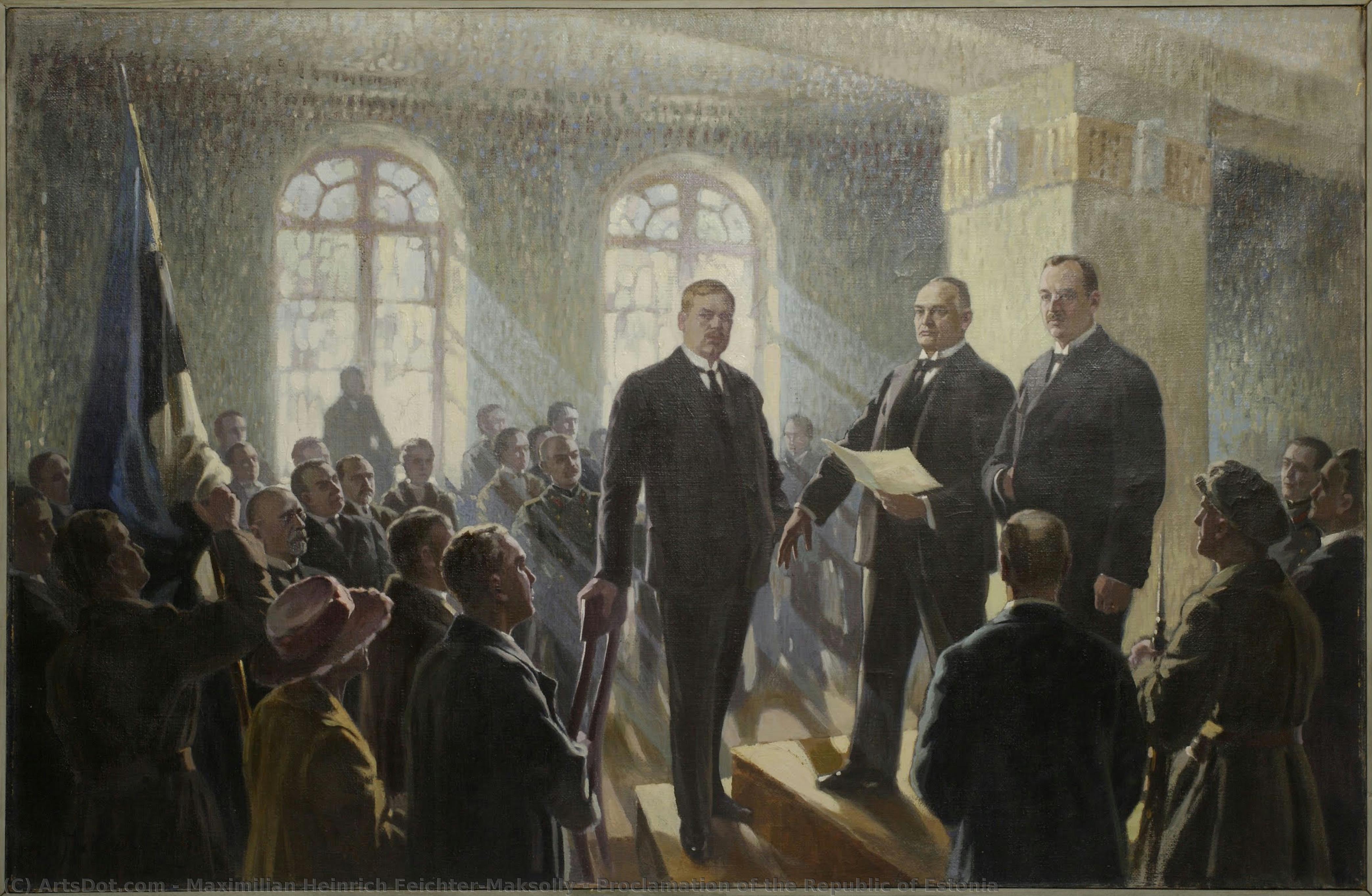
Proclamation of the Republic of Estonia


 Pročitaj više
Ručno rađena uljana reprodukcija
Ručno oslikano uljanim bojama na platnu u dimenzijama i okviru po vašem izboru, izrađeno po porudžbini od strane naših umetnika. ( Kupi print Kupi digitalnu sliku)




































Izaberite jednu od naših unapred definisanih veličina koje odgovaraju originalnim proporcijama umetničkog dela.

Можете унети сопствене димензије како бисте прилагодили дело одређеном оквиру или простору. Ако одабрана величина не одговара пропорцијама оригинала, слика ће бити исечена или проширена додатним елементима који се ручно насликавају. Дигитални prikaz ће вам бити послат на одобрење пре почетка производње.
Имајте на уму да преглед на екрану не одражава стварно исецање или проширење. Само приказ (mockup) ће тачно приказати коначну композицију.
Иако су доступне прилагођене величине, препоручујемо да одаберете димензију из дефинисане листе како бисте сачували оригиналне пропорције.
Nakon narudžbine, tim ArtsDot.com će klijentu putem e-pošte poslati uputstva i dostaviti prikaz predloženog rešenja
Isporuka širom sveta () za 3/4 nedelje umesto uobičajenih 5 nedelja. (7 септембар). Bez kompromisa po pitanju kvaliteta.

Besplatna ekspresna dostava širom sveta

Visokokvalitetno laneno platno

Kompletno osiguranje transporta

Garancija povraćaja carine i uvoznih dažbina

Garancija vernosti boja

Politika povrata u roku od 100 dana (samo u slučaju nedostataka)

Garancija povrata novca od 100%

Popust pri grupnoj kupovini
 Opcija sa staklom dostupna je samo za dimenzije manje od 110 cm

Proclamation of the Republic of Estonia
Tehnika reprodukcije
Dimenzije reprodukcije
-


Konačna cena
$ 263
Srodna umetnička dela








Biografija umetnika
A Voice of Estonian Resilience: The Life and Legacy of Maximilian Heinrich Feichter-Maksolly
In the grand tapestry of European art history, few figures embody the intersection of personal identity and national destiny as poignantly as Maximilian Heinrich Feichter-Maksolly. Born in 1880 in Tallinn, Estonia, to Hungarian parents, Maksolly’s life was a journey through the shifting borders and turbulent political landscapes of the early twentieth century. His artistic soul was forged within the prestigious halls of the Saint Petersburg Academy of Arts, where he immersed himself in the rich, burgeoning cultural currents of Imperial Russia. It was here that he mastered the delicate balance between meticulous observation and emotional expression, absorbing the luminous palettes of Impressionism and the profound, evocative depths of Symbolism. These early influences would later become the cornerstone of his ability to translate not just the physical world, but the very spirit of a nation in flux.
Maksolly’s professional maturation took place largely within the Russian Empire, where his technical prowess earned him significant commissions. He became a skilled restorer of churches and monasteries, a vocation that required an intimate understanding of sacred aesthetics and historical continuity. During this period, his portraiture flourished, as he sought to capture the nuanced personalities of the era's prominent figures with a sensitivity that transcended mere likeness. This era of his life was also marked by profound personal stability; his marriage to Klikeria Taigatsova in 1912 provided him with a lifelong partner and a steadfast muse, grounding his creative pursuits amidst a world on the brink of total transformation.
The Canvas of Conflict and Independence
The cataclysm of World War I acted as the great pivot in Maksolly’s life, redirecting his trajectory from the imperial centers of Russia back toward his Estonian roots. Traveling through Poland to reach Estonia, he arrived at a moment when the very concept of a sovereign nation was being forged in blood and fire. Driven by an urgent sense of artistic activism, Maksolly dedicated much of his subsequent career to documenting the Estonian War of Independence (1918-1920). He did not merely paint battles; he sought to immortalize the fervor of national aspiration and the heroic sacrifices made for liberty.
His works from this period are characterized by a remarkable emotional intensity, where the chaos of conflict meets the dignity of the human spirit. Notable masterpieces such as ‘Paju lahing 31. jaanuaril 1919. a.’ (Battle of Pajula Hill) and ‘Need, kes vabastasid isamaa’ (Those Who Liberated Fatherland) serve as powerful visual chronicles of the struggle for autonomy. Through his expressive brushstrokes and atmospheric use of light, he captured the grit and glory of the battlefield, ensuring that the struggles of the Estonian people were etched into the permanent record of art.
Historical Significance and Enduring Memory
Beyond the battlefield, Maksolly’s contribution to Estonian identity is perhaps most profoundly felt in his ability to idealize and commemorate the foundational moments of the Republic. His painting 'Proclamation of the Republic of Estonia' stands as a vital historical document, offering an idealized depiction of the 1924 ceremony in Tallinn. While art historians may debate its stylistic merits, its value as a record of figures like Jüri Vilms and Konstantin Päts is immeasurable. Remarkably, much of this visual heritage survived the dark era of Soviet occupation because works like these were carefully hidden within the archives of the Tallinn City Museum, escaping the systematic destruction of national memory.
The legacy of Maximilian Heinrich Feichter-Maksolly is one of profound endurance. He remains a pivotal figure whose oeuvre bridges the gap between the classical traditions of the Saint Petersburg Academy and the modern necessity of national storytelling. His life’s work serves as both a window into the aesthetic movements of his time and a mirror reflecting the resilience of the Estonian spirit, making him an indispensable chronicler of a nation's birth.
maximilian heinrich feichter-maksolly
1880 - 1968 , Estonia
Osnovne informacije
- Artistic Movement Or Style: Russian Art
- Date Of Birth: 1880 Tallinn Estonia
- Date Of Death: 1968 Rio de Janeiro Brazil
- Full Name: Maximilian Heinrich Feichter-Maksolly
- Nationality: Estonian
- Notable Artworks:
- Paju lahing 31. jaanuaril 1919. a.
- Need, kes vabastasid isamaa
- Place Of Birth: Tallinn Estonia