 Pregledaj u prostoru
 Pošalji
 Podeli
 Detalji o delu

 Преузми
 Slični predmeti
 Rendgenski snimak
 Slajdovi
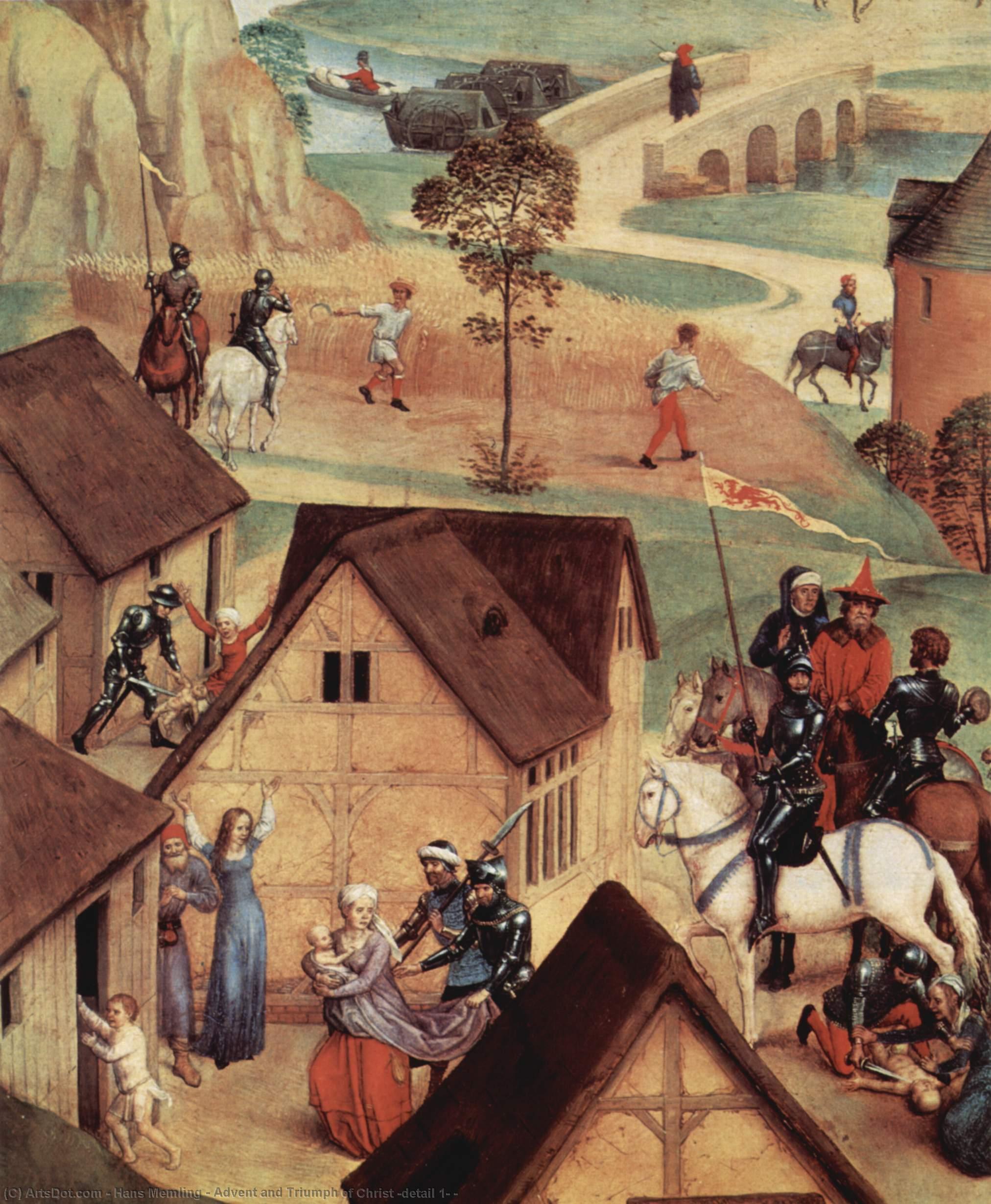
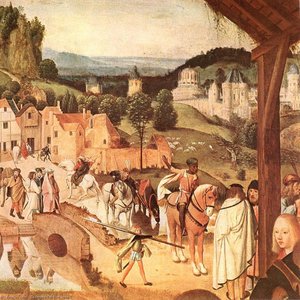
Advent and Triumph of Christ (detail 1) -


 Pročitaj više
Giclee štampa / Umetnički otisak
Giclée štampa ili print na platnu muzejskog kvaliteta uz brzu proizvodnju i fleksibilne opcije završne obrade. ( Kupi ručno naslikanu sliku Kupi digitalnu sliku)




P118B $10

P118H $10

P118W $10

P438Z $10

P508JH $12

P508YH $12

P805H $10

P805Z $10

P919BZ $10

P919G $10

P919XJ $10

P959ZH $10

P968JZ $12

W106C $8

W218G $10

W218JH $8

W218Y $10

W307PJ $10

W316G $10

W316PJ $8

W316Y $10

W398PJ $8

W4111J $10

W500HY $15

W500JH $15

W692G $12

W849H $8

W940BG $15

W953PJ $8




Izaberite jednu od naših unapred definisanih veličina koje odgovaraju originalnim proporcijama umetničkog dela.

Možete uneti sopstvene dimenzije kako biste umetničko delo prilagodili specifičnom okviru ili prostoru. Ako odabrani format ne odgovara proporcijama originalne slike, mi ćemo ili iscrtati deo dela ili proširiti sliku pomoću ogledane ivice ili jednobojnog popunjavanja. Digitalni prikaz će vam biti poslat na odobrenje pre početka proizvodnje.
Imajte na umu da pregled na ekranu ne odražava stvarno iscrtavanje ili proširivanje. Samo će prikaz (mockup) precizno pokazati finalnu kompoziciju.
Iako su prilagođene dimenzije dostupne, preporučujemo da odaberete dimenziju sa unapred definisane liste kako biste očuvali originalne proporcije.
Dostava širom sveta () za 2 nedelje umesto uobičajenih 4/5 nedelja. (23 август)

Besplatna ekspresna dostava širom sveta

Visokokvalitetno laneno platno

Kompletno osiguranje transporta

Garancija povraćaja carine i uvoznih dažbina

Garancija vernosti boja

Politika povrata u roku od 60 dana (samo u slučaju nedostataka)

Garancija povrata novca od 100%

Popust pri grupnoj kupovini
 Opcija sa staklom dostupna je samo za dimenzije manje od 110 cm

Advent and Triumph of Christ (detail 1) -
Giclee štampa / Umetnički otisak
Dimenzije reprodukcije
-


Konačna cena
$ 62
Opis predmeta
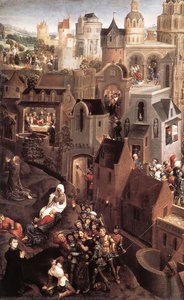
The Profound Narrative of “Advent and Triumph of Christ” – A Masterpiece by Hans Memling
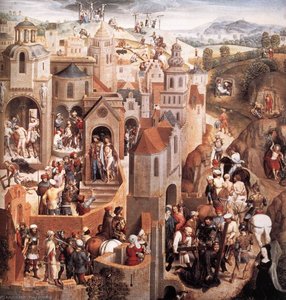
Hans Memling’s “Advent and Triumph of Christ (detail 1)” is more than just a painting; it's a meticulously crafted visual symphony, a vibrant tapestry woven with threads of biblical narrative, devotional piety, and the burgeoning artistic spirit of late medieval Bruges. Completed around 1480, this remarkable work transcends its physical dimensions to offer a profound meditation on Christ’s life – from his birth to his resurrection – all contained within a single, breathtakingly complex composition. Housed in the Memling Museum - Sint Jans Hospital, it stands as a testament to Memling's extraordinary skill and his ability to capture both the grandeur of religious themes and the intimate details of human experience.
The painting’s immediate impact lies in its sheer scale and density. It’s not merely a depiction of individual scenes; rather, Memling has orchestrated a sprawling panorama, a carefully arranged sequence of twenty-five episodes from the life of Christ and Mary. This ambitious design – often referred to as a *Simultanbild* or “simultaneous image” – was revolutionary for its time, demanding that the viewer engage in an active process of interpretation, piecing together the narrative across multiple viewpoints and temporal shifts. The scene unfolds with a remarkable dynamism, populated by soldiers, knights, shepherds, and ordinary people, all caught within the drama of salvation. The inclusion of donor portraits – likely members of Bruges’ prominent merchant families – subtly acknowledges their patronage while simultaneously integrating them into the larger religious story.
A Symphony of Color and Technique
Memling's mastery is immediately evident in his use of color, a hallmark of Early Netherlandish painting. He employs a rich palette of deep blues, vibrant reds, and earthy greens, creating an atmosphere of both solemnity and warmth. The figures are rendered with astonishing realism – the delicate folds of Mary’s robes, the weathered faces of the soldiers, the youthful innocence of the newborn Christ – all brought to life through meticulous attention to detail. His technique is characterized by a layering of thin glazes applied over a gesso ground, allowing light to penetrate and reflect off the surface, creating an illusion of depth and luminosity. The use of oil paints, relatively new at this time, allowed for greater control over color mixing and blending, contributing significantly to the painting’s luminous quality.
The landscape itself is a marvel of observation and artistic skill. It's not merely a backdrop; it actively participates in the narrative, providing context and atmosphere. The rolling hills, the distant buildings, and the carefully rendered trees all contribute to a sense of realism that was unprecedented for its time. Memling’s ability to seamlessly integrate these elements into the complex composition is a testament to his deep understanding of perspective and spatial relationships.
Symbolism and Devotional Significance
Beyond its technical brilliance, “Advent and Triumph of Christ” is rich in symbolism. Each scene within the painting carries layers of meaning, inviting contemplation on themes of faith, hope, and redemption. The presence of horses, for example, often symbolizes royalty and divine power. The stable where Jesus is born represents humility and the incarnation. The crucifixion, depicted towards the right side of the composition, serves as a poignant reminder of Christ’s sacrifice. Furthermore, the inclusion of donor portraits – likely members of Bruges’ prominent merchant families – subtly acknowledges their patronage while simultaneously integrating them into the larger religious story.
The painting's deliberate arrangement—designed to be viewed over multiple days and during different liturgical celebrations—was intended to deepen the viewer’s spiritual experience. It wasn’t meant to be passively observed; it was a dynamic, participatory work of art designed to engage the faithful in a continuous dialogue with the life of Christ. The inclusion of figures like Pieter Bultinc, the tanner who commissioned the piece, underscores this devotional purpose – he and his family were not simply patrons but active participants in the unfolding narrative.
Owning a Piece of History: Reproductions by ArtsDot.com
ArtsDot.com offers exquisite, handmade oil painting reproductions of “Advent and Triumph of Christ (detail 1),” allowing art lovers to bring this masterpiece into their homes. Our skilled artisans meticulously recreate Memling’s intricate details, vibrant colors, and masterful composition, ensuring that your reproduction captures the essence of the original while preserving its historical significance. Whether you are a seasoned collector or simply seeking to add a touch of timeless beauty to your interior space, an ArtsDot.com reproduction is a remarkable way to connect with one of the most compelling works of the Early Netherlandish period. Explore our collection today and experience the enduring power of Hans Memling’s vision.
For more information on Hans Memling and his works, visit /art/list/?Filter=hans+memling,hans,memling or the Memling Museum - Sint Jans Hospital website.
Srodna umetnička dela
Biografija umetnika
Ханс Мемлинг: Мајстор детаља и покровитељства из Бружа
Ханс Мемлинг (око 1430 – 11. август 1494), рођен у Зелигенштадту, Немачка, представља кључну фигуру ране холандске слике – покрета карактерисаног изузетним реализмом, прецизним посматрањем природе и дубоком духовном контемплацијом. Иако су његове ране године проведене углавном у уметничком окружењу Рајне, Мемлингов пут га је на крају одвео у Бриж, Белгија, где се усталио као један од водећих уметника свог времена и негује продуктивну радионицу која је широм Европе ширила његов препознатљив стил.- Рани живот и учење: Прецизни биографски детаљи око Мемлинговог рођења остају мистерија, али научни консензус сугерише да је потекао из Мајнца око 1430. године. Његова уметничка едукација започела је под менторством Рогира ван дер Вејдена, титана фламанског сликарства чије мајсторство у уљаним бојама и скулптуралном моделирању дубоко обликује Мемлингову технику. Ово учење га је усадило непоколебљиву посвећеност детаљу – обележју које ће дефинисати његов опус.
- Бриж и радионица: До 1465. године, Мемлинг је обезбедио држављанство у Брижу, растућем комерцијалном центру и уметничком епицентру. Препознајући потенцијал за колаборативну креативност, основао је радионицу са бројним асистентима, негујући окружење иновација и стилске конзистентности. Ова радионица је постала позната по производњи запањујућих репродукција ремек-дела – сведочење Мемлингове вештине као уметника и педагога.
Стил дефинисан прецизношћу и покровитељством
Мемлингов уметнички стил је одмах препознатљив: карактерише га луминозне палете боја, нежно рендерисане драперије и запањујући ниво анатомијске прецизности. Пажљиво је проучавао људску анатомију – црпећи инспирацију из класичне скулптуре – да би постигао неупоредив реализам у својим портретима и религиозним сценама. За разлику од многих савременика који су преферирали експресивне потезе четком, Мемлинг је давао предност педантном посматрању и мукотрпној извршности, што је резултирало сликама прожетим мирном лепотом и дубоким духовним значењем.- Религијске поруџбине: Мемлингов углед порастао је захваљујући профитабилним поруџбинама од богатих покровитеља – углавном клирицима и аристократских породица – који су тражили приказа светитеља и библијских наратива који су резонавали са благочешћем и престижом. Истакнути пример је “Страшни суд” у болници Светог Јована у Брижу, монументална фреска која демонстрира Мемлингову мајсторску композициону вештину и драматичну употребу боје.
- Портретирање: Мемлинг је одлично владао портретисањем, хватајући ликове познатих личности са изузетном осетљивошћу и психолошком проницливошћу. Његови портрети – као што је “Портрет човека са стрелом” – показују његову способност да пренесе карактер кроз суптилне гестове и изразе лица – вештину која га је учврстила међу највећим уметницима своје ере.
Утицај и наслеђе
Мемлингово уметничко наслеђе се протеже далеко ван његовог живота. Његова радионица произвела је велики низ слика – многе са стилским сличностима са његовим оригиналним радовима – које су шириле Мемлингов препознатљив естетички приступ широм Фландрије и шире. Штавише, Мемлингова педантна техника служила је као инспирација за наредне генерације уметника – посебно Квентину Масису, који је успоставио Антверпенску школу – учвршћујући Мемлингов положај као стубова фламанског ренесансног сликарства.Поново откривање и трајна популарност
Мемлингова уметничка достигнућа била су углавном заборављена до 19. века када су научници поново открили његове слике и заговарали његов генијалност. Данас, Мемлингови радови – посебно “Страшни суд” – настављају да очаравају публику широм света, служећи као трајни симболи уметничке изврсности и духовне контемплације. Његова педантна пажња посвећена детаљима и дубоко разумевање људске психологије остају прилично релевантни у нашем савременом цењењу историје уметности.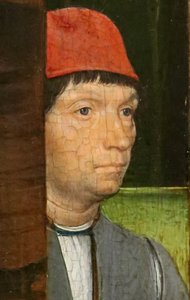
Ханс Мемлинг
Немачка
Osnovne informacije
- Artistic Movement Or Style: Rani nizozemski slikarstvo
- Artists Or Movements Influenced By This Artist: ['Flanderski primitivizam']
- Artists Who Influenced This Artist: ['Rogier van der Weyden']
- Date Of Birth: oko 1430.
- Date Of Death: 11. avgust 1494.
- Full Name: Hans Memling
- Nationality: Nemačko-Flanderski
- Notable Artworks:
- Bolnica Sv. Jovana
- Poslednja Presuda
- Place Of Birth: Seligenštat, Nemačka
Povezani članci
Illuminating Realism: Early Netherlandish Painting (15th-16th Centuries)
Explore the captivating world of Early Netherlandish painting! Discover Jan van Eyck, Hans Memling & more. Uncover symbolism, techniques & the legacy of these Flemish masters. A comprehensive guide for art enthusiasts.

Early Netherlandish Masters: 10 Paintings That Revolutionized Art & Decor
Journey into the world of Early Netherlandish painting! Explore 10 masterpieces by Jan van Eyck, Rogier van der Weyden & more. Discover stunning detail, symbolism & Renaissance art for your home decor. Find museum-quality reproductions on ArtsDot.com

Fra Anđeo: 25 Remek-dela Renesansnog Duha za Vaš Dom | ArtsDot
Uronite u svet Fra Anđela – 25 remek-dela renesansnog slikara. Otkrijte priče iza njegovih čuvenih fresaka i oltarskih slika, inspiracija za enterijer i duhovni mir. Kupite reprodukcije vrhunskog kvaliteta na ArtsDot.com!
Hans Holbein the Younger: A Renaissance Portraitist's Mastery of Realism & Psychological Insight
Explore the life & art of Hans Holbein the Younger, a Renaissance master renowned for his strikingly realistic portraits and psychological insight. Discover iconic works like 'The Ambassadors' and delve into his lasting legacy.
Illuminating Realism: Early Netherlandish Painting (15th-16th Centuries)
Explore the captivating world of Early Netherlandish painting (15th-16th centuries). Discover Jan van Eyck, Hans Memling & more. Uncover revolutionary techniques and hidden symbolism in this definitive guide.