 Pregledaj u prostoru
 Pošalji
 Podeli
 Detalji o delu

 Преузми
 Slični predmeti
 Rendgenski snimak
 Slajdovi
Diptych with the Allegory of True Love


 Pročitaj više
Ručno rađena uljana reprodukcija
Ručno oslikano uljanim bojama na platnu u dimenzijama i okviru po vašem izboru, izrađeno po porudžbini od strane naših umetnika. ( Kupi print Kupi digitalnu sliku)




P118B $10

P118H $10

P118W $10

P438Z $10

P508JH $12

P508YH $12

P805H $10

P805Z $10

P919BZ $10

P919G $10

P919XJ $10

P959ZH $10

P968JZ $12

W106C $8

W218G $10

W218JH $8

W218Y $10

W307PJ $10

W316G $10

W316PJ $8

W316Y $10

W398PJ $8

W4111J $10

W500HY $15

W500JH $15

W692G $12

W849H $8

W940BG $15

W953PJ $8




Izaberite jednu od naših unapred definisanih veličina koje odgovaraju originalnim proporcijama umetničkog dela.

Можете унети сопствене димензије како бисте прилагодили дело одређеном оквиру или простору. Ако одабрана величина не одговара пропорцијама оригинала, слика ће бити исечена или проширена додатним елементима који се ручно насликавају. Дигитални prikaz ће вам бити послат на одобрење пре почетка производње.
Имајте на уму да преглед на екрану не одражава стварно исецање или проширење. Само приказ (mockup) ће тачно приказати коначну композицију.
Иако су доступне прилагођене величине, препоручујемо да одаберете димензију из дефинисане листе како бисте сачували оригиналне пропорције.
Nakon narudžbine, tim ArtsDot.com će klijentu putem e-pošte poslati uputstva i dostaviti prikaz predloženog rešenja
Isporuka širom sveta () za 3/4 nedelje umesto uobičajenih 5 nedelja. (25 август). Bez kompromisa po pitanju kvaliteta.

Besplatna ekspresna dostava širom sveta

Visokokvalitetno laneno platno

Kompletno osiguranje transporta

Garancija povraćaja carine i uvoznih dažbina

Garancija vernosti boja

Politika povrata u roku od 60 dana (samo u slučaju nedostataka)

Garancija povrata novca od 100%

Popust pri grupnoj kupovini
 Opcija sa staklom dostupna je samo za dimenzije manje od 110 cm

Diptych with the Allegory of True Love
Tehnika reprodukcije
Dimenzije reprodukcije
-


Konačna cena
$ 263
Opis umetničkog dela
A Dance of Devotion: Unveiling Hans Memling’s ‘Diptych with the Allegory of True Love’
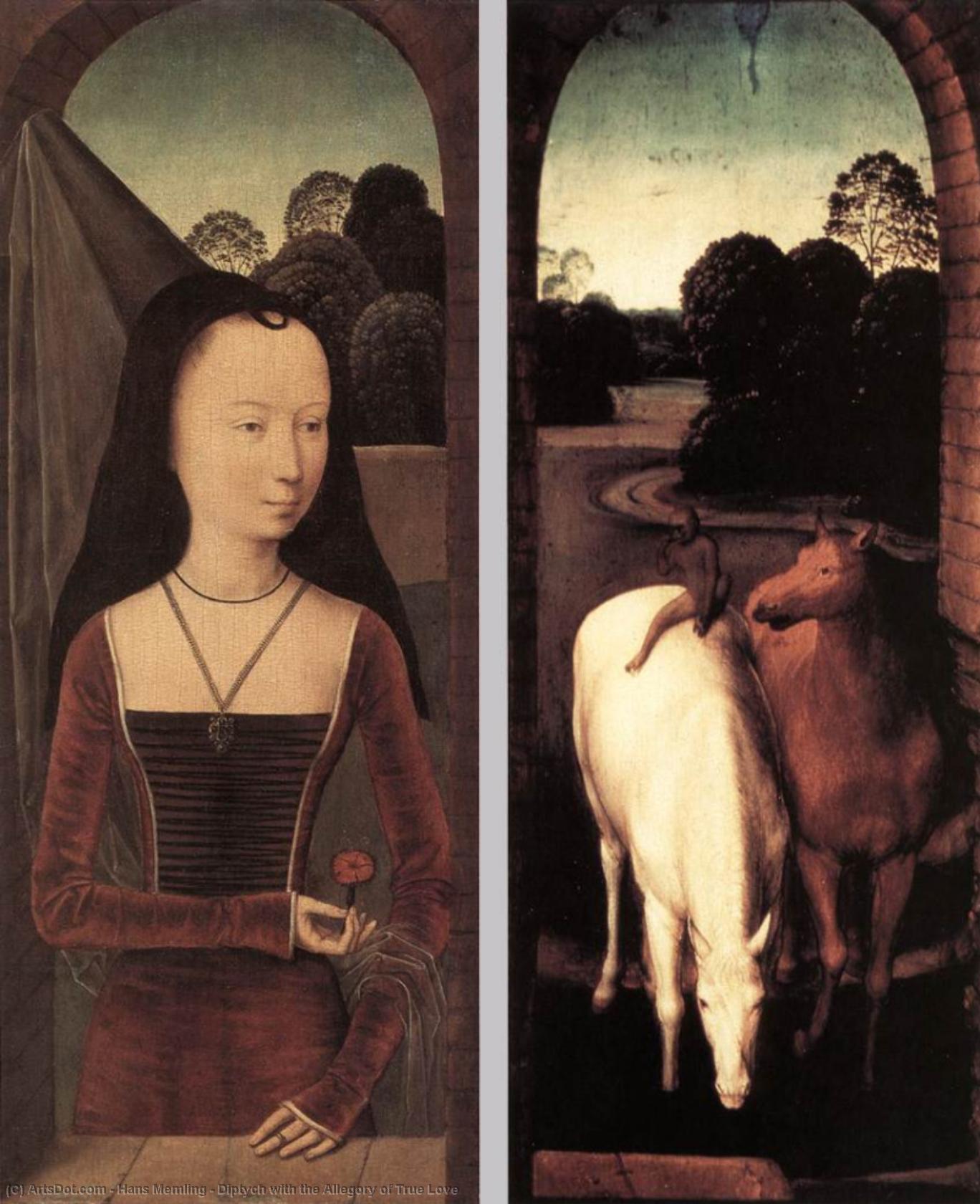
Hans Memling's “Diptych with the Allegory of True Love,” painted in Bruges around 1485-90, is more than just a beautiful depiction; it’s a meticulously crafted meditation on love, fidelity, and the complexities of human relationships. Born in Seligenstadt, Germany, Memling rose to prominence within the vibrant artistic landscape of the Low Countries, ultimately establishing himself as one of the most sought-after artists of his era. This diptych, a testament to his skill and the patronage he enjoyed, offers a glimpse into the prevailing ideals of courtly love and the spiritual aspirations of the late 15th century.
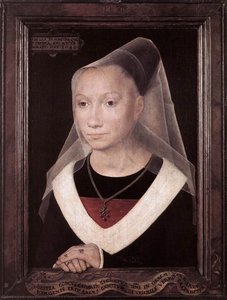
The painting immediately captivates with its dual scenes presented within a unified frame. On the left, we encounter a woman, rendered in exquisite detail – a type frequently found in Memling’s works, embodying an idealized beauty and serene grace. She holds a carnation, a potent symbol of marriage and fidelity, suggesting a commitment to loyalty and devotion. Her attire, fashionable for Burgundian courts at the time, speaks volumes about her status and the refined world she inhabits. Her gaze is directed towards the central archway, drawing us into the narrative.
- The Horsemen: On the right, a dynamic scene unfolds with a man astride a white horse, symbolizing nobility and power. A mischievous monkey perches upon his saddle – a clever visual metaphor for sinfulness, lust, and selfishness, qualities often associated with earthly desires. Contrasting this is a brown horse, gazing faithfully at the woman, representing selfless love and unwavering devotion. The juxtaposition of these two horses highlights the duality inherent in romantic relationships: the allure of fleeting pleasure versus the enduring strength of true commitment.
- Architectural Harmony: Notice the deliberate architectural framing – the archway itself acts as a visual bridge between the scenes, reinforcing the idea of interconnectedness and the seamless flow of love’s narrative. The vanishing point, strategically located on the dividing line, demonstrates Memling's mastery of perspective and his commitment to creating a believable, immersive space.
Technique and Materials: A Masterclass in Early Netherlandish Painting
Memling’s skill is immediately apparent in the meticulous detail of every element within the diptych. Executed in oil paint on wood panels, the painting showcases his mastery of glazing techniques – layers of translucent color that create a luminous depth and richness. The surfaces are remarkably smooth, reflecting the artist's painstaking attention to texture and form. The use of gold leaf accents adds further opulence and highlights key figures, emphasizing their importance within the allegorical narrative.
Memling’s training under Rogier van der Weyden is evident in his realistic portrayal of human anatomy and drapery. However, Memling subtly departs from his mentor's style, introducing a greater sense of serenity and grace into his figures. The composition itself is carefully balanced, with the archway acting as a central organizing element that anchors both scenes.
Symbolism and Context: Courtly Love and Spiritual Contemplation
The “Diptych with the Allegory of True Love” is deeply rooted in the conventions of courtly love – a complex system of ideals prevalent during the 15th century. This style emphasized chivalry, romantic longing, and the pursuit of unattainable beauty. The painting doesn’t simply depict a romantic encounter; it explores the tensions between earthly desires and spiritual devotion.
The presence of the monkey on the white horse is particularly significant. Monkeys were often associated with sin and temptation in medieval art, serving as visual reminders of the dangers of unchecked passion. Conversely, the brown horse’s unwavering gaze symbolizes a more profound and enduring love – one that transcends fleeting pleasures and embraces virtue.
A Legacy of Beauty: Reproductions for Today's Collector
ArtsDot offers exquisite, hand-painted reproductions of Hans Memling’s “Diptych with the Allegory of True Love,” allowing you to bring this masterpiece into your home or office. Our skilled artisans meticulously recreate every detail of the original painting, capturing its luminosity, depth, and emotional resonance. Whether you're an art enthusiast, a collector seeking to expand your collection, or simply someone who appreciates timeless beauty, our reproductions provide a stunning tribute to one of the greatest artists of the Early Netherlandish period. Explore the details further at our online gallery and discover the perfect piece to elevate your space.
Srodna umetnička dela
Biografija umetnika
Ханс Мемлинг: Мајстор детаља и покровитељства из Бружа
Ханс Мемлинг (око 1430 – 11. август 1494), рођен у Зелигенштадту, Немачка, представља кључну фигуру ране холандске слике – покрета карактерисаног изузетним реализмом, прецизним посматрањем природе и дубоком духовном контемплацијом. Иако су његове ране године проведене углавном у уметничком окружењу Рајне, Мемлингов пут га је на крају одвео у Бриж, Белгија, где се усталио као један од водећих уметника свог времена и негује продуктивну радионицу која је широм Европе ширила његов препознатљив стил.- Рани живот и учење: Прецизни биографски детаљи око Мемлинговог рођења остају мистерија, али научни консензус сугерише да је потекао из Мајнца око 1430. године. Његова уметничка едукација започела је под менторством Рогира ван дер Вејдена, титана фламанског сликарства чије мајсторство у уљаним бојама и скулптуралном моделирању дубоко обликује Мемлингову технику. Ово учење га је усадило непоколебљиву посвећеност детаљу – обележју које ће дефинисати његов опус.
- Бриж и радионица: До 1465. године, Мемлинг је обезбедио држављанство у Брижу, растућем комерцијалном центру и уметничком епицентру. Препознајући потенцијал за колаборативну креативност, основао је радионицу са бројним асистентима, негујући окружење иновација и стилске конзистентности. Ова радионица је постала позната по производњи запањујућих репродукција ремек-дела – сведочење Мемлингове вештине као уметника и педагога.
Стил дефинисан прецизношћу и покровитељством
Мемлингов уметнички стил је одмах препознатљив: карактерише га луминозне палете боја, нежно рендерисане драперије и запањујући ниво анатомијске прецизности. Пажљиво је проучавао људску анатомију – црпећи инспирацију из класичне скулптуре – да би постигао неупоредив реализам у својим портретима и религиозним сценама. За разлику од многих савременика који су преферирали експресивне потезе четком, Мемлинг је давао предност педантном посматрању и мукотрпној извршности, што је резултирало сликама прожетим мирном лепотом и дубоким духовним значењем.- Религијске поруџбине: Мемлингов углед порастао је захваљујући профитабилним поруџбинама од богатих покровитеља – углавном клирицима и аристократских породица – који су тражили приказа светитеља и библијских наратива који су резонавали са благочешћем и престижом. Истакнути пример је “Страшни суд” у болници Светог Јована у Брижу, монументална фреска која демонстрира Мемлингову мајсторску композициону вештину и драматичну употребу боје.
- Портретирање: Мемлинг је одлично владао портретисањем, хватајући ликове познатих личности са изузетном осетљивошћу и психолошком проницливошћу. Његови портрети – као што је “Портрет човека са стрелом” – показују његову способност да пренесе карактер кроз суптилне гестове и изразе лица – вештину која га је учврстила међу највећим уметницима своје ере.
Утицај и наслеђе
Мемлингово уметничко наслеђе се протеже далеко ван његовог живота. Његова радионица произвела је велики низ слика – многе са стилским сличностима са његовим оригиналним радовима – које су шириле Мемлингов препознатљив естетички приступ широм Фландрије и шире. Штавише, Мемлингова педантна техника служила је као инспирација за наредне генерације уметника – посебно Квентину Масису, који је успоставио Антверпенску школу – учвршћујући Мемлингов положај као стубова фламанског ренесансног сликарства.Поново откривање и трајна популарност
Мемлингова уметничка достигнућа била су углавном заборављена до 19. века када су научници поново открили његове слике и заговарали његов генијалност. Данас, Мемлингови радови – посебно “Страшни суд” – настављају да очаравају публику широм света, служећи као трајни симболи уметничке изврсности и духовне контемплације. Његова педантна пажња посвећена детаљима и дубоко разумевање људске психологије остају прилично релевантни у нашем савременом цењењу историје уметности.
Ханс Мемлинг
Немачка
Osnovne informacije
- Artistic Movement Or Style: Rani nizozemski slikarstvo
- Artists Or Movements Influenced By This Artist: ['Flanderski primitivizam']
- Artists Who Influenced This Artist: ['Rogier van der Weyden']
- Date Of Birth: oko 1430.
- Date Of Death: 11. avgust 1494.
- Full Name: Hans Memling
- Nationality: Nemačko-Flanderski
- Notable Artworks:
- Bolnica Sv. Jovana
- Poslednja Presuda
- Place Of Birth: Seligenštat, Nemačka
Povezani članci
Hans Baldung Grien: A Renaissance Master of Allegory, Innovation & the Grotesque
Explore the captivating world of Hans Baldung Grien, a Renaissance master renowned for his allegorical paintings, striking woodcuts & unique depictions of mythology and the grotesque. Discover his life, works & legacy with ArtsDot.
The Enduring Motif of Love in Art History: A Cross-Cultural Exploration of Representation and Emotion
Explore the rich history of love in art! Discover iconic masterpieces, artistic techniques & cultural symbolism from antiquity to modern times. Expert analysis for collectors.
Eternal Love: Top 10 Wedding Art Gifts & Their Meaning |
Find the perfect wedding gift! Explore 10 meaningful art gifts – from Monet to Klimt – symbolizing love & lasting commitment. Discover museum-quality reproductions and curated decor ideas at .
Romantic Masterpieces: 10 Artworks to Stir Your Soul |
Fall in love with art! Explore 10 iconic romantic paintings – from Renaissance classics to Impressionist masterpieces. Discover the stories behind artists like Monet & Klimt, and find museum-quality reproductions for your home at .
Unveiling Hidden Meanings: Allegory in Western Art History
Explore the rich history of allegory in Western art! Discover hidden meanings in masterpieces from Giotto to Bosch & beyond. Expert insights for collectors and enthusiasts at ArtsDot.