

 Pregledaj u prostoru
 Pošalji
 Podeli
 Detalji o delu

 Преузми
 Slični predmeti
 Rendgenski snimak
 Slajdovi
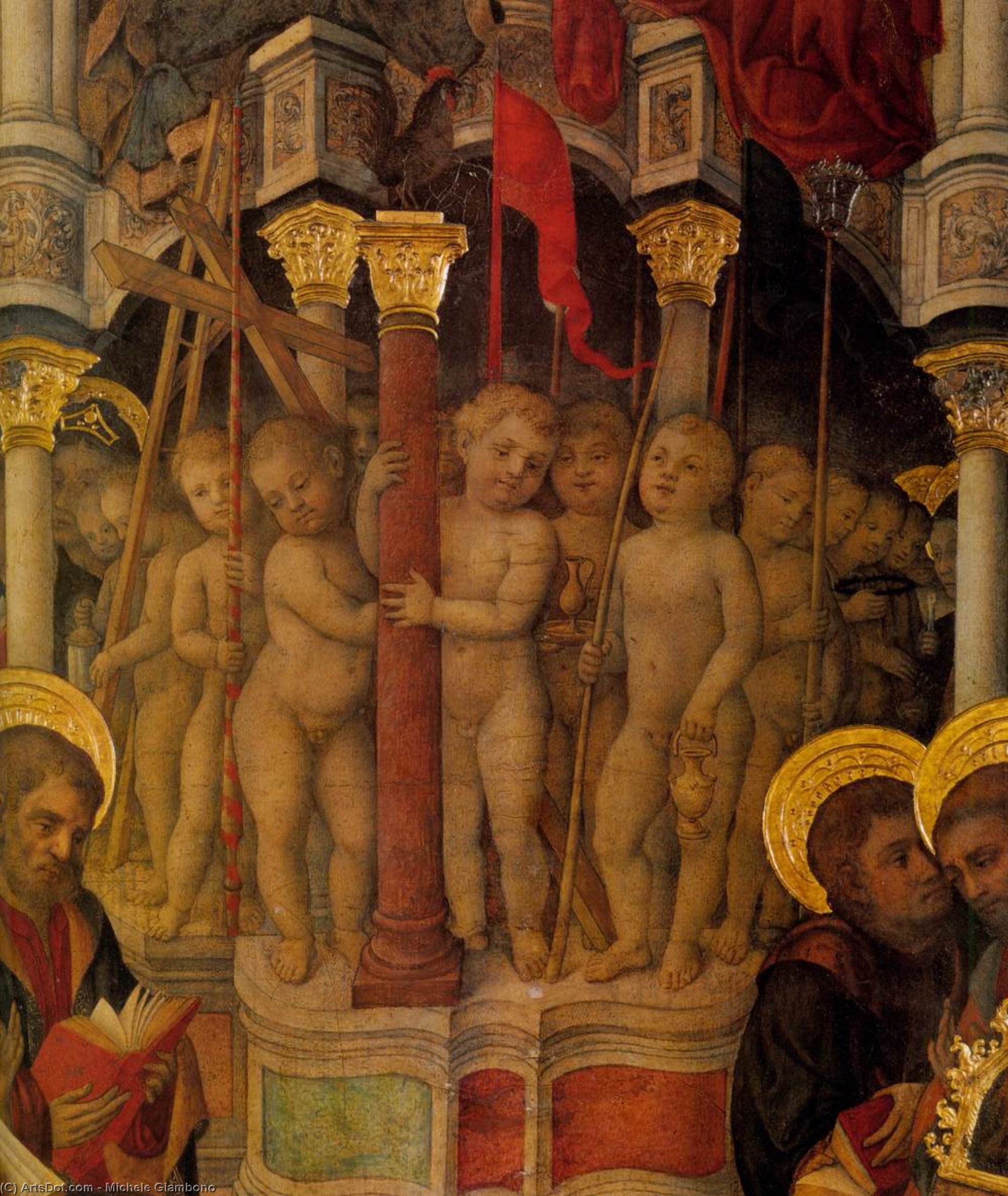
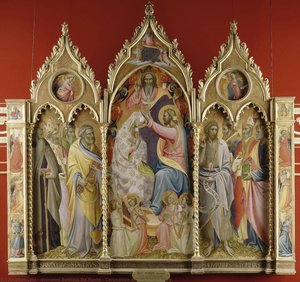
Coronation of the Virgin (detail)


 Pročitaj više
Ručno rađena uljana reprodukcija
Ručno oslikano uljanim bojama na platnu u dimenzijama i okviru po vašem izboru, izrađeno po porudžbini od strane naših umetnika. ( Kupi print Kupi digitalnu sliku)




P118B $10

P118H $10

P118W $10

P438Z $10

P508JH $12

P508YH $12

P805H $10

P805Z $10

P919BZ $10

P919G $10

P919XJ $10

P959ZH $10

P968JZ $12

W106C $8

W218G $10

W218JH $8

W218Y $10

W307PJ $10

W316G $10

W316PJ $8

W316Y $10

W398PJ $8

W4111J $10

W500HY $15

W500JH $15

W692G $12

W849H $8

W940BG $15

W953PJ $8




Izaberite jednu od naših unapred definisanih veličina koje odgovaraju originalnim proporcijama umetničkog dela.

Можете унети сопствене димензије како бисте прилагодили дело одређеном оквиру или простору. Ако одабрана величина не одговара пропорцијама оригинала, слика ће бити исечена или проширена додатним елементима који се ручно насликавају. Дигитални prikaz ће вам бити послат на одобрење пре почетка производње.
Имајте на уму да преглед на екрану не одражава стварно исецање или проширење. Само приказ (mockup) ће тачно приказати коначну композицију.
Иако су доступне прилагођене величине, препоручујемо да одаберете димензију из дефинисане листе како бисте сачували оригиналне пропорције.
Nakon narudžbine, tim ArtsDot.com će klijentu putem e-pošte poslati uputstva i dostaviti prikaz predloženog rešenja
Isporuka širom sveta () za 3/4 nedelje umesto uobičajenih 5 nedelja. (30 август). Bez kompromisa po pitanju kvaliteta.

Besplatna ekspresna dostava širom sveta

Visokokvalitetno laneno platno

Kompletno osiguranje transporta

Garancija povraćaja carine i uvoznih dažbina

Garancija vernosti boja

Politika povrata u roku od 60 dana (samo u slučaju nedostataka)

Garancija povrata novca od 100%

Popust pri grupnoj kupovini
 Opcija sa staklom dostupna je samo za dimenzije manje od 110 cm

Coronation of the Virgin (detail)
Tehnika reprodukcije
Dimenzije reprodukcije
-


Konačna cena
$ 263
A Coronation Reverberating Through Time: Exploring Giambono’s ‘Coronation of the Virgin’
The Venetian Renaissance witnessed an extraordinary confluence of artistic currents—the humanist spirit of Florence battling against the Gothic grandeur of Northern Europe—and Michele Giambono's “Coronation of the Virgin” embodies this dynamic tension with breathtaking precision. Painted in 1448, this monumental altarpiece transcends mere visual representation; it’s a profound meditation on faith, majesty, and divine grace, meticulously crafted by Giambono and his workshop.Style and Technique: The Legacy of International Gothic
Giambono's artistic vision firmly adheres to the tenets of International Gothic style, a movement that flourished across Europe during the mid-fifteenth century. Unlike its Florentine counterpart, which prioritized linear perspective and anatomical realism—though Giambono certainly possessed an understanding of these principles—International Gothic championed decorative splendor and stylized figures imbued with spiritual significance. Observe how Giambono employs flattened planes of color, creating a luminous surface that captures the ethereal glow emanating from the angelic choirs. The drapery folds are rendered with intricate detail, conveying movement and texture while simultaneously adhering to established conventions of Gothic art. This deliberate stylistic choice underscores the importance of symbolic representation over literal accuracy—a hallmark of Giambono’s oeuvre.Historical Context: Venice at the Height of Its Power
The painting's commission reflects Venice’s position as a dominant maritime republic and cultural powerhouse during the Quattrocento. The Venetian Doge, Francesco Gonzaga, sought to elevate his prestige through opulent artistic patronage—Gonzaga was a fervent supporter of humanist scholarship and commissioned numerous artworks intended to glorify his family lineage and reaffirm Venetian identity. “Coronation of the Virgin” served not only as a devotional centerpiece for Gonzaga’s palazzo but also as a potent symbol of Venetian piety and artistic excellence, aligning seamlessly with the broader cultural ambitions of the era. The artwork's placement within Gonzaga’s palace underscores its role in shaping public perception and reinforcing social hierarchies—a testament to Giambono’s ability to capture the zeitgeist of his time.Symbolism: Angels, Light, and Divine Majesty
The composition overflows with symbolic imagery designed to convey profound theological concepts. The central figures—the Virgin Mary and Saint Bernard—represent humility and piety, respectively, embodying the virtues deemed essential for spiritual ascension. Surrounding them are twelve angels, each meticulously rendered in shimmering gold leaf—a technique characteristic of International Gothic—symbolizing divine guardianship and illuminating the sacred narrative. The radiant light emanating from the heavens underscores God’s omnipresence and illuminates the Virgin Mary's coronation, signifying her exaltation into heavenly glory. Furthermore, the intricate floral motifs adorning the drapery convey fertility and renewal—references to Mary’s role as Mother of God and the promise of eternal life.Emotional Impact: A Vision of Transcendental Beauty
“Coronation of the Virgin” transcends mere aesthetic pleasure; it evokes a visceral response rooted in contemplation and reverence. Giambono's masterful manipulation of color, texture, and composition creates an immersive experience that transports viewers into the realm of divine majesty. The luminous gold leaf imparts an aura of otherworldly splendor—capturing the viewer’s gaze and fostering a sense of awe. The serene expressions of the figures convey tranquility and spiritual devotion—inspiring contemplation on themes of faith, grace, and redemption. Ultimately, Giambono's masterpiece succeeds in communicating the profound beauty and transformative power inherent in Christian iconography—a legacy that continues to resonate with audiences centuries later.Srodna umetnička dela


Biografija umetnika
The Golden Splendor of Michele Giambono
In the heart of fifteenth-century Venice, a city defined by its shimmering lagoons and unparalleled maritime wealth, the artistry of Michele Giambono emerged as a luminous bridge between the medieval past and the dawning Renaissance. Born around 1400 into a lineage of painters, Giambono was destined to become a master of the International Gothic style, an aesthetic characterized by courtly elegance, intricate ornamentation, and a profound sense of spiritual devotion. His life and work reflect the opulent atmosphere of a Venice that sought to manifest divine glory through gold, pigment, and mosaic, creating a visual language that remains as captivating today as it was during the Quattrocento.
The development of Giamblustre’s technique was deeply rooted in the Venetian tradition of craftsmanship. As a follower of luminaries such as Jacobello del Fiore and Gentile da Fabriano, Giambono inherited a fascination with delicate line work and the use of precious materials to evoke the celestial realm. His training likely involved the rigorous mastery of tempera on wood panels and the complex, architectural demands of mosaic application. This dual expertise allowed him to navigate both the intimate scale of devotional panel paintings and the monumental requirements of ecclesiastical decorations, ensuring that his artistic voice could resonate within the quiet corners of private chapels and the vast, echoing naves of great basilicas alike.
Mastery of Light and Devotion
Giambono’s oeuvre is a testament to the power of symbolic storytelling through color and light. His most significant contributions to the Venetian landscape can be found in his monumental mosaic commissions within the San Marco Basilica, specifically the decoration of the Birth of the Virgin and Presentation in the Temple chapels. In these works, he utilized the reflective properties of glass and gold leaf to create a sense of spatial illusion, where the flickering light of candles would breathe life into the sacred narratives. This mastery of mosaic artistry allowed him to transform stone and glass into ethereal visions of divine grace.
Beyond the mosaics, his panel paintings offer a more intimate glimpse into his stylistic nuances. In works such as Virgin and Child, Giambono employs a striking palette—often utilizing elegant black and white motifs set against radiant gold backgrounds—to focus the viewer's attention on the sanctity of the figures. His ability to balance the heavy, decorative traditions of the Gothic era with an emerging interest in more naturalistic detail is evident in masterpieces like Madonna and Child Enthroned and the detailed Coronation of the Virgin. These paintings are not merely religious icons but are sophisticated compositions where every fold of drapery and every gilded accent serves to elevate the soul.
Legacy within the Venetian Renaissance
The historical significance of Michele Giambono lies in his role as a custodian of beauty during a period of profound cultural transition. While the broader Renaissance would eventually move toward the anatomical realism and linear perspective of masters like Bellini, Giambono’s dedication to the International Gothic aesthetic provided the essential foundation of splendor upon which later Venetian art was built. He captured a specific moment in history where the decorative and the divine were indistinguishable.
To study Giambono is to encounter the very essence of Venetian elegance. His legacy survives through:
- The preservation of the International Gothic spirit: Maintaining the intricate, courtly beauty that defined early 15th-century Europe.
- Architectural integration: His ability to harmonize large-scale mosaic works with the complex liturgical spaces of Venice.
- Iconographic influence: Establishing enduring visual templates for themes such as the Man of Sorrows and the Coronation of the Virgin that would inspire generations of Italian painters.
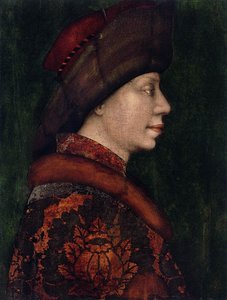
Michele Giambono
1400 - 1462 , Italy
Osnovne informacije
- Artistic Movement Or Style: International Gothic
- Artists Or Movements Influenced By This Artist: ['Renaissance']
- Artists Who Influenced This Artist:
- Jacobello del Fiore
- Gentile da Fabriano
- Date Of Birth: c. 1400 Venice
- Date Of Death: c. 1462 Venice
- Full Name: Michele Taddeo di Giovanni Bono
- Nationality: Italian
- Notable Artworks:
- Man of Sorrows
- St. Peter
- Birth of the Virgin
- The Visitation
- Place Of Birth: Venice, Italy
Povezani članci
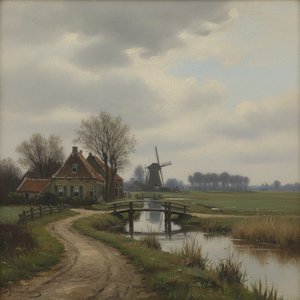
Jacob Henricus Maris: A Master of Dutch Atmospheric Realism & the Intimate Landscape
Explore the captivating world of Jacob Henricus Maris, a leading figure of the Dutch Hague School. Discover his atmospheric landscapes, signature brushstrokes & lasting influence on 19th-century art. Learn more at ArtsDot.

Fra Anđeo: 25 Remek-dela Renesansnog Duha za Vaš Dom | ArtsDot
Uronite u svet Fra Anđela – 25 remek-dela renesansnog slikara. Otkrijte priče iza njegovih čuvenih fresaka i oltarskih slika, inspiracija za enterijer i duhovni mir. Kupite reprodukcije vrhunskog kvaliteta na ArtsDot.com!

Giotto di Bondone: 25 Remek-dela koji definišu renesansu | ArtsDot
Istražite 25 remek-dela Giotta di Bondonea i otkrijte renesansnu umetnost u punom sjaju. Freske, oltarske slike & istorija italijanske umetnosti na ArtsDot.com! Reprodukcije vrhunskog kvaliteta za vaš dom.
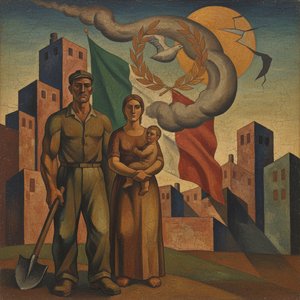
Mario Sironi: A Poetic of Modern Italian Identity Through Symbolism & Social Commentary
Explore the profound works of Mario Sironi, a key figure in Italian Modernism. Discover his evolution from Futurism to Metaphysical painting and his powerful social commentary. Learn about his legacy at ArtsDot.

Mary Vaux Walcott: Botanical Precision & Artistic Vision in American Conservation
Discover the exquisite botanical watercolors of Mary Vaux Walcott, celebrated as the 'Audubon of Botany.' Explore her life, art, and lasting impact on American conservation through detailed illustrations & Smithsonian contributions.

