


 Pregledaj u prostoru
 Pošalji
 Podeli
 Detalji o delu

 Преузми
 Slični predmeti
 Rendgenski snimak
 Slajdovi
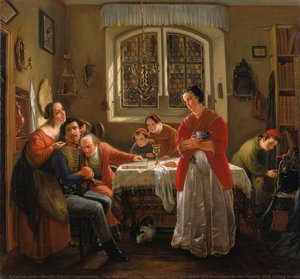
The Return of the Volunteer from the Wars of Liberation to His Family Still Living in Accordance with Old Customs (Die Heimkehr des Freiwilligen aus den Befreiungskriegen zu den nach alter Sitte lebenden Seinen)
 Oil On Canvas
- WallArt
- Realism
 1833
1833- 19th Century
 86.0 x 94.0 cm
 Jevrejski muzej
 Pročitaj više
Ručno rađena uljana reprodukcija
Ručno oslikano uljanim bojama na platnu u dimenzijama i okviru po vašem izboru, izrađeno po porudžbini od strane naših umetnika. ( Kupi print Kupi digitalnu sliku)




P118B $10

P118H $10

P118W $10

P438Z $10

P508JH $12

P508YH $12

P805H $10

P805Z $10

P919BZ $10

P919G $10

P919XJ $10

P959ZH $10

P968JZ $12

W106C $8

W218G $10

W218JH $8

W218Y $10

W307PJ $10

W316G $10

W316PJ $8

W316Y $10

W398PJ $8

W4111J $10

W500HY $15

W500JH $15

W692G $12

W849H $8

W940BG $15

W953PJ $8




Izaberite jednu od naših unapred definisanih veličina koje odgovaraju originalnim proporcijama umetničkog dela.

Можете унети сопствене димензије како бисте прилагодили дело одређеном оквиру или простору. Ако одабрана величина не одговара пропорцијама оригинала, слика ће бити исечена или проширена додатним елементима који се ручно насликавају. Дигитални prikaz ће вам бити послат на одобрење пре почетка производње.
Имајте на уму да преглед на екрану не одражава стварно исецање или проширење. Само приказ (mockup) ће тачно приказати коначну композицију.
Иако су доступне прилагођене величине, препоручујемо да одаберете димензију из дефинисане листе како бисте сачували оригиналне пропорције.
Nakon narudžbine, tim ArtsDot.com će klijentu putem e-pošte poslati uputstva i dostaviti prikaz predloženog rešenja
Isporuka širom sveta () za 3/4 nedelje umesto uobičajenih 5 nedelja. (30 август). Bez kompromisa po pitanju kvaliteta.

Besplatna ekspresna dostava širom sveta

Visokokvalitetno laneno platno

Kompletno osiguranje transporta

Garancija povraćaja carine i uvoznih dažbina

Garancija vernosti boja

Politika povrata u roku od 60 dana (samo u slučaju nedostataka)

Garancija povrata novca od 100%

Popust pri grupnoj kupovini
 Opcija sa staklom dostupna je samo za dimenzije manje od 110 cm

The Return of the Volunteer from the Wars of Liberation to His Family Still Living in Accordance with Old Customs (Die Heimkehr des Freiwilligen aus den Befreiungskriegen zu den nach alter Sitte lebenden Seinen)
Tehnika reprodukcije
Dimenzije reprodukcije
-


Konačna cena
$ 263
The Return of the Volunteer: A Window into 19th-Century Jewish Life
Moritz Daniel Oppenheim’s “The Return of the Volunteer from the Wars of Liberation to His Family Still Living in Accordance with Old Customs” (Die Heimkehr des Freiwilligen aus den Befreiungskriegen zu den nach alter Sitte lebenden Seinen), painted in 1833, is more than just a depiction of a family reunion; it’s a poignant snapshot of a pivotal moment in Jewish history – the burgeoning emancipation movement and its impact on traditional communities. Born in Hanau, Germany, Oppenheim's life mirrored this transformation: an observant Jew who, through diligent study and artistic talent nurtured under Conrad Westermayr, achieved remarkable success within the predominantly secular art world of his time. This painting, now housed at the Jewish Museum in New York, stands as a testament to his skill and a valuable record of a community navigating rapid change with both resilience and a deep-seated desire to preserve its heritage.
- Subject Matter: The scene unfolds within a domestic interior, meticulously rendered to capture the essence of family life. A recently returned soldier, dressed in the blue uniform of his era – complete with gold epaulettes signifying his service – is at the heart of the composition. His posture exudes both pride and weariness, reflecting the sacrifices made during the Wars of Liberation.
- Composition & Technique: Oppenheim’s masterful use of oil on canvas creates a remarkably realistic portrayal, employing soft brushstrokes to build depth and texture within the room. The balanced arrangement of figures – the soldier at the center, his wife offering comfort, children mimicking their father's actions – establishes a clear narrative flow, guiding the viewer’s eye through the scene with effortless grace.
Symbolism and Narrative
The painting is rich in symbolic detail, reflecting the complex social and emotional landscape of the time. The soldier’s attire, while representing his military service, also subtly acknowledges his return to a life rooted in tradition. His wife's gesture – gently placing her hands on his shoulders – speaks volumes about domestic harmony and familial support. The children, engaged in playful activities, embody the hope for future generations and the continuation of family values. Notably, the inclusion of objects within the interior—paintings adorning the walls, books lining shelves, vases and mirrors—are not merely decorative; they represent the soldier’s reintegration into a world that was increasingly influenced by Enlightenment ideals, yet still valued intellectual pursuits and domestic comfort.
- The Soldier's Sword & Hat: These symbols are central to the narrative, representing both his military service and his return to civilian life.
- The Woman’s Gesture: Her compassionate touch underscores the importance of family bonds in a time of upheaval.
- The Children’s Play: Represents hope for the future and the preservation of tradition.
Historical Context & Artistic Significance
Painted in 1833, “The Return of the Volunteer” offers a crucial glimpse into a period of profound social change within Jewish communities across Europe. The emancipation movement, driven by Enlightenment ideals, was beginning to dismantle centuries-old restrictions, allowing Jews access to professions previously closed to them. Oppenheim’s work is therefore not simply a sentimental family portrait; it's a visual document of this transformative era, capturing the anxieties and aspirations of a community grappling with modernity while striving to maintain its cultural identity. Oppenheim’s success as an artist – a testament to his talent and perseverance – paved the way for future generations of Jewish artists, demonstrating that artistic expression could be both deeply personal and socially significant.
Size:** 86 x 94 cm Date:** 1833 Artist:** Moritz Daniel Oppenheim (1800-1882)Srodna umetnička dela


Povezani članci
19th Century Masterpieces: 10 Paintings That Defined an Era | ArtsDot
Journey through 19th century art with ArtsDot! Explore 10 iconic paintings – from Monet & Renoir to Courbet – and discover the stories behind Romanticism, Realism & Impressionism. Find museum-quality reproductions for your home decor. Explore the full collection online!
Thomas Daniell: Navigating Light, Landscape & Cultural Exchange in Early 19th-Century India
Explore the captivating landscapes of Thomas Daniell, a pioneering artist who documented India's beauty in the 19th century. Discover his 'Oriental Scenery,' aquatint technique & lasting legacy. Hand-painted reproductions available at ArtsDot.
Vasily Vereshchagin: Realism, War & Subversion in 19th-Century Russian Painting
Explore the powerful realism of Vasily Vereshchagin's war paintings & Central Asian scenes. Discover how this Russian master challenged artistic conventions and offered a brutal, honest depiction of 19th-century conflict. Learn about his legacy for discerning collectors.
Anton von Werner: Imperial Painter, Historical Witness & Shifting German Identity
Explore the life & work of Anton von Werner, Imperial Germany's leading painter. Discover his dramatic depictions of war, unification, and court life – a fascinating insight into 19th-century German history & art.

William Owen: A Poetic Vision of War & Landscape in British Modernism
Explore the poignant war poetry of Wilfred Owen, a key figure in British Modernism. Discover his innovative style, themes of loss & camaraderie, and lasting impact on 20th-century literature. Analysis & historical context included.

