

 Pregledaj u prostoru
 Pošalji
 Podeli
 Detalji o delu

 Преузми
 Slični predmeti
 Rendgenski snimak
 Slajdovi
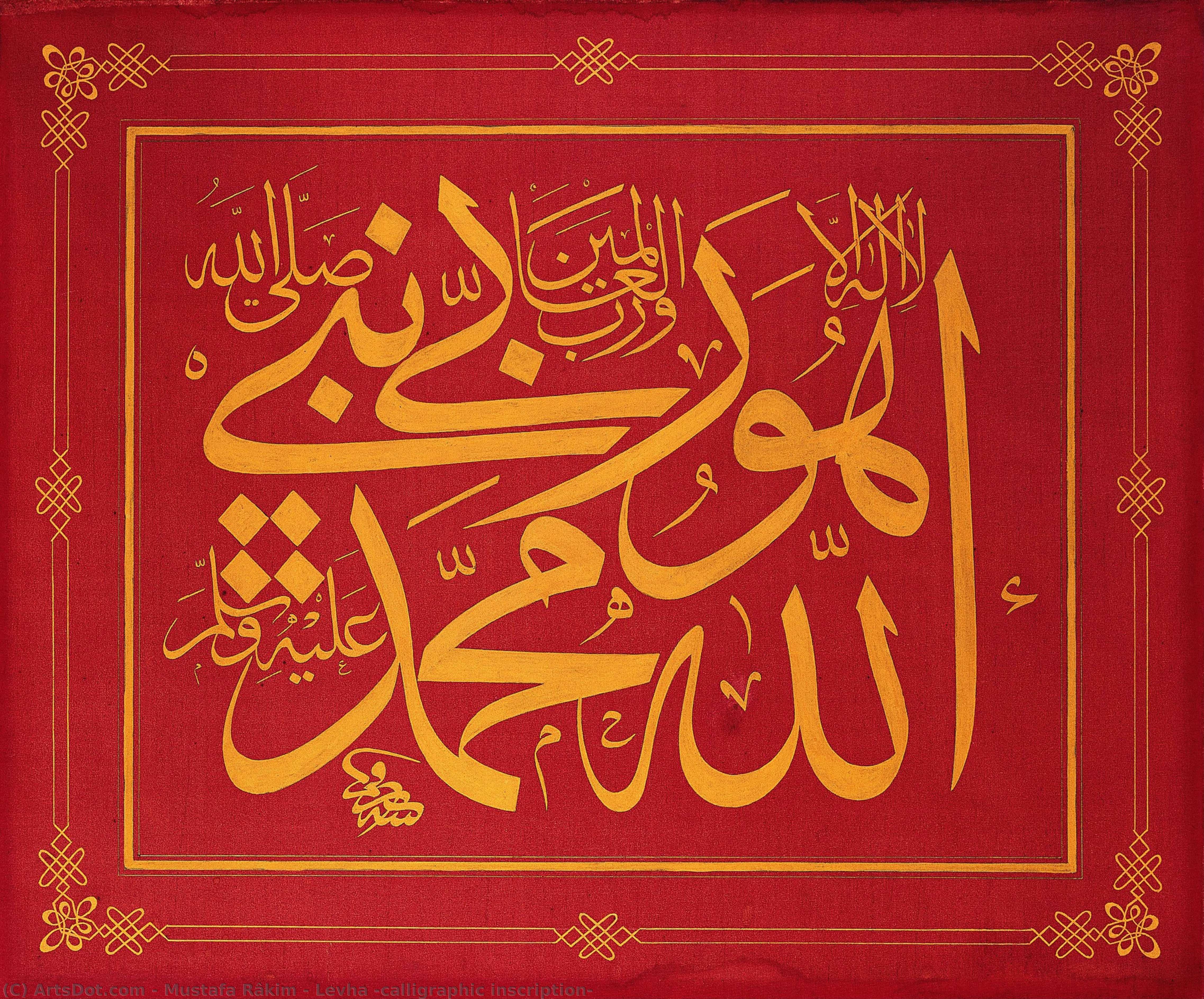
Levha (calligraphic inscription)
 Lithograph
- Islamic Calligraphy
 1700
1700- Early Modern
 58.0 x 48.0 cm
 Sakıp Sabancı Museum
 Pročitaj više
Ručno rađena uljana reprodukcija
Ručno oslikano uljanim bojama na platnu u dimenzijama i okviru po vašem izboru, izrađeno po porudžbini od strane naših umetnika. ( Kupi print Kupi digitalnu sliku)




P118B $10

P118H $10

P118W $10

P438Z $10

P508JH $12

P508YH $12

P805H $10

P805Z $10

P919BZ $10

P919G $10

P919XJ $10

P959ZH $10

P968JZ $12

W106C $8

W218G $10

W218JH $8

W218Y $10

W307PJ $10

W316G $10

W316PJ $8

W316Y $10

W398PJ $8

W4111J $10

W500HY $15

W500JH $15

W692G $12

W849H $8

W940BG $15

W953PJ $8




Izaberite jednu od naših unapred definisanih veličina koje odgovaraju originalnim proporcijama umetničkog dela.

Можете унети сопствене димензије како бисте прилагодили дело одређеном оквиру или простору. Ако одабрана величина не одговара пропорцијама оригинала, слика ће бити исечена или проширена додатним елементима који се ручно насликавају. Дигитални prikaz ће вам бити послат на одобрење пре почетка производње.
Имајте на уму да преглед на екрану не одражава стварно исецање или проширење. Само приказ (mockup) ће тачно приказати коначну композицију.
Иако су доступне прилагођене величине, препоручујемо да одаберете димензију из дефинисане листе како бисте сачували оригиналне пропорције.
Nakon narudžbine, tim ArtsDot.com će klijentu putem e-pošte poslati uputstva i dostaviti prikaz predloženog rešenja
Isporuka širom sveta () za 3/4 nedelje umesto uobičajenih 5 nedelja. (23 август). Bez kompromisa po pitanju kvaliteta.

Besplatna ekspresna dostava širom sveta

Visokokvalitetno laneno platno

Kompletno osiguranje transporta

Garancija povraćaja carine i uvoznih dažbina

Garancija vernosti boja

Politika povrata u roku od 60 dana (samo u slučaju nedostataka)

Garancija povrata novca od 100%

Popust pri grupnoj kupovini
 Opcija sa staklom dostupna je samo za dimenzije manje od 110 cm

Levha (calligraphic inscription)
Tehnika reprodukcije
Dimenzije reprodukcije
-


Konačna cena
$ 263
Opis umetničkog dela
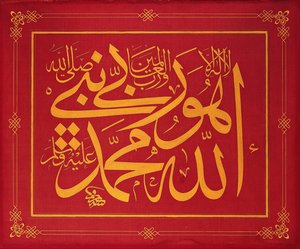
A Symphony of Crimson and Script
In the realm of Ottoman masterworks, few things command attention quite like the Levha, a calligraphic inscription that transcends mere writing to become a profound visual experience. This breathtaking piece, attributed to the legendary Mustafa Râkim, serves as a testament to the spiritual and aesthetic heights of the 18th-century Ottoman era. At first glance, the viewer is enveloped by a sea of deep, resonant crimson—a palette that ranges from the warmth of terracotta to the solemnity of dark garnet. This rich, monochromatic backdrop provides the perfect stage for the intricate dance of the Arabic script, where every curve and stroke is imbued with a sense of divine rhythm. The composition is masterfully balanced, utilizing a vertical orientation that draws the eye upward, mirroring the spiritual ascent intended by the sacred text.
The heart of this artwork lies in its subject: the Shahada, the Islamic declaration of faith. Through the meticulous application of the Sülüs script, Râ bek transforms linguistic meaning into architectural form. The calligraphy does not merely sit upon the surface; it builds a complex, layered landscape of interlocking letters and flowing flourishes. Each stroke is a deliberate act of devotion, where the precision of the line meets the fluidity of motion. For the collector or designer, this piece offers more than just decoration; it provides a focal point of immense gravity, where the density of the script creates a perceived texture that feels almost tactile, inviting the observer to linger on the mathematical perfection of its proportions.
The Legacy of a Master
To understand the brilliance of this Levha, one must look to the hands that shaped it. Mustafa Râkim was not merely a calligrapher; he was a revolutionary who redefined the boundaries of Ottoman art. While he drew deep inspiration from the classical foundations laid by Hâfiz Osman, Râkim possessed an insatiable drive for technical refinement. He approached the script with the eye of an architect and the soul of a poet, analyzing the very anatomy of letters to achieve an unprecedented level of elegance and clarity. This specific work embodies that pursuit of perfection, showcasing how the traditional Sülüs style can be elevated through a sophisticated command of space and weight.
Integrating such a masterpiece into a contemporary interior offers a unique opportunity to bridge the gap between historical reverence and modern luxury. The piece functions as a powerful anchor in a room, providing a sense of timelessness and cultural depth. Whether placed in a minimalist gallery-style setting or a richly textured classical study, the Levha radiates an aura of peace and intellectual sophistication. It is an investment in art that speaks to the eternal—a harmonious blend of religious devotion, historical mastery, and an aesthetic beauty that remains as captivating today as it was in the year 1700.
Srodna umetnička dela
Biografija umetnika
Mustafa Râkim: A Pioneer of Ottoman Calligraphy
Early Life and Background
- Born in Oyüzü, Turkey in 1757, Mustafa Râkim emerged as a transformative figure in the world of Ottoman art.
- His early life details remain somewhat scarce, but he quickly demonstrated an exceptional talent for calligraphy – a highly revered art form within Ottoman culture.
- He dedicated himself to mastering the intricacies of Islamic script, setting the stage for his future innovations.
Artistic Development and Influences
- Influenced by Hâfiz Osman, a prominent calligrapher of the 18th century, Râkim initially followed in his predecessor’s footsteps.
- However, he didn't simply imitate; he sought to refine and elevate Osman’s style, placing an unprecedented emphasis on technical perfection.
- This pursuit of precision led him to meticulously analyze the proportions and forms within both the Sülüs and Nesih scripts.
Key Achievements and Innovations
- Reforming Hâfiz Osman’s Style: Râkim extended and reformed Osman's style, broadening the scope of calligraphic art beyond just Sülüs to include Nesih.
- Technical Perfection: He achieved ideal measurement between letter thickness and pen thickness, establishing a new standard for beauty in Jali-Thuluth script and *Tughras* (the signature seals of Ottoman Sultans).
- First Great Turkish Painter: Râkim is regarded as the first great Turkish painter in the Western sense, marking a significant shift in Ottoman art.
- Portraiture: His portrait of Sultan Selim III was so captivating that it inspired a poem in his honor, showcasing his skill beyond calligraphy.
Historical Significance and Legacy
- Mustafa Râkim’s impact on Ottoman calligraphy is undeniable. His work represents a turning point, so significant that art historians divide Turkish calligraphic history into “pre-Rakim” and “post-Rakim” eras.
- He bridged traditional Islamic calligraphy with the emerging modern Turkish identity, influencing generations of artists to come.
- His legacy continues to inspire contemporary calligraphers and serves as a testament to the transformative power of artistic innovation.
- Râkim’s contributions extended beyond aesthetics; he elevated calligraphy from a craft to a high art form, solidifying its place within Ottoman culture and history.
Exploring His Work Today
- Numerous calligraphic masterpieces by Mustafa Râkim can be found in museums such as the Kıp Sabancı Museum in Istanbul, Türkiye.
- Collections like the *Murakka* (calligraphic album) containing works by Kadıasker Mustafa İzzet Efendi also showcase the beauty and influence of Ottoman calligraphy stemming from Râkim’s innovations.
mustafa râkim
1757 - 1826 , Turkey
Osnovne informacije
- Birth Date: 1757
- Birth Place: Oyüzü, Turkey
- Death Date: 1826
- Influenced: Kadıasker Mustafa İzzet Efendi
- Influenced By: Hâfiz Osman
- Movement: Ottoman Calligraphy
- Name: Mustafa Râkim
- Nationality: Turkish
- Notable Works:
- Portrait of Sultan Selim III
- Levha (calligraphic inscription)
Povezani članci

Crimson Threads of Narrative: Exploring Symbolism & Representation in Artworks Featuring the Red Dress
Explore the rich symbolism of the red dress in art history! From ancient power displays to iconic portraits like Cézanne’s 'Madame Cezanne', discover the cultural and artistic significance behind this captivating color. Expert analysis & insights.
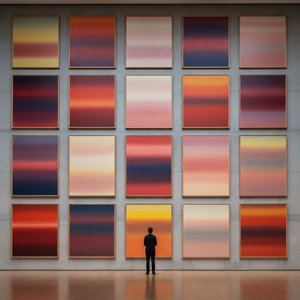
Mark Rothko: 25 Remek-dela Apstraktne Ekspresije za Vaš Dom | ArtsDot
Istražite 25 remek-dela Marka Rothka – ikona apstraktne ekspresije. Otkrijte priče, tehnike i emocije iza ovih veličanstvenih slika. Reprodukcije vrhunskog kvaliteta za vaš dom na ArtsDot.com!
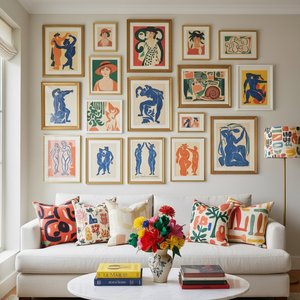
Henri Matisse: 25 Remek-dela koji definišu boju i modernu umetnost | ArtsDot
Uronite u svet Henri Matissea! Istražite 25 remek-dela Fauvizma i moderne umetnosti. Otkrijte priče iza slika, tehnike i inspiraciju slavnog francuskog slikara. Reprodukcije vrhunskog kvaliteta dostupne na ArtsDot.com.
Kandinsky's Masterpieces: 25 Paintings That Define Abstract Art | ArtsDot
Journey through Wassily Kandinsky's 25 most iconic abstract paintings. Explore his revolutionary use of color, form & spiritual expressionism. Find museum-quality Kandinsky reproductions and elevate your home decor with ArtsDot.com. Discover all masterpieces on ArtsDot.com!
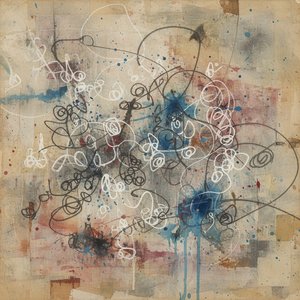
Cy Twombly: Scribbles of Emotion – Deconstructing Post-War Expressionism Through Calligraphy & Abstraction
Explore the captivating world of Cy Twombly with ArtsDot. Discover the emotional depth & artistic significance behind his abstract calligraphy. Expert insights for collectors.

