

 Pregledaj u prostoru
 Pošalji
 Podeli
 Detalji o delu

 Преузми
 Slični predmeti
 Rendgenski snimak
 Slajdovi
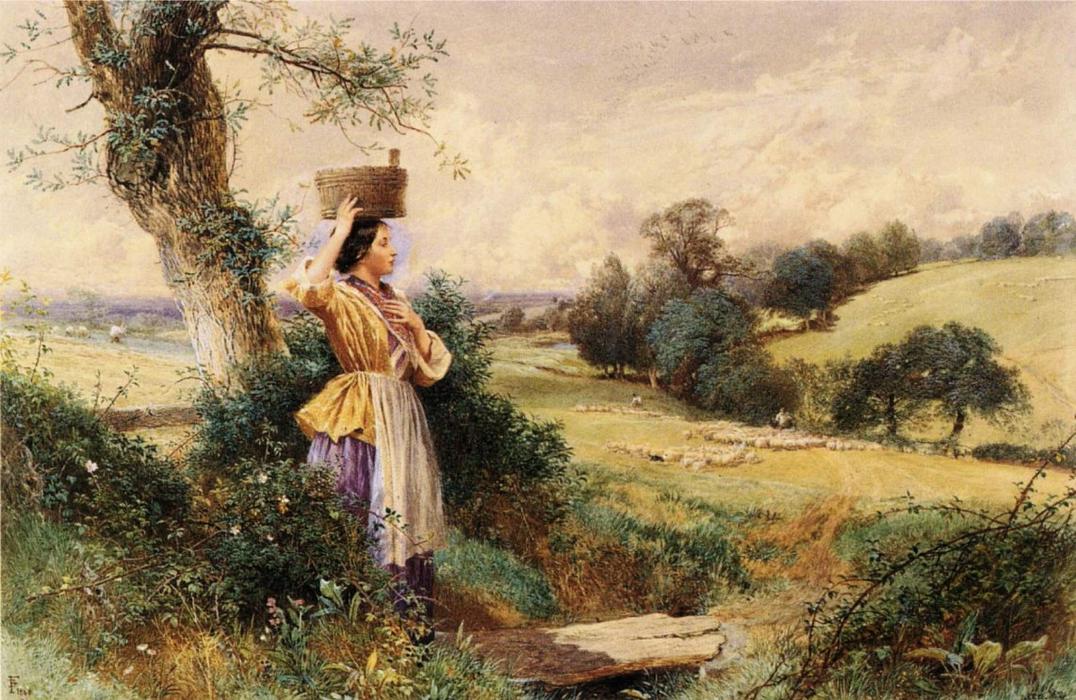
The Milk-maid


 Pročitaj više
Kupite digitalnu sliku visoke rezolucije i poboljšanog kvaliteta, koja je znatno superiornija od onoga što vidite u online prikazu.
Svaka datoteka je pedantno pripremljena od strane naših stručnjaka koristeći napredne alate i profesionalnu ručnu retušu. Osiguravamo da svaka slika ima izuzetnu oštrinu, preciznu reprodukciju boja i fine detalje.
Konačna datoteka se dostavlja putem e-pošte u roku od 72 sata, optimizovana za neposrednu upotrebu u profesionalnim, izdavačkim i štamparskim okruženjima. To je isti kvalitet kojem veruju vrhunski studiji dizajna, izdavači i galerije.
Digitalna slika
Preuzmite datoteku visoke rezolucije za ličnu upotrebu, štampanje i kreativne projekte. ( Kupi print Kupi ručno naslikanu sliku)
Uključeno uz svaku porudžbinu digitalne slike
Profesionalna digitalna isporuka, zagarantovana
Kada odaberete ArtsDot.com, ne dobijate samo sliku – vi primate profesionalno unapređeno digitalno umetničko delo, izrađeno sa najvećom preciznošću i uz garanciju zadovoljstva. Evo svega što automatski dolazi uz vašu porudžbinu:

Brza dostava putem e-pošte
Vaša digitalna slika visoke rezolucije biće vam poslata putem e-pošte u roku od 72 sata od poručivanja – spremna za trenutnu upotrebu.

Digitalna datoteka unapređena veštačkom inteligencijom
Vaše umetničko delo je profesionalno optimizovano korišćenjem naprednih AI alata i ručne obrade, čime se osiguravaju maksimalni detalji, oštrina i preciznost boja.

Besplatna ponovna isporuka doživotno
Slučajno ste obrisali ili izgubili svoju datoteku? Ne brinite – poslaćemo vam je ponovo u bilo kom trenutku, potpuno besplatno.

Bez troškova uvoza – zauvek
Uživajte u svojim umetničkim delima trenutno, bez carine, dažbina ili troškova dostave – digitalni download je uvek bez poreza.

Garancija vernosti boja
Uz pomoć profesionalnih alata i upravljanja bojama, osiguravamo da vaša digitalna slika što vernije odražava originalne boje.

Garancija zadovoljstva u roku od 60 dana
Ako niste zadovoljni svojom digitalnom slikom, revidirat ćemo je ili vratiti 100% novca u roku od 60 dana – bez ikakvih pitanja.

100% garancija povrata novca
Niste zadovoljni? Obezbedite pun povrat novca u roku od 60 dana od trenutka kada ste primili svoju digitalnu datoteku – bez suvišnih pitanja.

Popusti na velike porudžbine
Kupite 3 slike, uštedite 10% - Kupite 5 slika, uštedite 15% - Kupite 10+ slika, uštedite 20%. Odlično za kreativne projekte, galerije i agencije.
Opis kolekcionarskog dela
A Snapshot of Tranquility: Exploring Myles Birket Foster’s “The Milkmaid”
Myles Birket Foster's "The Milkmaid," painted in 1860, isn’t merely a depiction of rural England; it’s an embodiment of Victorian ideals—a carefully crafted meditation on simplicity, contentment, and the profound connection between humanity and nature. This watercolor masterpiece transcends its visual beauty to offer a glimpse into the philosophical currents shaping British art during the era. Foster's unwavering commitment to capturing authentic emotion through meticulous observation established him as one of the foremost landscape painters of his time.The Scene: Idyllic Pastoralism Embodied
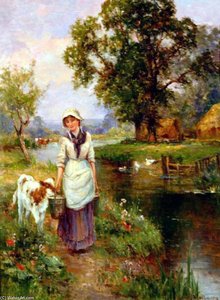
The painting transports us to a sunlit meadow dotted with sheep, instantly establishing an atmosphere of serene pastoral tranquility. At its heart stands a young woman diligently tending her basket of milk – a commonplace activity elevated by Foster’s masterful technique. The composition is deliberately balanced, drawing the eye towards the central figure while subtly incorporating the surrounding landscape elements. Notice how the artist skillfully utilizes light and shadow to sculpt the form of the woman and illuminate the woolly fleece of the sheep, creating an illusion of depth that feels remarkably lifelike.Technique & Style: Watercolor’s Delicate Dance
Foster's signature style is characterized by his unparalleled command of watercolor—a medium he championed with unwavering dedication. He achieved remarkable tonal subtlety through layering washes of pigment, painstakingly blending colors to create nuanced gradations and textures. This technique allowed him to convey the ephemeral qualities of light and atmosphere with breathtaking accuracy. The delicate brushstrokes capture not just the visual appearance but also the very essence of the scene—a testament to Foster’s artistic vision.Historical Context: Victorian Sentimentality & Moral Reflection
“The Milkmaid” emerged during a period marked by significant social and intellectual shifts within Victorian Britain. Following the Industrial Revolution, there was a growing desire for respite from urban life and a yearning for connection with rural traditions. Artists like Foster responded to this sentiment by portraying idealized landscapes populated by figures engaged in honest labor—a deliberate effort to instill moral virtue and celebrate the beauty of everyday existence. The painting reflects the broader Victorian preoccupation with capturing inner emotion alongside outward observation, aligning perfectly with the movement's core values.Symbolism & Emotional Resonance: More Than Meets the Eye
Beyond its picturesque charm lies a deeper symbolic significance. The milkmaid herself represents purity, diligence, and domestic virtue—values considered paramount in Victorian society. Her posture exudes quiet confidence and contentment, conveying a sense of inner peace derived from communion with nature. Foster’s masterful rendering captures not just what is seen but also what is felt—a poignant reminder of the enduring power of art to evoke emotion and inspire contemplation.Srodna umetnička dela
Biografija umetnika
The Painter of Pastoral Perfection
Myles Birket Foster stands as a cornerstone of Victorian landscape painting, celebrated for his exquisitely detailed watercolors that capture the serene beauty of rural England with an unparalleled sensitivity to light and atmosphere. More than just depicting picturesque scenes, Foster’s art embodies a profound philosophical preoccupation with capturing the essence of human experience—a quest for tranquility and contentment rooted in the rhythms of nature. His work serves as a window into a vanished era, offering a nostalgic glimpse into the idyllic landscapes that defined the nineteenth-century British imagination.
Born in 1825 in North Shields, Northumberland, Foster descended from Quaker ancestry, a heritage that shaped his worldview with principles of simplicity and moral integrity. His father established M. B. Foster & Sons, a thriving beer bottling business, providing him with the financial stability that allowed for uninterrupted artistic pursuits. This upbringing instilled in him a meticulous attention to detail and an appreciation for craftsmanship—qualities that would become the hallmarks of his mature style. His formal education at Hitchin Grammar School provided the foundational knowledge necessary for his later technical mastery.
From Engraving to Watercolor Mastery
The trajectory of Foster’s career was irrevocably altered by a crucial apprenticeship under Ebenezer Landells, a prominent wood engraver in London's Fleet Street. This formative experience honed his observational skills and introduced him to the intricate techniques of printmaking, which would later influence the precision of his watercolor compositions. His association with Landells proved pivotal, securing commissions for Punch magazine and establishing him within the vibrant artistic milieu of London. Collaborating on satirical illustrations demanded a level of accuracy and versatility that Foster seamlessly transferred to his landscapes.
As he transitioned from illustration to fine art, Foster developed a distinctive watercolor technique characterized by luminous color palettes, subtle tonal gradations, and a meticulous rendering of texture. He mastered the ability to evoke the soft, diffused light of an English afternoon, creating scenes that felt both tangible and dreamlike. His works often feature:
- Luminous Atmospheres: A mastery of light that breathes life into every leaf and stream.
- Sentimental Realism: The ability to depict rural life with a gentle, nostalgic warmth.
- Technical Precision: An inherited engraver's eye for fine detail and structural clarity.
A Legacy of Idyllic Landscapes
Foster’s oeuvre is defined by its ability to transport the viewer to a state of pastoral peace. Whether he was capturing the quiet intimacy of Stepping Stones or exploring more expansive vistas like his Lake Scene in Ticino, Switzerland, his work consistently sought the "pastoral perfection" suggested by his reputation. Even when venturing beyond the English countryside to depict maritime life or urban charm, as seen in his evocative depictions of Newcastle-on-Tyne, he maintained a signature sense of tranquility and order.
The historical significance of Myles Birket Foster lies in his role as a chronicler of the Victorian pastoral ideal. In an age of rapid industrialization and urban expansion, his paintings provided a much-needed sanctuary of stillness. His ability to blend technical excellence with deep emotional resonance ensured his place in the hearts of collectors and the annals of art history. Today, his works remain cherished for their ability to evoke a sense of timelessness, reminding us of the enduring beauty found in the simplest corners of the natural world.

Myles Birket Foster
1825 - 1899 , United Kingdom
Kratke činjenice
- Artistic Movement Or Style: Victorian Watercolor
- Artists Or Movements Influenced By This Artist: ['Edward Burne-Jones']
- Artists Who Influenced This Artist: ['Ebenezer Landells']
- Date Of Birth: February 4, 1825
- Date Of Death: March 27, 1899
- Full Name: Myles Birket Foster
- Nationality: British
- Notable Artworks:
- Haytime
- Stepping Stones
- Place Of Birth: North Shields, United Kingdom

