

 Pregledaj u prostoru
 Pošalji
 Podeli
 Detalji o delu

 Преузми
 Slični predmeti
 Rendgenski snimak
 Slajdovi
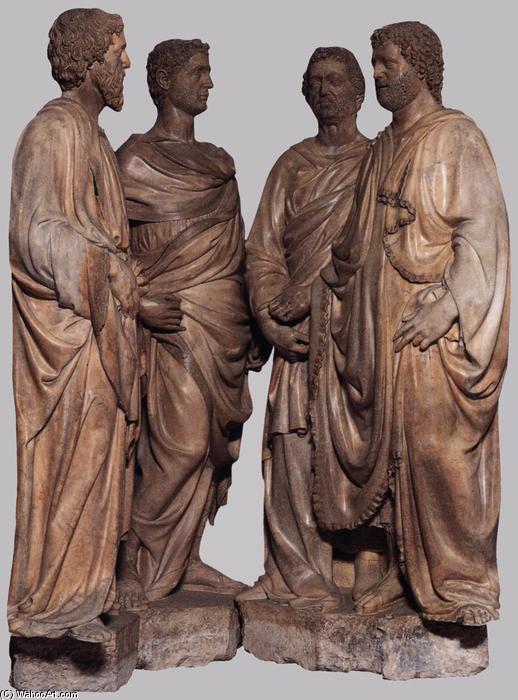
Quattro Santi Coronati


 Pročitaj više
Ručno rađena uljana reprodukcija
Ručno oslikano uljanim bojama na platnu u dimenzijama i okviru po vašem izboru, izrađeno po porudžbini od strane naših umetnika. ( Kupi print Kupi digitalnu sliku)




P118B $10

P118H $10

P118W $10

P438Z $10

P508JH $12

P508YH $12

P805H $10

P805Z $10

P919BZ $10

P919G $10

P919XJ $10

P959ZH $10

P968JZ $12

W106C $8

W218G $10

W218JH $8

W218Y $10

W307PJ $10

W316G $10

W316PJ $8

W316Y $10

W398PJ $8

W4111J $10

W500HY $15

W500JH $15

W692G $12

W849H $8

W940BG $15

W953PJ $8




Izaberite jednu od naših unapred definisanih veličina koje odgovaraju originalnim proporcijama umetničkog dela.

Можете унети сопствене димензије како бисте прилагодили дело одређеном оквиру или простору. Ако одабрана величина не одговара пропорцијама оригинала, слика ће бити исечена или проширена додатним елементима који се ручно насликавају. Дигитални prikaz ће вам бити послат на одобрење пре почетка производње.
Имајте на уму да преглед на екрану не одражава стварно исецање или проширење. Само приказ (mockup) ће тачно приказати коначну композицију.
Иако су доступне прилагођене величине, препоручујемо да одаберете димензију из дефинисане листе како бисте сачували оригиналне пропорције.
Nakon narudžbine, tim ArtsDot.com će klijentu putem e-pošte poslati uputstva i dostaviti prikaz predloženog rešenja
Isporuka širom sveta () za 3/4 nedelje umesto uobičajenih 5 nedelja. (24 август). Bez kompromisa po pitanju kvaliteta.

Besplatna ekspresna dostava širom sveta

Visokokvalitetno laneno platno

Kompletno osiguranje transporta

Garancija povraćaja carine i uvoznih dažbina

Garancija vernosti boja

Politika povrata u roku od 60 dana (samo u slučaju nedostataka)

Garancija povrata novca od 100%

Popust pri grupnoj kupovini
 Opcija sa staklom dostupna je samo za dimenzije manje od 110 cm

Quattro Santi Coronati
Tehnika reprodukcije
Dimenzije reprodukcije
-


Konačna cena
$ 263
Opis umetničkog dela
The Silent Conversation: Nanni di Banco’s Quattro Santi Coronati
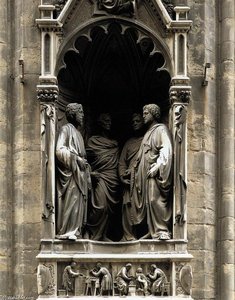
Nanni di Banco's “Quattro Santi Coronati” – literally, "Four Holy Crowned Ones" – isn’t merely a sculpture; it’s a frozen moment of profound contemplation. Carved from the cool, luminous marble of Tuscany around 1408-1416, this group of four figures residing within the Orsanmichele complex in Florence offers a rare glimpse into the intellectual and spiritual currents shaping early Renaissance art. More than just portraits of saints, they represent a dialogue – a silent conversation between faith, sacrifice, and the enduring legacy of Roman ideals.

Image of Quattro Santi Coronati by Nanni di Banco
A Bridge Between Worlds: Nanni’s Artistic Inheritance
Nanni di Banco occupies a fascinating position within the Florentine artistic landscape. He wasn't a revolutionary like Donatello, nor did he possess the dazzling technical virtuosity of Ghiberti, but his importance lies in his ability to synthesize the waning Gothic traditions with the burgeoning humanist ideals that were reshaping Florence. Born around 1374 into a family deeply rooted in Florentine stonemasonry – his father, Antonio di Banco, was a key figure in the construction of the Duomo – Nanni inherited both a practical skill set and an understanding of the city’s artistic priorities. He learned from the masters working on the cathedral, absorbing their techniques while simultaneously witnessing the shift towards a more classical, humanistic approach to art.
His early training likely occurred within the workshop of Giovanni d'Ambrogio, a pivotal figure in the transition between Gothic and Renaissance styles. This connection is evident in Nanni’s work, which retains elements of Gothic drapery and elongated figures while incorporating classical proportions and a greater emphasis on naturalism – a hallmark of the emerging Renaissance aesthetic.
The Narrative of Sacrifice: Symbolism and Human Emotion
The subject matter itself—the martyrdom of Claudius, Castor, Symphorian, and Nicostratus—is imbued with potent symbolism. These figures, stonemasons themselves, refused to erect a statue of the pagan god Aesculapius for Emperor Diocletian, choosing instead to uphold their Christian faith. Their subsequent execution underscores the conflict between religious conviction and imperial authority – a theme that resonated deeply within Florence during this period of political and social upheaval.
However, Nanni doesn’t depict a scene of brutal violence or despair. Instead, he captures a moment of intense reflection. The figures are arranged in a semi-circle, engaged in a silent dialogue with one another. Their gestures—a pointing hand, a raised eyebrow, a contemplative gaze—suggest a shared understanding of their fate and the moral weight of their decision. The dynamism of the composition, particularly the figure on the right who addresses his companions, creates a sense of immediacy and emotional depth.
A Legacy in Stone: The Enduring Power of Florentine Art
“Quattro Santi Coronati” stands as a testament to Nanni di Banco’s artistic skill and his ability to capture the complexities of human experience. The sculpture's influence extends beyond its immediate context within Orsanmichele; it reflects the broader intellectual and spiritual currents shaping Renaissance Florence. The work demonstrates how artists were not simply replicating classical forms, but reinterpreting them through a distinctly humanist lens – exploring themes of faith, morality, and the enduring legacy of Roman civilization. Today, this remarkable piece continues to invite viewers into a silent conversation about courage, conviction, and the timeless power of art.
Srodna umetnička dela
Biografija umetnika
A Florentine Bridge Between Worlds
Nanni di Banco, born in Florence around 1380, occupies a fascinating and pivotal position within the early Italian Renaissance. He wasn’t a revolutionary like Donatello, nor did he possess the dazzling technical virtuosity of Ghiberti, but his importance lies in his ability to synthesize the waning Gothic traditions with the burgeoning humanist ideals that were reshaping Florentine art. Details surrounding his early life remain somewhat elusive; however, it's clear he benefited from the vibrant artistic atmosphere of Florence and likely received his initial training within a local workshop, absorbing the prevailing stylistic conventions while simultaneously witnessing the stirrings of a new era. His father, Antonio di Banco, was himself a respected sculptor and stonemason involved in the construction of the Florence Cathedral, providing Nanni with both familial guidance and access to the heart of Florentine artistic production. This grounding in traditional craftsmanship would prove crucial as he navigated the transition towards a more classical aesthetic.The Sculptural Language of Transition
Di Banco’s style represents a delicate balance between the elegance of late Gothic sculpture and the emerging naturalism that characterized the Renaissance. While influenced by the International Gothic style—evident in his refined drapery and attention to detail—he increasingly incorporated elements drawn from classical antiquity. This wasn't merely an imitation of ancient forms, but rather a thoughtful integration of classical principles into his work, striving for greater anatomical accuracy and a more convincing sense of three-dimensionality. He observed the Roman sculptures that were being rediscovered at the time, absorbing their emphasis on proportion, balance, and dignified composure. Unlike Donatello, who often imbued his figures with intense emotionality and dramatic expression, Di Banco favored a more restrained classicism. His figures possess a quiet dignity and serenity, reflecting a humanist ideal of rational order and harmonious beauty. This is not to say his work lacks individuality; on the contrary, he demonstrated a remarkable ability to imbue each figure with a distinct personality and character.Orsanmichele and Enduring Legacy
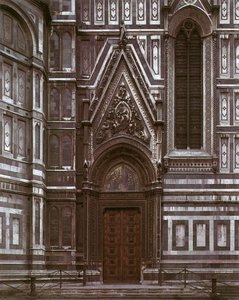
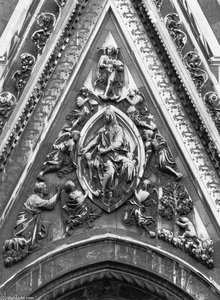
Nanni di Banco’s most celebrated achievement is undoubtedly the *Quattro Santi Coronati* (Four Crowned Martyrs), commissioned between 1412 and 1415 for the Orsanmichele church in Florence. This sculptural group, created for the stone carvers and woodworkers guild, stands as a testament to his skill and artistic vision. Each of the four figures – Saints Crispin, Crispianus, Dionysius, and Eustachius – possesses a unique personality and bears the marks of individual experience. The composition is remarkable not only for its naturalism but also for its complex construction as a unified ensemble; the saints are arranged in a harmonious grouping that conveys a sense of collective strength and spiritual conviction. Beyond Orsanmichele, Di Banco contributed to the *Porta della Mandorla* at the Florence Baptistery, working alongside other sculptors on this ambitious project. His panels depict scenes from the life of the Virgin Mary, showcasing his ability to narrate biblical stories with clarity and grace. Other notable works include sculptures of Saint Luke and Esaias, further demonstrating his mastery of form and expression.A Quiet Revolution
Nanni di Banco’s historical significance lies in his role as a crucial link between the Gothic past and the Renaissance future. He helped pave the way for later masters like Donatello and Michelangelo by establishing new standards for sculptural representation. His emphasis on naturalism, anatomical accuracy, and individualized portraiture challenged the conventions of medieval sculpture and anticipated the artistic achievements of the High Renaissance. Giorgio Vasari, in his seminal *Lives of the Most Excellent Painters, Sculptors, and Architects*, acknowledged Di Banco’s importance within the Florentine artistic tradition, recognizing his contribution to the evolving aesthetic landscape of the era. Though perhaps less celebrated than some of his contemporaries, Nanni di Banco remains a significant figure in Early Renaissance art—a sculptor who quietly but profoundly shaped the course of Western art history. His work embodies a spirit of thoughtful innovation and enduring beauty, continuing to inspire and captivate audiences centuries after its creation.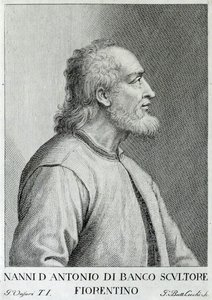
nanni d antonio di banco
1380 - 1421 , Italy
Osnovne informacije
- Artistic Movement Or Style: Early Renaissance
- Artists Or Movements Influenced By This Artist:
- Donatello
- Michelangelo
- Artists Who Influenced This Artist: ['International Gothic style']
- Date Of Birth: c. 1380
- Date Of Death: 1421
- Full Name: Nanni d'Antonio di Banco
- Nationality: Italian
- Notable Artworks:
- Quattro Santi Coronati
- Porta della Mandorla
- St. Luke
- Assumption of the Virgin
- Place Of Birth: Florence, Italy
Povezani članci

Giotto di Bondone: 25 Remek-dela koji definišu renesansu | ArtsDot
Istražite 25 remek-dela Giotta di Bondonea i otkrijte renesansnu umetnost u punom sjaju. Freske, oltarske slike & istorija italijanske umetnosti na ArtsDot.com! Reprodukcije vrhunskog kvaliteta za vaš dom.

Bronze Sculptures That Defined Art History | ArtsDot
Journey through art history with our Top 10 bronze sculptures! Explore masterpieces by Rodin, Michelangelo & more. Discover stories behind iconic statues and find museum-quality reproductions for your home decor at ArtsDot.com.

The Enduring Form: Exploring Themes & Techniques in Sculpture Across Historical Periods
Explore the rich history of sculpture from ancient masterpieces to contemporary innovations. Discover key techniques, influential artists & investment potential for discerning art collectors.

The Enduring Form: Sculpture Across History, Technique & Emotional Resonance
Explore the rich history of sculpture with ArtsDot. Discover key techniques, influential artists & investment potential for discerning collectors. Expert insights into valuing and collecting timeless masterpieces.

Bronze Age to Modern Masters: 10 Sculptures That Redefined Art | ArtsDot
Journey through art history with 10 legendary bronze sculptures – from Michelangelo's David to Rodin’s Thinker. Explore the stories, techniques & timeless beauty of these masterpieces. Find museum-quality reproductions & elevate your home decor on ArtsDot.com.

