

 Pregledaj u prostoru
 Pošalji
 Podeli
 Detalji o delu

 Преузми
 Slični predmeti
 Rendgenski snimak
 Slajdovi
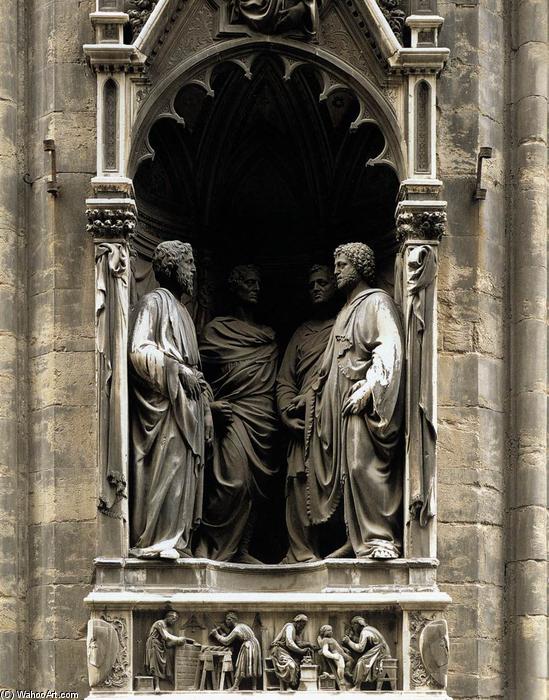
Quattro Santi Coronati


 Pročitaj više
Kupite digitalnu sliku visoke rezolucije i poboljšanog kvaliteta, koja je znatno superiornija od onoga što vidite u online prikazu.
Svaka datoteka je pedantno pripremljena od strane naših stručnjaka koristeći napredne alate i profesionalnu ručnu retušu. Osiguravamo da svaka slika ima izuzetnu oštrinu, preciznu reprodukciju boja i fine detalje.
Konačna datoteka se dostavlja putem e-pošte u roku od 72 sata, optimizovana za neposrednu upotrebu u profesionalnim, izdavačkim i štamparskim okruženjima. To je isti kvalitet kojem veruju vrhunski studiji dizajna, izdavači i galerije.
Digitalna slika
Preuzmite datoteku visoke rezolucije za ličnu upotrebu, štampanje i kreativne projekte. ( Kupi print Kupi ručno naslikanu sliku)
Uključeno uz svaku porudžbinu digitalne slike
Profesionalna digitalna isporuka, zagarantovana
Kada odaberete ArtsDot.com, ne dobijate samo sliku – vi primate profesionalno unapređeno digitalno umetničko delo, izrađeno sa najvećom preciznošću i uz garanciju zadovoljstva. Evo svega što automatski dolazi uz vašu porudžbinu:

Brza dostava putem e-pošte
Vaša digitalna slika visoke rezolucije biće vam poslata putem e-pošte u roku od 72 sata od poručivanja – spremna za trenutnu upotrebu.

Digitalna datoteka unapređena veštačkom inteligencijom
Vaše umetničko delo je profesionalno optimizovano korišćenjem naprednih AI alata i ručne obrade, čime se osiguravaju maksimalni detalji, oštrina i preciznost boja.

Besplatna ponovna isporuka doživotno
Slučajno ste obrisali ili izgubili svoju datoteku? Ne brinite – poslaćemo vam je ponovo u bilo kom trenutku, potpuno besplatno.

Bez troškova uvoza – zauvek
Uživajte u svojim umetničkim delima trenutno, bez carine, dažbina ili troškova dostave – digitalni download je uvek bez poreza.

Garancija vernosti boja
Uz pomoć profesionalnih alata i upravljanja bojama, osiguravamo da vaša digitalna slika što vernije odražava originalne boje.

Garancija zadovoljstva u roku od 60 dana
Ako niste zadovoljni svojom digitalnom slikom, revidirat ćemo je ili vratiti 100% novca u roku od 60 dana – bez ikakvih pitanja.

100% garancija povrata novca
Niste zadovoljni? Obezbedite pun povrat novca u roku od 60 dana od trenutka kada ste primili svoju digitalnu datoteku – bez suvišnih pitanja.

Popusti na velike porudžbine
Kupite 3 slike, uštedite 10% - Kupite 5 slika, uštedite 15% - Kupite 10+ slika, uštedite 20%. Odlično za kreativne projekte, galerije i agencije.
Opis kolekcionarskog dela
Nanni di Banco’s Quattro Santi Coronati: Bridging Gothic Legacy with Renaissance Vision
Giovanni di Antonio di Banco, known as Nanni di Banco (c. 1374 – 1421), stands as a pivotal figure in Florentine art history—a sculptor who deftly navigated the twilight of the Gothic era into the burgeoning brilliance of the Renaissance. Unlike his contemporaries like Donatello, whose innovations were driven by an uncompromising pursuit of classical ideals, Nanni’s genius resided in synthesizing the enduring traditions of medieval sculpture with the humanist spirit that was reshaping Florence’s intellectual landscape.
His contribution to the decoration of Orsanmichele—specifically the monumental group depicting four crowned saints—offers a profound glimpse into this transformative period. Commissioned by the Arte dei Maestri di Pietra e Legname guild in 1406–1408, it represents not merely an artistic achievement but also a reflection of Florentine civic identity and religious fervor.
A Synthesis of Styles: Gothic Roots and Classical Influence
The Quattro Santi Coronati’s stylistic complexity immediately distinguishes it from earlier sculptural productions. While undeniably rooted in the Gothic tradition—evident in its monumental scale, ribbed vaulting, and stylized drapery—the sculpture also incorporates elements characteristic of classical Roman art. This fusion is particularly striking in the faces of the saints themselves, which bear a resemblance to idealized portraits found in Roman sculptures.
As Giorgio Vasari eloquently observed, Nanni’s approach mirrored that of Donatello, yet crucially differed from him in prioritizing naturalism—a hallmark of Renaissance aesthetics. The sculptor skillfully captured human emotion and gesture, mirroring the humanist preoccupation with portraying the human condition authentically.
The Iconography and Symbolism of Martyrdom
The saints depicted are not merely figures; they embody a powerful theological narrative. They represent Claudius, Castor, Symphorian and Nicostratus—four Christian martyrs who refused to venerate Diocletian’s imperial cult during the persecutions of the fourth century AD. Their refusal stemmed from unwavering faith, resulting in their gruesome deaths.
The sculpture's central gesture—the outstretched hand—communicates a profound sense of contemplation and solemnity. It underscores the saints’ awareness of their impending fate, conveying an emotional depth that transcends mere representation. The positioning of the figures—particularly Castor and Symphorian—creates a dynamic interplay between stillness and movement, mirroring the humanist fascination with capturing human anatomy in precise detail.
The Context of Orsanmichele and Florentine Civic Identity
The Quattro Santi Coronati’s placement within the Orsanmichele complex—a former grain market transformed into an oratory and meeting hall for the guild—is itself significant. The sculpture served as a visual emblem of Florentine civic pride, reflecting the guild’s commitment to upholding Christian values.
Furthermore, the chapel's frescoes depict scenes from papal history, highlighting the importance of religious patronage in shaping Florentine culture and artistic production. They underscore the desire for Florence to assert its spiritual authority amidst the turbulent political landscape of the fourteenth century—a testament to Nanni di Banco’s enduring legacy as a sculptor who bridged the gap between Gothic grandeur and Renaissance humanism.
Srodna umetnička dela




Biografija umetnika
A Florentine Bridge Between Worlds
Nanni di Banco, born in Florence around 1380, occupies a fascinating and pivotal position within the early Italian Renaissance. He wasn’t a revolutionary like Donatello, nor did he possess the dazzling technical virtuosity of Ghiberti, but his importance lies in his ability to synthesize the waning Gothic traditions with the burgeoning humanist ideals that were reshaping Florentine art. Details surrounding his early life remain somewhat elusive; however, it's clear he benefited from the vibrant artistic atmosphere of Florence and likely received his initial training within a local workshop, absorbing the prevailing stylistic conventions while simultaneously witnessing the stirrings of a new era. His father, Antonio di Banco, was himself a respected sculptor and stonemason involved in the construction of the Florence Cathedral, providing Nanni with both familial guidance and access to the heart of Florentine artistic production. This grounding in traditional craftsmanship would prove crucial as he navigated the transition towards a more classical aesthetic.The Sculptural Language of Transition
Di Banco’s style represents a delicate balance between the elegance of late Gothic sculpture and the emerging naturalism that characterized the Renaissance. While influenced by the International Gothic style—evident in his refined drapery and attention to detail—he increasingly incorporated elements drawn from classical antiquity. This wasn't merely an imitation of ancient forms, but rather a thoughtful integration of classical principles into his work, striving for greater anatomical accuracy and a more convincing sense of three-dimensionality. He observed the Roman sculptures that were being rediscovered at the time, absorbing their emphasis on proportion, balance, and dignified composure. Unlike Donatello, who often imbued his figures with intense emotionality and dramatic expression, Di Banco favored a more restrained classicism. His figures possess a quiet dignity and serenity, reflecting a humanist ideal of rational order and harmonious beauty. This is not to say his work lacks individuality; on the contrary, he demonstrated a remarkable ability to imbue each figure with a distinct personality and character.Orsanmichele and Enduring Legacy
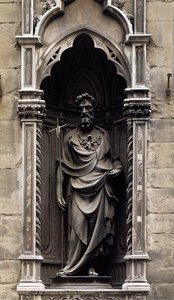
Nanni di Banco’s most celebrated achievement is undoubtedly the *Quattro Santi Coronati* (Four Crowned Martyrs), commissioned between 1412 and 1415 for the Orsanmichele church in Florence. This sculptural group, created for the stone carvers and woodworkers guild, stands as a testament to his skill and artistic vision. Each of the four figures – Saints Crispin, Crispianus, Dionysius, and Eustachius – possesses a unique personality and bears the marks of individual experience. The composition is remarkable not only for its naturalism but also for its complex construction as a unified ensemble; the saints are arranged in a harmonious grouping that conveys a sense of collective strength and spiritual conviction. Beyond Orsanmichele, Di Banco contributed to the *Porta della Mandorla* at the Florence Baptistery, working alongside other sculptors on this ambitious project. His panels depict scenes from the life of the Virgin Mary, showcasing his ability to narrate biblical stories with clarity and grace. Other notable works include sculptures of Saint Luke and Esaias, further demonstrating his mastery of form and expression.A Quiet Revolution
Nanni di Banco’s historical significance lies in his role as a crucial link between the Gothic past and the Renaissance future. He helped pave the way for later masters like Donatello and Michelangelo by establishing new standards for sculptural representation. His emphasis on naturalism, anatomical accuracy, and individualized portraiture challenged the conventions of medieval sculpture and anticipated the artistic achievements of the High Renaissance. Giorgio Vasari, in his seminal *Lives of the Most Excellent Painters, Sculptors, and Architects*, acknowledged Di Banco’s importance within the Florentine artistic tradition, recognizing his contribution to the evolving aesthetic landscape of the era. Though perhaps less celebrated than some of his contemporaries, Nanni di Banco remains a significant figure in Early Renaissance art—a sculptor who quietly but profoundly shaped the course of Western art history. His work embodies a spirit of thoughtful innovation and enduring beauty, continuing to inspire and captivate audiences centuries after its creation.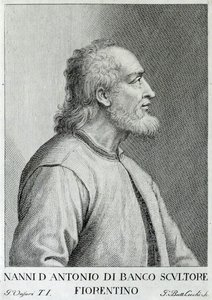
nanni d antonio di banco
1380 - 1421 , Italy
Kratke činjenice
- Artistic Movement Or Style: Early Renaissance
- Artists Or Movements Influenced By This Artist:
- Donatello
- Michelangelo
- Artists Who Influenced This Artist: ['International Gothic style']
- Date Of Birth: c. 1380
- Date Of Death: 1421
- Full Name: Nanni d'Antonio di Banco
- Nationality: Italian
- Notable Artworks:
- Quattro Santi Coronati
- Porta della Mandorla
- St. Luke
- Assumption of the Virgin
- Place Of Birth: Florence, Italy

