

 Pregledaj u prostoru
 Pošalji
 Podeli
 Detalji o delu

 Преузми
 Slični predmeti
 Rendgenski snimak
 Slajdovi
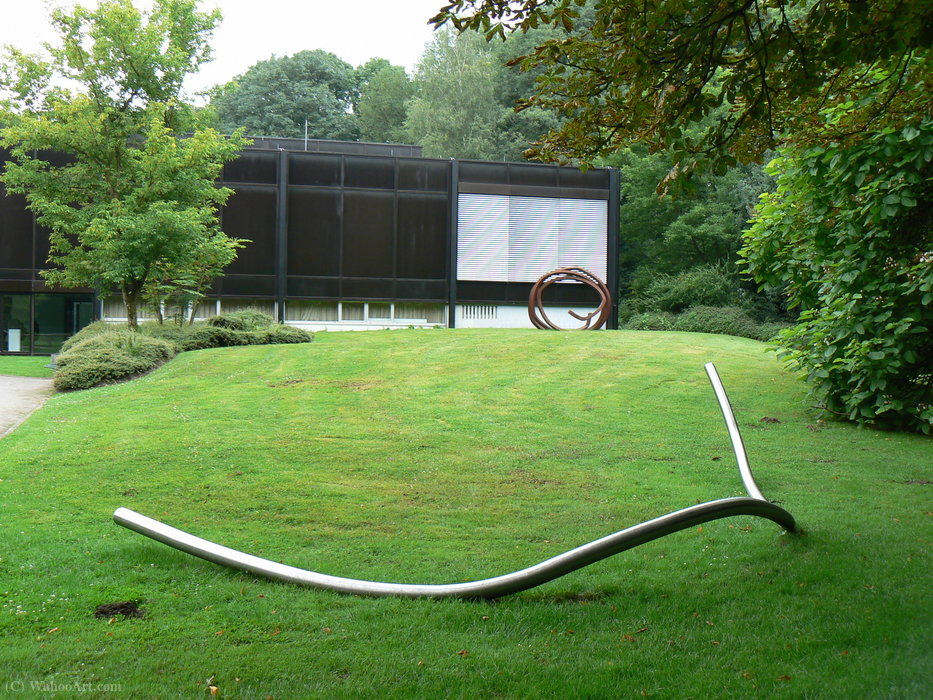
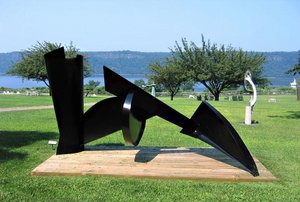
Raumplastik grosse kurve i, (2) (1980)

 Pročitaj više
Kupite digitalnu sliku visoke rezolucije i poboljšanog kvaliteta, koja je znatno superiornija od onoga što vidite u online prikazu.
Svaka datoteka je pedantno pripremljena od strane naših stručnjaka koristeći napredne alate i profesionalnu ručnu retušu. Osiguravamo da svaka slika ima izuzetnu oštrinu, preciznu reprodukciju boja i fine detalje.
Konačna datoteka se dostavlja putem e-pošte u roku od 72 sata, optimizovana za neposrednu upotrebu u profesionalnim, izdavačkim i štamparskim okruženjima. To je isti kvalitet kojem veruju vrhunski studiji dizajna, izdavači i galerije.
Digitalna slika
Preuzmite datoteku visoke rezolucije za ličnu upotrebu, štampanje i kreativne projekte. ( Kupi print Kupi ručno naslikanu sliku)
Uključeno uz svaku porudžbinu digitalne slike
Profesionalna digitalna isporuka, zagarantovana
Kada odaberete ArtsDot.com, ne dobijate samo sliku – vi primate profesionalno unapređeno digitalno umetničko delo, izrađeno sa najvećom preciznošću i uz garanciju zadovoljstva. Evo svega što automatski dolazi uz vašu porudžbinu:

Brza dostava putem e-pošte
Vaša digitalna slika visoke rezolucije biće vam poslata putem e-pošte u roku od 72 sata od poručivanja – spremna za trenutnu upotrebu.

Digitalna datoteka unapređena veštačkom inteligencijom
Vaše umetničko delo je profesionalno optimizovano korišćenjem naprednih AI alata i ručne obrade, čime se osiguravaju maksimalni detalji, oštrina i preciznost boja.

Besplatna ponovna isporuka doživotno
Slučajno ste obrisali ili izgubili svoju datoteku? Ne brinite – poslaćemo vam je ponovo u bilo kom trenutku, potpuno besplatno.

Bez troškova uvoza – zauvek
Uživajte u svojim umetničkim delima trenutno, bez carine, dažbina ili troškova dostave – digitalni download je uvek bez poreza.

Garancija vernosti boja
Uz pomoć profesionalnih alata i upravljanja bojama, osiguravamo da vaša digitalna slika što vernije odražava originalne boje.

Garancija zadovoljstva u roku od 60 dana
Ako niste zadovoljni svojom digitalnom slikom, revidirat ćemo je ili vratiti 100% novca u roku od 60 dana – bez ikakvih pitanja.

100% garancija povrata novca
Niste zadovoljni? Obezbedite pun povrat novca u roku od 60 dana od trenutka kada ste primili svoju digitalnu datoteku – bez suvišnih pitanja.

Popusti na velike porudžbine
Kupite 3 slike, uštedite 10% - Kupite 5 slika, uštedite 15% - Kupite 10+ slika, uštedite 20%. Odlično za kreativne projekte, galerije i agencije.
Srodna umetnička dela


Biografija umetnika
Norbert Kricke: Sculpting the Flow of Space and Time
Norbert Kricke (1922-1984) wasn’t merely a sculptor; he was an architect of perception, a pioneer who wrestled with the very essence of space and movement. Born in Düsseldorf during a period of profound societal upheaval following World War II, Kricke’s artistic journey was deeply intertwined with the post-war desire to rebuild—not just physical structures, but also the foundations of human experience. His work, often characterized by its stark minimalism and evocative use of wire, steel, and concrete, represents a pivotal moment in the evolution of abstract sculpture, bridging the gap between the formal rigor of the Constructivists and the expressive freedom of L’Art Informel.
Kricke's early artistic training under Richard Scheibe and Hans Uhlmann at the Hochschule für Bildende Künste in Berlin provided him with a crucial grounding in traditional sculptural techniques. However, he quickly moved beyond mere representation, seeking to capture something far more elusive: the dynamic quality of space itself. This shift was profoundly influenced by his exposure to the theories of John Anthony Thwaites, particularly their exploration of “Forms of Water,” which posited that space and time were inextricably linked—a concept Kricke sought to embody in his sculptures.
The Dawn of Raumplastik
Kricke’s breakthrough came with the development of what he termed *Raumplastiken* – ‘spatial sculptures.’ These weren't static objects; they were investigations into the very fabric of space, utilizing wire as a primary medium. Unlike earlier sculptors who focused on mass and volume, Kricke concentrated on line—the fundamental element that defines form and creates the illusion of depth. He meticulously crafted these lines, often employing complex geometric patterns, to suggest movement and dynamism within a confined space. This approach was revolutionary, challenging conventional notions of sculpture as a three-dimensional object and instead presenting it as an active participant in shaping our perception.
Early examples like *Raumplastik Gelb* (1951) demonstrate this shift powerfully. The work’s seemingly simple arrangement of wire immediately draws the eye, inviting viewers to trace the lines and contemplate their relationship to the surrounding space. This focus on line continued to evolve throughout his career, culminating in works that appeared almost fluid, capturing the essence of movement without depicting it literally.
Connections to L'Art Informel and Beyond
Kricke’s work resonated deeply with the burgeoning L’Art Informel movement, a post-war European artistic current characterized by its rejection of formal constraints and embrace of spontaneous expression. However, Kricke distinguished himself within this group through his rigorous intellectual approach and his systematic exploration of spatial relationships. He also maintained close ties with ZERO, a German collective that similarly challenged traditional sculptural conventions, and the Nouveau Réalisme movement in France, demonstrating a broad awareness of international artistic trends.
His collaboration with Yves Klein on exploring the properties of light and space further solidified his position as a key figure in the avant-garde. The influence of Walter Gropius is also notable, particularly in Kricke’s design for water configurations for the new university complex in Baghdad – a project that underscored his belief in the interconnectedness of art, science, and human experience.
Major Works and Legacy
Throughout his career, Kricke created numerous significant works, including the iconic *Water Forest* sculpture outside the Gelsenkirchen Opera House (1957), a testament to his fascination with flowing water and its transformative power. His wire sculptures for Münster Theatre (1955/56) and fountains for the University of Baghdad showcased his versatility and technical skill. Perhaps most notably, Kricke served as director of the Düsseldorf Art Academy from 1972 until his death in 1984, shaping a generation of artists.
Kricke’s legacy extends far beyond his individual creations. He fundamentally altered our understanding of sculpture, demonstrating that form and space are not mutually exclusive but rather inextricably linked. His pioneering use of wire as a medium—a material often associated with industry and construction—transformed it into a tool for exploring the most profound questions about human perception and the nature of reality. His work continues to inspire artists today, reminding us of the power of art to challenge conventions and expand our horizons.
Further Exploration
- Plastik, (2) (1980): Explore Norbert Kricke’s ‘Plastik, (2)’ (1980) – a striking metal sculpture blending Minimalist and L’Art Informel influences. A unique German artwork for collectors. Link to Artwork Database
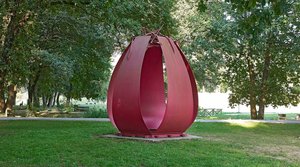
- Raumplastik grosse kurve i, (2) (1980): Discover Norbert Kricke’s ‘Raumplastik grosse kurve i,’ a striking Minimalist sculpture in a park setting. Explore this 1980 German artwork's metal form & integration with nature. Link to Artwork Database
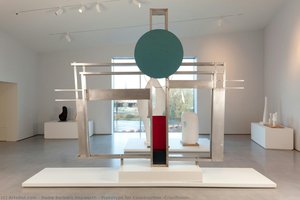
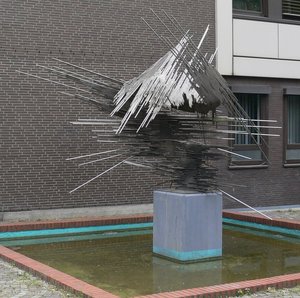
- Raum-Zeit-Plastik, (1956): Discover Norbert Kricke’s ‘Raum-Zeit-Plastik’ (1956) – a striking concrete architectural photograph. Minimalist, geometric & evocative of mid-century German art. Link to Artwork Database
- Norbert Kricke - Wikipedia: Link to Wikipedia
norbert kricke
1922 - 1984
Kratke činjenice
- Artistic Movement Or Style: Minimalist Sculpture, L’Art Informel, ZERO group
- Artists Who Influenced This Artist: ['Richard Scheibe, Hans Uhlmann],\n "Artists or movements influenced by this artist": ["Yves Klein", "John Anthony Thwaites"]\n}']
- Date Of Birth: November 30, 1922
- Date Of Death: June 28, 1984
- Full Name: Norbert Kricke
- Nationality: German
- Notable Artworks:
- Plastik, (2) (1980)
- Raumplastik grosse kurve i, (2) (1980)
- Raum-Zeit-Plastik, (1956)
- Place Of Birth: Düsseldorf, Germany

