

 Pregledaj u prostoru
 Pošalji
 Podeli
 Detalji o delu

 Преузми
 Slični predmeti
 Rendgenski snimak
 Slajdovi
Sawyers


 Pročitaj više
Giclee štampa / Umetnički otisak
Giclée štampa ili print na platnu muzejskog kvaliteta uz brzu proizvodnju i fleksibilne opcije završne obrade. ( Kupi ručno naslikanu sliku Kupi digitalnu sliku)




P118B $10

P118H $10

P118W $10

P438Z $10

P508JH $12

P508YH $12

P805H $10

P805Z $10

P919BZ $10

P919G $10

P919XJ $10

P959ZH $10

P968JZ $12

W106C $8

W218G $10

W218JH $8

W218Y $10

W307PJ $10

W316G $10

W316PJ $8

W316Y $10

W398PJ $8

W4111J $10

W500HY $15

W500JH $15

W692G $12

W849H $8

W940BG $15

W953PJ $8




Izaberite jednu od naših unapred definisanih veličina koje odgovaraju originalnim proporcijama umetničkog dela.

Možete uneti sopstvene dimenzije kako biste umetničko delo prilagodili specifičnom okviru ili prostoru. Ako odabrani format ne odgovara proporcijama originalne slike, mi ćemo ili iscrtati deo dela ili proširiti sliku pomoću ogledane ivice ili jednobojnog popunjavanja. Digitalni prikaz će vam biti poslat na odobrenje pre početka proizvodnje.
Imajte na umu da pregled na ekranu ne odražava stvarno iscrtavanje ili proširivanje. Samo će prikaz (mockup) precizno pokazati finalnu kompoziciju.
Iako su prilagođene dimenzije dostupne, preporučujemo da odaberete dimenziju sa unapred definisane liste kako biste očuvali originalne proporcije.
Dostava širom sveta () za 2 nedelje umesto uobičajenih 4/5 nedelja. (7 септембар)

Besplatna ekspresna dostava širom sveta

Visokokvalitetno laneno platno

Kompletno osiguranje transporta

Garancija povraćaja carine i uvoznih dažbina

Garancija vernosti boja

Politika povraćaja u roku od 100 dana (isključivo u slučaju nedostataka)

Garancija povrata novca od 100%

Popust pri grupnoj kupovini
 Opcija sa staklom dostupna je samo za dimenzije manje od 110 cm

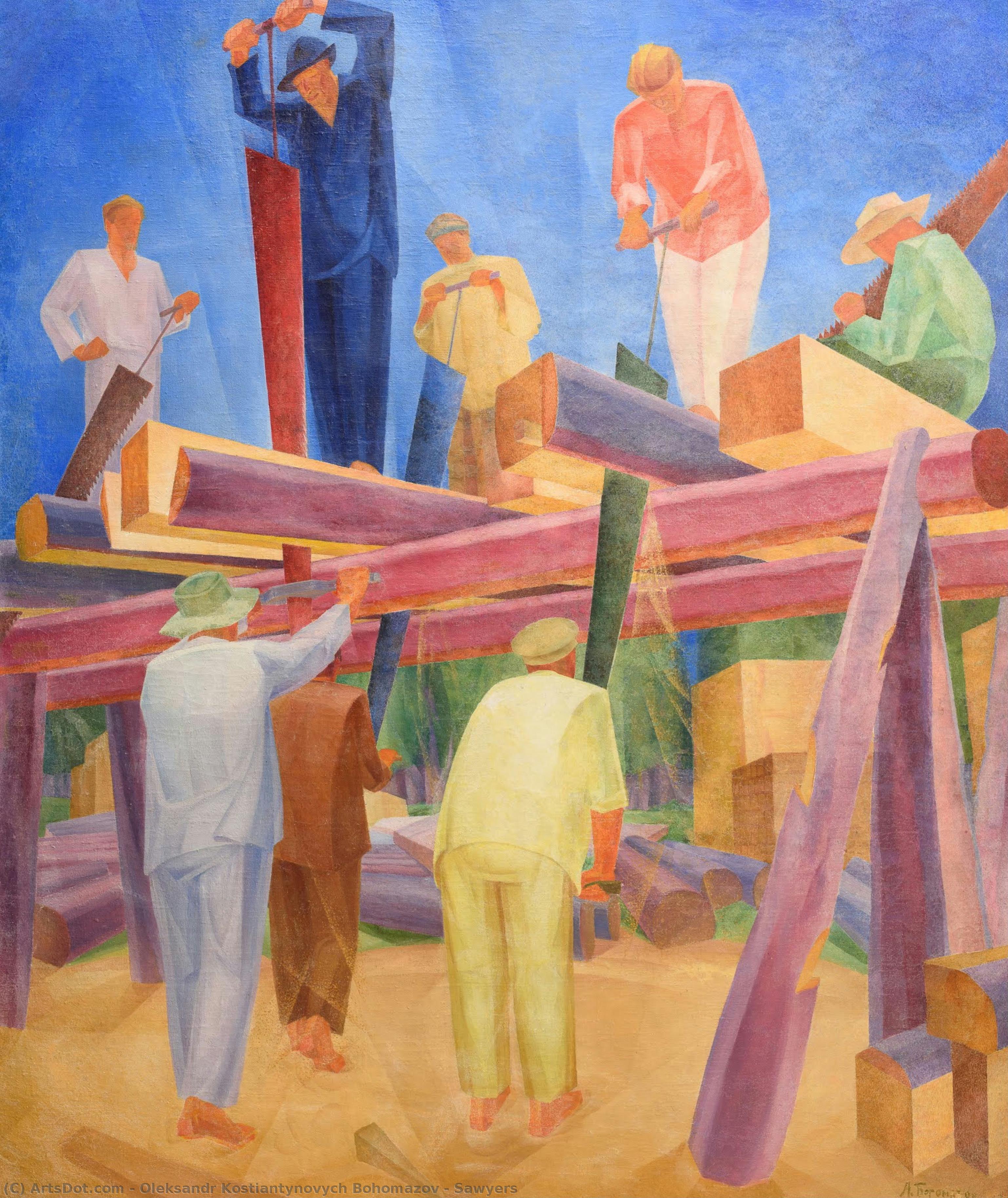
Sawyers
Giclee štampa / Umetnički otisak
Dimenzije reprodukcije
-


Konačna cena
$ 62
A Symphony of Labor: The Collective Spirit in Sawyers
In the vast tapestry of early 20th-century art, few works capture the raw, rhythmic pulse of human industry as poignantly as Oleksandr Kostiantynovych Bohomazov’s Sawyers. Painted in 1929, during the twilight of the artist's life, this monumental oil on canvas serves as a profound meditation on the strength found in unity. The scene unfolds with a breathtaking sense of scale, presenting a group of at least twelve men immersed in the arduous task of construction. As they gather around a skeletal wooden structure, the composition breathes with the movement of saws, hammers, and shared purpose. There is no solitary hero here; instead, Bohomazov directs our gaze toward the collective, where every figure plays a vital role in the unfolding drama of creation.
The technique employed in Sawyers is nothing short of masterful, utilizing a painterly approach that emphasizes texture and light to evoke the physical weight of the work. The artist utilizes a striking contrast between the earthy, grounded tones of the workers and the expansive, brilliant blue sky that looms above them. This celestial backdrop does more than provide depth; it acts as a silent witness to the earthly toil below, lending an almost spiritual dimension to the manual labor depicted. Through deliberate brushwork, Bohomumentov captures the interplay of light on wood and skin, creating a sense of atmosphere that makes the viewer feel the heat of the day and the grit of the sawdust.
For the discerning collector or interior designer, this piece offers a unique opportunity to introduce a narrative of resilience and harmony into a space. The painting transcends its historical context—a period of intense social and political transformation in Ukraine—to touch upon universal themes of collaboration and communal effort. Its large-scale presence and dynamic composition make it an ideal focal point for a sophisticated gallery wall or a grand living area, where its blue and earthen hues can anchor a room with both strength and serenity. To possess a reproduction of Sawyers is to invite a piece of art history into one's home that celebrates the enduring beauty of the human spirit working in concert.
Srodna umetnička dela


Biografija umetnika
Vincent van Gogh: A Life Painted in Bold Emotion
Vincent van Gogh, a name synonymous with passionate brushstrokes and intensely colored landscapes, remains one of the most recognizable figures in art history. Born in 1853 in Groot-Zundert, Netherlands, his life was tragically short – just seventeen years – yet within that brief span, he produced over two thousand works, leaving behind an extraordinary legacy that continues to resonate with audiences worldwide. More than simply a painter, Van Gogh was a man consumed by his art, driven by a profound need to capture the world around him and, perhaps more importantly, the turbulent emotions within himself.
Van Gogh’s early life offered little indication of the artistic genius he would become. He worked as an art dealer, a missionary, and even briefly as a teacher – roles that provided limited fulfillment. It wasn't until his late twenties, however, that he finally dedicated himself to painting, initially influenced by the Barbizon School artists who favored depicting rural life with earthy tones and realistic detail. His early works, particularly those created in Nuenen (1883-1885), such as *The Potato Eaters*, demonstrate this influence – a gritty portrayal of peasant farmers reflecting Van Gogh’s desire to connect with the working class and capture their honest existence. These paintings, characterized by dark palettes and thick impasto, foreshadowed his later stylistic developments.
Parisian Transformation: Embracing Impressionism and Beyond
A pivotal moment in Van Gogh's artistic journey arrived in 1886 when he moved to Paris. This relocation proved transformative, exposing him to the vibrant world of Parisian art and dramatically altering his style. He encountered the works of Impressionists like Claude Monet and Pierre-Auguste Renoir, absorbing their techniques of capturing fleeting moments of light and color. However, Van Gogh didn’t simply imitate; he pushed these influences further, experimenting with brighter palettes, looser brushstrokes, and a greater emphasis on subjective perception. The influence of Neo-Impressionism, particularly the pointillist technique championed by Georges Seurat and Paul Signac, is also evident in his Parisian paintings, such as *Self-Portrait with a Straw Hat*, where he employed small dots of color to create shimmering effects.
He began to explore complementary colors – juxtaposing hues like blue and orange or red and green – to intensify the visual impact of his work. This bold approach, combined with his expressive brushwork, created a sense of dynamism and emotional intensity that would become hallmarks of his style. The Parisian period was also marked by intense personal struggles, contributing to the psychological depth evident in many of his self-portraits.
Southern France: The Yellow Years
In 1888, Van Gogh moved to Arles in southern France, seeking a haven for artistic creation and hoping to establish an artist’s colony. This period, often referred to as the “yellow years,” is characterized by a particularly vibrant use of yellow – a color he associated with sunlight, optimism, and hope. He painted numerous scenes of sunflowers, wheatfields, and landscapes bathed in golden light, capturing the beauty and intensity of the Provençal countryside. Notable works from this time include *Sunflowers* (a series of paintings), *The Yellow House*, and *Wheatfield with Crows*.
Despite his artistic successes, Van Gogh’s mental health deteriorated during this period. He suffered from episodes of intense anxiety and depression, exacerbated by the isolation and challenges of establishing his artistic community. His strained relationship with fellow artist Paul Gauguin ultimately led to a dramatic breakdown in July 1888, culminating in Van Gogh's self-inflicted mutilation of his ear.
Late Works & Legacy
Following his hospitalization in Arles, Van Gogh moved to Saint-Rémy and later Auvers-sur-Oise, where he continued to paint prolifically. His late works are characterized by a heightened sense of emotional intensity and experimentation with form and color. *The Starry Night*, painted while residing at the Saint-Paul-de-Mausole asylum, is perhaps his most iconic work – a swirling, dreamlike depiction of the night sky filled with turbulent energy. Other significant paintings from this period include *Wheatfield with Crows* and *At Eternity’s Gate*.
Van Gogh died on July 29, 1890, at the age of 37, leaving behind a body of work that was largely unrecognized during his lifetime. It wasn't until after his death, through the efforts of his brother Theo and later art critics, that Van Gogh’s genius began to be appreciated. Today, he is celebrated as a pioneer of modern art, whose expressive use of color, dynamic brushwork, and deeply personal vision profoundly influenced generations of artists – from Expressionists like Edvard Munch to Abstract Expressionists like Jackson Pollock. His work continues to captivate viewers with its raw emotion, vibrant colors, and enduring power.
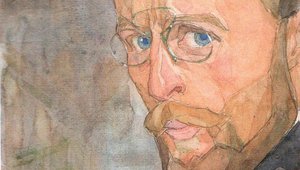
oleksandr kostiantynovych bohomazov
1880 - 1930 , Ukraine
Osnovne informacije
- Artistic Movement Or Style: Post-Impressionism
- Artists Or Movements Influenced By This Artist:
- Fauves
- Expressionism
- Artists Who Influenced This Artist:
- Jean-François Millet
- Theo van Gogh
- Date Of Birth: March 30, 1853
- Date Of Death: July 29, 1890
- Full Name: Vincent Willem van Gogh
- Nationality: Dutch
- Notable Artworks:
- Sunflowers
- Bedroom in Arles
- The Starry Night
- Wheatfield with Crows
- Place Of Birth: Ghent, Belgium
Povezani članci
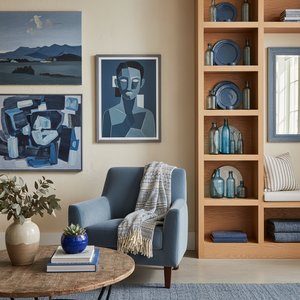
Slate Blue Masterpieces: 10 Iconic Paintings & Timeless Home Decor Ideas
Immerse yourself in the captivating world of slate blue! Explore 10 iconic paintings by Monet, Van Gogh & Renoir. Discover their stories, techniques & find museum-quality art reproductions for your home at .
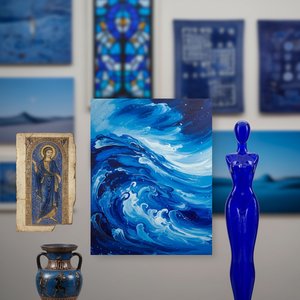
The Allure of Azure: Exploring the Symbolic & Aesthetic Depths of Blue in Art History
Explore the rich history of blue in art! Discover its symbolism, from ancient pigments to modern masterpieces by Kandinsky & Seurat. Uncover the psychological impact and cultural meanings behind this captivating hue.
Azure Visions: Exploring Representations of the Blue Dress in Western Art History
Explore the rich history of the blue dress in Western art! Discover its symbolism, from Renaissance masterpieces to modern interpretations by artists like Martin & Schiele. Uncover cultural meanings and artistic techniques.

Paul Cézanne: 25 Remek-dela Revolucionarnog Umjetnika | ArtsDot
Istražite 25 remek-dela Paula Cézanna, revolucionarnog slikara impresionizma i postimpresionizma. Otkrijte priče iza ikoničnih pejzaža, portreta i mrtve prirode. Kupite luksuzne reprodukcije slika na ArtsDot.com!
Claude Monet: 25 Remek-dela Impresionizma za Vaš Dom | ArtsDot
Uronite u svet Claudea Moneta sa 25 remek-dela impresionizma! Otkrijte priče iza poznatih slika, tehnike i inspiraciju. Reprodukcije vrhunskog kvaliteta za luksuzni dekor doma na ArtsDot.com.