

 Pregledaj u prostoru
 Pošalji
 Podeli
 Detalji o delu

 Преузми
 Slični predmeti
 Rendgenski snimak
 Slajdovi
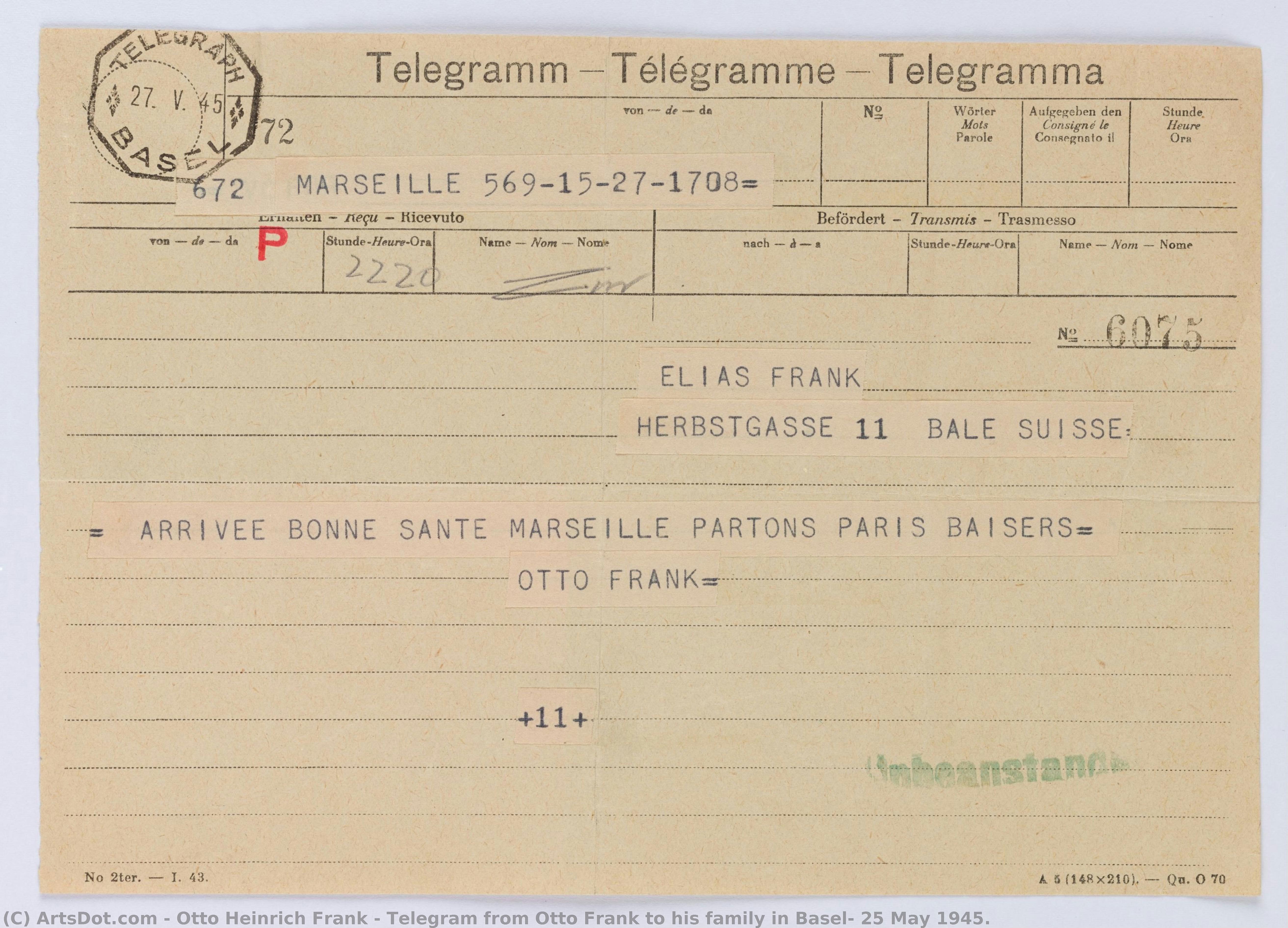
Telegram from Otto Frank to his family in Basel, 25 May 1945.


 Pročitaj više
Kupite digitalnu sliku visoke rezolucije i poboljšanog kvaliteta, koja je znatno superiornija od onoga što vidite u online prikazu.
Svaka datoteka je pedantno pripremljena od strane naših stručnjaka koristeći napredne alate i profesionalnu ručnu retušu. Osiguravamo da svaka slika ima izuzetnu oštrinu, preciznu reprodukciju boja i fine detalje.
Konačna datoteka se dostavlja putem e-pošte u roku od 72 sata, optimizovana za neposrednu upotrebu u profesionalnim, izdavačkim i štamparskim okruženjima. To je isti kvalitet kojem veruju vrhunski studiji dizajna, izdavači i galerije.
Digitalna slika
Preuzmite datoteku visoke rezolucije za ličnu upotrebu, štampanje i kreativne projekte. ( Kupi print Kupi ručno naslikanu sliku)
Uključeno uz svaku porudžbinu digitalne slike
Profesionalna digitalna isporuka, zagarantovana
Kada odaberete ArtsDot.com, ne dobijate samo sliku – vi primate profesionalno unapređeno digitalno umetničko delo, izrađeno sa najvećom preciznošću i uz garanciju zadovoljstva. Evo svega što automatski dolazi uz vašu porudžbinu:

Brza dostava putem e-pošte
Vaša digitalna slika visoke rezolucije biće vam poslata putem e-pošte u roku od 72 sata od poručivanja – spremna za trenutnu upotrebu.

Digitalna datoteka unapređena veštačkom inteligencijom
Vaše umetničko delo je profesionalno optimizovano korišćenjem naprednih AI alata i ručne obrade, čime se osiguravaju maksimalni detalji, oštrina i preciznost boja.

Besplatna ponovna isporuka doživotno
Slučajno ste obrisali ili izgubili svoju datoteku? Ne brinite – poslaćemo vam je ponovo u bilo kom trenutku, potpuno besplatno.

Bez troškova uvoza – zauvek
Uživajte u svojim umetničkim delima trenutno, bez carine, dažbina ili troškova dostave – digitalni download je uvek bez poreza.

Garancija vernosti boja
Uz pomoć profesionalnih alata i upravljanja bojama, osiguravamo da vaša digitalna slika što vernije odražava originalne boje.

Garancija zadovoljstva u roku od 60 dana
Ako niste zadovoljni svojom digitalnom slikom, revidirat ćemo je ili vratiti 100% novca u roku od 60 dana – bez ikakvih pitanja.

100% garancija povrata novca
Niste zadovoljni? Obezbedite pun povrat novca u roku od 60 dana od trenutka kada ste primili svoju digitalnu datoteku – bez suvišnih pitanja.

Popusti na velike porudžbine
Kupite 3 slike, uštedite 10% - Kupite 5 slika, uštedite 15% - Kupite 10+ slika, uštedite 20%. Odlično za kreativne projekte, galerije i agencije.
A Fragment of History: The Echoes of a Telegram
In the quiet, textured expanse of an aged telegram, dated May 25, 1945, lies a profound intersection of personal tragedy and global liberation. This document, a relic from the hands of Otto Heinrich Frank, transcends its utilitarian origins to become a hauntingly beautiful piece of historical art. The paper, weathered with the sepia tones of time, carries the weight of a man navigating the wreckage of the Second World us War. As one gazes upon the dense columns of typed text, there is an immediate sense of witnessing a private moment of transition—a bridge between the unimaginable horrors of the Holocaust and the fragile, uncertain dawn of peace. The composition, though dictated by the rigid, functional layout of telegraphic communication, possesses an organic, rhythmic quality created by the repetitive blocks of ink and the stark, vertical lines of the typeface.
The aesthetic of this piece is defined by its raw, documentary realism. There is no deliberate brushstroke or painterly flourish here; instead, the artistry resides in the authentic decay of the medium itself. The light brown and beige hues of the parchment suggest a vulnerability, as if the very fibers of the paper are holding onto the breath of the sender. For the collector of historical artifacts or the enthusiast of mid-century ephemera, the visual texture—the slight roughness of the aged surface and the presence of faded stamps—offers a tactile connection to the past. The typography, characterized by its clear, blocky, and utilitarian font, provides a structural stability that contrasts sharply with the emotional turbulence the words represent.
The Symbolism of Survival and Loss
Beyond its physical properties, the telegram serves as a powerful symbol of human resilience. To look upon these names—Marseille, Paris, Basel—is to trace the frantic odyssey of a father searching for the remnants of his family. The text contains fragments of hope and the seeds of devastating realization; phrases like 'ARRIVED' and 'TRANSFERRED' act as rhythmic pulses of movement through a fractured Europe. There is a profound, subtle symbolism in the way the ink meets the paper—a permanent record of a moment when Otto Frank clung to the belief that his wife and daughters might still be found. The document captures the precise instant where the relief of liberation met the crushing weight of loss, making it an emotionally charged centerpiece for any collection focused on the human condition.
For interior designers and curators, this piece offers a unique opportunity to introduce a narrative-driven element into a space. It is not merely a decoration but a conversation starter that invites reflection on memory, endurance, and the passage of time. When displayed, particularly in a setting that honors historical depth or minimalist elegance, the telegram acts as an anchor of authenticity. Its muted palette and structured layout allow it to integrate seamlessly into sophisticated environments, providing a soulful, intellectual layer to a room's atmosphere. It is a testament to the idea that even the most functional objects can carry the profound weight of the human spirit.
Srodna umetnička dela
Biografija umetnika
A Legacy of Resilience and Cultural Stewardship
Otto Heinrich Frank (1889–1980) remains a figure of profound historical weight, a man whose life was defined by both the quiet dignity of personal endurance and an enduring commitment to the preservation of European culture. While history most poignantly remembers him as the father of Anne Frank—the voice that would become a global symbol of hope amidst the darkness of the Holocaust—Frank’s own narrative is one of entrepreneurial success, intellectual depth, and a sophisticated engagement with the arts. Born in Frankfurt am Main on May 12, 1889, to the merchant Michael Frank and Alice Betty Frank-Stern, Otto was raised in an environment that valued education, responsibility, and the burgeoning artistic sensibilities of the German middle class.
His early years were steeped in the traditions of Frankfurt’s prominent families, fostering a character marked by diligence and a keen eye for detail. This foundation proved vital as he navigated the turbulent shifts of the 20th century. Beyond his familial roles, Frank was a man of significant professional achievement. After studying economics at Heidelberg University, he transitioned from the world of banking into the realm of industrial innovation. His entrepreneurial spirit led to the establishment of Fenestra GmbH, a firm specializing in steel constructions, and later, the founding of Kleiman & Frank GmbH. These ventures were not merely business pursuits but reflections of a mind capable of navigating complex structural and economic landscapes.
The Intersection of History and Artistry
To contemplate the life of Otto Frank is to witness the intersection of personal tragedy and the broader movement of historical preservation. His connection to the arts was not merely passive; he was an ardent supporter of European culture, a passion that found expression through his involvement with the Museum Kunstsalon Franke Schenk. Through this lens, one sees a man who understood the importance of maintaining a connection to beauty and heritage even when the world around him was fracturing. His life’s work, much like the historical artifacts associated with his name—such as the poignant telegram sent from Basel in May 1945—serves as a bridge between the unimaginable horrors of war and the fragile dawn of peace.
The aesthetic of Frank's legacy is often found in the textures of history itself: the weathered, sepia tones of aged documents and the rhythmic, utilitarian typography of wartime communications. There is a profound, raw realism in the way his story unfolds, much like a piece of documentary art where the artistry resides in the authentic decay of time and the resilience of the human spirit. His ability to find stability amidst the chaos of the mid-20th century mirrors the structural integrity of the industrial works he helped create.
A Lasting Historical Significance
The historical significance of Otto Heinrich Frank extends far beyond his personal biography. He stands as a witness to an era of unprecedented upheaval, embodying the struggle for survival and the subsequent duty to remember. Following the liberation of the concentration camps and the tragic loss of his daughters, Anne and Margot, Otto became the custodian of a legacy that would change the world. By publishing Anne’s diary in 1947, he fulfilled her deepest wish, transforming a private record of life in hiding into a universal testament to human rights and the indomitable will to endure.
His life remains a complex tapestry of several key elements:
- The Entrepreneurial Spirit: His success in the steel and industrial sectors demonstrated a capacity for innovation and economic leadership.
- Cultural Patronage: His dedication to art through the Museum Kunstsalon Franke Schenk helped sustain the continuity of European artistic heritage.
- Humanitarian Legacy: As the sole survivor of his immediate family from the Secret Annex, he became the essential link in preserving the truth of the Holocaust for future generations.
Ultimately, Otto Frank’s life was a masterclass in navigating the extremes of the human experience—from the prosperity of a merchant class in Frankfurt to the harrowing depths of wartime displacement, and finally to the profound responsibility of global remembrance. He remains an essential figure for anyone seeking to understand the resilience required to carry the weight of history.
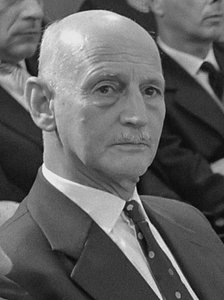
otto heinrich frank
1889 - 1980 , Germany
Kratke činjenice
- Artistic Movement Or Style: Modern Design
- Artists Or Movements Influenced By This Artist: ['Baroque']
- Artists Who Influenced This Artist: ['Jean Michel Frank']
- Date Of Birth: May 12, 1889
- Date Of Death: August 19, 1980
- Full Name: Otto Heinrich Frank
- Nationality: German
- Notable Artworks:
- Peter Paul Rubens: Morning Toilet of Venus
- Albrecht Dürer: St. Jerome beside the pasture
- Carl Fieger: Wicker Chair
- Place Of Birth: Frankfurt am Main, Germany

