

 Pregledaj u prostoru
 Pošalji
 Podeli
 Detalji o delu

 Преузми
 Slični predmeti
 Rendgenski snimak
 Slajdovi
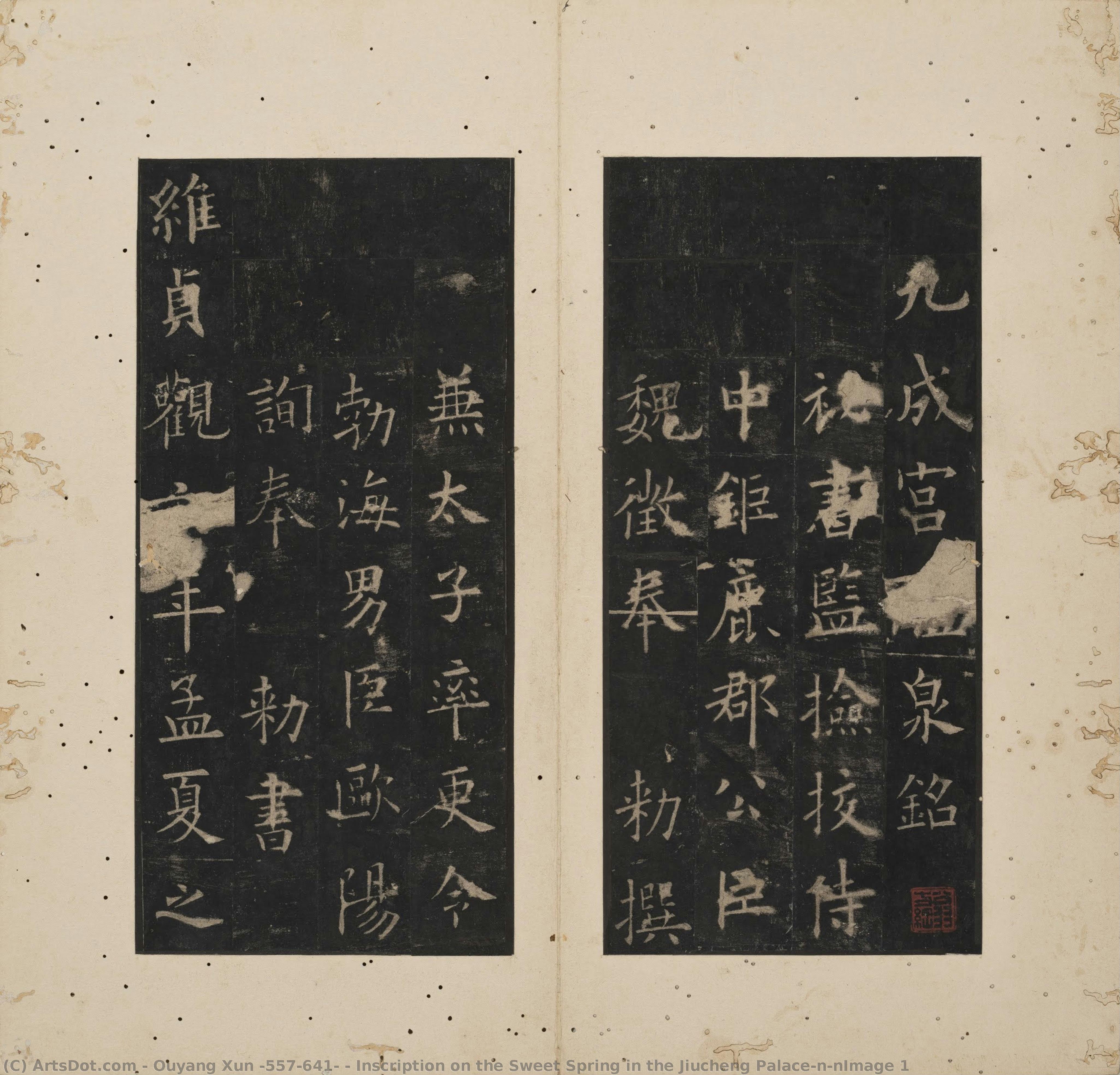
Inscription on the Sweet Spring in the Jiucheng Palace\n\nImage 1
 1100
1100 28.0 x 13.0 cm
 Pročitaj više
Ručno rađena uljana reprodukcija
Ručno oslikano uljanim bojama na platnu u dimenzijama i okviru po vašem izboru, izrađeno po porudžbini od strane naših umetnika. ( Kupi print Kupi digitalnu sliku)




































Izaberite jednu od naših unapred definisanih veličina koje odgovaraju originalnim proporcijama umetničkog dela.

Можете унети сопствене димензије како бисте прилагодили дело одређеном оквиру или простору. Ако одабрана величина не одговара пропорцијама оригинала, слика ће бити исечена или проширена додатним елементима који се ручно насликавају. Дигитални prikaz ће вам бити послат на одобрење пре почетка производње.
Имајте на уму да преглед на екрану не одражава стварно исецање или проширење. Само приказ (mockup) ће тачно приказати коначну композицију.
Иако су доступне прилагођене величине, препоручујемо да одаберете димензију из дефинисане листе како бисте сачували оригиналне пропорције.
Nakon narudžbine, tim ArtsDot.com će klijentu putem e-pošte poslati uputstva i dostaviti prikaz predloženog rešenja
Isporuka širom sveta () za 3/4 nedelje umesto uobičajenih 5 nedelja. (2 септембар). Bez kompromisa po pitanju kvaliteta.

Besplatna ekspresna dostava širom sveta

Visokokvalitetno laneno platno

Kompletno osiguranje transporta

Garancija povraćaja carine i uvoznih dažbina

Garancija vernosti boja

Politika povrata u roku od 60 dana (samo u slučaju nedostataka)

Garancija povrata novca od 100%

Popust pri grupnoj kupovini
 Opcija sa staklom dostupna je samo za dimenzije manje od 110 cm

Inscription on the Sweet Spring in the Jiucheng Palace\n\nImage 1
Tehnika reprodukcije
Dimenzije reprodukcije
-


Konačna cena
$ 263
Srodna umetnička dela









Biografija umetnika
The Architect of the Brush: The Life and Legacy of Ouyang Xun
In the golden era of the early Tang dynasty, a period defined by both political upheaval and unparalleled cultural flowering, there emerged a figure whose brushstrokes would become the very heartbeat of Chinese identity. Ouyang Xun, born in 557 AD in Changsha, was far more than a mere scribe; he was a scholar-official whose intellectual rigor and artistic precision bridged the gap between the administrative duties of the state and the spiritual depths of calligraphy. Raised within a distinguished lineage of government officials, his early life was steeped in the classical traditions of Confucianism. This foundation of scholarly discipline provided him with the tools to not only master the complexities of language but to infuse them with a structural integrity that would later define an entire era of Chinese art.
As he ascended through the imperial ranks—serving as an Imperial Doctor under the Sui dynasty and later as a censor and scholar at the prestigious Hongwen Academy—Ouyang Xun’s life became a tapestry of political service and artistic devotion. His career was marked by a profound commitment to the stability of the Tang empire, often acting as a moral compass within the court. Yet, it was in the quiet, focused moments of calligraphy that his true influence took root. He did not merely write; he engineered characters. His mastery of the regular script, or kaishu, transformed the medium from a tool of communication into a vessel for philosophical expression, characterized by a unique balance of strength and elegance.
The Precision of Regular Script and Artistic Mastery
To observe the work of Ouyang Xun is to witness a masterclass in structural equilibrium. His signature style is renowned for its "bone" structure—a term used by connoisseurs to describe the internal strength and vitality of each stroke. Unlike styles that favor fluid, sweeping motions, Ouyang’s regular script demands an almost architectural precision. Each character is composed with a deliberate sense of tension and release, where the weight of the ink and the sharpness of the edges create a visual rhythm that feels both eternal and alive. This technique was not merely an aesthetic choice but a reflection of his Confucian values: clarity, order, and righteousness.
His most celebrated achievement, the Inscription on the Sweet Spring in the Jiucheng Palace, stands as a monumental testament to this skill. Often hailed as "the best inscription written in regular script under heaven," this work exemplifies how his calligraphy could transcend the stone it was carved upon. Through his brush, the landscape of the palace and the essence of the spring are captured in the very architecture of the characters themselves. Similarly, works such as Bu Shang Studying demonstrate a contemplative serenity, where the complexity of the strokes never obscures the profound emotional depth and intellectual clarity that he sought to convey.
A Lasting Impression on Global Culture
The historical significance of Ouyang Xun extends far beyond the borders of ancient China. His influence acted as a cultural conduit, shaping the aesthetic sensibilities of neighboring nations for centuries. One of his most subtle yet profound legacies lies in the Kaiyuan Tongbao cash coin; the calligraphy he inscribed upon this currency became so iconic that it influenced the design of coinage in Japan, Sogdia, and Vietnam. Even in the modern era, traces of his genius remain visible, such as the characters extracted from his Zongsheng Temple Inscription which found their way into the branding of contemporary Japanese media.
Though legends occasionally whispered of his unconventional appearance, no myth could overshadow the supernatural intellect and artistic brilliance that defined him. Ouyang Xun remains one of the "Four Great Calligraphers of the Early Tang," a title that honors his role in establishing a standard of beauty that continues to inspire artists today. His life serves as a reminder that true art is not an escape from reality, but a profound engagement with it—a way to impose order upon chaos and to leave an indelible mark on the soul of civilization.
ouyang xun (557-641)
China
Osnovne informacije
- Artistic Movement Or Style: Tang dynasty calligraphy
- Date Of Birth: 557
- Date Of Death: 641
- Full Name: Ouyang Xun
- Nationality: Chinese
- Notable Artworks:
- Inscription on the Sweet Spring in the Jiucheng Palace
- Bu Shang Studying, Running Regular Script
- Place Of Birth: Changsha, China

