 Pregledaj u prostoru
 Pošalji
 Podeli
 Detalji o delu

 Преузми
 Slični predmeti
 Rendgenski snimak
 Slajdovi
Votive Portrait of Doge Sebastiano Venier
 Oil On Canvas
- WallArt
- High Renaissance
 1581
1581 285.0 x 565.0 cm
 Palazzo Ducale
 Pročitaj više
Ručno rađena uljana reprodukcija
Ručno oslikano uljanim bojama na platnu u dimenzijama i okviru po vašem izboru, izrađeno po porudžbini od strane naših umetnika. ( Kupi print Kupi digitalnu sliku)




P118B $10

P118H $10

P118W $10

P438Z $10

P508JH $12

P508YH $12

P805H $10

P805Z $10

P919BZ $10

P919G $10

P919XJ $10

P959ZH $10

P968JZ $12

W106C $8

W218G $10

W218JH $8

W218Y $10

W307PJ $10

W316G $10

W316PJ $8

W316Y $10

W398PJ $8

W4111J $10

W500HY $15

W500JH $15

W692G $12

W849H $8

W940BG $15

W953PJ $8




Izaberite jednu od naših unapred definisanih veličina koje odgovaraju originalnim proporcijama umetničkog dela.

Можете унети сопствене димензије како бисте прилагодили дело одређеном оквиру или простору. Ако одабрана величина не одговара пропорцијама оригинала, слика ће бити исечена или проширена додатним елементима који се ручно насликавају. Дигитални prikaz ће вам бити послат на одобрење пре почетка производње.
Имајте на уму да преглед на екрану не одражава стварно исецање или проширење. Само приказ (mockup) ће тачно приказати коначну композицију.
Иако су доступне прилагођене величине, препоручујемо да одаберете димензију из дефинисане листе како бисте сачували оригиналне пропорције.
Nakon narudžbine, tim ArtsDot.com će klijentu putem e-pošte poslati uputstva i dostaviti prikaz predloženog rešenja
Isporuka širom sveta () za 3/4 nedelje umesto uobičajenih 5 nedelja. (3 септембар). Bez kompromisa po pitanju kvaliteta.

Besplatna ekspresna dostava širom sveta

Visokokvalitetno laneno platno

Kompletno osiguranje transporta

Garancija povraćaja carine i uvoznih dažbina

Garancija vernosti boja

Politika povrata u roku od 60 dana (samo u slučaju nedostataka)

Garancija povrata novca od 100%

Popust pri grupnoj kupovini
 Opcija sa staklom dostupna je samo za dimenzije manje od 110 cm

Votive Portrait of Doge Sebastiano Venier
Tehnika reprodukcije
Dimenzije reprodukcije
-


Konačna cena
$ 413
A Portrait of Power and Faith: Paolo Veronese’s Votive Portrait of Doge Sebastiano Venier
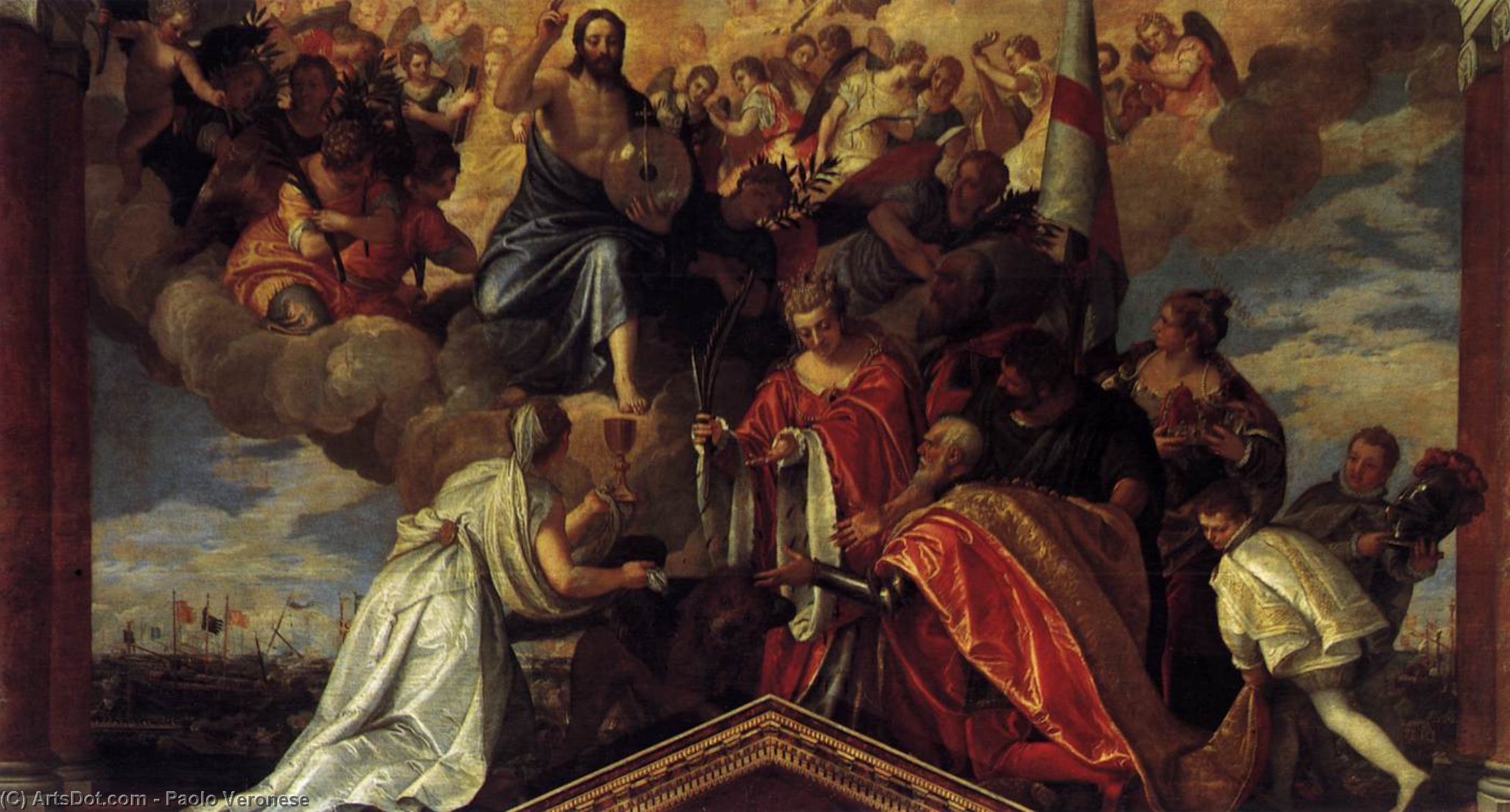
Paolo Veronese's “Votive Portrait of Doge Sebastiano Venier,” painted in 1581, is more than just a likeness; it’s a meticulously crafted tableau vivant—a vibrant snapshot of Venetian power, religious devotion, and the opulent grandeur of the late Renaissance. This monumental work, measuring an impressive 285 x 565 cm, resides within the Sala del Collegio at the Palazzo Ducale in Venice, originally intended as a commemorative tribute to the Doge himself. Veronese’s genius lies not merely in his technical skill but in his ability to weave together historical figures, allegorical symbols, and a palpable sense of theatrical spectacle—transforming a simple portrait into a complex narrative brimming with meaning. The painting immediately captivates with its sheer scale and lavish detail, transporting the viewer to a world of shimmering fabrics, intricate architecture, and divine presence.A Masterclass in Mannerist Composition
Veronese’s style firmly anchors this piece within the Mannerist movement, a period characterized by an embrace of elegance, complexity, and illusionistic space. Departing from the idealized forms of High Renaissance art, Mannerism favored elongated figures, dramatic poses, and a heightened sense of theatricality. Here, Veronese masterfully employs these techniques to create a dynamic composition that draws the eye across the canvas. The pyramidal structure, a hallmark of Renaissance painting, is subtly manipulated—the Doge’s figure anchors the base, while ascending towards Christ at the apex, creating an irresistible upward trajectory. Linear perspective is skillfully employed, though with a deliberate flattening effect characteristic of Mannerism, contributing to the overall sense of heightened drama and spatial ambiguity. The use of color is particularly noteworthy – Veronese's palette explodes with rich reds, blues, and golds, reflecting the wealth and prestige of Venice at the time.The Doge’s Homage: Symbolism and Historical Context
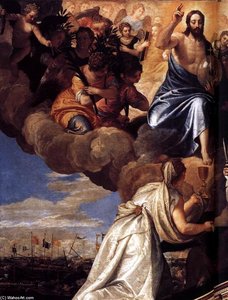
At the heart of the painting stands Doge Sebastiano Venier, depicted in a posture of profound humility before Christ. The inclusion of this specific portrait within the Sala del Collegio was a deliberate act of civic piety—a votive offering to commemorate Venier's leadership during the pivotal Battle of Lepanto in 1571, where the Venetian fleet decisively defeated the Ottoman Empire. The scene is layered with symbolism: the Doge’s outstretched hand signifies supplication and gratitude; the surrounding figures represent various saints and allegorical personifications—Faith, Justice, and Victory—all attesting to Venice's divine favor. The distant cityscape, faintly visible through a hazy atmosphere, subtly references Venice itself, reinforcing the painting’s connection to its patron and its city’s enduring legacy. The inclusion of elements like the naval battle in the background further emphasizes Venice’s maritime power and strategic importance.A Window into Venetian Splendor
Beyond its religious and historical significance, “Votive Portrait of Doge Sebastiano Venier” offers a remarkable glimpse into the material culture and artistic sensibilities of 16th-century Venice. Veronese's meticulous attention to detail—the intricate embroidery on the Doge’s robes, the shimmering fabrics adorning the figures, the elaborate architectural details—reflects the city’s status as a center of trade, wealth, and artistic innovation. The painting is not simply a portrait; it’s a meticulously constructed stage set, capturing the splendor and ambition of Venice at its zenith. The use of oil paint on canvas allows for layering and blending, creating textures that mimic the richness of velvet and silk, while the impasto technique adds depth and dimension to the drapery and cloud formations.An Enduring Legacy: Reproductions and Inspiration
Today, “Votive Portrait of Doge Sebastiano Venier” remains one of Veronese’s most celebrated masterpieces, admired for its scale, complexity, and sheer visual impact. High-quality reproductions offer a remarkable opportunity to experience the painting's grandeur in your own space, bringing a touch of Venetian Renaissance splendor into any setting. Whether you are an art enthusiast, a collector seeking a statement piece, or simply someone drawn to the beauty and artistry of the past, this monumental work continues to inspire awe and wonder. It stands as a testament to Veronese’s unparalleled skill and his ability to transform history, faith, and power into a timeless masterpiece.Srodna umetnička dela
Biografija umetnika
Паоло Веронезе: Венецијански Визионар и Мајстор Спектакла
Паоло Калијари, познат широм света као Паоло Веронезе, изникнуо је из живописног уметничког пејзажа 16. века Венеције као маестро боје, композиције и раскошног спектакла. Рођен у Верони 1528. године, син каменоресца, његов рани живот био је потопљен визуелним богатством околине – класичном архитектуром, обликованим формама и растућим хуманистичким идеалима који су обележили тај регион. Почетна обука под Антониом Бадилом и Ђовани Франческом Каротом поставила је основу за традиционалне технике, али је његов прелазак у Венецију педесетих година прошлог века заправо распламтао његов уметнички гениј. Сам град је постао његова муза, његови бурни тргови, величанствени палата и сјајне воде информисале су обим и драму његовог рада. Брзо је апсорбовао утицаје утврђених венецијанских мајстора као што је Тицијан, чије је овладавање бојом дубоко утицало на Веронезеову палету, ипак је створио карактеристичан стил обележен неупоредивим осећајем позоришта и величине.Сликар Гозби и Великих Наратива
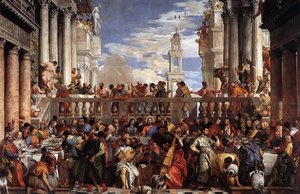
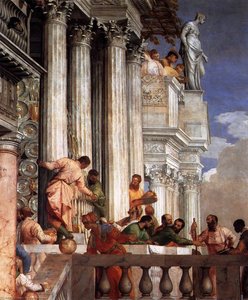
Веронезеова репутација лежи на његовим монументалним сликама, посебно онима које описују раскошне гозбе и библијске сцене трансформисане у блиставе призоре венецијанског живота. *Венчање у Кани*, завршено 1563. године за бенедиктински манастир Сан Ђорђо Мађоре, представља сведочанство његове вештине. Ово колосално платно није само илустрација чуда; то је живописна панорама друштва из 16. века, препуна елегантно обучених фигура, музичара и архитектонских детаља рендираних са задивљујућом прецизношћу. Слика није само о томе шта се догодило у Кани, већ *како* би изгледала да се десила у Венецији током Веронезеовог времена. Слично томе, *Гozба у кући Левија*, првобитно названа *Последна вечера*, изазвала је контроверзу са Инквизицијом због укључивања савремених фигура и наизглед непоштовање атмосфере. Веронезе се бранио, тврдећи да су сликари имали право на исту креативну слободу као песници и шаљивци – смела изјава која одражава његово уверење у моћ уметности да тумачи и пресликава свете наративе. Ова дела нису била само религиозни прилози; то су биле прославе живота, богатства и сјаја саме Венеције. Није га занимала аскетична духовност, већ је желео да заухвати радост и изобиље постојања.Утицаји и Уметнички Развој
Иако је Тицијанов утицај на Веронезеов колоризам неоспоран, његов уметнички развој био је сложена игра различитих утицаја. Архитектонска прецизност коју је донео својим композицијама дугује много класичној традицији која је била присутна у Верони током његових формирајућих година, посебно раду архитекта као што је Микеле Санмикели. Апсорбовао је и елементе из централних италијанских мајстора као што су Рафаел и Пармиђанино, видљиве у грациозним линијама и хармоничним аранжманима у његовим сликама. Међутим, Веронезе није једноставно имитирао ове утицаје; синтетизовао их је у јединствено венецијански стил карактеристичан драматичном употребом светлости, живописним палетама боја и педантном пажњом на детаље. Одликовао се стварањем илузија простора и дубине, користећи перспективне технике да би гледаоце увукао у срце својих елаборних сцена. Његово мајсторство уљарења омогућило му је да постигне неупоредив луминозност и богатство текстуре. Такође је водио велику радионицу, са доприносима брата Бенедета и синова Габријела и Карла, обезбеђујући да његов стил настави да процвета чак и након његове смрти 1588. године.Наслеђе и Историјски Значај
Утицај Паола Веронезеа се протеже далеко изван области ренесансне уметности. Његов рад је одјекивао кроз векове, инспиришући уметнике из различитих дисциплина. Његове драматичне композиције и живописне шеме боја су цитиране као утицаји на све што је од барокне слике до модерног филма – чак налазећи ехое у визуалној естетици шпагети вестерна. Био је део „великог триа“ венецијанских сликара — уз Тицијана и Тинторета — од којих је сваки на свој начин допринео граду наслеђу, али се Веронезе често истиче због своје чисте екстравагантности и прославе земаљских задовољстава. Његове слике настављају да очаравају публику својом величином и спектаклом, нудећи увид у раскошни свет Венеције из 16. века.- Редефинисао је историјску слику убацивањем савременог живота у њу.
- Његова употреба боје остаје инспиративна за уметнике и данас.
- Њихов рад отелотворује дух ренесансног хуманизма и слављења земаљске лепоте.
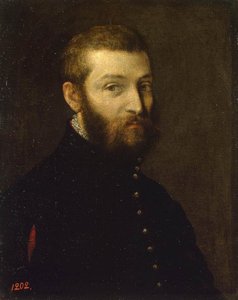
Паоло Веронезе
1528 - 1588
Osnovne informacije
- Artistic Movement Or Style: Renesansa, Manirizam
- Artists Or Movements Influenced By This Artist:
- Rubens
- Watteau
- Artists Who Influenced This Artist: ['Titian']
- Date Of Birth: 1528
- Date Of Death: 1588
- Full Name: Paolo Veronese
- Nationality: Italijan
- Notable Artworks (List Of Titles):
- Svadba u Kani
- Gožba u kući Levija
- Place Of Birth (City And Country): Verona, Italija
Povezani članci
Paolo Veronese: A Renaissance Master of Color, Composition, and Venetian Splendor
Explore the vibrant world of Paolo Veronese, a Renaissance master renowned for his opulent compositions, masterful use of color, and dramatic Venetian scenes. Discover key artworks & legacy.

Jacopo Tintoretto: 25 Remek-dela Venecijanskog Majstora | Reprodukcije i Inspiracija za Dom
Uronite u svet Jacopa Tintoreta! Otkrijte 25 remek-dela venecijanskog renesansnog majstora. Istražite dramatične kompozicije, bogate boje i istoriju umetnosti na ArtsDot.com. Reprodukcije slika za luksuzni enterijer.
Jacopo Palma il Giovane: A Venetian Master's Poetic Evolution
Explore the captivating world of Jacopo Palma il Giovane, a pivotal Venetian Renaissance master. Discover his unique style, influenced by Titian & Tintoretto, and learn about key works perfect for discerning collectors.
The Golden Light of Innovation: Exploring the Venetian Renaissance Art Movement (1430–1580)
Explore the Golden Age of Venetian art (1430–1580). Discover Giorgione, Titian & Tintoretto's techniques, the 'colorito' revolution, and lasting influence. Expert insights for collectors & enthusiasts.
Vittore Carpaccio: Venetian Renaissance Narrative & the Poetics of Detail
Explore the captivating world of Vittore Carpaccio, a master storyteller of the Venetian Renaissance. Discover his intricate details, narrative cycles like 'The Legend of St. Ursula,' and unique artistic style.